
NEWS
Women and Land: Why Nigeria’s Land Administration Cannot Afford to Leave Half the Nation Behind

The ongoing conversations on land reform in Nigeria tend to focus on speed, cost and documentation. Seemingly disregarded is the role of an important demographic within the population. Women across the country, who actively farm, build homes and anchor households, remain the group least likely to hold documented title to the land on which they depend.
Closing this gap is not a side issue in land administration. Rather, it is central to whether our reforms can deliver the inclusive, secure and productive land system we say we want.It is important to note that the law is not the main obstacle. The Constitution prohibits discrimination, and the Land Use Act makes no distinction between men and women in the grant of rights of occupancy.
The difficulty lies in what happens between the statute book and the ground. According to the Federal Ministry of Women Affairs’ National Women’s Economic Empowerment Policy and Action Plan, only about 10 per cent of landowners in Nigeria are women. Customary inheritance practices, informal allocation, the cost of titling and plain lack of information still decide who ends up with a certificate and who ends up with only permission to farm.The consequences reach well beyond the individual. A woman without secure tenure cannot easily offer land as collateral, invest in improving it or plan beyond the next season. A widow may lose both her home and her livelihood. These are the same weaknesses that keep low-income households locked out of formal land and housing markets. Women are often hit hardest by these consequences.
In my role as a land administration professional, I have found that our administrative systems and mechanisms are never neutral. A registry that does not record the sex of title holders cannot show where the gaps are. Furthermore, a process that assumes a single household head, usually a man, will quietly exclude everyone else. Reform has to be designed with women’s roles and challenges in mind.
Compensation is a clear example. In October 2024, the Federal Ministry of Housing and Urban Development convened a national technical forum to review compensation rates for crops and economic trees, with the aim of reaching a nationally acceptable standard. That matters for women in a particular way. In many rural communities, women gather from economic trees, grow food crops and run small-scale processing on land they do not formally own. When that land is acquired for a public project, their use of it is easily missed in the enumeration and, as a result, in the payment. A fair compensation rate means little if the person who actually depends on the crop is not among the beneficiaries.
Women are not only users of land, but also professionals within the system. They work as estate surveyors and valuers, land surveyors, planners, registrars, legal officers and policy makers. That presence has real value. Professionals who understand how households actually use land produce more accurate valuations, more complete enumerations and processes that more people can use.
There is a practical way forward. The Consolidated Land Registry now being developed should record sex-disaggregated data from the start, so that progress can be measured and not merely asserted. Joint titling for spouses should be actively encouraged in federal land allocations, and widows should be protected against dispossession through clear, enforceable procedures. Titling and registration costs should be scaled to what low-income applicants, who are disproportionately women, can actually pay. Enumeration for compensation and resettlement should require that women’s use of land and economic trees be recorded by name, not folded into a household entry. And professional bodies and public institutions should open clearer pathways for women to rise into senior roles in land administration.
Land is the foundation on which housing, farming and cities are built. A foundation is only as strong as the people it holds up. If women remain on its margins, the structure above it is weakened. Making women more visible in Nigeria’s land sector must therefore take centre stage, to ensure the wholesome growth and development of the sector and the nation as a whole.
Esv. Alice V. Bishen (ANIVS, RSV),
Lands & Housing Development Department,
Federal Ministry of Housing and Urban Development, Mabushi

By Tony Obiechina, Abuja
Caverton Offshore Support Group Plc recorded a 1.4 per cent increase in revenue to N20.74bn for the nine months ended September 30, 2026, supported by improved contributions from its marine business, which helped cushion the impact of the loss of a major helicopter contract that expired last year.
The company’s revenue increased from N20.
45bn reported in the corresponding period of 2025, with its marine operations contributing nearly one-third of total group revenue.The figures were disclosed in the company’s nine-month financial results made available to The PUNCH on Tuesday.
The modest revenue growth reflects Caverton’s ongoing efforts to diversify its operations, strengthen its marine business and reposition its aviation division for improved performance.
Despite the increase in revenue, the group’s financial performance remained under pressure, as its loss after tax widened to N13.79bn from N4.63bn recorded in the same period last year.
Caverton attributed the higher loss largely to N5.9bn in non-cash depreciation charges arising from the revaluation of its assets in the previous year. The company also faced the absence of a one-off gain of N5.3bn recognised in its 2025 results.
However, the group recorded some improvement in its financing costs, with net finance costs declining by 16 per cent, representing a year-on-year reduction of N2.19bn. The company also reported a net foreign exchange gain during the period.
The financial statements, approved by the company’s board on October 28, reflect its ongoing strategy to expand marine operations, restructure its debt obligations and explore partnerships aimed at revitalising its aviation business.
Commenting on the results, Group Chief Executive Officer, Olabode Makanjuola, described the period as one of significant transition for the company, noting that marine operations were becoming an increasingly important contributor to group revenue.
He said the business, which contributed little to the company’s financial performance a year ago, now accounted for almost a third of its revenue. He also highlighted its foreign currency earnings through an international Suezmax pool and the development of locally manufactured electric ferries for Lagos.
A major milestone during the period was the progress made by OMIBUS, Caverton’s indigenous electric ferry initiative, which successfully completed sea trials on Lagos waterways.
During a full-load trial, the electric ferry transported passengers over a distance of 12.6 nautical miles between Falomo and the Ikorodu ferry terminal, demonstrating its readiness for the next stage of commercial operations.
According to the company, passenger services will initially commence on shorter and high-demand routes connecting CMS, Falomo, Victoria Island and Lekki. Longer routes, including Ikorodu, will be introduced gradually as charging facilities and battery performance are further developed.
Caverton also disclosed that it was constructing 10 electric ferries for the Lagos State Government at its marine facilities, including its Naval Dockyard operation in Victoria Island.
The project involves local vessel construction, with propulsion technology provided by the company’s original equipment manufacturing partner, ExploMar, based in Shanghai, China.
While its marine business continues to expand, the company said it was also implementing changes to improve the performance and efficiency of its aviation operations.
Makanjuola explained that the aviation division was being restructured into a leaner, more capital-efficient business, with plans to maximise the value of its maintenance, repair and overhaul (MRO) and training facilities.
He added that the company was pursuing strategic partnerships to restore and expand flight operations, while its unmanned aerial vehicle (UAV) business was exploring new opportunities in drone services and technical training through collaborations with organisations, including the National Agency for Science and Engineering Infrastructure (NASENI).
On its financial position, Caverton disclosed that discussions were ongoing to restructure its debt and establish more sustainable repayment arrangements.
The company’s interest-bearing borrowings stood at N81.55bn as of September 30, 2026, highlighting the significant debt burden facing the group.
It also revealed that discussions were underway with prospective strategic investors regarding a possible equity investment in its aviation business.
Makanjuola said management remained focused on addressing the company’s financing challenges while pursuing opportunities to strengthen its operations and improve long-term performance.
He expressed confidence that the expansion of its marine business, alongside the restructuring of its aviation division and efforts to manage debt, would help create a more diversified and resilient group capable of delivering sustainable value to shareholders.
By David Torough, Abuja
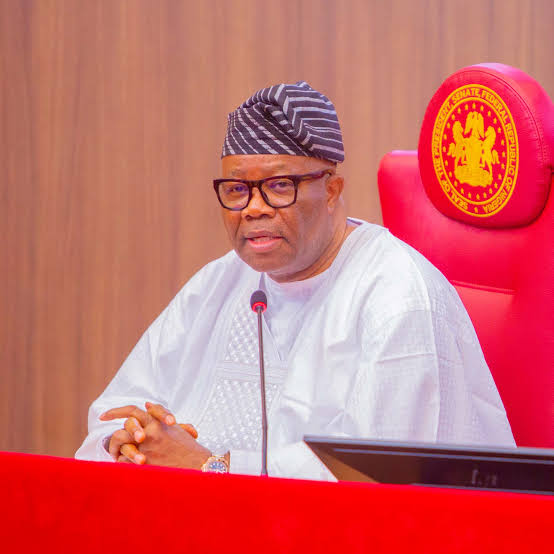
President Bola Tinubu has revised the Federal Government’s 2026 external borrowing proposal, seeking Senate approval to raise $7.707 billion (N10.79 trillion) to finance part of the country’s budget deficit.
The revised request, presented to the Senate on Wednesday by Senate President Godswill Akpabio, effectively replaces an earlier proposal seeking approval for $20.
52 billion and €1.045 billion in external loans.In a letter dated October 26, 2026, Tinubu requested legislative authorisation for the Federal Government to raise the equivalent of N10.
79 trillion through one or a combination of international financing sources to implement projects and programmes captured in the 2026 Appropriation Act.The President explained that the proposed external borrowing forms part of the N29.2 trillion new borrowing provision in the 2026 budget, designed to finance an estimated N31.4 trillion fiscal deficit.
Under the financing arrangement, the Federal Government plans to source N18.4 trillion from the domestic debt market, while N10.79 trillion would be raised externally.
Tinubu said the external funds would be mobilised through Eurobond issuance, concessional and commercial loans from multilateral and bilateral institutions, International Monetary Fund (IMF) facilities, bridge financing arrangements and direct borrowing from international financial institutions.
He noted that the government would pursue the available options simultaneously, taking into consideration their respective costs, benefits and the time required to access the funds.
However, he indicated that greater emphasis would be placed on Eurobond issuance because of its relatively faster processing time and capacity to raise substantial amounts at comparatively competitive costs.
According to the President, the final terms and conditions of the proposed facilities, including interest rates and repayment tenures, would depend on prevailing market conditions at the time of pricing.
He assured that the Federal Ministry of Finance and the Debt Management Office (DMO) would work together to secure the most favourable borrowing terms for the country.
Tinubu said the proposed funds would be deployed to priority projects and programmes in defence and security, transportation, agriculture, power, education and healthcare.
He explained that the borrowing was intended to support the implementation of the 2026 budget, sustain the administration’s economic reform agenda and consolidate the macroeconomic gains recorded in recent years.
Beyond financing budgetary commitments, the President said the foreign currency proceeds would also strengthen Nigeria’s external reserves and support exchange-rate stability.
He explained that the funds would be received by the Central Bank of Nigeria (CBN) on behalf of the Federal Government, thereby contributing to the country’s external reserves.
The President anchored the request on Sections 21(1) and 27(1) of the Debt Management Office (Establishment, etc.) Act, 2003, which provide the legal framework for legislative approval of external borrowing.
He specifically asked the National Assembly to approve the proposed N10.79 trillion facility, equivalent to approximately $7.707 billion, using the 2026 budget exchange rate of N1,409 to the dollar, as stated in the request.
He also sought authorisation for the Minister of Finance and Coordinating Minister of the Economy, in collaboration with the DMO, to take all necessary steps to implement the borrowing arrangement.
Earlier borrowing proposal superseded
Explaining the revised request, Akpabio said the latest communication effectively cancelled the earlier proposal submitted by the President, which sought approval for $20.52 billion and €1.045 billion in external borrowing.
He described the new letter as more explicit, noting that it provided the government with greater flexibility to explore different international financing sources rather than depend on a single lender or market.
Akpabio said the government would seek the most favourable borrowing terms through what he described as a willing-seller, willing-buyer arrangement.
He added that the revised proposal recognised the need to explore different funding opportunities to determine the most suitable financing conditions for the country.
Following the presentation of the presidential letter during plenary, the Senate President referred the request to the Senate Committee on Local and Foreign Debt for further legislative scrutiny.
He directed the committee to examine the proposal and report back to the Senate as soon as practicable.
The request comes against the backdrop of Nigeria’s growing public debt obligations, rising debt-servicing costs and continued reliance on borrowing to finance budgetary expenditure.
The Senate’s consideration of the proposal is therefore expected to bring renewed attention to the cost of additional external borrowing, the terms of the proposed facilities and the Federal Government’s capacity to ensure that the funds are deployed effectively to the projects and sectors identified in the 2026 budget.
By David Torough, Abuja
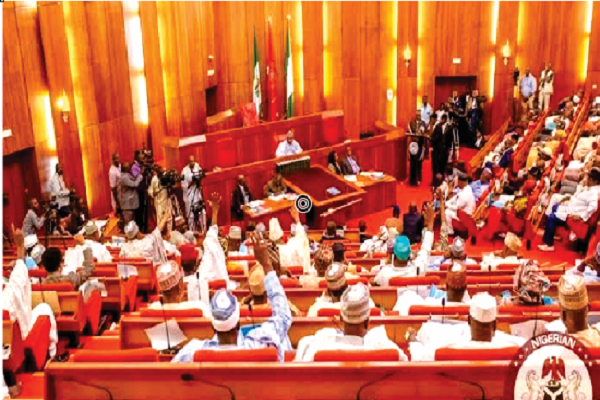
The Senate has advanced a bill seeking to criminalise the rejection or neglect of patients requiring emergency medical attention, proposing a six-month jail term, a fine of up to N300,000, or both for healthcare facilities and personnel found guilty of violating prescribed emergency treatment standards.
The National Health Act Amendment Bill 2026, sponsored by Senator Abdulaziz Musa Yar’Adua (APC, Katsina Central), was passed for second reading at Wednesday’s plenary.
It seeks to amend the National Health Act 2014 by establishing enforceable timelines for emergency assessment, treatment, stabilisation and patient referral across public and private healthcare facilities in Nigeria.Leading the debate, Yar’Adua said the proposed legislation was designed to address critical gaps in the country’s healthcare system and curb preventable deaths arising from delays in accessing emergency medical services.
He stressed that every Nigerian must receive timely and life-saving medical attention during emergencies, irrespective of social status, wealth, influence or geographical location.
According to him, the bill proposes that hospitals assess emergency patients within 15 minutes of arrival and commence initial stabilisation within 30 minutes, while life-saving interventions must begin immediately once a life-threatening condition is identified.
The proposed measures include oxygen administration, intravenous fluids, pain relief and preliminary diagnostic procedures, alongside urgent interventions such as cardiopulmonary resuscitation, airway management and bleeding control.
The bill also provides for the assignment of hospital beds within two hours of a patient’s arrival, subject to availability. Where beds are unavailable, facilities would be required to stabilise patients and initiate referral arrangements within two hours or as soon as they are assessed and considered stable for transfer.
Hospitals referring patients to other facilities would also be required to commence ambulance dispatch or arrange alternative transportation within 30 minutes of making the referral decision. The proposed referral framework is expected to strengthen coordination among primary, secondary and tertiary healthcare institutions.
Yar’Adua further disclosed that the amendment would require the Medical and Dental Council of Nigeria and the Nursing and Midwifery Council of Nigeria to jointly develop and maintain a standardised national emergency care curriculum.
Healthcare workers involved in emergency medical services would be required to undergo training and certification at intervals not exceeding 18 months.
He said the bill was consistent with international practices in countries including Ghana, South Africa, Kenya, the United Kingdom and the United States.
The senator also noted that Nigeria accounts for approximately 10 per cent of global maternal deaths, attributing part of the challenge to delays in accessing emergency obstetric care.
Supporting the proposed legislation, Senate Whip, Senator Mohammed Monguno (APC, Borno North), said it would help address avoidable deaths arising from road accidents, maternal emergencies and other life-threatening situations.
He lamented that some hospitals neglected emergency patients, resulting in preventable fatalities, adding that criminal liability would discourage such practices and strengthen accountability in the healthcare sector.
Similarly, Senator Diket Plang (APC, Plateau Central) backed the bill, describing it as particularly important for rural communities where complications during childbirth often require urgent referrals from primary healthcare centres to higher-level facilities.
Plang emphasised that patients must be stabilised before transportation to prevent avoidable deaths during emergency transfers.
However, Senator Francis Faduyile (APC, Ondo South) cautioned against imposing criminal sanctions on healthcare professionals without first addressing the systemic challenges confronting hospitals.
He argued that inadequate medical equipment, shortages of doctors, insufficient oxygen supplies and poor funding could make compliance with the proposed timelines difficult.
Faduyile questioned how a doctor attending to several patients simultaneously could be held criminally responsible when another emergency case arrived, stressing that healthcare workers should not be punished for circumstances beyond their control.
He also raised concerns about the financial burden on private healthcare providers, who often provide emergency services without immediate reimbursement.
The senator called for a broader review of the National Health Act to address the structural weaknesses of the healthcare system rather than concentrating primarily on punitive measures.
The Senate Minority Leader, Senator Abba Moro (PDP, Benue South), said the debate had exposed several gaps requiring legislative attention.
He expressed optimism that the committee stage and a proposed public hearing would provide opportunities for healthcare professionals and other stakeholders to contribute to the bill.
Moro also condemned the practice of hospitals demanding police reports before treating emergency patients, insisting that saving lives must take precedence over administrative procedures.
He cited experiences in Mexico, where emergency responders and ambulances reportedly attend promptly to accident victims, helping to prevent avoidable deaths.
In his remarks, Senate President Godswill Akpabio said the debate had highlighted significant challenges in Nigeria’s healthcare delivery system, urging lawmakers to support the bill’s progression while ensuring that identified shortcomings were addressed through further deliberations.
Akpabio stressed the need for the Federal Government, state governments and local government authorities to work together to provide the infrastructure, personnel and resources required for effective healthcare delivery.
The proposed amendment is expected to balance accountability for hospitals that wilfully neglect emergency patients with safeguards for healthcare workers acting in good faith under documented resource constraints.
Following its passage for second reading, the Senate referred the bill to its Committee on Health, directing it to report back within four weeks.
The proposed legislation will subsequently undergo further scrutiny, including stakeholder consultations, before lawmakers decide on its final passage.


Women and Land: Why Nigeria’s Land Administration Cannot Afford to Leave Half the Nation Behind
ShareThe ongoing conversations on land reform in Nigeria tend to focus on speed, cost and documentation. Seemingly disregarded is the...


Caverton Revenue Rises to N20.74bn
ShareBy Tony Obiechina, Abuja Caverton Offshore Support Group Plc recorded a 1.4 per cent increase in revenue to N20.74bn for...

Tinubu Slashes External Loan Request to $7.7bn, Seeks Senate Nod
ShareBy David Torough, Abuja President Bola Tinubu has revised the Federal Government’s 2026 external borrowing proposal, seeking Senate approval to...


Senate Criminalises Hospitals’ Rejection of Emergency Patients
ShareBy David Torough, Abuja The Senate has advanced a bill seeking to criminalise the rejection or neglect of patients requiring...


Youth and Human Development are my Priorities” – Hon Shekari
ShareHonourable Rijo Shekari is the aspirant contesting for the House of Representatives on the platform of the Peoples Democratic Party...


Oborevwori Calls for Continuous Training to Strengthen Civil Service
ShareFrom Francis Sadhere, Delta Delta State Governor, Rt. Hon. Sheriff Oborevwori, has urged civil service commissions across the country to...
Tuition Fees Review: Kogi Says PAAU VC Acted On Directive
ShareFrom Joseph Amedu, Lokoja The Kogi State Government has defended the recent review of tuition fees at Prince Abubakar Audu...
Post-evacuation: Nigeria’s Continuous Ebola Surveillance
ShareBy Folasade Akpan With Nigeria’s imported Bundibugyo Ebola patient now evacuated to Switzerland, the country’s health response has pivoted from...
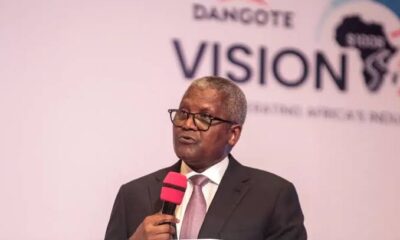

Dangote Hosts Egyptian Delegation, Weighs Industrial Expansion
ShareBy David Torough, Abuja Dangote Group is considering expanding its industrial investments into Egypt as part of its broader pan-African...


State Police: NASS Secures Approval of 28 State Assemblies
ShareBy David Torough, Abuja The National Assembly has crossed a major constitutional hurdle in its bid to establish State Police...