
NEWS
Trump-backed Republican Senate candidates pay the price

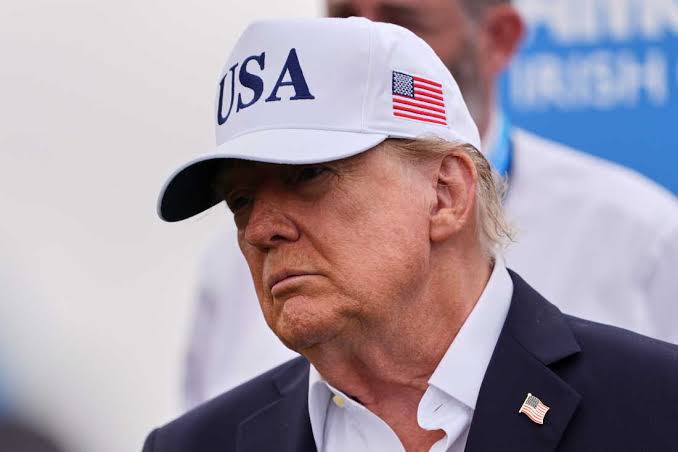
President Donald Trump asked voters to pretend he was on the ballot in the midterm elections and handpicked Republican candidates in some of the country’s most consequential Senate races.
By Tuesday night, voters had rejected them.
Trump-backed candidates in South Carolina, North Carolina, Texas and Michigan all lost, handing Democrats control of the chamber and exposing the limits of Trump’s political power.
Trump has spent more than a decade reshaping the Republican Party around his MAGA movement, dictating primary matchups and pushing aside conservative figures he felt were insufficiently loyal or not aligned with his vision.
Trump repeatedly favored loyalists and ideological allies over more established Republicans with stronger statewide networks and proven electoral track records, betting that his endorsement could overcome their political liabilities.
Tuesday’s results revealed he was unable to persuade the broader electorate to back his choices.
One of the most stunning repudiations came in South Carolina, which had not elected a Democratic senator since 1998 and which Trump won by 18 percentage points in 2024.
Trump backed Darline Graham, the sister of late Republican Senator Lindsey Graham. But Democrat Annie Andrews won the seat in a stunning upset.
In North Carolina, Trump endorsed former national Republican campaign official Michael Whatley, who lost in a rout to former Democratic Governor Roy Cooper.
In Texas, Trump intervened in a messy Republican primary election to promote scandal-plagued Attorney General Ken Paxton over Senator John Cornyn, a Trump ally who some in the party considered a safer pick in the general election.
Democrat James Talarico glided to a victory on Tuesday night, delivering Democrats a seat the party had not won since 1988.
Former U.S. Representative Mike Rogers, Trump’s choice in Michigan, was defeated by Democrat Abdul El-Sayed, who will be the first Muslim to serve in the Senate.
The losses came as Trump’s popularity was lower heading into Tuesday’s vote than in the aftermath of the January 6, 2021, attack on the U.S. Capitol, according to Reuters/Ipsos polls.
That helped fuel concerns among Republicans that the president had become a drag on the party he remade around himself.
“This is a Trump Quake,” said Doug Heye, a veteran Republican strategist, pointing to voter frustration over high prices caused by tariffs and the war in Iran.
“Trump spent the year telling voters what was important to him, not to them.”
Trump struck a defiant tone as election returns arrived.
“I wasn’t on the ballot, and if I was, we would have won in a landslide!” Trump wrote in a Tuesday night social media post.
One White House official, speaking on condition of anonymity, said Trump “did a better job promoting many of the candidates on the ballot than the candidates did themselves.”
A senior White House official, also speaking anonymously, told Reuters the administration had polling data as far back as six weeks ago showing Republicans would lose both the House of Representatives and Senate.
He also told Reuters that Trump embarked on a month-long nationwide campaign to try to salvage Republicans’ prospects.
Some independent analysts said the Senate losses bore Trump’s fingerprints specifically.
Thomas Kahn, a professor at American University, said the president’s intervention in the Texas Republican primary had cost his party a safe seat, arguing that a nomination for Senator John Cornyn “would have been a slam dunk for Republicans to win.”
North Carolina, Kahn said, was another clear case.
Republican incumbent senator Thom Tillis said he would not seek re-election last year after a public split with Trump, who threatened to back a primary challenger against him after Tillis balked at Medicaid cuts in the president’s tax-and-spending bill.
“He essentially gave that seat away to Democrats,” Kahn said. “Roy Cooper would not have run if Thom Tillis had run for re-election.”
Former North Carolina Governor Pat McCrory, a Republican, said Trump’s interventions in his party’s primaries had divided Republicans in state after state.
In South Carolina, McCrory said, the president went against two local congressmen, a fight that “really divided the party” – an example, in his telling, of a president spending his political capital against his own side.
McCrory’s sharpest criticism was aimed at Trump’s connection with the voters who built his coalition.
“I think President Trump’s greatest strength was that he had a common touch with the working-class people,” McCrory said.
“He lost that skill. He better regain that skill for the good of the country.” (NAN)

The Federal High Court in Abuja has fixed Dec. 8 for judgment in a N10 billion rights suit filed by former Gov. Nasir El-Rufai of Kaduna State against the Independent Corrupt Practices and Other Related Offences Commission (ICPC).
El-Rufai also joined ICPC Chairman, Musa Aliyu, SAN, the Attorney-General of the Federation (AGF) in the suit.
He alleged that they prevented him from having access to his wife, Aichatou Asabe; and son, Abba while in custody.
Justice Chigozie Onah fixed the date after the former governor’s counsel, Ubong Akpan; the ICPC’s lawyer, Yetunde Mosunmola, and Maimuna Lami-Shiru, who appeared for the AGF, adopted their processes and presented their arguments for and against the case.
Earlier when the case was called, the judge ordered that the footage of the closed-circuit television (CCTV) cameras at the ICPC’s office be played for 20 minutes each by parties to prove their arguments.
The commission, led by its lawyer, demonstrated some parts of the video clip in the open court.
Parts of the footage played include the incident of July 7 where Asabe, escorted by an officer, came to deliver food to the ex-governor at about 2:37pm, the incident involving Abba and the July 4 incident.
Mosunmola then urged the court to disregard El-Rufai’s claim.
On his part, Akpan, who asked that some parts of the footage of the CCTV earlier demonstrated be replayed, argued that neither Abba (El-Rufai’s son) nor Asabe had breached any security protocol from the video evidence to warrant their denial.
After the video recording was played, the parties adopted their processes.
Adopting his court documents, Akpan said their originating process was dated and filed on Aug. 13.
He said it was supported by an originating motion, an affidavit and an exhibit attached to the eight-paragraph affidavit with a written address.
The lawyer said four additional affidavits were filed in support of their arguments, urging the court to grant all their reliefs.
Akpan, who raised a sole question for determination, prayed the court to determine whether the respondents had been able to place any material fact before the court to prove their decision to bar El-Rufai’s wife access.
He argued that if there must be a denial of access to the detained ex-governor, there must be justification which must be verifiable.
He said for the purpose of the instant case, the denial of access to his relatives would constitute a breach of the law, including the Nelson Mandela Rules.
When the judge asked him if Mandela Rules are enforceable in Nigeria, Akpan responded that it is a standard in which all law enforcement agencies in the world operate.
Mosunmola, however, disagreed with Akpan’s submissions.
She said on behalf of the ICPC and its chairman, they filed three processes in opposing the suit.
She said a 27-paragraph counter affidavit with four exhibits and a written address were filed on Aug. 31.
The lawyer said a further counter affidavit was also filed on Sept. 28, among others.
Mosunmola said they relied on all the paragraphs of the counter affidavits, including the exhibits, in urging the court to dismiss the suit in its entirety.
The lawyer, who stated that El-Rufai was in lawful custody, submitted that access to him must be guided by security protocol within the facility.
She argued that it was glaring from the CCTV footage demonstrated in court that Asabe (El-Rufai’s wife) breached the security protocol on two occasions.
She maintained that Irrespective of how close a relative is to a person in custody, such a person cannot be given unrestricted access to the facility where there are rules that guide custodial access.
She said following Asabe’s alleged security breach, the anti-corruption commission reviewed its security setup.
Mosunmola, who asked if the measures adopted in restricting Asabe was really necessary, answered that the records showed that it was only Asabe that was not allowed access due to her conduct which had been demonstrated in the footage before the court.
She stated that Asabe was smuggled into the premises with the connivance of their officers on duty on July 4.
She said the officers were subjected to disciplinary action and one of them had been dismissed.
Mosunmola, therefore, urged the court to hold that El-Rufai’s rights had not been unlawfully interfered with.
In her submission, Lami-Shiru, Director of Civil Litigation and Public Law, said the AGF, in his opposition to the suit, filed a seven-paragraph affidavit on Sept. 11.
She said they equally filed a written address and a reply on points of law, urging the court to dismiss the suit.
The director submitted that their argument was predicated on the facts that the ICPC and its chairman acted within the confines of the law and that El-Rufai’s wife actually breached the commission’s protocol.
After listening to the parties, Justice Onah adjourned the matter until Dec. 8 for judgment.
The detained governor had instituted the suit against the ICPC, its Chairman, Aliyu, and the AGF as 1st to 3rd respondents respectively.
El-Rufai, in the originating motion, marked: FHC/ABJ/CS/1852/2026 and filed by Akpan on Aug. 13, sought a N10 billion in damages for allegedly preventing him from having access to his wife, Asabe; and son, Abba, while in custody.
The former governor, who alleged that his wife and son were denied to see him, sought nine reliefs.
He prayed the court to declare that his fundamental human rights guaranteed under Part IV of the 1999 Constitution (as amended} remain inviolable and in force notwithstanding his detention by the commission and should be honoured.
Responding in a joint counter affidavit filed by the ICPC and its chairman but deposed to by John Uche, a Chief Anti-Corruption Assistant in the Internal Security Support Unit, they said that many paragraphs in El-Rufai’s affidavit in support of his suit, were false.
Uche averred that the applicant (El-Rufai) was in the lawful custody of the commission by order of the Federal High Court (FHC), Kaduna Judicial Division in charge number: FHC/KD/73C/2025.
He said on July 7, in compliance with the order of the Kaduna FHC, permitting access to El-Rufai’s personal physician, the commission facilitated a medical visit to his personal physician accompanied by their officers and his wife, Asabe.
He said shortly after the hospital visit, the ICPC received a report that the said medical visit was turned into a political meeting in breach of its security protocol demonstrating that the existing access control environment was vulnerable.
He said against this development, the commission adopted a temporary-access control measure temporarily restricting non-essential access to the ex-governor because unrestricted access presented a continuing risk until the vulnerability was understood and adequately mitigated.
The officer said as this was happening on July 7, El-Rufai’s son, Abba, went to their office requesting to see his father and approached him (Uche) at his desk.
He said after he was prevented from gaining entry into the building, Abba lay in the gutter and repeatedly rubbed his leg against the edge of the gutter.
Uche said the commission has CCTV cameras installed at various strategic locations within and around its office premises for security and monitoring purposes, which also record activities and events occurring with their respective fields of view.
He said that the contents of the storage system, including the CCTV recordings, remained accurate and were not altered or tampered with during the material period.
Uche said that following a second security breach on July 7, the ICPC determined that its existing access arrangements were no longer adequate warranting an urgent review.
The officer said during the course of the review, the commission uncovered another security breach involving Asabe.
NEWS
Women and Land: Why Nigeria’s Land Administration Cannot Afford to Leave Half the Nation Behind
The ongoing conversations on land reform in Nigeria tend to focus on speed, cost and documentation. Seemingly disregarded is the role of an important demographic within the population. Women across the country, who actively farm, build homes and anchor households, remain the group least likely to hold documented title to the land on which they depend.
Closing this gap is not a side issue in land administration. Rather, it is central to whether our reforms can deliver the inclusive, secure and productive land system we say we want.It is important to note that the law is not the main obstacle. The Constitution prohibits discrimination, and the Land Use Act makes no distinction between men and women in the grant of rights of occupancy.
The difficulty lies in what happens between the statute book and the ground. According to the Federal Ministry of Women Affairs’ National Women’s Economic Empowerment Policy and Action Plan, only about 10 per cent of landowners in Nigeria are women. Customary inheritance practices, informal allocation, the cost of titling and plain lack of information still decide who ends up with a certificate and who ends up with only permission to farm.The consequences reach well beyond the individual. A woman without secure tenure cannot easily offer land as collateral, invest in improving it or plan beyond the next season. A widow may lose both her home and her livelihood. These are the same weaknesses that keep low-income households locked out of formal land and housing markets. Women are often hit hardest by these consequences.
In my role as a land administration professional, I have found that our administrative systems and mechanisms are never neutral. A registry that does not record the sex of title holders cannot show where the gaps are. Furthermore, a process that assumes a single household head, usually a man, will quietly exclude everyone else. Reform has to be designed with women’s roles and challenges in mind.
Compensation is a clear example. In October 2024, the Federal Ministry of Housing and Urban Development convened a national technical forum to review compensation rates for crops and economic trees, with the aim of reaching a nationally acceptable standard. That matters for women in a particular way. In many rural communities, women gather from economic trees, grow food crops and run small-scale processing on land they do not formally own. When that land is acquired for a public project, their use of it is easily missed in the enumeration and, as a result, in the payment. A fair compensation rate means little if the person who actually depends on the crop is not among the beneficiaries.
Women are not only users of land, but also professionals within the system. They work as estate surveyors and valuers, land surveyors, planners, registrars, legal officers and policy makers. That presence has real value. Professionals who understand how households actually use land produce more accurate valuations, more complete enumerations and processes that more people can use.
There is a practical way forward. The Consolidated Land Registry now being developed should record sex-disaggregated data from the start, so that progress can be measured and not merely asserted. Joint titling for spouses should be actively encouraged in federal land allocations, and widows should be protected against dispossession through clear, enforceable procedures. Titling and registration costs should be scaled to what low-income applicants, who are disproportionately women, can actually pay. Enumeration for compensation and resettlement should require that women’s use of land and economic trees be recorded by name, not folded into a household entry. And professional bodies and public institutions should open clearer pathways for women to rise into senior roles in land administration.
Land is the foundation on which housing, farming and cities are built. A foundation is only as strong as the people it holds up. If women remain on its margins, the structure above it is weakened. Making women more visible in Nigeria’s land sector must therefore take centre stage, to ensure the wholesome growth and development of the sector and the nation as a whole.
Esv. Alice V. Bishen (ANIVS, RSV),
Lands & Housing Development Department,
Federal Ministry of Housing and Urban Development, Mabushi

By Tony Obiechina, Abuja
Caverton Offshore Support Group Plc recorded a 1.4 per cent increase in revenue to N20.74bn for the nine months ended September 30, 2026, supported by improved contributions from its marine business, which helped cushion the impact of the loss of a major helicopter contract that expired last year.
The company’s revenue increased from N20.
45bn reported in the corresponding period of 2025, with its marine operations contributing nearly one-third of total group revenue.The figures were disclosed in the company’s nine-month financial results made available to The PUNCH on Tuesday.
The modest revenue growth reflects Caverton’s ongoing efforts to diversify its operations, strengthen its marine business and reposition its aviation division for improved performance.
Despite the increase in revenue, the group’s financial performance remained under pressure, as its loss after tax widened to N13.79bn from N4.63bn recorded in the same period last year.
Caverton attributed the higher loss largely to N5.9bn in non-cash depreciation charges arising from the revaluation of its assets in the previous year. The company also faced the absence of a one-off gain of N5.3bn recognised in its 2025 results.
However, the group recorded some improvement in its financing costs, with net finance costs declining by 16 per cent, representing a year-on-year reduction of N2.19bn. The company also reported a net foreign exchange gain during the period.
The financial statements, approved by the company’s board on October 28, reflect its ongoing strategy to expand marine operations, restructure its debt obligations and explore partnerships aimed at revitalising its aviation business.
Commenting on the results, Group Chief Executive Officer, Olabode Makanjuola, described the period as one of significant transition for the company, noting that marine operations were becoming an increasingly important contributor to group revenue.
He said the business, which contributed little to the company’s financial performance a year ago, now accounted for almost a third of its revenue. He also highlighted its foreign currency earnings through an international Suezmax pool and the development of locally manufactured electric ferries for Lagos.
A major milestone during the period was the progress made by OMIBUS, Caverton’s indigenous electric ferry initiative, which successfully completed sea trials on Lagos waterways.
During a full-load trial, the electric ferry transported passengers over a distance of 12.6 nautical miles between Falomo and the Ikorodu ferry terminal, demonstrating its readiness for the next stage of commercial operations.
According to the company, passenger services will initially commence on shorter and high-demand routes connecting CMS, Falomo, Victoria Island and Lekki. Longer routes, including Ikorodu, will be introduced gradually as charging facilities and battery performance are further developed.
Caverton also disclosed that it was constructing 10 electric ferries for the Lagos State Government at its marine facilities, including its Naval Dockyard operation in Victoria Island.
The project involves local vessel construction, with propulsion technology provided by the company’s original equipment manufacturing partner, ExploMar, based in Shanghai, China.
While its marine business continues to expand, the company said it was also implementing changes to improve the performance and efficiency of its aviation operations.
Makanjuola explained that the aviation division was being restructured into a leaner, more capital-efficient business, with plans to maximise the value of its maintenance, repair and overhaul (MRO) and training facilities.
He added that the company was pursuing strategic partnerships to restore and expand flight operations, while its unmanned aerial vehicle (UAV) business was exploring new opportunities in drone services and technical training through collaborations with organisations, including the National Agency for Science and Engineering Infrastructure (NASENI).
On its financial position, Caverton disclosed that discussions were ongoing to restructure its debt and establish more sustainable repayment arrangements.
The company’s interest-bearing borrowings stood at N81.55bn as of September 30, 2026, highlighting the significant debt burden facing the group.
It also revealed that discussions were underway with prospective strategic investors regarding a possible equity investment in its aviation business.
Makanjuola said management remained focused on addressing the company’s financing challenges while pursuing opportunities to strengthen its operations and improve long-term performance.
He expressed confidence that the expansion of its marine business, alongside the restructuring of its aviation division and efforts to manage debt, would help create a more diversified and resilient group capable of delivering sustainable value to shareholders.




Trump-backed Republican Senate candidates pay the price
SharePresident Donald Trump asked voters to pretend he was on the ballot in the midterm elections and handpicked Republican candidates...

Court to Deliver Judgment in El-Rufai’s N10bn Rights Suit
ShareThe Federal High Court in Abuja has fixed Dec. 8 for judgment in a N10 billion rights suit filed by...
Women and Land: Why Nigeria’s Land Administration Cannot Afford to Leave Half the Nation Behind
ShareThe ongoing conversations on land reform in Nigeria tend to focus on speed, cost and documentation. Seemingly disregarded is the...


Caverton Revenue Rises to N20.74bn
ShareBy Tony Obiechina, Abuja Caverton Offshore Support Group Plc recorded a 1.4 per cent increase in revenue to N20.74bn for...

Tinubu Slashes External Loan Request to $7.7bn, Seeks Senate Nod
ShareBy David Torough, Abuja President Bola Tinubu has revised the Federal Government’s 2026 external borrowing proposal, seeking Senate approval to...


Senate Criminalises Hospitals’ Rejection of Emergency Patients
ShareBy David Torough, Abuja The Senate has advanced a bill seeking to criminalise the rejection or neglect of patients requiring...


Youth and Human Development are my Priorities” – Hon Shekari
ShareHonourable Rijo Shekari is the aspirant contesting for the House of Representatives on the platform of the Peoples Democratic Party...


Oborevwori Calls for Continuous Training to Strengthen Civil Service
ShareFrom Francis Sadhere, Delta Delta State Governor, Rt. Hon. Sheriff Oborevwori, has urged civil service commissions across the country to...
Tuition Fees Review: Kogi Says PAAU VC Acted On Directive
ShareFrom Joseph Amedu, Lokoja The Kogi State Government has defended the recent review of tuition fees at Prince Abubakar Audu...

Post-evacuation: Nigeria’s Continuous Ebola Surveillance
ShareBy Folasade Akpan With Nigeria’s imported Bundibugyo Ebola patient now evacuated to Switzerland, the country’s health response has pivoted from...