
Foreign News
US Launches New Strikes on Iran, Targets Missile Sites, Boats


The US said it launched new strikes on southern Iran on Monday, targeting Iranian missile sites and boats attempting to place mines.
The strikes were in “self-defence” and designed “to protect our troops from threats posed by Iranian forces”, US Central Command (Centcom) said in a statement.
Iran’s Islamic Revolutionary Guard Corps (IRGC) said on Tuesday it had downed a US drone and fired at a fighter jet and another drone that entered Iranian airspace, state media reported.
It did not specify when this happened.It added that Iran had the “legitimate and definite” right to retaliate against any US ceasefire violations.
“US forces conducted self-defence strikes in southern Iran today to protect our troops from threats posed by Iranian forces,” Centcom spokesperson Capt Tim Hawkins said in a statement on Monday.
“US Central Command continues to defend our forces while using restraint during the ongoing ceasefire.”
Capt Hawkins added the US strikes targeted an area near Bandar Abbas, a southern port city and home of an Iranian naval base that sits on the Strait of Hormuz, according to the New York Times.
Iranian state media had earlier reported that local officials in Bandar Abbas were investigating after explosions were heard.
It is unclear what impact the latest US strikes will have on any potential peace agreement between the US and Iran.
Following the US attack, Secretary of State Marco Rubio said a deal was still possible and pointed to talks on Tuesday between Iran’s top negotiator and foreign minister and Qatar’s prime minister.
“We’ll see if we can make progress. I think there’s a lot of back and forth going on about specific language in the initial document, so it’ll take a few days,” Rubio told reporters during an official visit to India.
He said President Donald Trump had “expressed his desire to make it”.
“He’s either going to make a good deal or no deal,” Rubio said.
Asked again later about Monday’s strikes, Rubio said: “The straits have to be open.
“They’re going to be open one way or the other, so they need to be open.
“What’s happening there is unlawful, it’s illegal, it’s unsustainable for the world, it’s unacceptable.”
Meanwhile, Iran’s Supreme Leader Mojtaba Khamenei said the Middle East “will no longer serve as shields for US bases”.
Khamenei, who has not been seen in public since succeeding his late father as supreme leader earlier this year, made the comments on Tuesday in a message marking the annual Hajj pilgrimage.
He added: “In addition to no longer having a safe haven for evil and establishing military bases in the region, America is moving away from its previous status day by day.”
Earlier in May, a clash between Iran and US naval destroyers in the Strait of Hormuz – for which each side blamed the other – led Trump to insist a ceasefire was still in place.
At the weekend, Trump had suggested the sides were close to a deal, but later said he had instructed negotiators “not to rush into” one, while Rubio had said an agreement could possibly be reached on Monday.
But Iranian foreign ministry spokesman Esmail Baqai responded: “It is correct to say that we have reached a conclusion on a large portion of the issues under discussion. But to say that this means the signing of an agreement is imminent – no-one can make such a claim.”
The memorandum of understanding being discussed reportedly involves a 60-day ceasefire extension, the reopening of the Strait of Hormuz and a plan for further negotiations over Iran’s nuclear programme.
Mojtaba Khamenei is thought to have been injured in an Israeli strike that killed his father and predecessor on the first day of the war more than three months ago.
According to US media, the discussions will not immediately lead to a final settlement. Contentious issues will likely be negotiated later, including details of Iranian sanctions relief, the release of frozen Iranian funds, and US demands for Iran to curb its nuclear ambitions.
The International Atomic Energy Agency (IAEA) estimated that at the start of the war, Iran had about 440kg (970 lbs) of uranium enriched up to 60 percent purity.
This is a short process away from being enriched to the weapons-grade 90 percent, which theoretically could allow it to create a nuclear bomb.
On Monday night, Trump said the enriched uranium would either be “immediately” turned over to the US, or “preferably, in conjunction and co-ordination with the Islamic Republic of Iran, destroyed in place”.
US and Iranian forces have observed a ceasefire since 8 April. Iran has maintained controls on Gulf shipping through the Strait of Hormuz and the US Navy has sought to blockade Iran’s ports.
The US and Israel launched wide-ranging strikes on Iran on 28 February, sparking conflict across the Middle East.
Iran responded by attacking Israel and US-allied states in the Gulf, and effectively closed the Strait of Hormuz. The move sent oil prices soaring globally.
Local authorities on Monday announced that 28 people were killed when a landslide struck an illegal gold mining site in Angola.
According to the authorities this was the deadliest illegal mining accident in Angola, northwestern Bengo province.
The province’s civil protection and fire service said four people were rescued from the site adding that search operations had been completed.
The deceased from Saturday’s accident were aged between 16 and 35 years old, authorities said.
Illegal mining in Angola had historically been associated with the diamond industry.
The country’s mining diversification drive has fuelled a boom in artisanal mining of other metals such as gold.
Angola, a major diamond producer is diversifying into metals such as copper and gold as diamond prices fall and synthetic diamonds rise.
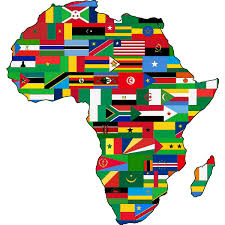
Crowds gathered in the Royal Square in Jersey to mark Africa Week in the island.
The charity Friends of Africa hosts events through the week to share the continent’s culture with the wider community.
As part of the campaign, Friends of Africa helps to set up food stalls, fashion displays and music performances for the public in St Helier.
One of the charity’s founders, Lainah Pentilla said: “We’re sharing my culture, we want to share Jersey’s culture as well and let the community be one.
”The campaign Africa Week has been running in Jersey for the last 11 years and Pentilla said engagement had grown over the years.
“It’s getting bigger and bigger and bigger every year,” she said, adding: “Our aim is for people to know that Jersey is welcoming, Jersey is diverse, Jersey is willing to understand where people are coming from.”
Pentilla added: “My son is born here, he’s a Jersey boy and I just want our young children to be proud of their heritage and be proud to be from Jersey as well
“Jersey is a small island but it’s the most important to make sure that we’re all one and make sure that people are celebrating each other.”

The International Court of Justice (ICJ) has ruled that citizens’ right to strike is protected under a core International Labour Organization (ILO) convention.
The UN World Court, in a landmark advisory opinion of 10 votes to four, settled a long-running dispute between workers and employers worldwide.
Based in The Hague, the ICJ is the United Nations’ principal judicial organ and is composed of 15 judges elected by the UN General Assembly and Security Council.
ICJ ruled “the right to strike of workers and their organizations is protected” under the Freedom of Association and Protection of the Right to Organise Convention, 1948 (No.
87).Convention 87 of 1948 guarantees workers and employers the right to establish and join organizations of their own choosing without prior authorization, ensuring they can operate freely without state interference.
The Court, however, stressed that its opinion did not define the exact scope of the right to strike.
Its conclusion, the judges held, “it does not entail any determination on the precise content, scope or conditions for the exercise of that right.”
The case was referred to the Court by the ILO’s Governing Body in November 2023, after years of disagreement among the agency’s core constituents – governments, employers and workers.
The disagreement bothered on whether Convention No. 87 protects the right to strike, even though the treaty does not explicitly mention strikes.
At the heart of the dispute was whether the right to organize under Convention No. 87 includes the right of workers and their organizations to take strike action.
Employers’ groups stress that the convention contains no provision whose ordinary meaning implies such a right, and that the treaty’s drafting history showed no intention to include strike action.
Workers’ representatives, by contrast, argue that the right to strike is inherent in freedom of association and has long been recognized by ILO supervisory bodies.
The ILO said its Governing Body is expected to consider the matter at its November session, including any follow-up.
The Court acknowledged that Convention No. 87 “does not contain an explicit reference to the right to strike”.
ICJ, however, said the absence of such a provision “does not necessarily mean that the issue is excluded” from the treaty.
The judges found that strike action could fall within the ordinary meaning of workers’ organizations’ “activities” under the Convention.
The judges added that strike action could also fall within provisions protecting the right of workers and employers to form organizations and defend their interests.
While the Court was unanimous that it had jurisdiction and should answer the ILO’s request, four judges dissented from the central conclusion.
The case was only the second time in ILO history that a question concerning interpretation of an international labour convention had been referred, and the first such request to the ICJ since its creation in 1945.
ICJ advisory opinions are not binding judgments but they carry significant legal and political weight, shaping debates and national and international law.




Eid-el-Kabir: CAN tasked Nigerian leaders to focus on restoring public confidence
ShareBy Laide Akinboade Abuja The Christian Association of Nigeria (CAN) on Wednesday, tasked Nigerians leaders to put aside indifference, blame-shifting...

Hon. Bawa Felicitates Muslim Ummah on Eid-El-Kabir Celebration
ShareBy Tambaya Julius, Abuja The Senior Special Assistant (SSA) on the Greater Karu Development Control Agency (KAPDA) to Governor Engr....

Eid-el-Kabir: Let’s Embrace Peace – Fintiri
ShareAdamawa State Governor, Rt. Hon. Ahmadu Umaru Fintiri, CON, has called on the people of Adamawa to rededicate themselves to...

Africa Gets 14 Olympic Slots in Boxing
ShareAfrica has been allocated only 14 direct qualification spots for the boxing event at the 2028 Los Angeles Olympics, a reduction from the 18...

US Launches New Strikes on Iran, Targets Missile Sites, Boats
ShareThe US said it launched new strikes on southern Iran on Monday, targeting Iranian missile sites and boats attempting to place mines. The strikes were in “self-defence” and designed “to protect our troops from threats posed...
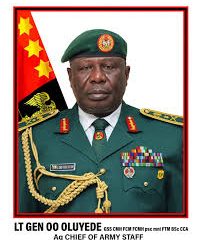

Army, TETFund Deepen Ties on Local Defence Technology
ShareThe Nigerian Army says it will deepen strategic collaboration with the Tertiary Education Trust Fund (TETFund) to boost local production of military hardware. The Chief of Army Staff...

Borno Shuts School, Relocates Students after Abduction of 42 Children
ShareFrom Muhammad Muhammad Al-amin, Maiduguri The Borno State Government has temporarily closed Government Day Secondary School, Mussa, in Askira/Uba Local Government Area after suspected insurgents abducted 42 children from...

NAICOM Licenses First Insurtech Firm under New Reforms
ShareBy Tony Obiechina, Abuja The National Insurance Commission (NAICOM) has formally granted an operational licence to CBI Partnering Insurtech Ltd,...


Eid-el-Kabir: Hope Lies Ahead Hard Times, says Tinubu
ShareBy David Torough, Abuja President Bola Tinubu yesterday declared that the sacrifices Nigerians have endured under his administration’s economic reforms...

Court Clears Jonathan for 2027, Reaffirms INEC Election Powers
ShareBy David Torough, Abuja Two landmark judgments delivered by the Federal High Court in Abuja on Tuesday have reshaped the...