
Foreign News
Five Patients Recover from Ebola in DR Congo


Health authorities in the Democratic Republic of Congo are celebrating after five patients, who had Ebola and now recovered, were allowed to leave the hospital.
The current outbreak is suspected to have killed almost 250 people.
But those infected can get better and officials stress that people should seek medical help if they believe they have contracted the virus.On Sunday, there was a ceremony for a group of four nurses who were discharged from a hospital in Bunia, the provincial capital of Ituri, the epicentre of the outbreak.
“We were really demoralised because we knew that at some point… we were going to die. That was it… I’m telling you, if you have never been isolated, you will not know that it’s not easy,” Nurse Etienne Ezo told the Reuters news agency as he reflected on his experience.
The first survivor, a laboratory worker, to have recovered left hospital last week.
Health workers are on the frontline in the battle against the spread of the virus and are often the most at risk.
“This encouraging milestone bears witness to the effectiveness of field interventions: early detection, medical care, contact tracing and community engagement,” DR Congo’s Institute of Public Health wrote on social media.
Its director, Dr. Mwamba Kazadi, described the recoveries as a victory worth celebrating, adding that early detection and strong care make a difference.
Tedros has called on communities to work with medical staff after some residents attacked health centres over strict burial rules. The bodies of those suspected of having died of Ebola are not allowed to be handled by grieving relatives, regulations which clash with local traditions.
In a joint statement with the Congolese government on Sunday, he said local communities are “at the heart of the solution” and that “success” in their response depends on their trust and engagement.
“Persistent challenges include early detection and isolation of cases, contact tracing, safe and dignified burials, robust infection prevention and control in health facilities, and strong community awareness.
“The Government and WHO call on all communities to continue adopting protective behaviours, including regular hand hygiene, early care seeking in health facilities, and sharing accurate information.”
There are now more than 1,000 suspected Ebola cases in the DR Congo, and at least 246 deaths. Neighbouring Uganda has reported nine confirmed cases and one death.
But in some affected areas, there is a sense of normality. In Bunia, schools and markets are open as people continue to go about their daily activities.
The current outbreak – the 17th in DR Cngo’s history – is caused by the Bundibugyo species of Ebola, which has no approved vaccines, though some are being worked on now.
While cases are concentrated in DR Congo’s Ituri, North and South Kivu provinces, and some in Uganda’s capital Kampala, people have also been tested outside of Africa.
Health officials in Brazil said on Saturday that they were investigating two suspected Ebola cases in São Paulo state.
Meanwhile, protests have erupted in the Kenyan town of Nanyuki over US plans to construct an Ebola quarantine facility for American citizens at an air base.
Residents marching through the streets say the facility may expose local people to infection and an outbreak of the virus. There have been no recorded cases of Ebola in the country.
Marcus Trescothick has insisted he wants to continue working with England’s Test team even though Mike Hussey has revealed an approach by incoming head coach Stephen Fleming to effectively replace him.
Trescothick has been a member of England’s backroom staff since 2021 and is currently leading the Test side on an interim basis ahead of Fleming’s arrival.
Former opening batsman Trescothick and returning captain Joe Root oversaw an innings and 103-run thrashing of Pakistan in the first Test at Headingley on Friday as the hosts went 1-0 up in a three-match series.
Former Australia international Hussey has said he is considering an offer to work as England’s Test batting coach, effectively Trescothick’s role, after being approached by Fleming, his former boss at Chennai Super Kings.
“I’d love to carry on, of course,” said Trescothick.
The 50-year-old, a member of England’s 2005 Ashes-winning team, added: “I’ve a huge amount of respect for Stephen and what he’s done in the game, he was a fantastic captain and leader, and has done a brilliant job doing what he’s done as a coach.
“It’s really not in my job (description) or position to judge that. We’ll wait until we get the tap on the shoulder.”
Iranian President Masoud Pezeshkian defended a recent memorandum of understanding as the best way for the country to move beyond what he described as a situation of “neither war nor peace.”
In a speech published by state-run IRNA early on Sunday, he said members of Iran’s Supreme National Security Council believed the memorandum represented the best possible agreement based on what he described as dignity, wisdom and the national interest.
“There is not a single provision in this agreement that amounts to capitulation,” Pezeshkian said. “The supreme leader sets the policies, and we will follow that path.
”The deal known as the Memorandum of Understanding that US President Donald Trump signed in June set an ambitious 60-day deadline for ending the war with Iran and reaching an accord on its nuclear program. That period ended last week, but the two sides remain far apart, with no signs of compromise on the crucial issue of reopening the Strait of Hormuz, vital to global shipping.
Pezeshkian also linked the agreement to Iran’s economic prospects, saying the country could not attract investment in this stalled phase.
“Capital and money are extremely sensitive to risk,” he said. “We have to remove this risk from the country.”
Nearly six months into the war with the United States and Israel, the Iranian economy is suffering under sanctions and a naval blockade.
Pezeshkian acknowledged that his country’s citizens face “many problems,” after the United States launched a new wave of sanctions seeking to further isolate its economy.
“I understand we have many problems in society right now. We are trying to prevent these as much as we can,” Pezeshkian said.
Pezeshkian said that, thanks to Trump, Iran was “in a full-scale economic, military and security war.”
“He says he is imposing the most crushing and terrifying sanctions on Iran,” Pezeshkian said.
Meanwhile, the hard-line new leader of Iran’s Supreme National Security Council warned Tehran’s neighbors against joining the new US effort to hurt Iran’s economy.
“If (Trump) wants to do something, we will retaliate in a seismic manner,” Mohsen Rezaei said in an interview with the state broadcaster that aired Saturday.
Rezaei was named this month as part of senior appointments widely seen as hardening Tehran’s political and military stance. His interview with IRIB is his most extensive public statement since then.
Rezaei said Iran would target oil-shipping routes out of the Persian Gulf — alternatives to the Strait of Hormuz — if neighbors join what he described as the economic war against Iran.
Trump in the past week has vowed to increase Iran’s pain by imposing an “unprecedented” level of economic warfare and isolation. Iran has lived under sanctions for years.
Foreign News
Iran FM, Pakistan Military Chief Discuss Regional Devts as US Eyes New Tehran Sanctions
Iran’s Foreign Minister Abbas Araghchi and Pakistan’s defense forces chief, Field Marshal Asim Munir, discussed regional developments and efforts to advance diplomatic solutions, Iranian state media reported on Sunday, as Washington plans to announce new sanctions targeting Tehran.
After nearly six months of war since the US and Israel launched airstrikes against Iran on February 28, the sides are not firing at each other but also showing no sign of pursuing peace talks.
Oil shipments are at a virtual standstill in the Strait of Hormuz, with Tehran threatening to strike any unauthorized oil tankers that try to transit the vital waterway, and Iran’s economy is already under immense pressure from sanctions.
Pakistan, which helped broker an interim US-Iran peace deal in June, has been engaged with the leaderships of the US and Iran in efforts to broker peace between the two countries since their conflict broke out in February this year.
“During the telephone conversation, both sides reviewed the latest regional developments and discussed various dimensions of the current situation,” Iran’s state-run IRNA new agency reported, following telephonic conversation between FM Araghchi and Field Marshal Munir.
“The two sides also exchanged views on diplomatic trends, ongoing efforts to advance political and diplomatic solutions, and ways to enhance bilateral consultations and cooperation.”
This is the second time Araghchi has spoken to Munir, who emerged as a key figure in US-Iran negotiations, about regional developments in less than a week.
The development comes after US Treasury Secretary Scott Bessent threatened “the toughest sanctions in history” on Iran. He has also urged cooperation with Washington by China, which buys more than 80 percent of Iran’s shipped oil, according to 2025 data from analytics firm Kpler. Beijing has urged diplomacy.
Iran’s Foreign Ministry spokesperson, Esmaeil Baghaei, said on Saturday the imminent US announcement of new economic sanctions was an “assertion of extraterritorial sovereignty over every independent member state of the United Nations.”
The US-Iran war has driven oil prices higher and created inflationary pressures, especially for countries like Pakistan who heavily depend on the Middle East for their fuel needs. Iran has frequently attacked its neighbors in its Gulf region since the war began, firing missiles and carrying out drone attacks the UAE, Saudi Arabia, Kuwait, Bahrain, Qatar and other countries.
Islamabad has repeatedly called for diplomacy to resolve the conflict and said last week it was making “all-out efforts” through direct and indirect channels to bring Washington and Tehran back to the negotiating table.


Peace on Paper, Peril in Practice: Why 2027’s Elections Remain at Risk
ShareBy Dakuku Peterside There is something reassuring about the ritual of political rivals gathering beneath the same roof and signing...


2027: Bawa Urges APC Leaders, Supporters on Unity
ShareBy Tambaya Julius, Abuja The Senior Special Assistant (SSA) to the Nasarawa State Governor on Greater Karu Development Control Agency...

NCS Lilypond Export Command Gets New Acting CAC
ShareThe Nigeria Customs Service (NCS), Lilypond Export Command, has appointed Deputy Comptroller Olusola Salako as its Acting Customs Area Controller...

Oyebanji Reappoints Retired Ekiti Accountant-General
ShareEkiti State Governor, Biodun Oyebanji, on Tuesday approved the appointment of Titilayo Olayinka as the new Accountant General of the...

Eid-el-Maulud: Tinubu, Govs, Others Preach Peace, Compassion, Unity
ShareBy Laide Akinboade, Abuja President Bola Tinubu, state governors, traditional rulers and religious leaders have called on Nigerians to draw...

Niger Mosque Massacre: Tinubu Orders Rescue of over 60 Abductees
ShareFrom Dan Amasingha, Minna President Bola Ahmed Tinubu has ordered the Armed Forces, the Nigeria Police Force, the Department of...


JAMB Breaks New Ground, Allows Home Upload of O’Level Results
ShareCandidates seeking admission into Nigerian tertiary institutions can now upload and verify their O’Level results from the comfort of their...

Tinubu Mourns Ogogo, Extols His Creative Legacy
SharePresident Bola Tinubu has condoled with the family, friends and colleagues of veteran Nollywood actor, filmmaker and screenwriter Taiwo Hassan,...


Nigeria Upgrading its Digital, Intelligence-led Border Management System — NIS
ShareNigeria is strengthening its border management architecture through digital technology, biometric identity systems, intelligence sharing and stronger collaboration with border...
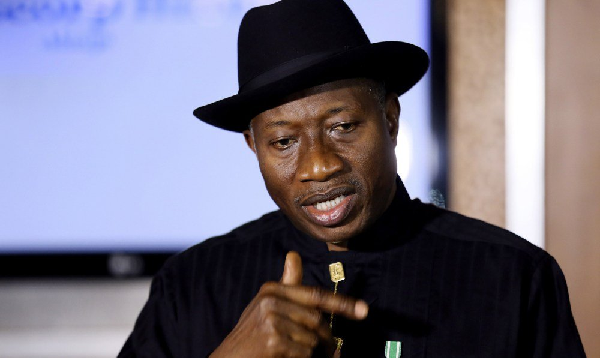
ShareGoodluck Jonathan Advises Leaders to Invest in Youths, Industry Former President of Nigeria, Dr. Goodluck Jonathan, has called on leaders...