
NEWS
Three Years After: A Critical Evaluation of Tinubu’s Economic Reforms

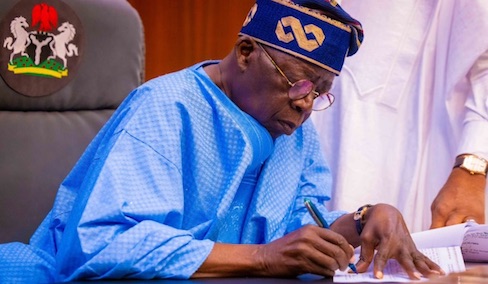
Prof Uche Uwaleke
As President Bola Ahmed Tinubu marked three years in office on May 29, 2026, Nigeria stands at a defining moment in its economic and political history. The journey of the last thirty-six months has been difficult, controversial in some respects, but undeniably transformational in many fundamental ways.
Rarely has any administration confronted so many entrenched structural distortions within such a short period while simultaneously attempting to reposition the economy for long-term sustainability.The significance of this moment therefore lies not merely in celebrating political longevity, but in critically assessing the depth of the reforms undertaken, the progress achieved, the sacrifices borne by Nigerians, and the urgent work that still lies ahead if the country must achieve inclusive growth, large-scale job creation, poverty reduction, and accelerated infrastructural development.
When President Tinubu assumed office in May 2023, Nigeria’s economy was weighed down by multiple crises. Fiscal instability had reached alarming levels, foreign exchange distortions had undermined investor confidence, inflationary pressures were rising, fuel subsidy payments had become unsustainable, and economic policy credibility had significantly deteriorated.
The country was effectively operating an economy that subsidized consumption instead of production, rewarded arbitrage instead of productivity, and encouraged rent-seeking instead of innovation. Difficult and politically costly reforms therefore became inevitable.
Perhaps the boldest and most consequential decision of the administration was the removal of fuel subsidy. For decades, fuel subsidy had drained public finances while failing to deliver sustainable economic benefits.
In 2022 alone, Nigeria reportedly spent over N4 trillion on fuel subsidies, yet fuel scarcity persisted across the country while smuggling and corruption flourished. The subsidy regime disproportionately benefited a narrow class of middlemen and wealthy consumers rather than ordinary Nigerians. By abolishing the subsidy, the Tinubu administration freed substantial fiscal resources that could now be redirected toward infrastructure, social investment, and economic development.
Closely connected to this was the unification of the foreign exchange market. Before 2023, Nigeria operated a deeply distorted exchange rate system characterized by multiple windows and significant disparities between official and parallel market rates.
This encouraged speculation, round-tripping, capital flight, and severe inefficiencies in foreign exchange allocation. The unification policy restored greater transparency and reduced opportunities for arbitrage.
Although the transition initially triggered painful exchange rate adjustments and inflationary pressures, the policy gradually improved confidence in the foreign exchange market. The gap between official and parallel market exchange rates, which once exceeded 60%, has narrowed significantly, while exchange rate stability has improved considerably compared with the volatility witnessed during the early phase of the reforms.
As of May 2026, the naira has stabilized around N1,400 to the United States dollar in the official market after previously depreciating beyond N1,800 during the peak adjustment period in 2024.
The administration also took decisive steps to restore fiscal discipline by ending the Central Bank’s excessive “Ways and Means” financing of government deficits. Under previous arrangements, large-scale monetary financing up to the tune of about N30 trillion had contributed significantly to inflationary pressures and macroeconomic instability.
By curtailing this practice, the administration signaled a stronger commitment to disciplined economic management and institutional coordination between fiscal and monetary authorities. This renewed policy coherence has become one of the defining characteristics of the current administration’s economic strategy.
Equally significant was the clearing of Nigeria’s foreign exchange backlog, estimated at over USD7 billion. The inability of businesses and foreign investors to repatriate funds had severely damaged Nigeria’s international reputation before 2023. Airlines, manufacturers, and investors had effectively trapped funds within the country, discouraging future investments. The settlement of these obligations restored confidence and improved Nigeria’s standing within global financial markets.
Today, several macroeconomic indicators reflect gradual stabilization. Inflation, which had surged to alarming levels during the peak adjustment period, has moderated considerably to 15.68 percent as of April 2026. Foreign reserves have strengthened substantially and are now sufficient to finance more than nine months of imports.
Net external reserves, which stood below USD4 billion in 2023, have risen to over USD34 billion, while gross external reserves have climbed close to USD50 billion. Nigeria’s sovereign credit outlook has also improved under major international rating agencies, with S&P recently upgrading Nigeria’s rating from B- to B, while Fitch and Moody’s improved the country’s outlook.
By the same token, capital importation has increased significantly, with inflows rising from approximately USD1.1 billion in the first quarter of 2023 to over USD3.5 billion by the fourth quarter of 2025.
Foreign portfolio investors have returned to the Nigerian market, attracted by greater transparency and improving macroeconomic stability. The Nigerian Stock Exchange has equally recorded remarkable growth, with equities market capitalization surging from about N44 trillion at the end of 2023 to approximately N160 trillion recently, creating substantial wealth for investors and pension contributors. These developments collectively suggest that the reforms, though painful, are beginning to yield measurable macroeconomic benefits.
Another important but often underappreciated achievement of the administration has been the implementation of far-reaching tax reforms culminating in the Nigeria Tax Acts 2025. These reforms represent one of the most ambitious overhauls of Nigeria’s tax system in a generation.
The objective has been to modernize tax administration, streamline multiple taxes into fewer and more efficient levies, eliminate nuisance taxes that harass small businesses, improve compliance, and create a more investment-friendly business environment.
Importantly, the reforms introduced new exemption thresholds protecting individuals earning below minimum wage from personal income tax while small businesses with annual turnover below N100 million now pay zero corporate income tax.
At a time when businesses are struggling with inflation and high operating costs, these reforms have the potential to significantly ease the burden on small enterprises, encourage formalization, stimulate entrepreneurship, and improve the ease of doing business.
The administration also oversaw the successful recapitalization of the Nigerian banking sector, another major reform with long-term implications for economic growth and financial stability. Banks were required to significantly increase their capital base, with international banks mandated to raise minimum capital thresholds to N500 billion.
Thirty three banks (out of 36) successfully compiled before the March 31 2026 deadline, increasing aggregate banking sector capital by over 60 percent. This exercise has strengthened the resilience of the financial system, improved investor confidence, and positioned Nigerian banks to finance the large-scale infrastructure and industrial projects required for long-term economic transformation.
Closely related to this improvement in Nigeria’s international financial standing was the country’s successful exit from the Financial Action Task Force (FATF) Grey List under the current administration.
Exiting the Grey List significantly improves Nigeria’s reputation within the global financial system because it reduces international compliance concerns associated with transactions involving Nigerian institutions.
This development makes international financial transactions easier, improves investor confidence, and strengthens Nigeria’s attractiveness as a destination for foreign investment.
Another notable development under the administration has been Nigeria’s return to trade surplus after years of persistent deficits driven largely by fuel importation. For four consecutive quarters between 2024 and 2025, Nigeria recorded merchandise trade surpluses supported by increased crude oil production and the sharp reduction in petrol imports following the expansion of domestic refining capacity. This represents a major structural improvement for an economy that had hemorrhaged foreign exchange for decades through excessive fuel imports.
Furthermore, the implementation of local government financial autonomy can be considered as another landmark achievement of this administration. Following the Supreme Court judgment affirming direct allocations to local governments, all 774 local government areas have now been reported to have completed the opening of dedicated accounts with the Central Bank of Nigeria.
This development has the potential to fundamentally reshape grassroots governance and development if properly implemented. For decades, local government allocations were often subjected to state-level control and diversion, weakening service delivery at the grassroots.
Direct funding now creates an opportunity for greater accountability and more effective delivery of primary healthcare, basic education, rural infrastructure, and community development projects. However, transparency and oversight will remain essential to ensure that local governments themselves do not become new centers of financial mismanagement.
The increase in Federation Account Allocation Committee (FAAC) disbursements to states and local governments since 2023 has also significantly improved subnational fiscal capacity. Monthly FAAC allocations have reportedly risen by an average of about 45 percent largely due to subsidy removal, improved revenue collection, and reforms within the Nigerian National Petroleum Company Limited. Consequently, many states have been able to clear salary arrears, settle longstanding contractor debts, and reduce domestic debt burdens.
This increased fiscal space gives subnational government’s greater responsibility to invest aggressively in agriculture, infrastructure, healthcare, education, industrialization, and youth employment programmes.
In the petroleum sector, the administration has pursued reforms aimed at improving transparency and efficiency within the Nigerian National Petroleum Company Limited. The overhaul of NNPCL management and the implementation of Executive Order 09, which mandates direct remittance of crude oil revenues into the Federation Account, represent significant governance reforms.
NNPCL contributions to FAAC reportedly increased by over 300 percent following these changes, ending an era where the national oil company was often criticized as a fiscal burden rather than a revenue-generating institution.
In the energy sector more broadly, the administration has pursued reforms aimed at achieving greater domestic refining capacity and reducing dependence on imported petroleum products. The operational expansion of the Dangote Refinery alongside modular refineries represents a major shift in Nigeria’s energy landscape.
For the first time in decades, Nigeria is approaching domestic sufficiency in refined petroleum production. The chronic fuel scarcity that once defined daily life for millions of Nigerians has reduced significantly, while the pressure on foreign exchange reserves from fuel imports has eased considerably.
The administration has equally introduced major social intervention programmes aimed at expanding access to opportunity and reducing economic exclusion. The Students’ Loan Scheme under the Nigerian Education Loan Fund represents one of the most important educational financing reforms in recent decades.
As of May 2026, more than 450,000 indigent students across federal and state tertiary institutions have reportedly benefited from interest-free educational loans tied to future employment-based repayment structures. This initiative has helped reduce the financial barriers preventing many young Nigerians from accessing higher education.
Similarly, the Consumer Credit Scheme has emerged as a significant intervention designed to deepen financial inclusion and stimulate domestic demand. More than N200 billion in affordable credit has reportedly been disbursed to over 1.2 million low and middle-income Nigerians, enabling beneficiaries to acquire vehicles, appliances, housing improvements, and other productive assets.
Beyond improving living standards, the programme also supports local manufacturing, stimulates economic activity, and gradually reduces excessive dependence on cash transactions within the informal economy.
Another important milestone under the current administration was Nigeria’s settlement of all outstanding obligations to the International Monetary Fund in 2024. The full repayment of approximately USD2.5 billion in IMF obligations inherited from previous administrations improved Nigeria’s sovereign standing and reduced external policy conditionalities. It also strengthened the country’s image as a more fiscally responsible economy within the international financial system.
The administration has also pursued ambitious infrastructure projects, including the Lagos-Calabar Coastal Highway and the Sokoto-Badagry Superhighway. These projects, if successfully completed, could significantly improve national connectivity, logistics efficiency, trade integration, and economic productivity.
Infrastructure development remains one of the strongest catalysts for long-term growth, industrialization, and employment generation. Nigeria’s infrastructure deficit remains enormous, spanning roads, rail, power, healthcare, irrigation, ports, and digital infrastructure. The government’s willingness to borrow concessionally for productive infrastructure therefore reflects an understanding that development cannot occur without large-scale capital investment.
Nevertheless, this also raises serious concerns regarding debt sustainability. Nigeria’s public debt has risen significantly to over N159 trillion as at December 2025 while debt servicing costs continue to place enormous pressure on government finances.
Recent fiscal reports indicate that debt servicing exceeded capital expenditure over the last two years, highlighting the strain on the federal budget. The Federal Government reportedly spent about N27.2 trillion servicing debt between 2024 and 2025, while debt servicing exceeded capital expenditure by approximately N3.9 trillion within the same period.
Furthermore, while the government recorded fresh borrowings of about N11.89 trillion within the first nine months of 2025, only about N3.1 trillion was reportedly utilized for capital expenditure during that period.
The danger is therefore not merely the volume of borrowing itself, but whether borrowed funds are being transparently and efficiently deployed into productive sectors capable of generating growth, exports, jobs, and future revenues. Borrowing for infrastructure can be justified if it expands economic capacity; however, borrowing without accountability risks creating long-term fiscal vulnerability.
A particularly urgent challenge that must be addressed during the next phase of reforms is Nigeria’s persistent budget implementation weakness and public spending inefficiency. One of the major structural problems undermining economic development is the continued implementation of overlapping and multiple-year budgets, which often delays capital project execution and weakens fiscal discipline.
In 2025, for example, less than 30 percent of budgeted capital projects were reportedly implemented despite significant borrowing. This creates a situation where the government accumulates debt without corresponding infrastructure delivery or economic productivity gains.
The next phase of reforms must therefore focus on strengthening budget credibility, improving project monitoring mechanisms, eliminating duplication in capital allocations, enforcing stricter timelines for procurement and implementation, and ensuring that borrowed funds are tied directly to measurable developmental outcomes.
Nigeria cannot continue operating a fiscal system where recurrent expenditure consistently overwhelms capital investment while critical infrastructure deficits persist across the country.
While the administration deserves considerable credit for stabilizing major macroeconomic indicators, it is equally important to acknowledge that many ordinary Nigerians are still struggling with severe economic hardship.
Inflationary pressures, though moderating, have significantly eroded purchasing power over the past three years. Rising transportation costs, especially on the back of the recent Middle East crisis, food prices, electricity tariffs, and general living expenses continue to place enormous pressure on households. The gains of macroeconomic stabilization have not yet translated sufficiently into broad-based improvements in living standards.
This reality becomes especially clear when examining the challenge of unemployment and poverty, particularly among young Nigerians. Youth unemployment remains one of the greatest threats to Nigeria’s social stability and future development.
With over 70 percent of the population below the age of thirty-five, the country’s long-term prosperity depends largely on whether it can productively engage the energy, creativity, and entrepreneurial capacity of its youths.
To its credit, the Tinubu administration has introduced several initiatives aimed at expanding youth opportunities. The 3 Million Technical Talent programme represents one of the most strategic interventions in Nigeria’s digital economy.
By equipping young Nigerians with skills in software development, data analysis, cybersecurity, artificial intelligence, and digital marketing, the programme recognizes that the future global economy will increasingly be driven by technology and knowledge-based industries. Millions of Nigerian youths possess the talent to compete globally if provided with the right training, infrastructure, and digital access.
Similarly, efforts to reposition the Nigerian Youth Investment Fund and expand entrepreneurship financing are commendable. Access to affordable credit remains one of the biggest obstacles facing young entrepreneurs across agriculture, manufacturing, technology, and the creative industries.
Sustainable economic transformation cannot occur without supporting small businesses, startups, and youth-led enterprises capable of generating employment opportunities.
However, far more still needs to be done. Skills acquisition, vocational education, digital literacy, and entrepreneurship development must become central pillars of national development planning.
Every state and local government should prioritize the establishment of functional vocational training centers, technology hubs, and innovation laboratories. The era when graduates depended almost entirely on government employment is no longer realistic. Nigeria must intentionally prepare young people not merely to seek jobs, but to create them.
The agricultural sector presents another major opportunity for employment generation and poverty reduction. Nigeria possesses enormous agricultural potential, yet food insecurity remains deeply troubling.
The recent warning by the United Nations regarding rising hunger levels in Nigeria should be treated as a serious national concern. The projection that millions of Nigerians could face acute food insecurity this year reflects the combined effects of inflation, insecurity, climate-related disruptions, and declining purchasing power.
Although the government has implemented measures such as food imports, tariff reductions, and support for agricultural production, the scale of the challenge requires far more aggressive intervention. Insecurity in farming communities continues to limit cultivation activities in several food-producing regions.
Farmers face rising costs of fertilizer, transportation, labour, and inputs, while poor rural infrastructure contributes significantly to post-harvest losses. Addressing food insecurity therefore requires both immediate humanitarian interventions and long-term structural reforms.
Governments at both federal and state levels must prioritize investment in irrigation systems, mechanized agriculture, rural roads, storage infrastructure, agricultural research, and affordable financing for farmers.
Agriculture must evolve beyond subsistence farming toward integrated agribusiness and value-chain development. Young Nigerians are increasingly interested in modern agriculture, food processing, logistics, and export-oriented farming, but they require access to technology, credit, markets, and infrastructure.
Electricity also remains absolutely central to sustainable economic growth and job creation. Small businesses, technology startups, manufacturers, and agro-processors cannot thrive without reliable power supply.
In this regard, the Electricity Act 2023 signed into law under the current administration represents a potentially transformative reform because it decentralizes power generation and distribution, allowing states greater participation in electricity development. If effectively implemented, this reform could significantly improve energy access, attract private investment, stimulate industrialization, and reduce production costs across the economy.
Nigeria’s Q1 2026 GDP report reflects both the resilience and fragility of the current economic recovery. The economy recorded real GDP growth of 3.89 percent in Q1 2026 despite significant domestic and external pressures, although this represented a slight moderation from the 4.07 percent recorded in Q4 2025.
The non-oil sector remains the major growth driver, accounting for over 96 percent of GDP, with strong performances from telecommunications, financial services, construction, transportation, and segments of manufacturing. Telecommunications grew by almost 11 percent during the quarter while financial and insurance services expanded by over 8 percent.
However, sectors tied more directly to household consumption remain under pressure due to inflation and weak purchasing power. Oil production also remains below potential at approximately 1.55 million barrels per day despite improvements in security and anti-oil theft measures. The report therefore highlights both the resilience of the Nigerian economy and the reality that growth remains uneven and fragile.
However, GDP growth alone is insufficient if it does not translate into meaningful improvements in employment, poverty reduction, and living standards. Nigeria requires growth that is inclusive, broad-based, and capable of improving the welfare of ordinary citizens.
Macroeconomic stability is important, but citizens ultimately measure economic success through food affordability, job opportunities, stable electricity, security, and improved quality of life.
The administration must therefore ensure that the next phase of reforms focuses more aggressively on inclusive growth. Stabilizing the economy was necessary, but stabilization alone is not enough. The benefits of reform must become more visible within households and communities across the country.
Policies must increasingly target industrialization, manufacturing expansion, agricultural productivity, housing development, transportation infrastructure, and social protection.
At the same time, policy consistency remains critically important. International institutions and rating agencies have repeatedly emphasized that Nigeria’s recent improvements in macroeconomic credibility depend largely on maintaining the current reform trajectory.
A reversal to fuel subsidies, exchange rate distortions, or fiscal indiscipline could undermine investor confidence and reverse much of the progress already achieved. Economic reform often requires continuity because structural adjustments typically produce their most meaningful benefits over the medium to long term.
Nonetheless, continuity should not imply complacency. The administration must remain responsive to the social costs of reform. Inflation control, food affordability, security, healthcare access, education quality, and social welfare require urgent and sustained attention.
Economic reforms that fail to improve human welfare risk losing public legitimacy regardless of their technical soundness.
Ultimately, President Bola Ahmed Tinubu’s first three years in office represent one of the most ambitious periods of economic restructuring in Nigeria’s contemporary history. The administration confronted longstanding distortions that previous governments repeatedly avoided due to political sensitivity.
Significant progress has been made in restoring fiscal discipline, stabilizing the foreign exchange market, improving investor confidence, strengthening reserves, reforming the tax system, recapitalizing the banking sector, expanding digital opportunities, improving local government financing, restoring trade balance stability, and repositioning the economy for long-term growth.
Yet, the work remains unfinished. Millions of Nigerians still face economic hardship, unemployment, food insecurity, and declining purchasing power. The challenge before the administration now is to ensure that macroeconomic stabilization evolves into inclusive prosperity that reaches ordinary citizens.
Nigeria’s enormous population, entrepreneurial energy, natural resources, and youthful demographic profile provide immense potential for transformation. But unlocking that potential will require sustained reforms, stronger institutions, transparent governance, accelerated infrastructure development, security improvements, agricultural modernization, human capital investment, and deliberate policies aimed at reducing poverty and expanding opportunity.
History may ultimately judge this administration not merely by the boldness of its reforms, but by whether those reforms succeed in building a more prosperous, inclusive, and economically resilient Nigeria for future generations.
Prof Uwaleke, a financial Economist, is Nigeria’s renowned Professor of Capital Market with the Nasarawa State University Keffi and President, Capital Market Academics of Nigeria
The parliament in Ghana has approved a new bill criminalising homosexuality and the promotion of LGBTQ+ activities.
It proposes that identifying as lesbian, gay, bisexual, transgender or queer be punished by up to three years’ imprisonment.
The bill also introduces a “Duty to report” prohibited acts to police.Religious leaders have pressured President John Dramani Mahama, who still needs to ratify the legislation, to strengthen anti-gay laws since he came to power last year.
The ban has been sharply criticised by international organisations, including Human Rights Watch, which said it placed LGBTQ+ peoples’ lives at risk while also “encouraging citizens to surveil and denounce one another”.
Same-sex relationships have been banned in Ghana under laws dating from the British colonial era.
In an address to parliament, the bill’s sponsor Reverend John Ntim Fordjour said it would protect Ghanaian family and cultural values.
He said the new bans would make existing laws “more robust, more encompassing and more stringent in dealing with the practices of LGBTQI”.
Anyone who identifies as an “ally”, a general term for a supporter of LGBTQ+ people, could also face a prison sentence.
Exemptions were included for legal, media and healthcare professionals who report on LGBTQ+ issues or provide medical treatment or other services for gay people.
Human Rights Watch recommended the bill be abandoned in a formal submission to the constitutional and legal affairs committee scrutinising the legislation in the capital, Accra.
Ghana passed a similar bill in 2024 but it did not become law after former President Akufo-Addo failed to sign it amid legal challenges.
The current President Mahama has indicated he would support the bill’s passage, saying shortly after he took office that “I believe in the principles and values that only two genders exist – man and woman – and that marriage is between a man and a woman.”
Several African countries have cracked down on LGBTQ+ rights in recent years.
Senegal’s parliament approved similar legislation in March prescribing a maximum prison term of 10 years for sexual acts by same-sex couples and criminalising the ”promotion” of homosexuality.
Uganda introduced a death penalty for certain same-sex acts in 2023.
By Tony Obiechina, Abuja
Personal loans granted by Nigerian banks rose to N1.96tn in January 2026, accounting for more than half of total consumer credit in the country, according to the latest Economic Report released by the Central Bank of Nigeria (CBN).
Findings from the report showed that total consumer credit outstanding increased by 0.
79 per cent to N3.81tn in January from N3.78tn recorded in December 2025, with the growth driven entirely by a rise in personal loans.The CBN stated that personal loans rose by 5.
95 per cent from N1.85tn in December to N1.96tn in January, representing 51.44 per cent of total consumer credit during the review period.In contrast, retail loans declined by 4.15 per cent to N1.85tn from N1.93tn in the preceding month, accounting for the remaining 48.56 per cent of total consumer credit.
The report also showed marginal growth in total credit to the economy, which increased by 0.17 per cent to N57.41tn in January from N57.32tn in December 2025.
According to the apex bank, the increase was largely driven by improved lending to the services and agriculture sectors, while credit to the industrial sector recorded a slight decline.
“The growth was driven primarily by the 0.12 and 2.77 per cent increase in credit to the services and agriculture sectors, respectively. Credit to the industry sector, however, declined by 0.24 per cent,” the report stated.
Sectoral analysis indicated that the services sector remained the largest recipient of bank credit, accounting for 56.98 per cent of total lending. Industry accounted for 36.55 per cent, while agriculture received 6.47 per cent.
Credit to agriculture rose to N3.81tn in January from N3.71tn in December, while lending to the services sector increased to N32.86tn from N32.71tn. Credit to the industrial sector stood at N21.21tn.
Within the services sector, finance, insurance and capital market activities attracted N9.16tn in credit, while trade and general commerce received N5.54tn.
The manufacturing sector accounted for the largest share of industrial credit at N6.37tn, while power and energy received N1.59tn and construction attracted N2.44tn.
The CBN report further revealed that broad money supply contracted by 1.50 per cent in January amid tighter liquidity conditions in the banking sector.
According to the apex bank, the decline reflected a reduction in net foreign assets, although the banking system remained stable with prudential indicators staying within regulatory thresholds.
Speaking after the 305th meeting of the Monetary Policy Committee, the CBN Governor, Olayemi Cardoso, disclosed that lending to small and medium enterprises had started improving.
He said new credit to SMEs rose to about N199bn in April 2026 from N153bn in March, particularly within the retail segment of the market.
By Tony Obiechina, Abuja
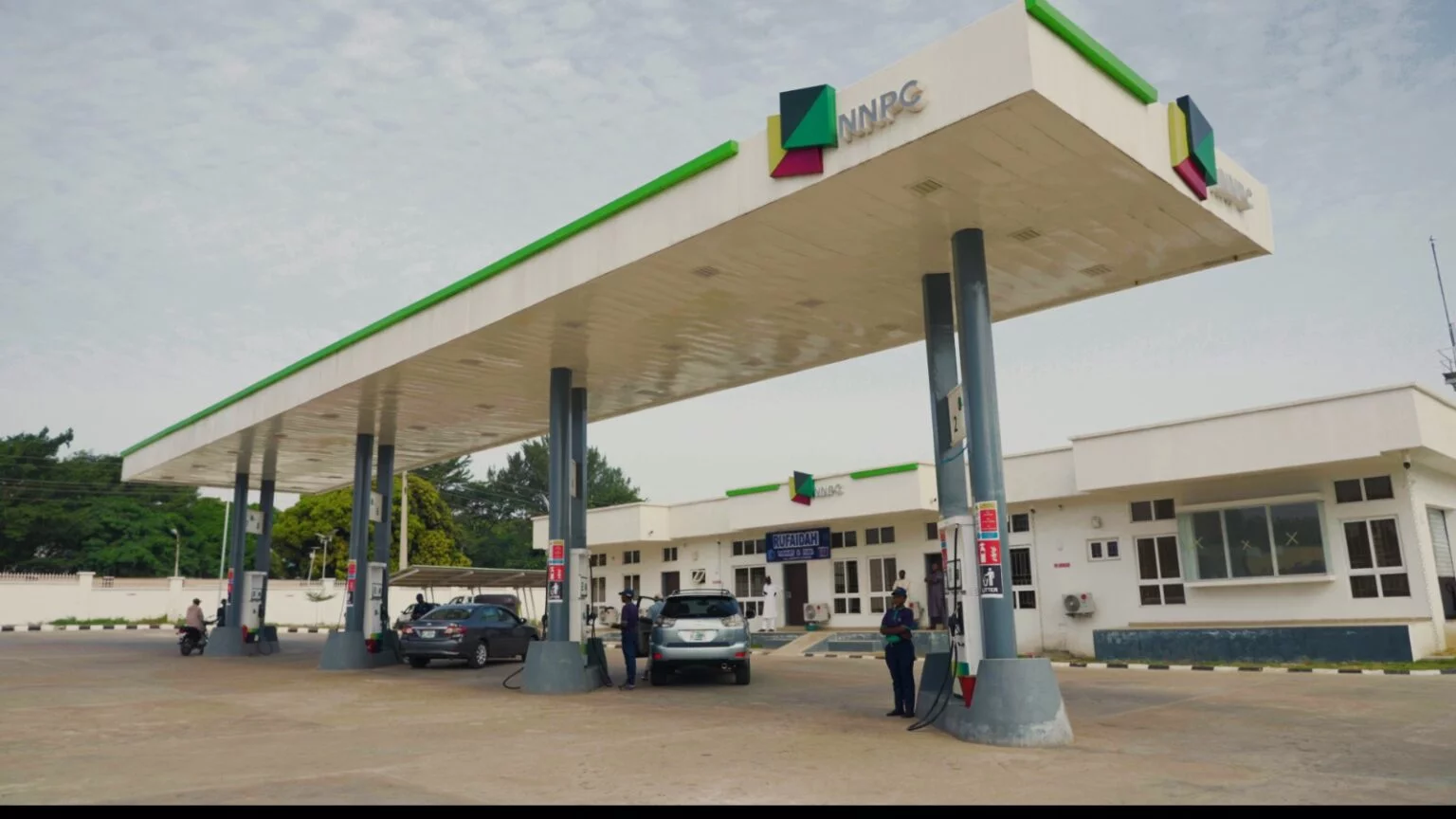
The Nigerian National Petroleum Company Limited has recorded a significant month-on-month surge in performance, with revenue climbing sharply to N4.97tn in April 2026, compared to N2.
77tn posted in March.This represents an increase of about 79 per cent in monthly revenue, according to the company’s April 2026 operational and financial report released on Saturday.
According to the report, profit after tax also rose substantially to N481bn in April, up from N276bn in March, a jump of approximately 74 per cent.Between January and April 2026, NNPC said it remitted a total of N3.
71tn in statutory payments to the Federal Government. This is up from N2.89tn recorded for the first three months of the year.The report stated that crude oil and condensate production increased to 1.68 million barrels per day in April from 1.56 mbpd in March, indicating a marginal recovery in upstream output.
Natural gas production remained largely stable at 7.7 billion standard cubic feet per day in April. Gas sales averaged 4.65 bscf/d, while upstream pipeline availability stood at 79 per cent.
The oil firm stated that it achieved a major infrastructure milestone in April with the successful crossing of the OB3 River Niger pipeline segment, advancing Nigeria’s gas infrastructure goals. Progress also continued on the Ajaokuta-Kaduna-Kano gas pipeline project.
However, NNPC noted challenges, including delays in the start-up of the Trans Ramos Pipeline due to leak detection and facility integrity issues.
Similarly, the NNPC Foundation reportedly sustained its strong corporate social responsibility drive in April. It commissioned three fully rehabilitated wards with 102 beds at the National Orthopaedic Hospital, Lagos, on April 29.
The Foundation also said it delivered humanitarian aid to flood victims in Mokwa, Niger State, and trained 72,657 NYSC members in basic financial literacy during the month under review.



Three Years After: A Critical Evaluation of Tinubu’s Economic Reforms
ShareProf Uche Uwaleke As President Bola Ahmed Tinubu marked three years in office on May 29, 2026, Nigeria stands at a defining moment in...


Troops Neutralize Five Terrorists, Rescue 31 Kidnapped Victims in Katsina, Zamfara
ShareFrom Ifeanyichukwu Nwannah, Gusau Troops of Sector 2 Operation Fansan Yamma have rescued 31 kidnapped victims, neutralized five terrorists and dismantled several terrorists camps in a series of coordinated...
Arsenal Set Aside UCL Loss to PSG with Bus Parade Celebrating EPL Title
ShareTens of thousands of Arsenal fans put aside their pain at missing out on European glory as the club on Sunday celebrated...
Ghana’s Parliament Passes Anti-LGBTQ+ Bill
ShareThe parliament in Ghana has approved a new bill criminalising homosexuality and the promotion of LGBTQ+ activities. It proposes that identifying as lesbian, gay, bisexual, transgender or...
Kwara Community Clash Claims Two, Razes 10 Houses
ShareTwo people were killed, and about 10 houses were burnt in Ilesha Baruba, Baruten Local Government Area of Kwara State, on Saturday, after a violent clash involving an...

Declares No Faction in Nasarawa
ShareFrom Abel Zwanke, Lafia The Nasarawa State chapter of the Peoples Democratic Party (PDP) has declared that there is no faction within the party, insisting that...


Personal Loans Rise to N1.96trn in Jan 2026 – CBN
ShareBy Tony Obiechina, Abuja Personal loans granted by Nigerian banks rose to N1.96tn in January 2026, accounting for more than...


NNPC Records N481bn April Profit amid Strong Revenue Growth
ShareBy Tony Obiechina, Abuja The Nigerian National Petroleum Company Limited has recorded a significant month-on-month surge in performance, with revenue...


Oyo Abduction: Tinubu Orders Full-Scale Action After 16 Days of Agony
ShareBy David Torough, Abuja President Bola Tinubu has intensified efforts to secure the release of 46 abducted pupils and teachers...

Chimaroke Nnamani: Progenitor of Ebeano, Misunderstood Leader, Vindicated at 66.
ShareBy Paul Mumeh Senator Chimaroke Nnamani, former Governor of Enugu State, stands tall as one of the most intriguing, visionary,...