
NEWS
Poco Lee’s Management Praises Zlatan’s Support, Urges Restraint


The management of Nigerian dancer and entertainer, Iweh Odinaka, popularly known as Poco Lee, has called for restraint in the spread of negative narratives surrounding the entertainer’s ongoing legal case in the United Kingdom.
The management, in a statement issued on Wednesday by Poco Lee’s manager, Faleye “Dee-Y” Adedoyin, also acknowledged the support of Nigerian singer, Zlatan Ibile, and others during the entertainer’s legal ordeal.
Adedoyin said Zlatan and others had been “extremely supportive and helpful” throughout the matter, adding that their involvement had been vital to moving things forward.
The statement read, “We would like to publicly acknowledge that Zlatan, along with others, has been extremely supportive and helpful through this matter.
“Their involvement, support, and effort have been vital to moving things forward.
“We deeply value their ongoing support and dedication and we kindly request that everyone refrain from spreading negative narratives.”
The manager signed off the statement as “Poco’s Management.”
The statement followed reports and comments about Poco Lee’s UK trip and the circumstances surrounding his ongoing court case.
Social commentator Martins Otse, popularly known as VeryDarkMan, had made the claims, questioning reports that Poco Lee had travelled to the UK for a Davido show.
In an Instagram post, VeryDarkMan claimed that Poco Lee travelled to the UK for a Zlatan show rather than a Davido concert.
He also questioned why people were defending Poco Lee while the case remained before the court.
VeryDarkMan said, “In between Poco Lee didn’t travel to the UK for a Davido show, it was for a Zlatan show.”
He also said Poco Lee should be allowed to face the court process, adding that “court case na stress” and praying that the matter would end soon.
The latest development comes amid ongoing proceedings against Poco Lee in the UK.
Poco Lee was granted bail on September 11 ahead of his scheduled appearance at Snaresbrook Crown Court on September 15. The court had confirmed the bail and hearing date to PUNCH Online.
However, the September 15 plea and trial preparation hearing was adjourned to February 8, 2027, after the charge sheet was reportedly unavailable and Poco Lee did not appear in court. The trial was subsequently scheduled for March 8, 2027.
Poco Lee is facing five sexual offence charges in the UK: attempted rape, two counts of rape and two counts of assault by penetration. He has denied the allegations and has not been convicted of any offence.
His management had previously urged the public and media to exercise restraint, particularly over unverified narratives surrounding the case, saying allegations should not be treated as evidence of guilt.
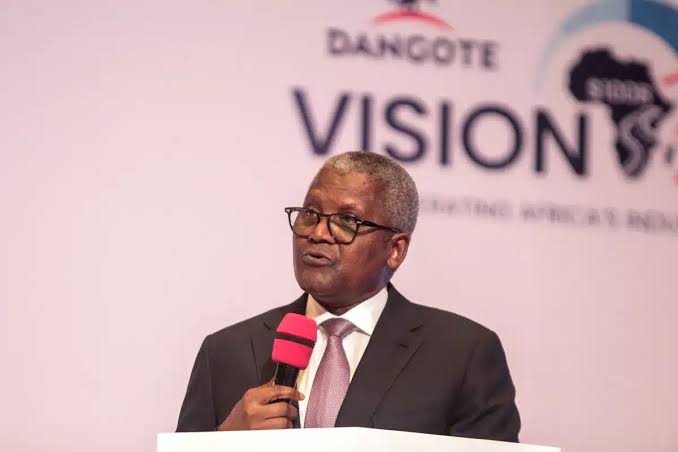
The commencement of the Initial Public Offering (IPO) of Dangote Petroleum Refinery and Petrochemicals FZE has generated considerable public interest in Nigeria’s capital market. With an offer price of ₦525 per share and a minimum subscription of 10 shares, an eligible investor can participate with ₦5,250.
This development raises an important legal question: can an individual who invests ₦5,250 become a member of Dangote Refinery? This article examines the question within the framework of Nigerian company law, particularly the Companies and Allied Matters Act 2020 (CAMA), while using the Dangote Refinery public offer as a contemporary case study.
It distinguishes between an applicant, shareholder and member of a company and examines the legal consequences of the allotment and registration of shares.The article further considers the rights and limitations attached to a small shareholding and clarifies the distinction between being a member of Dangote Petroleum Refinery and being a member of the wider Dangote Group.
For many Nigerians, the figure of ₦5,250 may ordinarily appear too small to purchase an interest in a multibillion-naira enterprise. The recent public offering of Dangote Petroleum Refinery and Petrochemicals FZE, however, has challenged that assumption by opening an opportunity for eligible members of the public to participate in the ownership of the company. The public offer commenced on 14 September 2026 and provides for 4.1 billion ordinary shares at ₦525 per share. The minimum subscription is 10 shares, requiring ₦5,250, while subsequent subscriptions are made in multiples of 10 shares.
The development has naturally generated the question: if a person invests ₦5,250, does that person become a member of Dangote Refinery? The answer requires an understanding of the legal meaning of a share, shareholder and member under Nigerian company law. It is also necessary to distinguish between acquiring an ownership interest in a particular corporate entity and becoming a member of an entire business conglomerate.
Understanding the Dangote Refinery Public Offer
An Initial Public Offering is a process through which a company offers shares to members of the public, usually for the purpose of raising capital. The Dangote Refinery public offer provides eligible investors with the opportunity to apply for shares in Dangote Petroleum Refinery and Petrochemicals FZE.
According to the official IPO platform, the offer consists of 4.1 billion ordinary shares at ₦525 per share, with a minimum subscription of 10 shares or ₦5,250. The offer opened on 14 September 2026 and is scheduled to close on 13 October 2026. The legal significance is that the ₦5,250 is not simply a payment for a product or service.
It represents the minimum amount required to apply for an interest represented by 10 ordinary shares in the company.
However, it is important to emphasise that application is not necessarily the same thing as ownership. The official IPO information states that an applicant becomes a shareholder if the shares are allotted to that applicant. Consequently, a person who merely submits an application has not necessarily completed the legal process of becoming a shareholder.
Who Is a Member of a Company?
Under Nigerian company law, membership is closely connected with the ownership of shares in a company. CAMA 2020 provides the statutory framework governing companies and their members. In the context of a company having a share capital, a person who subscribes to the memorandum and persons whose names are entered in the company’s register of members constitute the membership structure of the company, subject to the provisions of the Act.
The distinction is important because the expressions “investor”, “shareholder” and “member” are sometimes used interchangeably in ordinary conversation although they may describe different stages or concepts.
An investor is a broad term referring to a person who commits money or other resources with an expectation of an economic return. A shareholder is a person who holds shares in a company. Membership, on the other hand, has a specific corporate-law significance. Therefore, merely possessing ₦5,250 and intending to purchase Dangote Refinery shares does not, by itself, make a person a member of the company.
The relevant corporate procedures concerning application, allotment and registration must be completed.
Can ₦5,250 Make an Individual a Shareholder?
The answer is potentially yes, subject to successful allotment.
At ₦525 per share, ₦5,250 corresponds to 10 shares. The official public-offer platform expressly identifies 10 shares/₦5,250 as the minimum subscription.
Thus, if an eligible person applies for the minimum number of shares and the shares are duly allotted and registered in that person’s name, the person can become a shareholder of Dangote Petroleum Refinery and Petrochemicals FZE. This is significant because company law does not generally make share ownership dependent upon an investor being wealthy.
A person can hold a relatively small number of shares and nevertheless possess the legal status of a shareholder.
The size of the investment may affect the extent of economic interest and voting influence, but it does not necessarily prevent the holder from being recognised as a shareholder. Therefore, ₦5,250 can be sufficient to acquire a shareholding in Dangote Refinery if the corresponding shares are successfully allotted to the investor.
Does Becoming a Shareholder Make the Person a Member?
In practical corporate-law terms, the acquisition and registration of shares can confer membership status. The important point is that membership should not be confused with merely making an application. The legal relationship arises through the company’s statutory and corporate procedures concerning the acquisition and registration of shares.
Accordingly, the following distinction may be made:
Applicant: A person who applies for shares in the public offer.
Allottee: A person to whom shares are allotted following the public-offer process.
Shareholder/member: A person whose shareholding has been duly recognised and entered in the relevant corporate records.
The distinction is particularly important in the context of an IPO because an applicant may not necessarily receive every share applied for where demand exceeds the number of shares available.
Thus, saying that “₦5,250 makes everyone a member of Dangote Refinery” would be legally imprecise. A more accurate statement is that ₦5,250 gives an eligible person the opportunity to apply for the minimum 10 shares, and successful allotment and registration can result in shareholder/member status.
What Rights Does a Small Shareholder Have?
A person holding only 10 shares should not assume that the small size of the investment means that the shares have no legal significance. Shares ordinarily carry rights determined by the company’s constitution, the terms of issue and applicable legislation.
Depending on the class and terms of the shares, shareholders may have rights relating to voting, dividends where declared, participation in certain corporate decisions and receipt of information required by law.
However, the existence of shareholder rights does not mean that every shareholder possesses equal economic or voting influence. For example, a person holding 10 shares will ordinarily have a substantially smaller economic interest than an investor holding millions of shares.
The small shareholder cannot, by virtue of possessing 10 shares, individually control the company’s affairs. This illustrates an important principle of company law: legal membership does not necessarily translate into significant control. A shareholder may therefore be a genuine member of the company while possessing only a very small proportion of its issued share capital.
Does Buying Dangote Refinery Shares Make You a Member of the Dangote Group?
This is perhaps the most important distinction.
The Dangote Group is a conglomerate comprising different corporate entities and businesses. Acquiring shares in Dangote Petroleum Refinery and Petrochemicals FZE does not automatically make the investor a shareholder of every company associated with the Dangote Group. For instance, ownership of shares in one company does not automatically confer ownership of shares in another legally separate company.
The doctrine of separate legal personality is fundamental to company law. A company is ordinarily treated as a legal person distinct from its shareholders and from other companies within the same corporate group.
Consequently, an individual who acquires shares in Dangote Petroleum Refinery should properly describe himself or herself as a shareholder of Dangote Petroleum Refinery and Petrochemicals FZE, rather than as a shareholder of every Dangote company.
The distinction is important because corporate groups may contain several separately incorporated entities, each possessing its own legal personality, assets, liabilities, shareholders and corporate records.
The Significance of the ₦5,250 Minimum Investment
The minimum subscription has an important capital-market significance. It lowers the financial threshold for participation in the ownership of a major Nigerian industrial enterprise.
The offer has consequently been described in public reporting as a “people’s IPO”, with the intention of attracting retail investors. Reuters reported that the offering involves 4.1 billion shares and is designed to broaden public participation in the refinery’s ownership.
From a corporate-law perspective, however, the significance goes beyond the amount of money involved. The important principle is that share ownership is divisible.
A large company does not have to be owned exclusively by a small number of wealthy individuals. Its share capital may be divided into numerous shares, allowing different investors to hold different proportions. The ₦5,250 minimum therefore demonstrates how corporate ownership can be divided into relatively small units while retaining legal significance.
The Difference Between Ownership and Control
Another important issue is the distinction between ownership and control. A person who acquires 10 shares may technically become a shareholder, but that does not mean that the individual can determine the company’s management or business policies. Corporate control is ordinarily influenced by the proportion of voting rights held by shareholders, the company’s constitution, board structure and applicable company law.
Therefore, it is more accurate to say that a small investor acquires an ownership interest, rather than saying that the investor becomes a person capable of controlling the refinery.
This distinction is crucial because popular discussions about the IPO may sometimes create the impression that every investor becomes an equal owner of the company. That is not the legal effect of purchasing a small number of shares. The ownership interest is proportional to the shares held.
Risks Associated with the Investment
The legal recognition of a shareholder should not be confused with a guarantee of profit. The official Dangote IPO platform expressly warns that investing in shares carries risk and that the value of an investment may rise or fall. It also advises prospective investors to read the prospectus and seek professional advice where necessary.
Consequently, ₦5,250 should not be understood as a guaranteed pathway to wealth. The investor is acquiring an investment whose value may fluctuate. Similarly, becoming a shareholder does not guarantee the payment of dividends.
Dividends are generally dependent upon the company’s financial position, applicable law and the declaration of dividends in accordance with corporate requirements. The legal status of a shareholder therefore exists independently from any guarantee that the investment will appreciate.
The question whether ₦5,250 can make a person a member of Dangote Refinery has a legally qualified answer. Yes, ₦5,250 is currently sufficient to apply for the minimum 10 shares offered in the Dangote Petroleum Refinery and Petrochemicals FZE public offer, at ₦525 per share.
However, payment of ₦5,250 and submission of an application should not be confused with automatic membership. The applicant must go through the public-offer process, and the relevant shares must be successfully allotted and registered before the applicant can properly be regarded as a shareholder/member.
Once duly recognised as a shareholder, the individual possesses an ownership interest in the particular company in which the shares are held. That status does not, however, make the person a shareholder of every company within the wider Dangote Group.
The development is nevertheless significant from the perspective of Nigerian company law and capital-market participation. It demonstrates that corporate ownership can be divided into relatively small units, allowing ordinary investors to acquire legally recognised interests in large enterprises.
Ultimately, the most accurate legal proposition is therefore:
“₦5,250 does not simply “buy membership” of Dangote Refinery automatically; rather, it provides an eligible investor with the minimum subscription required to apply for 10 shares, and successful allotment and registration of those shares can make the investor a shareholder and member of the company.”
The Author, Ibraheem Iyanuoluwa Jelili, is a law graduate from Ahmadu Bello University, Zaria, Kaduna State. And is a member of International Law Association, Nigeri Chapter. He can be reached through these platforms:- LinkedIn:- Ibraheem Iyanuoluwa Jelili
By Tony Obiechina, Abuja
A total sum of N2.338 trillion, being August 2026 Federation Account Revenue, has been shared to the Federal Government, States and the Local Government Councils.
The revenue was shared at the September 2026 Federation Account Allocation Committee (FAAC) meeting held in Abuja.
The N2.
338 trillion total distributable revenue comprised distributable statutory revenue of N1.565 trillion, distributable Value Added Tax (VAT) revenue of N773.233 billion.A communiqué issued by the Federation Account Allocation Committee (FAAC) indicated that total gross revenue of N3.
685 trillion was available in the month of August 2026. Total deduction for cost of collection was N125.142 billion while total transfers, refunds and savings N1.221 trillion.According to the communiqué, gross statutory revenue of N2.850 trillion was received for the month of August 2026. This was lower than the sum of N4.359 trillion received in the preceding month by N1.508 trillion.
Gross revenue of N834.843 billion was available from the Value Added Tax (VAT) in August 2026. This was higher than the N793.968 billion available in the month of July 2026 by N40.875 billion.
The communiqué stated that from the N2.338 trillion total distributable revenue, the Federal Government received a total sum of N804.897 billion and the State Governments received a total sum of N794.313 billion.
The Local government Council received N555.142 billion, while the sum of N184.388 billion (13% of mineral revenue) was shared to the benefiting State as derivation revenue.
On the N1.565 billion distributable statutory revenue, the communiqué stated that the Federal Government received N727.573 billion and the State Governments received N369.035 billion.
The Local Government Councils received N284.511 billion and the sum of N184.388 billion (13% of mineral revenue) was shared to the benefiting States as derivation revenue.
From the N773.233 billion distributable Value Added Tax (VAT) revenue, the Federal Government received N77.323 billion, the State Governments received N425.278 billion and the Local Government Councils received N270.632 billion.
In August 2026, Petroleum Profit Tax (PPT), Hydrocarbon Tax (HT), Value Added Tax (VTA), CET Levies and Excise Duty increased significantly while Companies income Tax (CIT), CGT, SDT, Petroleum Royalties, Mineral Royalties, and Gas Flared Penalty Import Duty, Rental Gas Flared Fee and Misc. Oil Revenue decreased considerably.
By Tony Obiechina, Abuja
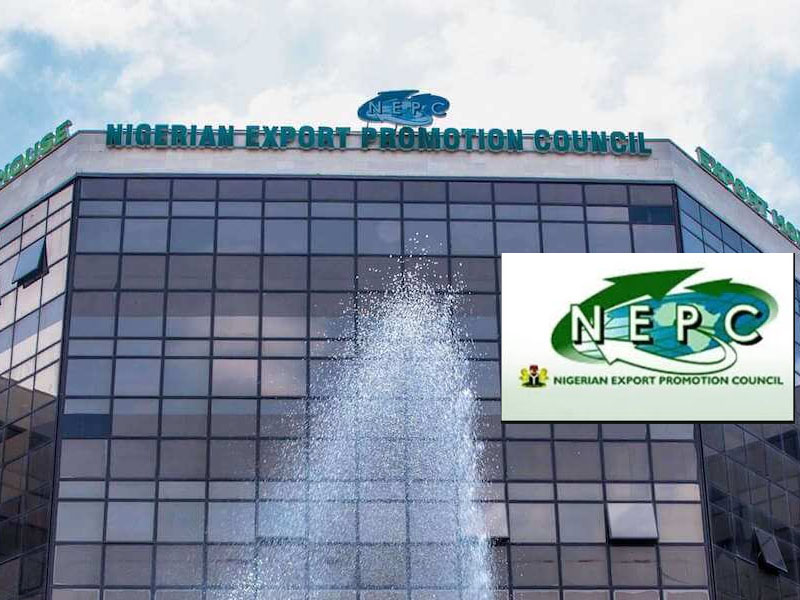
The Federal Government has begun fresh moves to clear about N330bn in outstanding claims under the Export Expansion Grant (EEG) scheme, while working on a new framework to make the export incentive programme more sustainable.
The Nigerian Export Promotion Council (NEPC), in collaboration with the Manufacturers Association of Nigeria Export Group and other stakeholders, is coordinating the process following a directive from the Minister of Industry, Trade and Investment, Dr.
Jumoke Oduwole.The NEPC Executive Director/Chief Executive Officer, Nonye Ayeni, disclosed this on Thursday at a stakeholder engagement on the EEG scheme at the council’s headquarters in Abuja.
Ayeni said the meeting was convened to reconcile outstanding liabilities, identify challenges affecting the scheme and develop practical recommendations for its restructuring.
She said the Federal Government’s renewed emphasis on non-oil exports had made it necessary to restore confidence in the incentive framework and ensure that exporters had greater certainty.
According to her, the EEG has historically supported Nigerian exporters and improved the competitiveness of non-oil products. She said the government was therefore committed to ensuring that the incentive system remained credible, transparent and sustainable.
Ayeni, however, stressed that the settlement of outstanding claims would be subject to verification and the required approval processes.
The liabilities under consideration include previously approved claims under the Promissory Note mechanism, verified claims for the 2017–2020 and 2021–2022 periods, as well as stepped-down claims that remain subject to verification and approval.
She recalled that the Federal Executive Council, in May 2023, approved a Promissory Note Programme covering approximately N269.45bn in verified EEG claims for 195 beneficiary companies.
She added that outstanding stepped-down claims for 32 companies covering the 2017–2020 period were estimated at about N60.64bn, bringing the combined outstanding figure to approximately N330.08bn.
The reconciliation process involves the Federal Ministry of Industry, Trade and Investment, NEPC, Ministry of Finance, Debt Management Office, Office of the Accountant-General of the Federation, Central Bank of Nigeria, National Assembly and other relevant institutions.
Beyond settling the backlog, Ayeni said the government was reviewing the funding architecture of the scheme to ensure that future obligations could be sustainably financed.
She disclosed that President Bola Tinubu had approved the establishment of a professionally managed Trade Facilitation Fund, with 40 per cent of monthly Nigerian Export Supervision Scheme collections to be ring-fenced for strategic trade-facilitation and export-incentive interventions.
According to Ayeni, the arrangement is expected to establish a clearer link between available funding, verified export performance and government support for exporters.
She also noted that Nigeria had recorded increases in the volume and value of non-oil exports, the number of products exported and the destinations reached.
Ayeni urged exporters to focus more on value addition, saying stronger domestic processing would contribute to industrialisation, job creation and poverty reduction.
The EEG is a post-shipment incentive established under the Export (Incentives and Miscellaneous Provisions) Act, Cap E19, to improve the competitiveness of Nigerian products and increase the volume and value of non-oil exports.
Under the scheme, eligible exporters receive Export Credit Certificates, which may be used for specified Federal Government tax obligations and other approved liabilities. Eligibility takes into account factors such as local value addition, local content, employment and export growth.
The Federal Government also approved N308.45bn in promissory notes for 199 exporting companies in March 2023, covering various categories of outstanding EEG claims.
Ayeni said Thursday’s engagement was intended to produce practical recommendations, clear action points and a stronger framework for administering Nigeria’s export incentives.




Poco Lee’s Management Praises Zlatan’s Support, Urges Restraint
ShareThe management of Nigerian dancer and entertainer, Iweh Odinaka, popularly known as Poco Lee, has called for restraint in the...


Wizkid Originally Owned ‘Alive’ Before Jorja Smith Took it over, Singer Reveals
ShareBritish singer Jorja Smith has revealed that her collaboration with Nigerian star Wizkid on the track “Alive” originally belonged to...

Can ₦5,250 MAKE You a Member of Dangote Refinery?
ShareThe commencement of the Initial Public Offering (IPO) of Dangote Petroleum Refinery and Petrochemicals FZE has generated considerable public interest...
FG, States, LGCs Share N2.338trn August 2026 Revenue
ShareBy Tony Obiechina, Abuja A total sum of N2.338 trillion, being August 2026 Federation Account Revenue, has been shared to...


FG Tackles N330bn Export Grant Liabilities, Reviews Funding Model
ShareBy Tony Obiechina, Abuja The Federal Government has begun fresh moves to clear about N330bn in outstanding claims under the...
Niger Youths Protest as 33 Miners Die in NSCDC Custody
ShareFrom Dan Amasingha, Minna At least 33 suspected illegal miners have died in the custody of the Nigeria Security and...
Equities Market Sustains Gain with N315bn
Share The Nigerian stock market extended its positive momentum on Wednesday, marking the fifth consecutive bullish session. The market’s upward movement...
Nigeria’s Doctor Deficit and Surplus Unplaced Medical Graduates
Share By Abujah Racheal Every morning, Dr Adamu Inusa checks his phone, hoping to find the email that will define the...
Nigeria, Spain Move to Deepen Trade, Investment Ties
ShareNigeria’s Ambassador to Spain, Okezie Ikpeazu, has called for the revitalisation of existing bilateral agreements with Spain, including the Bilateral...


World Bank Group Appoints New Chief Economist
ShareWorld Bank Group President, Ajay Banga, has announced the appointment of Nobel laureate, Michael Kremer, as the institution’s Chief Economist...