
NEWS
Police Apprehend 4 Suspected Traffickers, Rescue 11 Victims


The Police Command in Lagos State has arrested a suspected child trafficking syndicate allegedly involved in recruiting and transporting young Nigerians to Ghana for prostitution.The command’s spokesperson, CSP Benjamin Hundeyin, confirmed this in a statement on Friday in Lagos.
He said that the police apprehended the suspects, who were between the ages of 31 and 54, at different locations in the state. “On Aug. 13, operatives of Ilemba Hausa Division intercepted and apprehended one of the suspects, suspected to be an okada operator and a recruiter, in possession of a 15-year-old female victim who was on the verge of being trafficked to Ghana for prostitution.“The case was, thereafter, transferred to the Special Squad I of the command which, backed by actionable intelligence, launched a swift and coordinated manhunt that led to the apprehension of the other three suspects.“Investigation revealed that all apprehended suspects are part of the criminal network that recruits and traffics young women from Nigeria to Ghana, ” he said.The image maker explained that further investigations led to the safe rescue of additional 10 victims, aged between 21 and 29.“All rescued persons are now in protective care, receiving the necessary support and assistance, while arrangements are being made to reunite them with their families.“The suspects remain in custody and are actively assisting investigators in unravelling the full extent of the network, ” he said.The spokesperson said that the state Commissioner of Police, Mr Olohundare Jimoh, commended the operatives for their prompt and professional response.“CP Jimoh, while commending the operatives for their swift and professional action, reaffirms the command’s zero tolerance for human trafficking and exploitation.“CP urges the public to remain vigilant, monitor the welfare of young persons, and promptly report suspicious activities to the police, ” Hundeyin said.(NAN)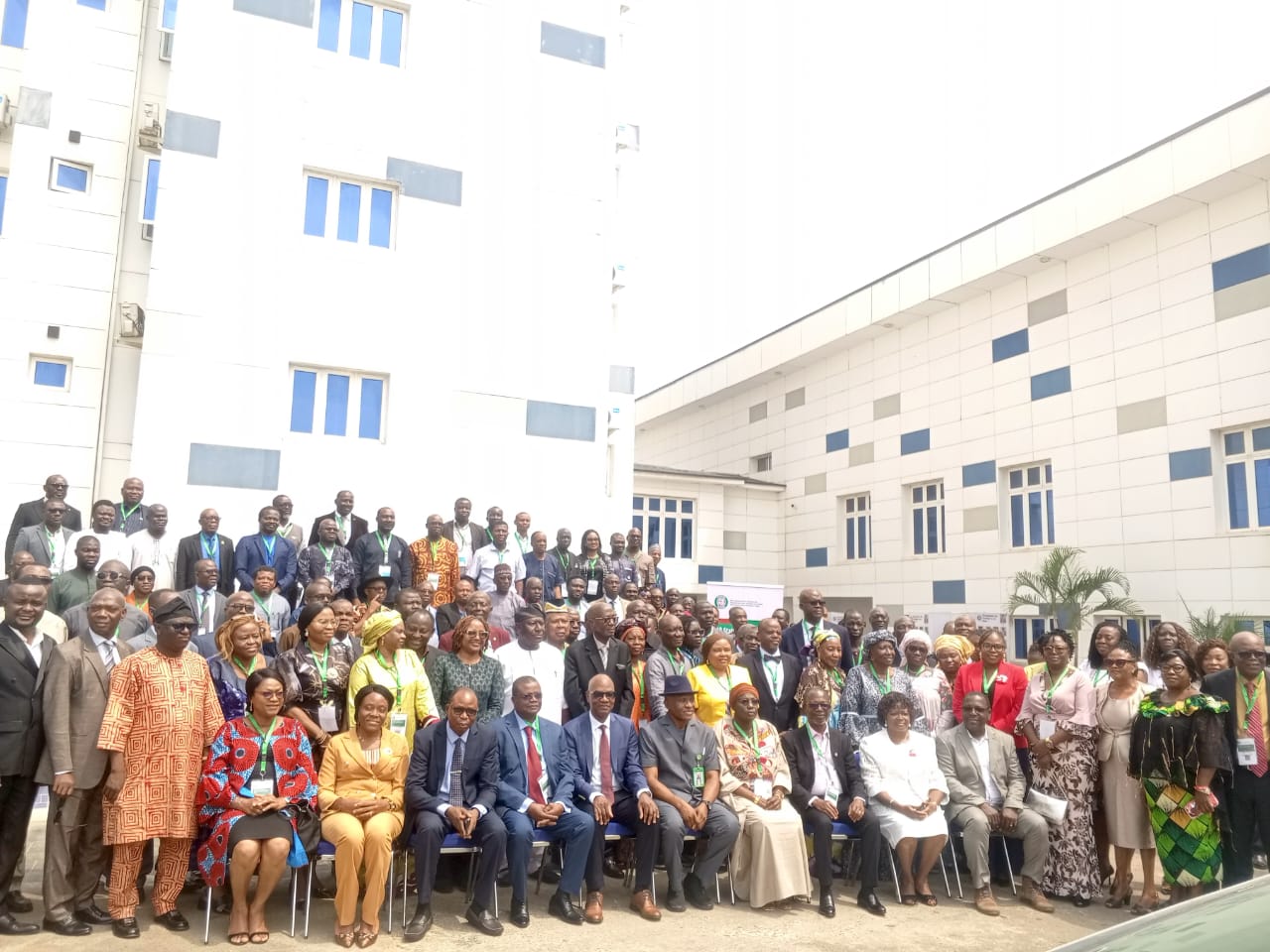
By David Torough, Abuja
The West African Health Organisation (WAHO) has reaffirmed its commitment to harmonising the training, accreditation and recognition of health professionals’ qualifications across the Economic Community of West African States (ECOWAS), as part of efforts to address workforce shortages and improve access to quality healthcare in the sub-region.
The commitment was reiterated at the opening ceremony of the 11th Statutory Meeting of the Regional Council for Health Professionals Education in the ECOWAS Region, held on Monday at the WACOP Hotel, Abuja.
WAHO Director-General, Prof.
Palokinam Pitche, said qualified, motivated and equitably distributed health professionals remained fundamental to building resilient health systems and achieving Universal Health Coverage (UHC) in West Africa.He noted that the availability of health facilities alone could not guarantee quality healthcare without sufficient numbers of appropriately trained professionals to provide services, particularly in underserved and vulnerable communities.
According to him, the unequal distribution of health workers across countries, coupled with inadequate training, retention challenges and gaps in professional development, continues to constrain healthcare delivery in the region.
Pitche said that despite efforts by member states to strengthen their health workforce, implementation of relevant strategies had been slow and uneven, with issues relating to training curricula, continuing professional development, professional regulation, inter-professional conflicts and staff retention requiring more coordinated attention.
He stressed that achieving UHC would remain difficult without qualified health personnel who are adequately trained, motivated, retained and fairly distributed across the region.
The WAHO Director-General explained that the organisation’s efforts were backed by several regional and continental frameworks, including the WAHO Creation Protocol of 1997, the 2003 Dakar Convention on education and training, resolutions on harmonised training curricula adopted in Abuja in 2006, and the 2007 Dakar Convention on the recognition and equivalence of diplomas and certificates.
He also cited the organisation’s collaboration with the African and Malagasy Council for Higher Education (CAMES) on curriculum harmonisation and accreditation, as well as the 2014 Additional Act of ECOWAS Heads of State on improving higher education and research.
Pitche described WAHO’s human resources development programme as one of the organisation’s major achievements, noting that countries with different educational traditions, including Anglophone, Francophone and Lusophone systems, had worked together to harmonise curricula, accreditation processes and the recognition of professional qualifications.
He said the programme had attracted interest from other African regions seeking to learn from the West African experience.
However, he called for an evaluation of the programme to identify its achievements, shortcomings and areas requiring improvement.
He disclosed that WAHO would launch the evaluation process in 2027, adding that the findings would provide evidence to guide future interventions and support engagement with political authorities in member states.
The Director-General identified cross-border training, mobility of health professionals, exchange of knowledge and skills, training of trainers and joint research networks as important measures for strengthening regional cooperation and improving healthcare delivery.
He said WAHO would continue working with governments, professional bodies and development partners to implement decisions aimed at strengthening health workforce capacity across the region.
Earlier, Head of Training and Human Resources for Health at WAHO, Prof. Joseph Olorunda, outlined the objectives of the 11th statutory meeting, emphasising the need to establish and regularly review regional standards for the training of health professionals.
He said the council was also expected to ensure that harmonised training curricula complied with regional standards and to facilitate the accreditation of health training programmes and institutions across ECOWAS in partnership with relevant regulatory and professional bodies.
Olorunda added that the council would intensify advocacy with governments of member states to secure the political commitment required to strengthen health professionals’ education and training.
He listed the major deliverables of the meeting to include reviewing draft guidelines for harmonising university education systems across the ECOWAS region and submitting a revised regional framework for the recognition and equivalence of certificates awarded to health professionals.
Other deliverables include reviewing the roadmap for capacity development and health workforce training in the region, deliberating on criteria for the recognition and equivalence of professional certificates, and making recommendations to improve the functioning of the Regional Council.
He said WAHO would continue to pursue its mandate of scaling up coordinated efforts in health workforce training, development, motivation and retention, while promoting Universal Health Coverage and the recognition of professional qualifications across West Africa.
He also highlighted the importance of borderless training, professional mobility, skills exchange, joint research and greater integration among ECOWAS member states.
In his remarks, the representative of the West African Colleges, Prof. Yao Tettey, congratulated Pitche on his appointment as WAHO Director-General and pledged the cooperation of postgraduate professional colleges in advancing the organisation’s regional health agenda.
Tettey commended WAHO for involving professional colleges in the development of regional policy documents and frameworks designed to promote uniform training, professional practice and the free movement of health workers across the sub-region.
He disclosed that some postgraduate colleges had already incorporated WAHO’s harmonised curricula into their training programmes and accreditation criteria.
However, he expressed concern that some of the regional policy documents requiring adoption and implementation at national level were not receiving adequate attention from governments.
He therefore urged WAHO to use its engagement with the Assembly of Health Ministers to encourage member states to adopt and implement the harmonised frameworks.
According to him, effective implementation would help improve health workforce retention, facilitate the movement of professionals across borders and address the uneven distribution of health workers in the region.
He further expressed optimism that the documents being considered at the meeting would help address the growing migration of health professionals, commonly described as the ‘japa syndrome’, by strengthening training and retention frameworks.
Tettey reaffirmed the commitment of the postgraduate colleges to working with WAHO and other stakeholders to advance the harmonisation agenda.
The meeting is expected to produce recommendations and regional frameworks that will guide the recognition of professional qualifications, harmonisation of health education systems and development of the health workforce across ECOWAS member states.
The outcomes are also expected to strengthen cooperation among governments, universities, professional councils and postgraduate colleges in building a more integrated and responsive West African health system.

By David Torough, Abuja
A telecommunications firm, ESDIAC Global, has said it does not impose storage charges on subscribers’ wallets, assuring customers that unused credits would not be deducted for keeping money in their accounts.
The Managing Director/Chief Executive Officer of the company, Austin Ugbebor, gave the assurance at the ESDIAC Global media parley, stakeholders’ engagement and official application launch held in Abuja.
Ugbebor said the policy was designed to protect customers’ money, explaining that subscribers would not be charged monthly fees for keeping money in their accounts, even when they did not make calls.
He cited the experience of a customer who had not used the platform for about 18 months but still had his previous credit balance when he returned.
He said the company also did not impose additional connectivity charges, adding that subscribers could report disputed transactions to its customer service department for investigation and refund where their complaints were justified.
On the cost of international calls, Ugbebor said the platform could offer cheaper services than conventional telecommunications providers, adding that its charges were subject to regulatory requirements.
He said the company maintained licences from the Nigerian Communications Commission (NCC) and the United States Federal Communications Commission (FCC).
The ESDIAC chief executive explained that the platform uses existing mobile network operators for subscriber authentication but also operates its own telecommunications infrastructure.
He said the application allows subscribers to call ordinary mobile phones and landlines, including numbers belonging to people who do not have the application or smartphones.
On data protection, Ugbebor said the company had measures to protect subscribers’ personal information, call records and financial transactions.
He said the company would not share subscribers’ information with other organisations without their approval, except where disclosure was required through appropriate legal processes.
He added that the company takes measures to ensure that subscribers’ data in Nigeria is not transferred outside the country without regard to applicable regulations.
Ugbebor also said the company would comply with directives from regulatory authorities whenever changes to telecommunications tariffs were required.
Also speaking at the event, the Special Adviser to President Bola Tinubu on Economic Matters, Tope Fasua, said the platform could provide an alternative for Nigerians seeking to reduce their telecommunications costs.
Fasua said he had previously purchased an eSIM at Abuja airport for an international trip, but the service failed to work when he arrived in Bangkok, despite working in London.
He expressed hope that ESDIAC’s service would provide better value for travellers and other telecommunications users.
He said the platform could offer international calls at about N13 per minute, compared with more than N200 per minute on some conventional telecommunications networks.

By Tony Obiechina, Abuja
Premium vehicle hire and all-in-one travel booking are coming to Nigeria’s capital
GIG Mobility (GIGM) has announced plans to launch hireX, a premium vehicle hire and charter marketplace, and PASS by GIGM, an integrated travel and tours platform, in Abuja on Tuesday, November 4, 2026.
GIGM is West Africa’s largest intercity road transport company, operating over 40 terminals across Nigeria and Ghana.
Through intercity bus travel, the hireX vehicle hire marketplace and the PASS travel and tour platform, GIGM uses technology to make travel safer, simpler and more connected for millions of Guests each year.
The company explained that hireX by GIGM will offer chauffeur-driven vehicles by the hour or by the day, with upfront pricing and professionally vetted drivers, for executive movement, airport transfers, interstate trips, group travel and event transport.
Unveiling the plans on Sunday in the nation’s capital, Dr. Enahoro Okhae, Chief Executive Officer of GIG Mobility, noted that the organisation’s Abuja fleet will combine GIGM-owned vehicles with cars from verified partner operators.
According to him, PASS by GIGM will bring intercity bus tickets, flights, hotels, airport pickups and curated local and international tours into one app, so a whole trip can be planned in one place instead of across five different vendors.
Explaining the choice of Abuja for the new innovation Dr. Okhae, said: “Abuja runs on schedules: meetings, ministries, embassies, flights. The people who keep this city moving deserve transport that keeps up with them.
“For nearly three decades, Nigerians have trusted GIGM with their intercity journeys. On November 4, we bring that same trust to every part of the trip in the capital.”
Also providing further insights into the event, Jude Odum, Chief Operating Officer of GIG Mobility, said:
“We’re already working with organisations in Abuja ahead of launch. Corporates, embassies and NGOs that want one partner for executive transport, staff movement and travel management should talk to us now. Early partners will help shape how we serve the city.”
“From November 4, Guests can book hireX at hirex.gigmobility.co / GIGM app and PASS on the GIGM app and at www.gigm.com, he added.



WAHO Seeks Uniform Standards for Health Professionals’ Education in ECOWAS
ShareBy David Torough, Abuja The West African Health Organisation (WAHO) has reaffirmed its commitment to harmonising the training, accreditation and...


Firm Promises No Storage Charges On Subscribers’ Wallets
ShareBy David Torough, Abuja A telecommunications firm, ESDIAC Global, has said it does not impose storage charges on subscribers’ wallets,...


GIGM Brings hireX, PASS to Abuja Nov 4
ShareBy Tony Obiechina, Abuja Premium vehicle hire and all-in-one travel booking are coming to Nigeria’s capitalGIG Mobility (GIGM) has announced...


UNIBEN Recruits again after 10-year Employment Freeze
ShareThe Vice-Chancellor of the University of Benin, Prof. Edoba Omoregie, SAN, has said that another set of graduates will be...


Fire Service Responds to Building Collapse, Rescues Five Victims in Osun
ShareFrom Ayinde Akintade, Osogbo The Federal Fire Service, Osun State Command, responded to a distress call on a building collapse...


CAN Raises Concern Over Reported Conviction of Christian Woman in Borno
ShareBy Laide Akinboade, Abuja The Christian Association of Nigeria (CAN), at the weekend has expressed their concern over the reported...


Wike Hails Dunamis Church for Pedestrian Bridge
ShareBy Laide Akinboade, Abuja The Minister of the Federal Capital Territory (FCT), Nyesom Wike, has commended the Dunamis International Gospel...


El Niño: Lagos Urges Residents to Stay Hydrated, Avoid Sunlight
ShareThe Lagos State Government has urged residents to take precautions against possible extreme heat as the dry season approaches and...


INEC Targets Dec 15 for Publication of Final Voters’ Register
ShareThe Independent National Electoral Commission (INEC) has fixed December 15 2026, for final publication of the voters’ register. Professor Joash...


Nigeria, China Sign $30m Deal on Grassroots Development
ShareBy Tony Obiechina, Abuja Nigeria and China have signed a grant agreement worth RMB 200 million (approximately $30 million) to...