
Agriculture
Police Arrest Killer of UniAgric Varsity Lecturer


From Vincent Nyinongu, Makurdi
The Benue State Police Command said it has arrested one of the suspects who allegedly murdered a University lecturer, Prof. Karl Kwaghger in Makurdi, the state capital.
Recall that the lifeless body of Dr.
Gwaghger, an Associate Professor of Mechanical Engineering with the Federal University of Agriculture Makurdi (FUAM) was found around the JS Tarka Foundation last Saturday, while his Toyota Venza car was taken away by his attackers.The state Police Command, in a statement by the Police Public Relations Officer (PPRO), DSP Catherine Anene on Saturday, revealed that the suspect, one Nnamdi Jeremiah of Umigwe village, Imo State, and a student of FUAM was arrested in Abuja, where he had gone to sell off the car that was stolen from the deceased.
“On 28/11/2020 at about 2120hrs information was received that Dr. Karl Kwaghger, a lecturer with the Federal University of Agriculture, Makurdi was found in a pool of blood at J.S. Tarka Foundation where he went to relax.
“Swiftly, police detectives where deployed to the scene where they met the victim brutally stabbed on his ribs and cut on his neck. The victim was rushed to Bishop Murray Hospital where he was confirmed dead and deposited at the morgue.
“During investigation, one Nnamdi Jeremiah ‘m’ of Umigwe village, Imo State, a student of Federal University of Agriculture, Makurdi was arrested in Abuja where he went to sale the car of the deceased,” the police said in a statement in Makurdi.
Anene disclosed that the suspect confessed to the crime and further stated that his initial intension was not to kill but to threaten the victim with a make believe gun and then rob him of his Venza car.
The Police spokesperson who noted that investigation was in progress explained that the suspect ended up killing the lecturer because of his resistance during the encounter after which he took away his car.
Meanwhile, 70 year old father of the deceased, Pa Peter Kwaghger has called on the government to ensure that justice is served in the killing of his first son by the suspects.
Pa Kwaghger, a retiree from the Local Government service said he was at home one night when some.persons called to inform him that his son had been shot and that he was receiving treatment at the hospital.
“After I got that news, I couldn’t sleep that night because I didn’t know how grevious the injury he sustained may have been. The next morning I was on my way to Makurdi with one of my brothers.
The septugenarian said it was while they were on their way to Makurdi, that his brother broke the news of his son’s death to him.
“As we were going to Makurdi, my brother told me he had just recieved a call that the people who attacked my son actually killed him. On hearing that news, I became devastated.
Visibly shaken Pa Kwaghger who described his late son as a very humble and sociable person who was loved by all wondered how life would be with him after the loss of the bread winner of his family.
“He never had any child. He was the bread winner of the family, the reason why his demise is a big blow to the family.”
While expressing satisfaction with the manner in which the police had handled the matter so far, Pa Kwaghger said, all he wanted was justice for his son.










Some residents in Lagos State have expressed concern over the recent surge in the price of tomatoes, forcing many households to adopt alternatives.
The residents made their views known in separate interviews on Wednesday in Lagos.
A market survey showed that a 50kg basket of tomatoes now sells between N115,000 and N125,000, compared to between N35,000 and N40,000 recorded last month.
Olachi Igwe, a resident of Ago Palace, said the scarcity and high cost of tomatoes had disrupted her household’s meal plans.
“I contacted my usual vendor, but she said tomatoes were scarce and difficult to source.
“A small bowl we used to buy for between N3,500 and N4,000 now sells for as high as N6,000 to N7,000, when available.
“For now, my family will resort to palm nut stew (ofe akwu) until prices stabilise,” she said.
Another resident, Mercy Okeleye of FESTAC, said although her family prefers fresh tomatoes, rising prices have forced her to consider cheaper options.
“I cannot do without fresh tomatoes because of the taste, but I may have to buy broken ones, popularly called ‘esha’, which are relatively cheaper.
“I do not consider tomato paste a suitable substitute because it is not purely made from tomatoes,” she said.
Also speaking, Tope Babalola from Dopemu, said she might adjust her cooking methods if prices remain high.
“I have not bought tomatoes in over a month, but if the price is still high, I will use more onions and peppers.
“I will not resort to artificial additives; I prefer natural ingredients for my meals,” she said.
Joan Ogugua, another resident, said she had already switched to tomato paste to cope with the situation.
“I asked my son to buy tomato paste for our meals. I cannot justify spending excessively on fresh tomatoes when other basic needs must be met,” she said.
Also, Oge Ugwu, a civil servant at Lekki, said she would resort to cucumber stew with the recent price hike.
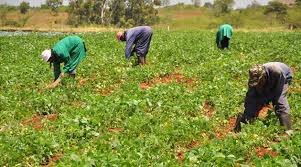
The Tomatoes Growers and Processors Association of Nigeria (TOPAN) has predicted a steady increase in the price of the produce between May and June 2026.
The Kaduna State Chairman TOPAN, Rabiu Zuntu, disclosed this in an interview recently in Lagos.
Zuntu noted that although there is no particular time for tomatoes planting season up north, seasonal weather variations can affect the production of the produce.
“Although we can plant tomatoes all-year-round, we cannot assure quality harvest all-year-round.
“Some farmers are harvesting now, while others are transplanting, and others are harvesting.
“Tomatoes are still available for sale but the price of the produce is gradually on the increase.
“Come May/June, the prices of tomatoes will be very expensive, so now is a good time to stock up the produce. There’s always a scarcity within that period.
“This is because of the nature of the weather in the north around that period, the weather is usually very hot and tomatoes cannot resist such hot temperature,” he said.
Zuntu said the price of tomatoes have started rising up in the north.
“A 50kg rafia basket of tomatoes sells from N20,000 as against N7,000 to N10,000 that was sold earlier in the year.
“While a crate of tomatoes up north is sold between N10,000 and N15,000 as against N5,000 to N6,500 sold earlier in the year.
“In most part of Kano State, where there is bumper harvest, they are rounding off their harvest. So, tomato is not that available there and most buyers have turned to where they can find it now, mostly within Kaduna State and some parts of Plateau State.
“So, that’s why the supply has decreased and the tomato supply and cost is determined by the law of demand and supply,” he said.
A 50kg basket of tomatoes in Lagos, at the moment, sells between N40,000 and N60,000 depending on the size and quality.

The Smallholder Women Farmers Organisation in Nigeria (SWOFON), Oyo State chapter, has said that the lack of irrigation facilities had become a major obstacle to dry season farming in the state.
The Chairperson of SWOFON in Oyo State, Atinuke Akinbade, said this in an interview in Ibadan on Monday.
Akinbade, who shared the experiences of women farmers in the state during the 2025 dry season, said that inadequate access to water for irrigation significantly affected the performance of many farmers during the period.
“It hindered many older farmers from participating in dry season farming and also prevented younger farmers from doing as much as they could in cultivating large acres of land,” she said.
Akinbade explained that farmers who managed to plant during the season struggled to access sufficient water to irrigate their farms, a situation worsened by the effects of climate change.
“Many farmers who depended on streams and wells to water their crops suffered major setbacks because those sources could not provide enough water for irrigation.
“Some farmers had to resort to buying water from commercial water tankers, which increased the cost of production, while at times it was even difficult to get water from the tankers,” she said.
The SWOFON chairperson warned that failure to address the problem could worsen food insecurity in the coming months.
“Even now, rainy season farming has not fully commenced because of the irregular rainfall pattern.
“This is a double burden, and if nothing is done, it may lead to serious hunger later,” she said.
Akinbade, however, acknowledged that the government had organised training for members of the association on home gardening.
She, however, said that little support was provided to address the challenges of dry season farming.
The chairman said that the home garden support package given to members consisted mainly of seedlings and one sprayer.
“They gave us two packs each of maize and pepper seeds, with six seeds in each pack, as well as one sprayer, so that we can grow food for household consumption,” she said.
Earlier, Oluwatoyin Oyedeji, SWOFON Coordinator in Oyo East, explained the severe hardship members of the organisation experienced in sourcing water for irrigation.
“Many farmers are already counting their losses because water was not available to irrigate their farms.
“Those who depended on streams and brooks were badly affected because many of them dried up, while the few that still had water had so little that farmers had to dig deeper into the ground in search of more,” Oyedeji said.
In the same vein, the Women Leader for farmers in Saki East, Musiliu Ashiru, said the absence of irrigation facilities also hampered dry season farming in her area.
According to her, many farmers still engaged in dry season farming have had to pay for water to keep their crops alive.
“Many of them buy water from the dam here to irrigate their crops. It has not been easy for them this year,” Ashiru said.



Adeniyi, JAMB Registrar Seek Operational Synergy
ShareBy Tambaya Julius, Abuja The Nigeria Customs Service (NCS) and the Joint Admissions and Matriculation Board (JAMB) are considering areas...


NLC Suspends FCT Indefinite Strike
ShareThe Nigeria Labour Congress (NLC), Federal Capital Territory (FCT) Council, has suspended its indefinite strike and directed all affected workers,...


APC Dismisses Alleged Plot to Assassinate Atiku
ShareThe All Progressives Congress (APC) Presidential Campaign Council (PCC) has dismissed allegations that the Federal Government is plotting to assassinate...


2027: We’ll Deliver Rivers, FCT for Tinubu – Wike
ShareBy Laide Akinboade, Abuja The Minister of the Federal Capital Territory (FCT), Nyesom Wike, has declared that the All Progressives...


Tinubu’s Three Bills and the Burden of Government
ShareBy Tom Chiahemen A government that asks its citizens to endure the pain of economic reform must demonstrate a corresponding...

DMO Raises N2.02trn As FGN Bond Yields Rise To 17.29 Per Cent
ShareBy Tony Obiechina, Abuja Yields on Federal Government of Nigeria (FGN) bonds increased by as much as 50 basis points...


Anxiety Grips FCT Residents As FG Confirms Ebola Disease Case
ShareBy Laide Akinboade, Abuja The Federal Government (FG), on yesterday confirmed one case of Ebola disease in the Federal Capital...


Again, Tinubu Rules Out Return to Petrol Subsidy Regime
ShareBy Tambaya Julius, Abuja President Bola Ahmed Tinubu has ruled out a return to petrol subsidy, insisting that his administration...


Former Delta Governor Uduaghan Dies at 70
ShareFrom Francis Sadhere, Delta Former Governor of Delta State, Dr. Emmanuel Eweta Uduaghan, has died. Uduaghan, who governed the state...


Customs Opens Review for Disqualified Recruits, Flags 397 Applicants
ShareBy Tambaya Julius, Abuja The Nigeria Customs Service (NCS) has opened a review process for applicants disqualified during its recent...