
security
Police, Varsity Deepen Security Pact against Cultism, Campus Threats


The Cross River Police Command and the University of Cross River State (UniCross) have resolved to deepen their collaboration to strengthen campus security and tackle cultism and other emerging threats.
The Command’s Spokesman, Sunday Eitokpah, disclosed this in a statement made available to newsmen in Calabar on Monday.
According to him, the resolution followed a strategic security meeting between the Commissioner of Police, Ajo Ordue, and the Vice-Chancellor of UniCross, Prof.
Francisca Bassey, at the command headquarters.Eitokpah said the meeting was aimed at reviewing and strengthening the security architecture around the university, with particular attention to the safety of students, staff and other members of the academic community.
He quoted Ordue as assuring the university management of increased police visibility and security presence within and around its campuses.
The commissioner said the deployment would be driven by intelligence gathering, information sharing, and rapid response to security threats.
He also called for stronger coordination between the police and the university’s internal security structures to ensure early identification and prevention of criminal activities.
Ordue urged students and staff to remain vigilant and report suspicious movements, cult-related activities, recruitment attempts, and other security concerns to the appropriate authorities.
He said the command would further strengthen the Police Campaign Against Cultism and Other Vices (POCACOV) programme within the university as part of efforts to prevent cultism and other forms of youth-related criminality.
The commissioner said sustained engagement with students and other members of the university community remained critical to preventing crime and maintaining peace on campus.
Responding, Bassey commended the command for its continued partnership with the university and its efforts to strengthen security around the institution.
She pledged the university’s continued cooperation with the police, saying closer collaboration was necessary to effectively confront cultism and other emerging security challenges.
The vice-chancellor called for further strengthening of the partnership between the two institutions to safeguard lives and property and create an environment conducive to teaching, learning and research.
The commissioner reaffirmed the command’s commitment to working with the university and other stakeholders to ensure a safe and secure academic environment.
He said effective campus security remained a shared responsibility requiring constant vigilance, timely information and sustained collaboration.(NAN)
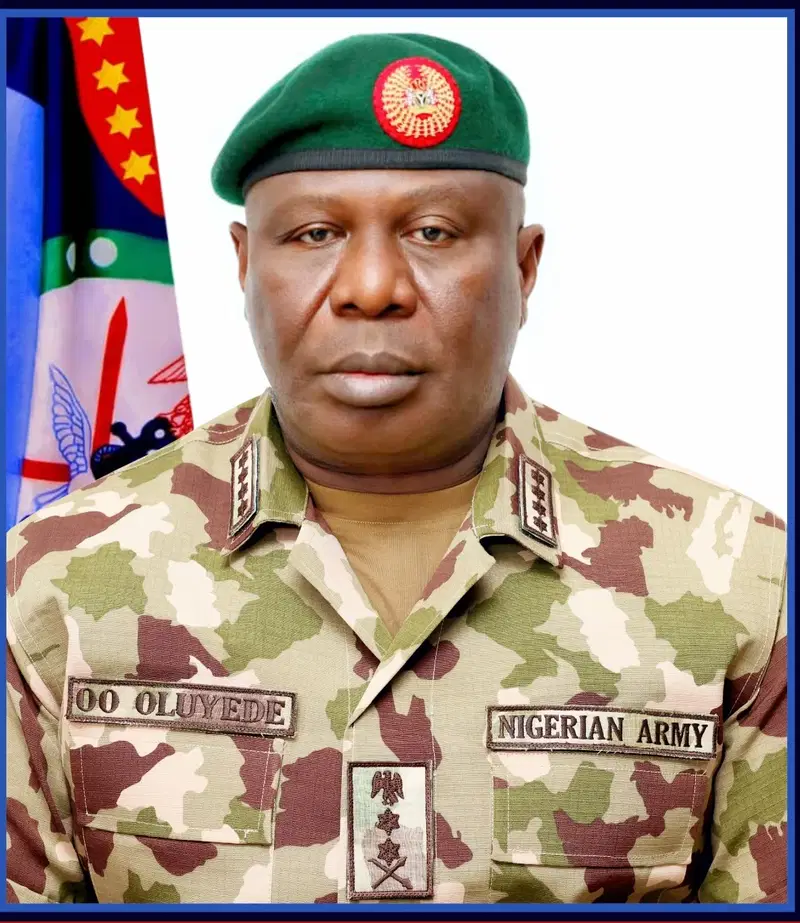
The United Kingdom has reaffirmed its commitment to deepening defence and security cooperation with Nigeria, with emphasis on military training, technology transfer and institutional capacity building.
The British High Commissioner to Nigeria, Pete Vowles, reiterated the commitment during a courtesy visit to the Chief of Defence Staff (CDS), Gen.
Olufemi Oluyede, at the Defence Headquarters, Abuja.This was contained in a statement by the Director of Defence Information, Maj.-Gen. Samaila Uba, on Tuesday in Abuja.
Vowles reaffirmed the UK’s commitment to sustaining existing security initiatives and exploring new areas of collaboration to address evolving regional and global security challenges.
He described defence and security cooperation as critical pillars of the longstanding bilateral relationship between both countries.
The high commissioner also stressed the need for a mutually beneficial partnership that would promote regional stability and strengthen Nigeria’s capacity to tackle contemporary security threats.
In his response, Oluyede highlighted the longstanding historical ties between Nigeria and the UK, noting that both countries had sustained productive defence relations over several decades.
He said the two countries had continued to collaborate in addressing shared security concerns.
The CDS emphasised the need to sustain and expand existing areas of cooperation, particularly in professional military education, technology transfer and institutional capacity building.
According to him, ongoing defence agreements and training programmes have contributed to improving the professional competence and operational capabilities of the Armed Forces of Nigeria.
Oluyede emphasised that continued collaboration with strategic international partners remained vital to strengthening the military’s capacity to respond effectively to emerging threats.
He added that such partnerships would also promote greater self-reliance, institutional resilience and operational efficiency within the Armed Forces.
Both parties expressed optimism about the future of the UK-Nigeria defence and security partnership, reaffirming their commitment to consolidating existing achievements and exploring further areas of cooperation for mutual benefit.

By Tambaya Julius, Abuja
Nigeria and Rwanda are exploring new areas of military cooperation, including personnel exchanges, specialised training and local defence equipment production, as both countries seek to strengthen regional security.
The proposals were presented by the Chief of Army Staff (COAS), Lieutenant General Waidi Shaibu, during an official working visit to Rwanda, where he held talks with the Army Chief of Staff of the Rwanda Defence Force, Major General Vincent Nyakarundi.
In a statement, the Acting Director of Army Public Relations, Colonel Appolonia Anele, said the discussions focused on expanding professional military cooperation and improving the operational capacity of both armies.
Shaibu proposed that two cadets of the Nigerian Defence Academy (NDA) undertake a four-year training programme at the Rwanda Military Academy, with similar opportunities to be made available to Rwandan cadets in Nigeria.
He also called for collaboration between the Defence Industries Corporation of Nigeria (DICON) and relevant Rwandan institutions to boost local defence production and encourage technology development.
Other areas identified for cooperation include logistics, Military Police training, pre-deployment preparation for peace support operations and the exchange of operational experience in counterterrorism and counterinsurgency.
The Army Chief said both countries could draw on their respective military experiences to tackle emerging security threats, improve operational readiness and promote stability across the region.
He further stressed the need for closer ties between DICON and Rwanda’s defence engineering and procurement institutions to support indigenous equipment manufacturing, technological advancement and greater self-reliance.
During the visit, Shaibu paid tribute to the courage and sacrifices of the Rwandan Patriotic Army, particularly the 600 personnel who defended Kigali during the 1994 Genocide against the Tutsi.
He described their resilience and patriotism as enduring lessons in national determination and military leadership.
In his response, Nyakarundi commended the Nigerian Army for providing specialised Military Police and Intelligence training to Rwandan personnel.
He called for expanded professional military education through institutions such as the Armed Forces Command and Staff College, Army War College Nigeria and the National Defence College.
The Rwandan Army chief also welcomed the proposed cadet exchange programme and defence industrial partnership, describing the visit as a reflection of growing mutual trust and professional solidarity between the two armies.
The proposed initiatives are expected to provide a framework for deeper military engagement between Nigeria and Rwanda, particularly in training, defence technology and regional security cooperation
From Dan Amasingha, Minna
An Assistant Superintendent of Corps (ASC), Usman Isah Ndamaka, was moved to tears yesterday as he appeared before the Justice Mohammed Mohammed-led Judicial Commission of Inquiry in Minna.
He offered an unreserved apology over the death of 37 miners while in the custody of the Niger State Command of the Nigeria Security and Civil Defence Corps (NSCDC).
Ndamaka, who was the officer in charge of the command’s detention facility when the incident occurred on September 17, admitted full responsibility for the tragedy, describing it as a grave mistake.
The judicial panel was set up by the Niger State Government to probe the circumstances surrounding the fatalities, which reportedly occurred following the arrest of 58 suspected illegal miners comprising 33 males and 25 females.
Recounting the events that led to the deaths, Ndamaka explained that the facility was originally designed to accommodate between 28 and 30 detainees.
He stated that while female suspects were separated and relocated to another facility, accommodating the remaining male detainees presented a severe logistical challenge.
According to him, the suspects arrived late in the evening during a heavy downpour, making an immediate transfer difficult. An attempt to relocate some of the detainees to the old command facility failed after the Mining Marshal rejected the arrangement.
Ndamaka told the commission that heat, severe overcrowding, and distress caused the male suspects to scream and shout inside the cell.
However, he admitted that fear of being overpowered prevented him and his subordinates from unlocking the door
”An error has already been committed. I am very sorry for the death of the miners under my custody,” Ndamaka said in an emotional testimony. “It is unfortunate that this happened under my watch. I am pained, and I admit my mistake.”
Also testifying, the head of the NSCDC investigation unit, Chief Superintendent of Corps Sunday Oluwadere, confirmed that he profiled and investigated the suspects following their arrest and recovered several exhibits.
Under cross-examination by the Niger State Head of the Legal Aid Council, Mrs. Bolanle Jibogun, Oluwadere expressed regret over operational shortcomings during the handling of the suspects.
Earlier, the Chief Consultant Pathologist at the General Hospital, Minna, Dr. Alfa Sule, informed the panel that post-mortem examinations were required to determine the precise cause of death.
Dr. Sule stated that conducting the autopsies requires coroner approval, while obtaining toxicology and histology samples for forensic laboratory analysis in Lagos requires the consent of the deceased persons’ families.
He projected that full forensic results would be ready within two weeks once samples are dispatched.
Following the incident, the Commandant-General of the NSCDC, Dr. Ahmed Abubakar Audi, ordered the arrest of 22 officers, including the suspended Niger State Commandant, Siaka Zubeiru Anirive.
The officers were escorted to the corps’ national headquarters in Abuja for administrative procedures.
Eight personnel have so far testified before the judicial panel as proceedings continue.



WAHO, ECOWAS Stakeholders Move to Harmonise Nursing, Midwifery Accreditation Standards Across West Africa
ShareBy David Torough, Abuja The West African Health Organisation (WAHO) has convened a three-day regional workshop in Abuja to finalise...

Okorocha Hails Court Victory as APC Insists Uzodimma Remains Candidate
ShareBy Tambaya Julius, Abuja Former Imo State Governor, Rochas Okorocha, has described a Federal High Court judgment recognising him as...

TRIBUTE: CHIEF GABRIEL GBAYAN, A LEGACY OF SERVICE TO BADMINTON
Share The late Chief Gabriel Gbayan was a distinguished sports administrator who served as a Two times Chairman of the...


Court Dismisses Emeka Ike’s N10bn Suit against Wike’s Aide
ShareThe Federal High Court in Abuja on Wednesday dismissed a N10bn fundamental rights suit filed by Nollywood actor Emeka Ike...

Reps Threaten to Arrest Telecom CEOs Over Poor Network Services
ShareBy Ubong Ukpong, Abuja The House of Representatives on Wednesday threatened to issue warrants of arrest against chief executives of...


A Guide to IFRS S1 and S2 Sustainability Implementation (4)
ShareBy Innocent Okwuosa The implementation of IFRS S1 and S2 must not be approached strictly from a regulatory compliance perspective....

2027: Reward Tinubu with Votes for Federal University – Wike
ShareBy Laide Akinboade Abuja The Minister of the Federal Capital Territory, Nyesom Wike, has said the Ogoni people of Rivers...


FCSC, Soft Alliance Explore IPPIS Integration to Improve Civil Service Management
ShareThe Federal Civil Service Commission (FCSC) and Soft Alliance and Resource Ltd. are exploring ways to integrate the commission’s statutory...


Tinubu Presides over FEC Meeting
SharePresident Bola Tinubu is presiding over a meeting of the Federal Executive Council at the Council Chamber of the State...

Wike Question Atiku, Obi, Contributions to Rivers State
ShareBy Laide Akinboade Abuja Minister of the Federal Capital Territory, Nyesom Wike, has challenged former Vice-President Atiku Abubakar and former...