
COVER
President Directs Comprehensive Civil Service Personnel Audit

By David Torough, Abuja
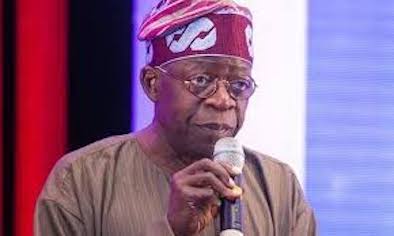
President Bola Tinubu yesterday, in Abuja described the Nigerian civil service as the backbone of any effective administration, extolling the invaluable roles they play as the engine room through which the government is able to deliver public goods and programmes.
Tinubu spoke as he declared open the maiden International Civil Service Conference in Abuja as part of the 2025 Civil Service Week, organized by the Office of the Head of the Civil Service of the Federation.
The President said it was imperative for the government to ensure that the right people with the right competencies were put in positions for an efficient public service.
“Civil servants, you are not just the backbone of effective administration across borders but the very essence of it. Your role as the quiet architects of stability, innovation, and public trust is invaluable.
“The Civil Service, as the vehicle through which the government delivers public goods, has steered us through economic cycles, constitutional transitions, and social democratic consolidation. Today, we stand on the sturdy foundation our predecessors built, and your leadership and stakeholder roles remain crucial and integral in modernising and fortifying the Civil Service for generations unborn.
“We can only guarantee the high-performance culture our country deserves by placing the right people in the right roles. To this end, I have authorised a comprehensive Personnel Audit and Skills Gap Analysis across the Federal Civil Service to deepen capacity. I urge all responsible stakeholders to prioritise the timely completion of this critical exercise to begin implementing targeted reforms and realise the full benefits of a more agile, competent, and responsive Civil Service, “the President stated.
Tinubu said that the Civil Service Conference resonates with the administration’s vision for a public service that aligns with global best practices and conforms with today’s digital transformation.
“This maiden conference, with the theme “Rejuvenate, Innovate & Accelerate” is timely, apt and compelling. It captures our collective ambition to reimagine and reposition the Service. In today’s rapidly evolving world of technology, innovation remains critical in ensuring that the Civil Service is a dynamic, digital, ethical, and globally competitive institution. An innovative Civil Service ensures we meet today’s needs and overcome tomorrow’s challenges.
“This vision aligns with our Renewed Hope Agenda, a comprehensive roadmap for building a secure, inclusive, and prosperous Nigeria. At the heart of this Agenda is a Public Service that works efficiently and effectively for every Nigerian. A revitalised Civil Service is not a supporting actor but the central platform for delivering national transformation and the Renewed Hope Agenda, a future we can all look forward to with optimism. Your role in this transformation is indispensable,” he said.
On his administration’s effort towards an enhanced and vibrant workforce, the President declared that the administration had prioritised key welfare policies to improve the wellbeing of staff. He added that the new national minimum wage, the consequential adjustments to salaries arising from the new minimum wage, and the approval of the Pension Bond Scheme, were some of the instruments to boost morale of the workforce.
Tinubu spoke on the imperative of data gathering and management by Ministries, Departments and Agencies for people – centred and evidence- based governance.
“Accurate, secure, and sovereign data is the lifeblood of every reform we pursue. Data is the new oil, but unlike oil, its value increases the more it is refined and responsibly shared. I therefore direct all Ministries, Extra-Ministerial Departments, and Agencies to capture information rigorously, safeguard it under the Nigeria Data Protection Act 2023, and release it swiftly for public value, ensuring the highest data protection and privacy standards. “We must let our Data speak for us. We must publish verified datasets within Nigeria and share them in internationally recognised repositories. This will allow global benchmarking organisations to track our progress in real-time and help us strengthen our position on the world stage,” he further stated.President Tinubu commended the Head of the Civil Service of the Federation, Mrs Didi Esther Walson – Jack, for organizing the conference, noting that its theme aligned with his administration’s commitment to transforming all sectors of the Nigerian economy.He lauded her dogged pursuit of the implementation of the Federal Civil Service Strategy and Implementation Plan 2021-2025, marked by milestones such as digitalising work processes, continuous learning initiatives, and launching Service-Wise GPT as hallmarks of outstanding leadership.The President also appreciated international partners, especially, the United Nations, the Government of the United Arab Emirates and the United Kingdom for their continued support in capacity development, affirming their impact on Nigeria’s public service.In her address, Didi Esther Walson – Jack noted that the Civil Service was central to national development, arguing that “if Nigeria must lead Africa, then our Civil Service must lead the way; this is our purpose for gathering today, declaring that she was “proud to say that this conference is already a model of innovation fully self -funded through collaborations, strategic partnership, resourcefulness with the overwhelming support from the corporate bodies and individuals.”There were goodwill messages from Rt Hon. The Lord O’Donnell, former Cabinet Secretary and Head of the UK Civil Service, Amina Mohammed, United Nations Deputy Secretary General, David DaCosta Archer Jnr, Deputy Governor of the Virgin Island, and Dr Richard Montgomery, British High Commissioner to Nigeria.…Signs Tax Reform Bills, Three Others into LawPresident Bola Tinubu has signed into law four tax reform bills on key areas of Nigeria’s fiscal and revenue framework.Tinubu signed the bills at a ceremony held at the Aso Rock Presidential Villa, yesterday in Abuja.The four bills include: the Nigeria Tax Bill, the Nigeria Tax Administration Bill, the Nigeria Revenue Service (Establishment) Bill, and the Joint Revenue Board (Establishment) Bill.They were passed by the National Assembly after months of consultations with various interest groups and stakeholders.“When the new tax laws become operational, they are expected to significantly transform tax administration in the country, leading to increased revenue generation, improved business environment, and a boost in domestic and foreign investments,” Onanuga said.The presidential assent to the bills was witnessed by the Senate President, Speaker of the House of Representatives, Senate Majority Leader, House Majority Leader, chairman of the Senate Committee on Finance, and his House counterpart.The Chairman of the Governors Forum, Abdulrahman Abdulrazaq of Kwara State; the Chairman of the Progressives Governors Forum, Hope Uzodinma of Imo State; the Minister of Finance and Coordination Minister of the Economy, Wale Edun; and the Attorney General of the Federation, Lateef Fagbemi, were also at the ceremony.One of the four bills is the Nigeria Tax Bill (Ease of Doing Business), which aims to consolidate Nigeria’s fragmented tax laws into a harmonised statute.“By reducing the multiplicity of taxes and eliminating duplication, the bill will enhance the ease of doing business, reduce taxpayer compliance burdens, and create a more predictable fiscal environment,” said the Presidency in a statement Wednesday night.The second bill, the Nigeria Tax Administration Bill, will establish a uniform legal and operational framework for tax administration across federal, state, and local governments.The Nigeria Revenue Service (Establishment) Bill, the third bill, repeals the current Federal Inland Revenue Service Act and creates a more autonomous and performance-driven national revenue agency— the Nigeria Revenue Service.It defines the NRS’s expanded mandate, including non-tax revenue collection, and lays out transparency, accountability, and efficiency mechanisms.The fourth bill is the Joint Revenue Board (Establishment) Bill.It provides for a formal governance structure to facilitate cooperation between revenue authorities at all levels of government. It introduces essential oversight mechanisms, including establishing a Tax Appeal Tribunal and an Office of the Tax Ombudsman.…Rejects NDLEA Bill over Crime Proceeds ClausePresident Bola Tinubu has declined to sign the National Drug Law Enforcement Agency Bill, 2025 into law.The President’s decision not to sign the bill passed by both chambers of the National Assembly was contained in a letter read in the Green Chamber on Thursday during plenary.The President, citing Section 58(4) of the 1999 Constitution (as amended), explained that the proposed law seeks to empower the NDLEA to retain a portion of the proceeds from drug-related crimes, a move he said contradicts existing financial regulations.He noted that under the current system, “All proceeds of crime are paid into the government’s Confiscated and Forfeited Properties Account. Disbursements to any recovery agency, including the NDLEA, can only be made by presidential approval, subject to the consent of the Federal Executive Council and the National Assembly.”The President maintained there was no compelling reason to alter a process designed to uphold accountability through executive and legislative oversight.
By Tony Obiechina, Abuja
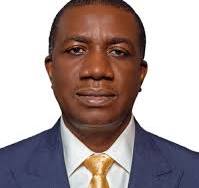
The Development Bank of Nigeria Plc (DBN) has launched DAWN: DBN Action for Women in Nigeria, unveiled its Impact Report and presented MSME Data Assets at the seventh edition of Annual Lecture held in Abuja.
DBN, in a statement on Thursday, said while delivering a welcome address, its Managing Director and Chief Executive Officer, Dr Tony Okpanachi, said the central challenge was no longer reforms themselves but ensuring benefits reach businesses at end of the chain.
He asked how to make sure benefits reach traders in Onitsha, fabricator in Aba, farmer in Kebbi and young founder in Yaba, noting that MSMEs accounted for about half of Nigeria’s GDP and more than eight in every ten jobs, adding that when reform works for MSMEs it works for most Nigerians.
He explained that reform becomes prosperity only when entrepreneurs can act on it whether through long tenor loans to buy equipment, banks willing to take risk or skills and records needed to grow.
He said working through Participating Financial Institutions DBN provides longer term funding, partial credit guarantees through subsidiary Impact Credit Guarantee Limited and capacity building including Entrepreneurship Training Programme.
He disclosed that as at December 2025 DBN had disbursed a cumulative N1.4 trillion to MSMEs through 84 Participating Financial Institutions creating about 1.6 million jobs nationwide.
Under the new five year strategy, the Bank aims to reach more than two million MSMEs with deliberate targets for women led businesses, youth led businesses and underserved states.
On DAWN, Okpanachi said finance alone had not enabled enough women-led businesses to scale.
He said initiative brings together financing, guarantees and credit support, technical assistance, outcome linked grants and market linkages delivered through banks, microfinance institutions, fintechs, aggregators, cooperatives and direct channels.
Its priority sectors are agriculture and exports, healthcare, arts and creatives, technology and green business.
He said DAWN is about moving gender focused lending beyond intention and turning access into opportunity.
On the sidelines of the lecture DBN and African Development Bank held a signing ceremony of AfDB DBN 61 million United States dollars Gender Line of Credit development that reinforces Bank commitment to women led enterprises.
Okpanachi urged Participating Financial Institutions to extend lending into sectors and states where access to finance has been limited, policymakers and regulators to measure reform by what changes for business at end of chain and MSMEs to formalise, keep good records and use support now available.
The Vice President as Special Guest of Honour was represented by Dr Fred Iklaga Senior Technical Adviser in the Office of Special Adviser to the President on Economy.
Keynote speakers were Chief Executive Officer of MTN Nigeria, Dr Karl Toriola, and Chairman of Nigeria Sovereign Investment Authority, Dr Segun Ogunsanya.
Fireside chat featured Chief Executive Officer of Sterling Bank Abubakar Suleiman, manufacturing and trade entrepreneur Mrs Omoyemi Chukwurah and by video Kola Masha of Babban Gona.
The Secretary to the Government of Federation, represented by Augusta Warren Bekaredebo, said 2026 tax reforms would bring relief to many small businesses expressing optimism that a lot of businesses will be smiling by next year because they will be exempted from tax.
By Tambaya Julius, Abuja
The Nigeria Labour Congress (NLC) has threatened possible nationwide industrial action following the failure of talks with the Federal Government over workers’ welfare, petrol prices and other outstanding labour demands.
The warning came after a meeting between the government and organised labour at the Ministry of Labour in Abuja on Thursday, October 22, ended without an agreement.
The congress has given the Federal Government until Tuesday, October 27, to make meaningful progress on the issues, warning that its relevant organs would decide the next line of action if the next meeting fails to produce concrete commitments.
The NLC has also directed its affiliates, state councils and civil society allies to begin mobilising members for possible nationwide action.
In a statement issued after the meeting, the NLC Acting General Secretary, Benson Upah, expressed disappointment over what he described as the government delegation’s lack of preparedness for the negotiations.
According to the congress, organised labour presented its demands in good faith but left the meeting without any concrete commitments from the government.
The demands include a reduction in petrol prices to 2024 levels, renegotiation of the national minimum wage, implementation of agreed tax relief measures and resolution of the terms of settlement involving the Joint Health Sector Unions (JOHESU).
The congress also called for the resolution of issues raised by the Joint Public Service Negotiating Council (JPSNC) over peculiar allowances, wage awards and hazard allowances.
The NLC said the government delegation lacked the necessary authority to engage meaningfully on the issues presented by labour representatives.
“The meeting between the Federal Government and organised labour, convened at the Ministry of Labour in Abuja on 22nd October 2026, has ended without resolution,” the statement said.
It added that the Minister of Labour requested that the meeting be adjourned until October 27 to allow the government to prepare adequately for further discussions.
The preparations, according to the statement, would include bringing relevant ministers and heads of departments and agencies to the negotiating table.
The congress said it remained open to dialogue but would not accept continued delays in addressing workers’ concerns.
“We will report back to our organs, and if no meaningful progress is made on Tuesday, the relevant organs of the NLC will decide the next line of action,” it said.
The labour body urged workers and members of the public to remain calm while the negotiations continue, even as it directed its affiliates and allies to prepare for possible industrial action.
“However, we urge all affiliates of NLC and TUC; all state councils and our civil society allies to be alert and start mobilising for a possible action across the nation while we hope that the tenets of our demands are met by the government,” the statement added.
The October 27 meeting is expected to provide another opportunity for both sides to address the outstanding issues and prevent a possible escalation of the dispute.
However, the NLC’s decision to begin mobilisation suggests that tensions could rise if the next round of talks fails to produce meaningful progress.
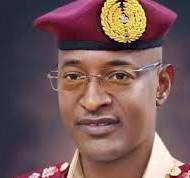
The Federal Road Safety Corps (FRSC) has barred its personnel from escorting politicians during campaigns for the 2027 general elections.
Zonal Commanding Officer, RS6, ACM Abimbola Owolabi, gave the directive during her maiden visit to the Cross River Command in Calabar on Wednesday.
Owolabi said patrol vehicles and sirens must not be used for political activities or private engagements, including weddings and funeral processions.
She directed officers deployed to campaign venues to focus exclusively on traffic management to prevent congestion and road crashes.
The zonal head warned personnel against leading political convoys or providing escorts for politicians, stressing that official vehicles must not be used for unauthorised purposes.


Afe Babalola Send Education Reform Proposals to Tinubu
ShareThe Founder and Chancellor of the Afe Babalola University Ado-Ekiti (ABUAD), Aare Afe Babalola has announced plans to forward proposals...


Sunbeth Treenuts & Sesame Acquires 73.29 Per Cent of Livestocks Feeds Plc
ShareSunbeth Treenuts and Sesame Limited, a subsidiary of Sunbeth Agro HoldCo, announces the completion of its acquisition of UAC of...
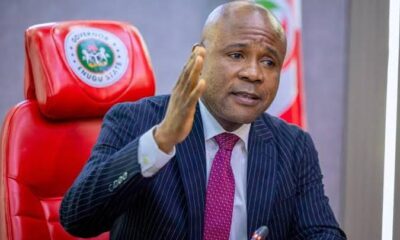

How Tinubu’s Reforms Halted Nigeria’s Economic Collapse – Mbah
ShareFrom Sylvia Udegbunam, Enugu Enugu State Governor, Dr. Peter Mbah, says Nigeria would have suffered total economic collapse but for...


Oborevwori Presents N1.23trn 2027 Budget
ShareFrom Francis Sadhere, Delta Delta State Governor, Rt. Hon. Sheriff Oborevwori, on Monday presented a proposed N1.23 trillion 2027 budget...
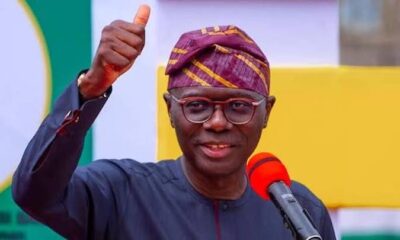

Sanwo-Olu Gifts Flamingos N10m Each over World Cup Triumph
ShareLagos State Governor, Babajide Sanwo-Olu, has rewarded each member of Nigeria’s Flamingos with ₦10 million and an iPhone 18 Pro...

UniAbuja Land Tussle: Wike Only Implemented What His Predecessor Approved – FCTA
ShareBy Laide Akinboade, Abuja The Federal Capital Territory Administration (FCTA) has described today’s protest by the Joint Action Committee (JAC)...
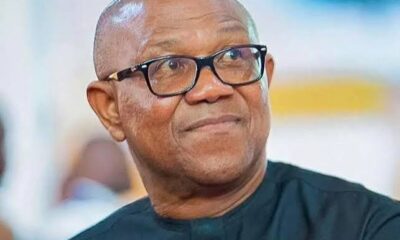

Obi to Publish Anambra Achievements in 10-day Series
ShareThe 2027 presidential candidate of the Nigeria Democratic Congress, Peter Obi, has announced plans to publish a 10-day account of...


NiMet Predicts Dust Haze, Thunderstorms Nationwide
ShareThe Nigerian Meteorological Agency (NiMet) has predicted dust haze and thunderstorms across the country from Monday to Wednesday. NiMet’s weather...

INEC Debunks Claims of Remote BVAS Log-Out, Lost Election Results
ShareBy Orjime Moses, Abuja The Independent National Electoral Commission (INEC) has dismissed claims that presiding officers can be remotely logged...
Needless Diplomatic Brawl
ShareNigeria and South Africa do not need another quarrel. They have had too many already — xenophobic attacks, trade disputes,...