
COVER
Real Reasons I was Away From Nigeria – Aisha Buhari

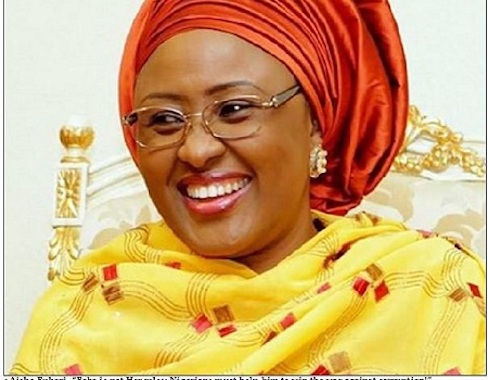
By Orkula Shaagee, Abuja
The First Lady, Aisha Buhari, yesterday advised Nigerians against spreading fake news. She said this shortly after she returned from a medical leave from the United kingdom.
Mrs Buhari gave the warning while fielding questions from news shortly after her arrival at the Nnamdi Azikiwe International Airport, Abuja, in the early hours of Sunday.
The First Lady was received at the airport by the wife of Kogi State Governor, Rashida Bello, Senior Special Assistant to the President (Administration), Hajo Sani and wife of former Governor of Nasarawa State, Mairo Al-Makura, among others.
She expressed gratitude to almighty God for journey mercy back to Nigeria from United Kingdom after a medical was advised by her doctor.
”It has been a tradition for us. For like 20 to 27 years now, if our children are on holiday, we used to spend holiday with them.
”I never abandon my children and last year, I went to Spain and spent two months with Zahra when she gave birth.
”So, the same this year’s holiday in U.K, I fell sick; so, I stayed back to see a doctor and the doctor advised me to stay back to attend to my health.
”From the U.K, I travelled to Saudi Arabia for Hajj and returned to England on doctor’s advice and they also advised that I should slow down my activities.’’
She expressed gratitude to President Muhammadu Buhari for approving some Special Assistants to her office to assist her to achieve the mission of improving the lives and wellbeing of women and children in Nigeria.
The first lady cautioned Nigerians against spreading fake news, saying that it does no good to anyone and urged relevant stakeholders to make efforts to stem the act
”The genesis of this fake news started when my husband fell sick and perpetrators of this act were showing fake Ambulance, Hospital and dead body suggesting that my husband is dead.
”That time, I received so many calls from other first ladies and presidents of other countries to confirm; so I called the attention of NCC, NBC and the National Orientation Agency.
”Fake news will lead this country to something else if actions are not taken with immediate effect,’’ she said. (NAN)



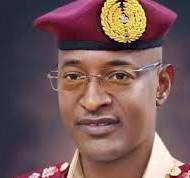
The Federal Road Safety Corps (FRSC) has barred its personnel from escorting politicians during campaigns for the 2027 general elections.
Zonal Commanding Officer, RS6, ACM Abimbola Owolabi, gave the directive during her maiden visit to the Cross River Command in Calabar on Wednesday.
Owolabi said patrol vehicles and sirens must not be used for political activities or private engagements, including weddings and funeral processions.
She directed officers deployed to campaign venues to focus exclusively on traffic management to prevent congestion and road crashes.
The zonal head warned personnel against leading political convoys or providing escorts for politicians, stressing that official vehicles must not be used for unauthorised purposes.
By Elijah Oguche, Abuja
The National Information Technology Development Agency (NITDA) has warned that artificial intelligence (AI)-powered misinformation, deepfake videos and sophisticated cyberattacks could be deployed to manipulate Nigerians ahead of the 2027 general elections.
The Director-General of NITDA, Kashifu Abdullahi, raised the alarm on Wednesday during a press briefing at the agency’s headquarters in Abuja on preparations for the International Cybersecurity Conference 2026.
He expressed concern over the growing use of AI to generate convincing but misleading political messages, warning that the trend could undermine public trust, distort information and threaten national cybersecurity.
Abdullahi said cybercriminals were increasingly exploiting human weaknesses through social engineering, rather than relying solely on attacks against computer systems.
“We are in an election period where people are using misinformation everywhere to manipulate. So that’s why we look at it. How can we defend our minds? Because today, as a hacker, it’s easier for me to hack humans than to hack systems,” he said.
According to him, advances in AI have made it easier to produce deceptive audio recordings, videos and online content capable of misleading the public and influencing political decisions.
He warned that Nigerians’ growing reliance on social media for news and information could expose them to coordinated disinformation campaigns, particularly during election periods.
“Imagine someone using AI-generated content, manipulating us, controlling what to see, what to believe, and so on,” he said.
The NITDA chief urged Nigerians to verify information before believing or sharing political messages online, stressing the need for caution in identifying AI-generated content designed to deceive the public.
“Many people today will generate content, will generate political messages using AI. And as we are in an election period, people need to be mindful of what they see, what they believe, and what they share online,” Abdullahi added.
Beyond election-related misinformation, he said AI was reshaping cybercrime by making attacks more sophisticated while also creating opportunities to improve digital security.
He explained that organisations were increasingly deploying AI agents to automate business operations, warning that such systems could become targets for cybercriminals if adequate safeguards were not in place.
“So imagine someone hijacking your AI agent. It’s like someone taking over control of your staff,” he said.
Abdullahi noted that although AI could improve the detection and prevention of cyber threats, criminals could also use the technology to develop more convincing scams and automate malicious activities.
He further stressed the need to address human error, which he identified as a major factor in cybersecurity breaches.
“More than 95 per cent of all cyber breaches are as a result of human error,” he said.
He called on individuals and organisations to strengthen digital literacy, review AI-generated materials before circulating them and ensure that human oversight remained part of their use of the technology.
On the forthcoming conference, Abdullahi disclosed that the event had been upgraded from the National Cybersecurity Conference to an international gathering following growing interest from participants across Africa and beyond.
He said the expansion reflected the cross-border nature of cyber threats and the need for stronger collaboration among governments, businesses and international security organisations.
The conference, themed “Cyber Resilience in the Age of AI: Defending Minds, Networks, and Nations,” will address emerging threats, including deepfakes, cognitive manipulation, cybercrime and attacks on critical infrastructure.
According to him, the event will feature 13 keynote addresses and 16 panel discussions, alongside a cybersecurity hackathon expected to attract about 1,946 participants from secondary schools, tertiary institutions, professional bodies and government agencies.
He identified the Office of the National Security Adviser and the Nigerian Communications Commission as principal partners in the conference.
Abdullahi said the gathering would promote collaboration, develop local cybersecurity expertise and strengthen Nigeria’s capacity to anticipate, detect and respond to emerging digital threats.
He also described cybersecurity as essential to the growth of Nigeria’s digital economy, warning that weak security systems could erode public confidence in electronic transactions.
According to him, fears of online fraud already discourage some Nigerians from embracing e-commerce, limiting the benefits of digital business and services.
He urged public and private organisations to invest in cybersecurity, improve their preparedness for security incidents and integrate protective measures into digital infrastructure from the outset.
The NITDA director-general further identified agriculture, financial services, education, healthcare and small businesses as sectors where responsible technology adoption could improve productivity and support economic growth.
He maintained that protecting digital systems and strengthening public trust would be crucial to ensuring that Nigeria benefits from AI-driven innovation without exposing citizens, businesses and critical infrastructure to avoidable risks.

By Tony Obiechina, Abuja
A committee of the Revenue Mobilisation, Allocation and Fiscal Commission (RMAFC) has received Anambra State’s request for N70 billion from the Stabilization Fund. The money would pay for priority projects and other investments in key sectors of the state’s economy.
The Indices and Disbursement Committee heard the state’s presentation at a technical session at the Commission’s headquarters in Abuja on Tuesday, 20th October 2026.
The request covers security, environmental management, infrastructure, healthcare, education, agriculture, solid minerals and tourism.The committee chairman, who is also the Commissioner representing Lagos State, Prof. Olusegun Adekunle Wright, praised the Anambra government for bringing its financial challenges before the committee. He explained that the Stabilization Fund is meant to help states in genuine need, but only within set rules.
In a statement issued on Wednesday by the Head of the Commission’s Information and Public Relations Unit, Hajia Umar Maryam Yusuf, Prof. Wright said the Fund is “an important fiscal intervention mechanism intended to provide assistance in deserving circumstances, subject to established guidelines, availability of resources and the appropriate approval processes.”
He made it clear that the session does not mean the money has been approved. The technical review, he said, “did not constitute automatic approval.” The request remains open to further checks and possible recommendations to the full Commission, known as the plenary.
Wright said the Commission’s rules require any state seeking money from the Fund to first make a formal presentation. Only after that can officials visit the state to inspect the proposed projects on the ground. The committee will check whether the state’s financial records can be trusted, whether the projects are workable and their costs reasonable, what is needed to carry them out, and what benefits ordinary people in the state will get.
Representing Anambra, the Secretary to the State Government, Chiamaka Nnake, described the state’s economy, its income, its spending pressures and its development plans.
She said Anambra has 21 local government areas and 179 communities. It has an estimated 8.9 million people, a gross domestic product of about $12.7 billion and a projected 2026 budget of ₦766 billion.
Nnake said the state has raised its internally generated revenue from about ₦2.2 billion to about ₦7.2 billion. She said its economy is driven by the commercial and industrial centres of Awka, Onitsha and Nnewi, as well as its oil-producing areas.
She named insecurity, erosion, flooding, inflation and the rising cost of public services as the main pressures on the state’s finances. Sit-at-home orders and restrictions on movement, she said, have disrupted business, reduced government income and made investors less confident.
On the erosion ravaging the state, she said Anambra has more than 1,000 erosion sites, with 146 communities affected to varying degrees. She estimated that about ₦170 billion would be needed to fix the most serious sites. That is more than twice the ₦70 billion being requested. She listed work already going on, including erosion control, flood management, road repairs, land reclamation, clearing of waterways and tree planting. The state has also restricted sand mining near vulnerable areas. She asked for more resources to protect communities and key infrastructure.
On security, Nnake said the state has passed a Homeland Security Law, set up a state security outfit and works with a joint task force. She said extra funds would buy patrol vehicles, surveillance and communication equipment, and pay for staff training and better coordination. This, she said, would protect lives and property, bring back investor confidence and revive economic activity.
On health, she said the state’s free antenatal care and delivery programme has supported more than 206,000 deliveries, including 642 Caesarean sections, at no cost to the women involved. In education, she said the state has recruited 8,415 teachers and introduced free education from nursery to Senior Secondary School Three.
She said these programmes have raised the demand for doctors and nurses, equipment, medicines, classrooms and learning materials. The state must therefore keep spending to maintain quality and reach more people.
Nnake described agriculture as a major chance for the state to earn from more than one source. She said it has given out more than 2.3 million coconut and oil-palm seedlings. She called for investment in processing, storage, irrigation, cold-chain facilities and market access, so that farmers produce more, lose less after harvest and create jobs.
She also pointed to the state’s minerals, which include kaolin, bentonite, lignite, silica sand, gypsum and laterite, along with oil-related opportunities. To attract investors, she said, the state needs geological surveys, processing plants and supporting infrastructure.
On tourism, she cited Agulu Lake and other natural and heritage sites. Better access roads, visitor facilities and supporting infrastructure, she said, would make the state a more attractive destination and bring jobs, investment and income.
Concluding, she repeated the request for ₦70 billion. The money, she said, would add to what the government is already spending, keep essential services running, protect livelihoods, improve investor confidence and help build a stronger economy that does not depend on one source of income.
In his closing remarks, the Commissioner representing Anambra State, Dr. Enefe Ekene, thanked the committee chairman for presiding. He also thanked fellow commissioners for their patience and sharp observations, and the committee secretariat for its guidance.
He said the observations made at the session would help the Anambra delegation improve its presentation before the planned visit to the state. He said he was hopeful the engagement would produce good results.
The committee said its decision would depend on the financial documents supplied, the feasibility of the projects, their costs, what is needed to carry them out and the expected benefits. It added that any recommendation would still be subject to further checks and the proper procedures.




UK, Nigeria to Deepen Defence, Security Cooperation
ShareThe United Kingdom has reaffirmed its commitment to deepening defence and security cooperation with Nigeria, with emphasis on military training,...

2027: INEC Steps Up Preparations, Completes Nine Activities
ShareBy Tambaya Julius, Abuja The Independent National Electoral Commission (INEC) has completed nine of the 14 activities on its timetable...
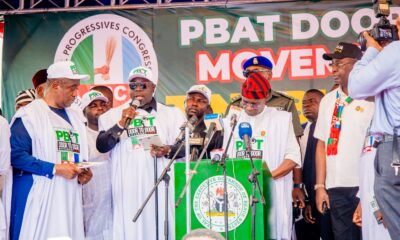

2027: Tinubu Accords Benue Security Top Priority, Tompolo Tells Supporters
ShareLeader of the PBAT Door-to-Door Movement, Government Tompolo, has called on the people of Benue state to come out enmasse...


Senate Demands Compulsory Screening of Foreign Arrivals
ShareBy Eze Okechukwu, Abuja The Senate yesterday ordered mandatory health screening for every international passenger arriving Nigeria airports, seaports, land...

Reps Summon Telecom Operators over Poor Network Services
ShareBy Ubong Ukpong, Abuja The House of Representatives on Wednesday, summoned telecommunication operators in the country to appear before it...


Bill to Design, Manufacture, Commercialize Drones Passes Second Reading in Reps
ShareBy Ubong Ukpong, Abuja A bill for an Act to move the nation to developing the capacity to design, manufacture...


Otu Presents N987.8bn Budget Estimate to Assembly
ShareFrom Ene Asuquo, Calabar Cross River State Governor, Sen. Bassey Edet Otu, has presented a proposed budget of ₦987, 808,...

Borno Police Arrest Six Suspects over Mobile Phone Theft, Recover N5.65m
ShareThe Police Command in Borno has arrested six suspects over alleged mobile phone theft and fraudulent withdrawal of ₦5.65 million...

Election Campaigns: FRSC Bars Officers from Politicians’ Escort
ShareThe Federal Road Safety Corps (FRSC) has barred its personnel from escorting politicians during campaigns for the 2027 general elections....

2027: NITDA Raises The Alarm Over AI-driven Election Manipulation
Share By Elijah Oguche, Abuja The National Information Technology Development Agency (NITDA) has warned that artificial intelligence (AI)-powered misinformation, deepfake...