
COVER
Real Sector Dominates $876.26m CBN Dutch Auction

By David Torough, Abuja
Players in the real sector have dominated the retail Dutch Auction System conducted by the Central Bank of Nigeria last week.According to the sales report, which was published by the apex bank recently, 3347 firms got access to the dollars via the 26 banks, which qualified at the rate of N1,495 per dollar cut-off rate.
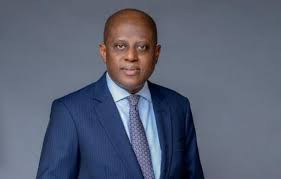
About $876. 26m was sold during the auction, which the CBN initiated to mitigate the rising demand pressures in the foreign exchange market and to promote price discovery.The sales report showed that businesses in the manufacturing sector benefited from the auction, as they got dollars to import spare parts of machinery, industrial raw materials, plain paper in sheets, raw materials for books), pharmaceutical products, raw materials for brewery, brewery equipment, plant and machinery.The other reasons for which the industries got the FX included tobacco rolling paper, spare parts for low loaders and cranes, frozen fish, etc.Promasidor Nigeria Limited got about $59.772 for Cowbell Instant dairy creamer, and Sumal Foods Limited got dollars for glucose syrup, hydrogenated vegetable fat and dextrose monohy.African Foundries, International Towers Limited, Crown Flour Mills, Churchgate Investments Ltd, Nucleus Ventures, HIS (Nigeria) Ltd and others got the dollars to facilitate loan repayments.This auction marks one of the most significant FX interventions by the CBN under the leadership of Governor Yemi Cardoso, who has been actively working to stabilise the naira and address the ongoing volatility in the FX market.Companies under Dangote Industries got about $105.33m in successful foreign exchange bids via Zenith Bank, Access Bank, Providus Bank, Union Bank and Sterling Bank.According to the CBN, the beneficiary’s subsidiaries include Dangote Sugar Refinery, Dangote Cement, Dangote Oil & Gas Company, Dangote Agro Sacks and Dangote Coal Mines.Companies in the BUA Group; BUA Cement, BUA Foods, and BUA Sugar Refinery, also assessed dollars via Access Bank, Greenwich Merchant Bank, Coronation Merchant Bank, FirstBank of Nigeria, Zenith Bank, Union Bank of Nigeria and Sterling Bank.Some of the reasons for that included wheat, gypsum in bulk, raw sugar in bulk, machinery and equipment and infield drip irrigation systems.For the auction, the CBN said that the total bids received were valued at $1.19bn.After the coalition, the Committee of Governors of the apex bank approved a cut-off bid of N1495.00/$ with a total successful bid of $815.36m.The range of successful bids was N1495.00/$ N1650.00/$ across 26 banks. Six banks were disqualified; four banks for submitting bids after the 6-hour submission period stipulated (9:00 a.m.–3:00 p.m.) and two banks for not providing bids in the template supplied.Zenith Bank, FirstBank and Access Bank were the top three banks to get FX from the Dutch auction.Other banks in the top 10 included Fidelity Bank, Guaranty Trust Bank, Standard Chartered Bank, Taj Bank, Jaiz Bank, Sterling Bank and Union Bank.The Retail Dutch Auction System adopted by the CBN involves the sale of FX through an auction system to end users.It starts with a call for the submission of bids for an auction and all the bids are collated and arranged from the highest bid to the lowest bid.The auction mechanism is predicated on the volume of the FX that is available for sale.In addition, it is also to give forward guidance on the price of the exchange rate that will promote FX market stability.The cut-off point of an auction is the lowest exchange rate, which clears the volume that is offered for the auction.The CBN said that the system was introduced and used by the CBN in 1987, 1990 and 2002–2006.In its weekly update, Afrinvest analysts argued that the apex bank did not possess the required financial war chest to meet the average FX demand for an extended period.In the days following the auction, the naira appreciated 1.7 per cent at the Nigerian Autonomous Foreign Exchange Market window to end the week at N1,574.2/$.“First, we are of the view that Dr Cardoso, during the last MPC meeting, stated that the country’s foreign reserves of $37.1bn could cover 11 months’ imports. This implies a monthly average import spend of $3.3bn. Meanwhile, the IMF, in its 2024 Article IV consultation note, estimated Nigeria’s monthly import bill at $6.0bn, implying that the reserves could only cover six months of imports. “Regardless of the estimate considered, the FX reserves could run dry in six to nine months should the magnitude of the bids at the auction ($1.2bn) be met weekly and the accretion rate does not offset outflows. In addition, seasonality trends suggest that FX demand for manufacturing imports, educational commitments and summer travel peaks in Q3. Hence, we are of the view that the measure will only temper the demand pressure that is building up,” it stated.According to the firm, the auction pricing closely reflects existing reality in the wholesale FX market – the NAFEM rate has swung between N1,450/$ and N1,600/$ in most of 2024.“This highlights the fact that the FG’s goal of bringing the NGN/USD rate to N800.0/$ by year-end is unlikely. As such, we hold to our view that for the naira to regain lasting strength, there is a need for the implementation of strategic fiscal policies to boost economic productivity.“Without an increase in oil production (to at least 1.80mbpd), higher remittances flow through official channels (to at least $20.0bn per annum), and improved inflows of patient longer-term capital (FDI of at least $10.0bn per annum), the naira would remain in the shadow of the FG’s dream target,” the analyst said.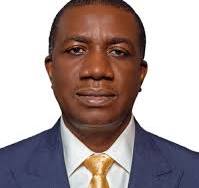
By Tony Obiechina, Abuja
The Development Bank of Nigeria Plc (DBN) has launched DAWN: DBN Action for Women in Nigeria, unveiled its Impact Report and presented MSME Data Assets at the seventh edition of Annual Lecture held in Abuja.
DBN, in a statement on Thursday, said while delivering a welcome address, its Managing Director and Chief Executive Officer, Dr Tony Okpanachi, said the central challenge was no longer reforms themselves but ensuring benefits reach businesses at end of the chain.
He asked how to make sure benefits reach traders in Onitsha, fabricator in Aba, farmer in Kebbi and young founder in Yaba, noting that MSMEs accounted for about half of Nigeria’s GDP and more than eight in every ten jobs, adding that when reform works for MSMEs it works for most Nigerians.
He explained that reform becomes prosperity only when entrepreneurs can act on it whether through long tenor loans to buy equipment, banks willing to take risk or skills and records needed to grow.
He said working through Participating Financial Institutions DBN provides longer term funding, partial credit guarantees through subsidiary Impact Credit Guarantee Limited and capacity building including Entrepreneurship Training Programme.
He disclosed that as at December 2025 DBN had disbursed a cumulative N1.4 trillion to MSMEs through 84 Participating Financial Institutions creating about 1.6 million jobs nationwide.
Under the new five year strategy, the Bank aims to reach more than two million MSMEs with deliberate targets for women led businesses, youth led businesses and underserved states.
On DAWN, Okpanachi said finance alone had not enabled enough women-led businesses to scale.
He said initiative brings together financing, guarantees and credit support, technical assistance, outcome linked grants and market linkages delivered through banks, microfinance institutions, fintechs, aggregators, cooperatives and direct channels.
Its priority sectors are agriculture and exports, healthcare, arts and creatives, technology and green business.
He said DAWN is about moving gender focused lending beyond intention and turning access into opportunity.
On the sidelines of the lecture DBN and African Development Bank held a signing ceremony of AfDB DBN 61 million United States dollars Gender Line of Credit development that reinforces Bank commitment to women led enterprises.
Okpanachi urged Participating Financial Institutions to extend lending into sectors and states where access to finance has been limited, policymakers and regulators to measure reform by what changes for business at end of chain and MSMEs to formalise, keep good records and use support now available.
The Vice President as Special Guest of Honour was represented by Dr Fred Iklaga Senior Technical Adviser in the Office of Special Adviser to the President on Economy.
Keynote speakers were Chief Executive Officer of MTN Nigeria, Dr Karl Toriola, and Chairman of Nigeria Sovereign Investment Authority, Dr Segun Ogunsanya.
Fireside chat featured Chief Executive Officer of Sterling Bank Abubakar Suleiman, manufacturing and trade entrepreneur Mrs Omoyemi Chukwurah and by video Kola Masha of Babban Gona.
The Secretary to the Government of Federation, represented by Augusta Warren Bekaredebo, said 2026 tax reforms would bring relief to many small businesses expressing optimism that a lot of businesses will be smiling by next year because they will be exempted from tax.
By Tambaya Julius, Abuja
The Nigeria Labour Congress (NLC) has threatened possible nationwide industrial action following the failure of talks with the Federal Government over workers’ welfare, petrol prices and other outstanding labour demands.
The warning came after a meeting between the government and organised labour at the Ministry of Labour in Abuja on Thursday, October 22, ended without an agreement.
The congress has given the Federal Government until Tuesday, October 27, to make meaningful progress on the issues, warning that its relevant organs would decide the next line of action if the next meeting fails to produce concrete commitments.
The NLC has also directed its affiliates, state councils and civil society allies to begin mobilising members for possible nationwide action.
In a statement issued after the meeting, the NLC Acting General Secretary, Benson Upah, expressed disappointment over what he described as the government delegation’s lack of preparedness for the negotiations.
According to the congress, organised labour presented its demands in good faith but left the meeting without any concrete commitments from the government.
The demands include a reduction in petrol prices to 2024 levels, renegotiation of the national minimum wage, implementation of agreed tax relief measures and resolution of the terms of settlement involving the Joint Health Sector Unions (JOHESU).
The congress also called for the resolution of issues raised by the Joint Public Service Negotiating Council (JPSNC) over peculiar allowances, wage awards and hazard allowances.
The NLC said the government delegation lacked the necessary authority to engage meaningfully on the issues presented by labour representatives.
“The meeting between the Federal Government and organised labour, convened at the Ministry of Labour in Abuja on 22nd October 2026, has ended without resolution,” the statement said.
It added that the Minister of Labour requested that the meeting be adjourned until October 27 to allow the government to prepare adequately for further discussions.
The preparations, according to the statement, would include bringing relevant ministers and heads of departments and agencies to the negotiating table.
The congress said it remained open to dialogue but would not accept continued delays in addressing workers’ concerns.
“We will report back to our organs, and if no meaningful progress is made on Tuesday, the relevant organs of the NLC will decide the next line of action,” it said.
The labour body urged workers and members of the public to remain calm while the negotiations continue, even as it directed its affiliates and allies to prepare for possible industrial action.
“However, we urge all affiliates of NLC and TUC; all state councils and our civil society allies to be alert and start mobilising for a possible action across the nation while we hope that the tenets of our demands are met by the government,” the statement added.
The October 27 meeting is expected to provide another opportunity for both sides to address the outstanding issues and prevent a possible escalation of the dispute.
However, the NLC’s decision to begin mobilisation suggests that tensions could rise if the next round of talks fails to produce meaningful progress.
The Federal Road Safety Corps (FRSC) has barred its personnel from escorting politicians during campaigns for the 2027 general elections.
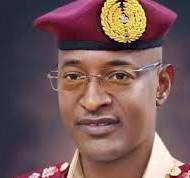
Zonal Commanding Officer, RS6, ACM Abimbola Owolabi, gave the directive during her maiden visit to the Cross River Command in Calabar on Wednesday.
Owolabi said patrol vehicles and sirens must not be used for political activities or private engagements, including weddings and funeral processions.
She directed officers deployed to campaign venues to focus exclusively on traffic management to prevent congestion and road crashes.
The zonal head warned personnel against leading political convoys or providing escorts for politicians, stressing that official vehicles must not be used for unauthorised purposes.



Henry Okeke Welcomes Tinubu to Enugu, Hails Mbah’s Development Efforts
ShareBy Raphael Atuu The Convener of New Enugu Group Barrister Henry Okeke, has welcomed President Bola Ahmed Tinubu to Enugu...
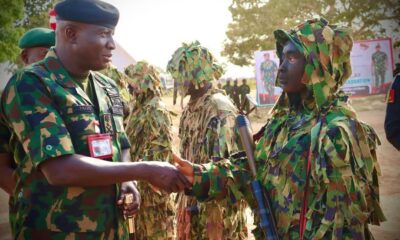

COAS Sharpens Combat Edge of Expanding Nigerian Army, Graduates 91 RRI CTCOIN Recruits
ShareBy David Torough, Abuja The Chief of Army Staff (COAS), Lieutenant General Waidi Shaibu, has highlighted the importance of specialised...


FOOG Women Support Group for Tinubu Commends Babangida, Abdulsalami Over Tinubu’s 2027 Endorsement
ShareBy Francis Sadhere, Delta The FOOG Women Support Group for Tinumbu has commended former Nigerian military Heads of State, Generals...
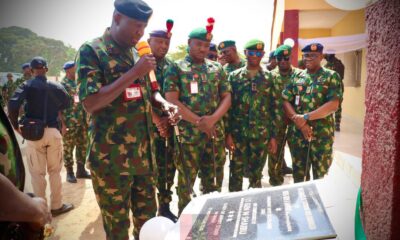

COAS Strengthens Troops Welfare, Commissions Training Infrastructure atDepot Nigerian Army Zaria
ShareBy David Torough, Abuja The Chief of Army Staff (COAS), Lieutenant General Waidi Shaibu, has strengthened the Nigerian Army’s drive...

Benue IDPs Praise UNICEF over Provision of Facilities
ShareFrom Attah Ede, Makurdi Internally Displaced Persons (IDPs) in Benue State have poured praises on the United Nations Children’s Fund...

CBN Appoints Acting MD/CEO ofKeystone Bank
ShareBy Tony Obiechina, Abuja The Central Bank of Nigeria (CBN), in exercise of powers conferred on it by theBanks and...
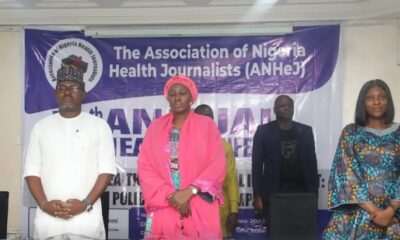

3,526 Primary Healthcare Centres Revitalised – FG……… Tasks Health Journalists on Accountability
ShareBy Laide Akinboade Abuja The Federal Government (FG), on Thursday, disclosed that 3,526 primary healthcare centres had been revitalised, while...

Court Nullifies Omo-Agege’s NDC Senatorial Candidacy
ShareFrom Francis Sadhere, Delta The Federal High Court sitting in Warri, Delta State, has nullified the nomination of former Deputy...


APC Mourns 15 Supporters Killed In Zamfara Road Accident
ShareBy Orjime Moses, Abuja The All Progressives Congress (APC) has mourned 15 of its members and supporters reportedly killed in...
Ortom ‘Ranched’ Benue People in IDP Camps Instead of Cattle – Tondo
ShareFrom Attah Ede, Makurdi Former Benue State Commissioner for Lands and Survey, John Tondo, has criticised former Governor Samuel Ortom...