
NEWS
Redeemer’s University Appoints 4th Substantive Vice-Chancellor

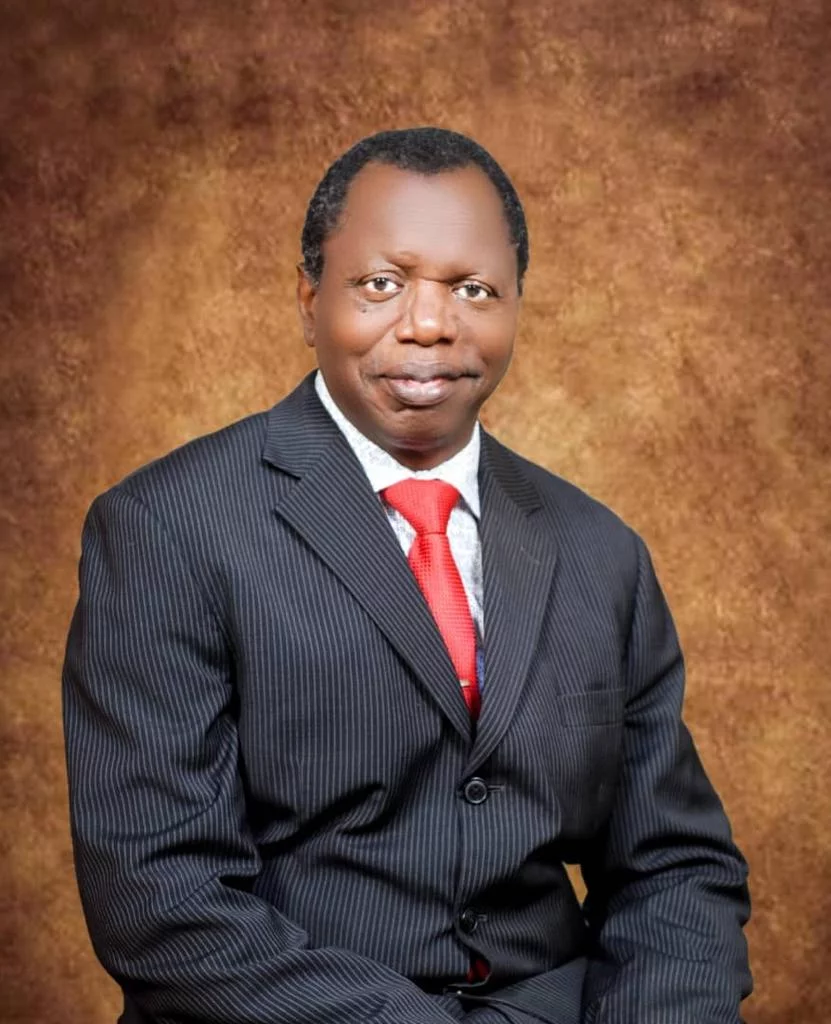
The Board of Trustees of the Redeemer’s University (RUN), Ede, in Osun, has appointed Prof. Shadrach Akindele, as the fourth substantive Vic-Chancellor of the university.
Akindele, a full-time pastor of the Redeemed Christian Church of God and a Professor of Forestry, would serve for a single term of five years.
Mr Adetunji Adekeye, the Deputy Director, Corporate Affairs Directorate of the university, in a statement on Wednesday in Osogbo, said Akindele’s appointment followed a rigorous recruitment exercise carried out by a professional recruiting firm and topnotch academics.
He said that the recruitment was done in line with global best practices in headhunting for strategic positions in higher education institutions.
Adekeye also quoted Pastor Olukayode Pitan, the university’s Board of Trustees Chairman, as saying that the appointment was expected to usher in an era of innovation and academic excellence.
Pitan said that with a remarkable track record in higher education and a deep commitment to fostering learning and research, Akindele was poised to make a lasting impact on the university and the broader academic community.
According to the statement, Akindele attended the University of Ibadan where he earned his Bachelor of Science degree in Forest Resources Management in 1985.
After completing his National Youth Service Corps programme, he returned to the same University for his postgraduate studies and earned a Master of Science degree and Doctor of Philosophy in Forest Biometrics in 1987 and 1990, respectively.
Akindele began his academic career as a Teaching Assistant at the University of Ibadan in 1987, and moved to the Federal University of Technology, Akure (FUTA), as an Assistant Lecturer in 1988.
At FUTA, he rose through the ranks to become a professor in 2005 and had served in different capacities both within and outside the country.
The statement also said that Akindele was ordained a full Pastor of the Redeemed Christian Church of God in 2009 and had continued to serve in various departments of the church.
He is married to Pastor (Mrs.) Hannah Oluwatoyin Akindele and they are blessed with children.
“His vision for Redeemer’s University is to promote a vibrant educational community where staff and students are supported to serve God in order to achieve academic excellence.
Akindele is deeply committed to student success, and his tenure is expected to usher in new opportunities for research funding, international collaborations and a strong emphasis on community outreach,” he said. (NAN)
From Joseph Amedu, Lokoja
The AIDS Healthcare Foundation (AHF) Nigeria, has opened applications for journalists to join a two-month project aimed at deepening ethical, solutions-focused coverage of HIV and TB in communities most affected by both diseases.
The “HIV and TB Media Reporting Project: Amplify the Response” will run from September to October 2026 and will support reporters in Abuja FCT, Akwa Ibom, Anambra, Benue, Cross River, Kogi, and Nasarawa to produce human-centered stories that drive testing, treatment uptake, and public accountability.
Applications close at the close of business on Monday, 31st August 2026.
Interested journalists can apply via https://forms.gle/S8U4HLqQCaCc43Cg7 or by sending documents to Procurement.Nigeria@aidshealth.org with the subject line “AHF HIV/TB Reporting Projects.AHF Nigeria currently provides free HIV testing, treatment, care, and TB services across its seven states of operation.
While Nigeria has made progress toward the UNAIDS 95-95-95 targets, AHF notes that challenges persist around TB reduction, stigma, misinformation, and funding gaps.
“Media is key to closing these gaps,” the organization stated in its call.
The project is designed to equip reporters with the science, context, and access needed to tell accurate, stigma-free stories that center the voices of people living with HIV and TB survival.
At least seven journalists will be selected for the pilot edition.
Each participant is expected to develop and publish two in-depth feature or investigative stories within the two-month period, with a human-angle focus.
Stigma reduction: using person-first, rights-based language and ethical representation
Accountability: examining access to treatment, budget performance, and community-led monitoring in AHF-supported facilities
Key themes: U=U science, TB-HIV co-infection, domestic financing, local ARV manufacturing, and implementation of Nigeria’s Anti-Discrimination Act 2014
To support this, journalists must submit three story pitches and attend a full-day virtual orientation.
AHF is calling on journalists from print, online, broadcast, photographic storytelling, and community media who live and report in the seven project states.
To qualify, applicants must have a minimum of two years professional experience with verifiable published or broadcast work.
They must also be attached to a media organization, or for freelancers, provide a letter of intent to publish from an editor or publisher.
Priority will be given to women journalists, journalists with disabilities, and reporters from community and local language media.
Demonstrated interest in health, human rights, or development reporting is an added advantage.
Selected journalists will receive a package designed to remove common reporting barriers:
Capacity Training: Virtual orientation facilitated by NACA, NASCP, NTBLCP, AHF’s technical team, and senior editors, covering HIV/TB reporting, data journalism, ethics, and safety. Data support will be provided.
Reporting Grant: Modest funds to cover logistics for field work on two stories
Editorial Mentorship: One-on-one support from a senior health journalist or editor to refine angles and drafts
Key Access: Facilitated entry to AHF-supported facilities, State AIDS and TB Control Programs, PLHIV networks, and TB survivor groups for interviews
Recognition: Certificate of participation from AHF Nigeria, and featuring of top stories on AHF global platforms
Applicants must submit a single PDF containing: a 2-page CV, a 250-word motivation letter, two 200-word story pitches with proposed sources and angle, links or PDFs of two work samples with at least one on health or development, and a letter of support from an editor.
The call opened on 10th August 2026.
Shortlisted journalists will be notified on 14th September 2026. Selection will be based on strength of story pitch 35%, relevance of work samples 15%, journalism experience 15%, gender diversity 15%, and editor support 10%.
For questions, contact Steve Aborisade, Senior Advocacy and Marketing Manager, AHF Nigeria, at 2 Paul Unongo Street, off Ebitu Ukiwe Street, Jabi, Abuja.
AHF, the world’s largest HIV/AIDS healthcare organization, provides care to more than 2.9 million people across 50 countries. In January 2025, it received The King Center’s MLK Jr. Social Justice Award.
From Francis Sadhere, Delta
The Federal Government has entered into a strategic partnership with Warri Kingdom to leverage the 5th Coronation Anniversary of His Majesty, Ogiame Atuwatse III, the Olu of Warri, for global tourism development, investment and youth empowerment.
The partnership, according to the Chairman of the Coronation Anniversary Oversight Committee and Ologbotsere of Warri, Chief (Dr.
) Oma Eyewuoma, is being facilitated through the Federal Ministry of Arts, Culture, Tourism and Creative Economy.Chief Brown Mene, the Ogwa- Olusan of Warri Kingdom, who read the speech on behalf of Eyewuoma, disclosed this on Monday at a press conference at the Palace of the Olu of Warri, Warri, Delta State, ahead of the 10-day anniversary celebration scheduled for August 14 to 23, 2026.
He said the partnership stressed the national and international significance of the anniversary, which is being celebrated under the theme, “Global Home Coming: Celebrating Our Cultural Renaissance, Unity and Transformational Progress.”
According to him, the Federal Government’s involvement would help position Warri Kingdom as a major destination for cultural tourism, investment and youth development, while showcasing the rich heritage of the Itsekiri people to the world.
He said the anniversary would feature a wide range of cultural and community activities, including traditional dances, exhibitions of family heirlooms, homage-paying by communities, a Royal Boat Regatta, Bike and Scooter Competition, Itsekiri Language Competition for children, football and other sporting events.
The Ologbotsere said the celebration was also designed to encourage sons and daughters of Warri Kingdom across the world to return home and participate in what he described as a historic global homecoming.
He added that the administration of Ogiame Atuwatse III had placed considerable emphasis on innovation and youth development, noting that the establishment of the Iwere Innovation Hub was part of efforts to equip young people with skills in digital literacy, software engineering and entrepreneurship.
“Under the reign of His Majesty, Ogiame Atuwatse III, Olu of Warri, there is a shift from crude oil to a thriving digital economy,” Eyewuoma said.
He explained that the 10-day programme would combine royal ceremonies with community engagement, cultural exhibitions and sporting events, providing opportunities for people within and outside the kingdom to connect with Warri’s heritage.
Speaking on the Warri Unity Game, Chief Brown Mene said the games would involve neighbouring communities, which he noted were closely located to one another, making the sporting event an avenue for promoting unity, friendship and peaceful coexistence among the people of Warri Kingdom and its environs.
He said the anniversary should be viewed as a celebration of joy and togetherness, urging journalists to take the message beyond Warri and publicise the activities across Nigeria and the globe.
The anniversary activities will commence on Friday, August 14, with Praise Day, followed by the Warri Unity Game, Grand Finale Bini Riva Live, Bike and Scooter Competition, Itsekiri Language Competition for Children, community homage-paying, the Royal Regatta, the main celebration, football match and thanksgiving.
The committee said high-profile guests from across the country and beyond are expected to attend the anniversary, which is expected to further strengthen Warri Kingdom’s cultural and tourism profile.
Eyewuoma called on the media to support the global homecoming initiative by disseminating information on the anniversary and encouraging sons and daughters of Warri Kingdom to return home for the celebration.
From Rabiu Sanusi, Kano
A delegation from the National Institute for Policy and Strategic Studies, NIPSS, has commenced a one-week study visit to Kano State to assess the state’s economic and entrepreneurship initiatives and gather information that will contribute to a national policy report to be presented to President Bola Tinubu.
The delegation, comprising participants of Senior Executive Course 48, Study Group One, made this known when it paid a visit to the Kano State Government House as part of its local study tour.
The delegation was led by retired Brigadier General Jimo, who said the study group was conducting research on “Current Economic and Entrepreneurship for Sustainable Development in Nigeria.
”Representing Governor Abba Kabir Yusuf at the occasion the Chief of Staff to the Governor, Dr. Sulaiman Wali, welcomed the delegation and presented a paper outlining various programmes, policies and achievements recorded by the present administration in Kano State.
Also presenting a paper was the Permanent Secretary, Ministry of Science and Innovation Alhaji Abba Danguguwa, who highlighted several initiatives and interventions being implemented by the state government, particularly in areas connected with innovation, economic development and entrepreneurship.
The delegation was further taken through a presentation on the activities and achievements of the Abba Kabir Yusuf administration through a video documentary.
The video presentation, prepared by the Director-General, Media and Publicity to the Governor, Sanusi Bature Dawakin-Tofa, was presented by the Chief Press Secretary to the Governor, Mustafa Muhammad.
Speaking on the purpose of the visit, the leader of the NIPSS delegation said the study group had conducted preliminary research before coming to Kano, adding that the visit was aimed at validating the information obtained and interacting directly with government officials, private-sector players and other stakeholders.
He said Kano was selected for the study because of its strategic importance to Nigeria’s economic development, particularly its human resources, commerce, entrepreneurship, technology, arts and culture, tourism and other economic activities.
According to him, NIPSS was established in 1979 as a foremost policy think tank to examine national challenges and develop solutions and recommendations capable of assisting governments in policy formulation and implementation.
He explained that the Senior Executive Course, which lasts for ten months, draws participants from the military, police, civil service, academia and other sectors of society.
The delegation leader said the information and statistics gathered during the study tours would form part of a comprehensive report to be presented to the President at the end of the course.
He stressed that the delegation was not an investigative panel, but a study group interested in understanding how governments and other stakeholders could contribute to achieving a stronger Nigerian economy, creating employment opportunities for young people and promoting sustainable entrepreneurship.
He also encouraged Kano State officials to provide the delegation with any specific issues or recommendations they wished to be reflected in the final report, noting that the report would provide an opportunity for state-level concerns and ideas to reach the federal government.
The visit also featured an interactive question-and-answer session, during which participants of the Senior Executive Course engaged government representatives on various aspects of Kano’s economic policies, entrepreneurship programmes, investment promotion, innovation and other development initiatives.
The delegation expressed appreciation to Governor Abba Kabir Yusuf and the Kano State Government for the reception accorded them, saying the engagement would provide useful information for the successful completion of their study.
The study tour is expected to continue with further engagements with relevant government agencies, private organisations and other stakeholders in Kano State.


AHF Nigeria Calls on Journalists to Amplify Ethical HIV, TB Reporting
ShareFrom Joseph Amedu, Lokoja The AIDS Healthcare Foundation (AHF) Nigeria, has opened applications for journalists to join a two-month project...
FG Partners Warri Kingdom for Olu’s 5th Coronation Anniversary
ShareFrom Francis Sadhere, Delta The Federal Government has entered into a strategic partnership with Warri Kingdom to leverage the 5th...
NIPSS Study Group Examines Kano’s Economic, Entrepreneurship Initiatives
ShareFrom Rabiu Sanusi, Kano A delegation from the National Institute for Policy and Strategic Studies, NIPSS, has commenced a one-week...
TICC Alerts Public to Fake Website, Disowns Election Campaign Cash Transfer Message
ShareFrom Ayinde Akintade, Osogbo The Imole Campaign Council (TICC) has said it is aware of a malicious website being circulated...
Buni’s Food Security Adviser Pledges Fresh Drive to Boost Agriculture, Jobs in Yobe
ShareFrom Rabiu Sanusi, Kano The newly appointed Special Adviser on Food Security to the Yobe State Governor, Dr. Babagana Mohammed...
Nation’s Security Begins with Well-being of Citizens —Sanusi
ShareFrom Rabiu Sanusi, Kano The Emir of Kano, His Royal Highness Khalifa Muhammadu Sanusi II, CON, has said that the...


2027: EU Pulls Back from Observation – PDP
ShareFrom Johnson Eyiangho, Abuja The Turaki-led faction of the Peoples Democratic Party (PDP) has described the recent decision of the...


Jonathan Commissions 18 Roads in Bauchi
ShareFrom Ajiya Ayuba, Bauchi The former president, Goodluck Jonathan, on Monday commissioned 18 completed township roads projects constructed by the...


Benue Assembly Majority Leader, Dugeri Dumps APC for PDP
ShareFrom Attah Ede, Makurdi The Majority Leader of the Benue State House of Assembly and member representing Kwande West State...


Kogi Police Rescue 15 Kidnap Victims
ShareFrom Joseph Amedu, Lokoja The Kogi State Police Command has successfully rescued 15 victims abducted along the Itobe–Anyigba Highway in...