
POLITICS
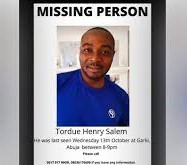
Reps Summon Security Agencies over Missing Journalist, Tordue Salem

By Ubong Ukpong, Abuja
The House of Representatives yesterday, summoned all security agencies in the country, over the missing Vanguard journalist, Tordue Salem, attached to the House of Representatives, just as it tasked them to raise crack teams to find him.
The latest action followed a motion of urgent public importance brought before it by Minority Leader, Ndudi Elumelu, on the need to investigate circumstances surrounding his disappearance.
Elumelu told the House that Mr Tordue Henry Salem, a member of the House of Representatives Press Corps, reporting for the Vanguard Newspaper, “reported for work at the National Assembly premises on Wednesday the 13th of October and was last seen in Garki District of FCT before his alleged disappearance same day. ”
He said that his disappearance was immediately reported to the relevant security agencies as all efforts by both friends and family to reach him have been abortive.
The lawmaker expressed worries that inspite of official effort by the leadership of the House to galvanise the security agencies at promptly resolving his disappearance, there’s been no headway.
He further worried that this sudden disappearance was an extension of the deteriorating state of insecurity in the nation’s capital and again questioned the efficiency of the country’s security operatives.
The Opposition Leader was concerned that if necessary measures were not put in place to curtail the indiscriminate disappearance of innocent Nigerians living in abuja , the federal capital may soon become a breeding ground for kidnappers and bandits, hence the need for an urgent investigation.
Consequently, the House resolved that all security agencies in Nigeria should urgently investigate his whereabouts.
Also, that the committees on National Security and Intelligence, Police, Defense and Interior should interface with the Service Chiefs and other security agencies so as to find the missing Tordue and report back to the House within two weeks.
The motion was approved by the House and the Speaker, Femi Gbajabiamila appointed Hon Jimmy Benson to coordinate all the relevant committees to ensure the execution of the assignment.







By Ubong Ukpong, Abuja
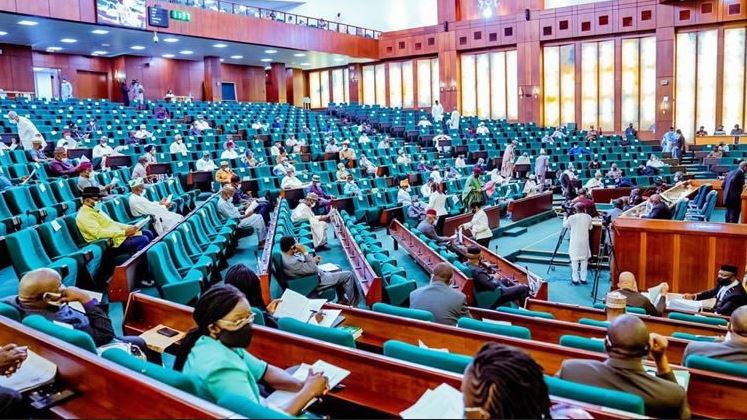
The House of Representatives on Wednesday, accused the electricity Distribution Companies (DisCos) in the country, of crippling the nation’s electricity supply system.
The House Ad hoc Committee investigating Nigeria’s power sector reforms and expenditure from 2007 to 2024, said that the DisCos wallowed in years of poor investment, inadequate expansion, and failure to meet obligations outlined in their original business plans.
Speaking during an investigative hearing, Chairman of the committee, Arch. Ibrahim Almustapha Aliyu, said most distribution companies had misled the government at the point of acquisition, presenting impressive business plans but failing to deploy the required resources to upgrade substations, transformers, and distribution networks more than a decade after privatization.
He expressed shock that despite claims by the Transmission Company of Nigeria (TCN) that it can wheel up to 8,000 megawatts, the DisCos continue to take only about 4,000 megawatts due to limited infrastructure, a problem he said is self-inflicted.
According to him, the power distribution firms have “refused to invest, refused to expand, and refused franchising options,” thereby creating the conditions for energy theft, meter bypassing, and consumer apathy across the country.
“You have caused this problem because you could not expand from what you inherited,” he said. “For 13 to 14 years now, if you had made the necessary investments, substations, up-to-date transformers, proper network expansion, there would be no issue. You would uptake more energy, the cost would be lower, and Nigerians would be happy.”
He noted that many consumers resort to illegal connections because they are billed monthly for electricity that is either not supplied or grossly inadequate.
“How do you expect someone whose monthly bill equals his salary to keep paying? People will look for alternatives. And your refusal to invest has contributed to this unholy attitude of bypassing and stealing energy,” he said.
The committee chairman reminded the DisCos that Nigerians enjoyed better supply under the defunct NEPA/NITEL-era systems in some areas, and expected significant improvements after private investors took over the assets.
He further challenged the DisCos to reconcile their earlier claims of competence and financial capacity with their current inability to meet tariff obligations, network expansion expectations, and service delivery benchmarks.
Chief Regulatory and Compliance Officer of Kaduna Electric, Dr. Mahmood Abubakar said about 60 percent of electricity supplied nationwide is subsidised, a situation the company said has continued to weaken investor confidence and limit the ability of distribution companies (DisCos) to make the necessary capital investments.
He said during the hearing that only about 40 percent of electricity, largely consumed by Band A customers, is cost-reflective, while the rest depends heavily on government subsidies that are often delayed or unpaid.
According to him, the current subsidy structure distorts billing, revenue collection, and the ability of DisCos to expand infrastructure more than a decade after privatisation.
“If we go strictly by the multi-year tariff order, about 60 percent of the energy consumed in Nigeria is subsidised by the government. Only Band A pays the reflective tariff. Even then, we have Band A feeders recording up to 80 percent energy losses due to theft and bypasses, making full recovery impossible,” he said.
Abubakar explained that because DisCos cannot recover their full revenue requirement, they cannot secure investments or loans needed to upgrade their networks.
He added that the delay in the payment of subsidies affects the entire value chain, particularly affecting generation companies’ ability to pay for gas, thereby affecting power production.
“The subsidy is not forthcoming as and when due. It comes whenever the government decides to pay. That is the reality, and it affects everyone. We cannot pay our market invoices fully, the Gencos cannot fulfil firm contracts with gas suppliers, and the whole chain is weakened,” he said.
By Mike Odiakose, Abuja
The Labour Party has commenced its congresses across the states with the exception of Abia state, with the election held across all the electoral wards in Nigeria.
According to the party’s guidelines, the ward Congress holds today Tuesday December 2, while the Local Government Congress will hold Thursday December 4.
The State Congress is expected to hold on Saturday December 6 at the party headquarters across the states.The LP Spokesman, Obiora Ifoh said in a statement that the Abia state Congress was put on hold after a State High Court in Abia restrained the party from going ahead with the Congress in the state pending the determination of charges filed against the state leadership of the party.
Though the party resolved to comply with the order, even though the court lacks jurisdiction, the party’s legal department has already taken steps to vacate the order. This will enable Abia state to hold its own Congress at a later date.
The supervision teams sent by the national leadership to some of the venues have returned positive reports on the progress of the congresses nationwide.
At its NEC meeting held on Friday, November 28 and attended by officials of the Independent National Electoral Commission, the party resolved to reposition the party by ensuring that leaders of the party across board emerge democratically and in line with the electoral law and the constitution of the Federal Republic of Nigeria.
The Labour Party is calling on Nigerians to embrace the party ahead of the 2027 general election. We are repositioning to improve on our capacity to drive the leadership of this great nation soonest.
“However, we are not unmindful of the activities of the fifth columnists planted in the party to create unnecessary friction and to destabilize the unity in the party. While some of them have repented and are being absorbed back into the party, some have nonetheless chosen to stay and continue to play out the script of their paymasters.
“We want to inform them that disseminating falsehood all in the name of propaganda, is a serious crime. In the Criminal Code Act, Section 59 makes it a crime to publish false statements, rumors or reports that are likely to cause fear and alarm to the public. This attracts a huge consequence for the peddlers of such fake news.
“Publishing a fake news that a court has cancelled the Labour Party Congresses nationwide, while knowing that it was done falsely and for the intent of causing panic amongst Nigerians particularly, Labour Party members is a crime and can attract dire consequences. We therefore warn these merchants of falsehood to desist from such shenanigans or we will have no option but to commit them to prison.
“The Julius Abure leadership of the Labour Party is determined to move the party forward by making it attractive for every Nigerian desirous of leadership to achieve their political ambition. We have therefore taken the painful decision to move on, leaving behind anyone not willing to meet up with the pact.”
By Eze Okechukwu, Abuja
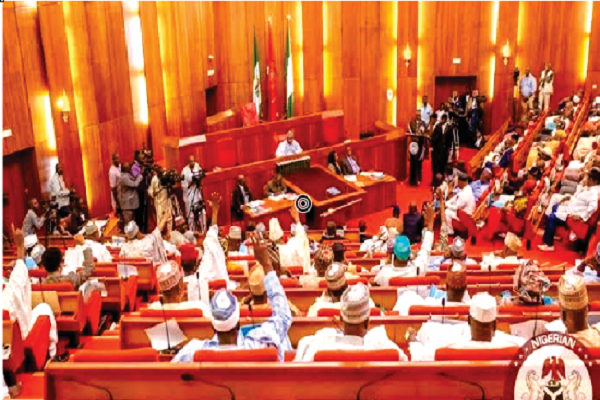
The senate has kick-started pushing for a bill seeking to establish a uniform, toll-free national emergency number for all across every state in Nigeria.
The legislation titled: ‘A Bill for an Act to Establish the National Emergency Toll Service (NETS) to Provide Uniform, Accessible and Rapid Emergency Response Through a Dedicated Toll-Free Number Nationwide, to Empower the Nigerian Communications Commission as the Regulator and for Related Matters, 2025 (SB 402)’ was brought to the floor of the Senate yesterday by Senator Abdulaziz Yar’adua (Katsina central).
Leading the debate on the general principles of the Bill, he said the proposed law would harmonise Nigeria’s multiple emergency helplines into a single, easy-to-remember three-digit number, such as 112 or an alternative agreed after a public hearing.
Speaking further, Senator Yar Adua revealed that countries like the United Kingdom and the United States have improved emergency outcomes with 999 and 911, while India adopted a unified emergency number in 2014 and wondered why Nigeria should operate several helplines for police, fire service, ambulance response, domestic violence, child protection and disaster management.
He said that Lagos alone has several toll-free numbers linked to different agencies, describing the idea as confusing and counterproductive during emergencies.
“Therefore, a toll-free emergency number would go a long way in ensuring that Nigerians in distress are just a call away from the relevant emergency institutions,” the senator said.
“The number would provide a one-stop shop for receiving distress calls from the public and dispatching the same to appropriate response agencies, who will respond to the needs of callers.”
He said calls or text messages to the national emergency line would automatically route to the nearest response centre, taking advantage of the fact that many Nigerians use mobile phones.
Ali Ndume, senator representing Borno south, supported the bill and described it as “timely, very important, and urgently needed”.
“If we do this, we will be enhancing our security architecture and contributing significantly to solving the criminalities affecting the country,” he said.
“One of the impediments we are facing during this security crisis is lack of communication by various security agencies.”
Tahir Monguno, senate chief whip and senator representing Borno north, also backed the proposal.
He said the country must provide a simple and obstruction-free channel for citizens to report suspicious activities.
“This bill gives muscular expression to the need for the general public to report what they see,” he said.
Barau Jibrin, deputy senate president, who presided over the plenary, described the bill as a “wonderful arrangement to help the people of this country whenever it is implemented”.
The bill was referred to the senate committee on communications to report back in four weeks.
If passed, the bill will empower the Nigerian Communications Commission (NCC) to regulate the system and ensure nationwide accessibility to emergency services.


ShareABUMET Brings Joy to JKS Orphanage Through Annual CSR Outreach By Mike Odiakose, Abuja In line with its long-standing commitment...


Senate Seeks Death Penalty for Terrorism Convicts, Informants, Financiers
ShareBy Eze Okechukwu, Abuja In a major legislative push to curb the worsening state of insecurity, the Senate unanimously approved...

FG Empowers 9,870 Farmers with Inputs, Modern Rice Technologies in Kano
ShareThe Federal Government, through the Kano State Special Agro-Processing Zone (SAPZ) Programme in partnership with IFAD, has empowered 9,870 rice...
FG Unveils National Agricultural Sample Survey, 2023 Report for Food Security
ShareThe Federal Government has launched the National Agricultural Sample Survey (NASS) 2023 report, towards developing data-driven policies to achieve food...
Senate Proposes 2-Year Pupillage for Lawyers Newly Called to Bar
ShareBy Eze Okechukwu, Abuja The Senate has passed a bill to amend the Legal Practitioner Act, 2004 into second reading,...


Can the Defense Minister‑Designate Gen. Musa Be Nigeria’s Last Hope for Security Renewal?
ShareBy Abba Dukawa Nigeria stands at a tipping point, where insecurity threatens the very foundations of national stability and erodes...


CBN Scraps Cash Deposit Limits, Raises Weekly Withdrawal
ShareBy Tony Obiechina, Abuja The Central Bank of Nigeria (CBN) yesterday removed all limits on cash deposits and raised the...

Reps Accuse DisCos of Crippling Nations’ Power Supply System
ShareBy Ubong Ukpong, Abuja The House of Representatives on Wednesday, accused the electricity Distribution Companies (DisCos) in the country, of...

Tinubu Inaugurates N1.9bn Renewed Hope Initiative for PWDs, Empowers 250 in Benue
ShareFrom Attah Ede, Makurdi The First Lady of Nigeria, Sen. Oluremi Tinubu, has inaugurated the Renewed Hope Initiative (RHI) Economic...

NPAN Names Veteran Journalist Segun Adediran as New GM/CEO
ShareBy David Torough, Abuja The Newspaper Proprietors Association of Nigeria (NPAN) has appointed seasoned journalist and media strategist, Segun Adediran,...
 Arabic
 Chinese (Simplified)
 Dutch
Dutch English
 French
 German
 Italian
 Portuguese
 Russian
 Spanish