
view point
Rising Cases of divorce demand urgent attention


By Bola Sobola
Marriage, traditionally referred to as a sacred and lifelong union, is under increasing strain in contemporary Nigerian society. Once seen as a bedrock for family stability and societal cohesion, the institution of marriage now finds itself vulnerable to a growing trend: divorce.
Events from within and outside Nigeria reveal that the rate of marital breakdown is rising at an alarming pace, prompting an urgent question: What is going wrong?During courtship, couples often project themselves as generous, loving, and attentive.
The love feels endless, and the commitment unwavering. Yet not long after tying the knot, many discover a different reality. The very individuals who once could not go a day without speaking to each other suddenly become emotionally distant, sometimes even hostile. Is marriage really then an ‘eye-opener’, as the popular saying goes? Or are societal, psychological, and cultural forces silently undermining relationships from within?While Nigeria lacks a centralised, up-to-date national database, anecdotal evidence, court filings, and media reports suggest a marked increase in divorce rates, particularly in urban areas.
In Ogun State, data from the High Court divisions between 2017 and 2020 shows a sharp rise in divorce petitions, from 535 in 2017 to 1,016 in 2019.
Furthermore, the Hill Deep Dive report estimates that there are about 15,000 formal and informal divorce or separation disputes annually in the state, suggesting that most separations occur outside formal courts, with many families choosing informal resolutions or simply walking away.
Such breakdowns are not without consequence, as findings have shown that children from broken homes often suffer academically and emotionally, with higher levels of psychological distress and lower academic performance.
Beyond infidelity and financial stress, many marriages suffer due to a lack of preparation. Too many couples focus on planning a glamorous wedding but spend little time evaluating emotional compatibility or receiving premarital counselling. According to marriage therapists, many divorces could be prevented with better pre-marital education.
Changing gender roles has also been identified as a major contributory factor. As more Nigerian women attain higher education and financial independence, they are less willing to endure disrespect, abuse, or irresponsibility from partners.
Cultural and religious pressures also complicate matters. Many marry to fulfil family or religious expectations, only to find themselves ill-equipped to navigate the complexities of shared life. Add to this the widespread stigma around seeking therapy or help, and it is no surprise that unresolved issues fester into full-blown crises.
Social media, though a viable tool of change, has also emerged as a powerful destabiliser. A 2022 study in Ota, Ogun State, found a strong correlation between social media use and family discord, noting that online behaviours often fuelled suspicion, emotional withdrawal, and infidelity.
The consequences are clear: emotionally unstable children, fractured family units, and increased social tension. In response, Ogun State is strengthening its family courts to better manage domestic disputes and also support affected individuals. What then can be done?
First, pre-marital education must be prioritised. Government and religious institutions should provide structured programmes that help couples understand communication, finances, conflict, resolution, and emotional readiness.
Therapy and mediation services must be normalised and made accessible, as this can significantly reduce court cases and support healthier conflict resolution. Employers and religious bodies can offer relationship wellness programmes as part of their outreach.
In addition to the above, public campaigns are needed to destigmatise divorce and counselling. Education campaigns should also teach the responsible use of social media in relationships.
There should also be school programmes targeted towards supporting children. Children affected by divorce with access to counselling and academic support. Let us not derail the future of the generations that can move the nation to great heights.
Faith still plays a central role in Nigerian marriages. While religious institutions should encourage unity and endurance, they must also support justice and safety. As Malachi 2:16 reminds us, “For I hate divorce, says the Lord.” But even within this context, silence and suffering must never be glorified.
Marriage is still worth defending, but not blindly. It requires wisdom, emotional intelligence, open communication, and mutual respect. If we are to reverse the rising trend of divorce, it will take the collective efforts of society, individuals, families, communities, governments, and spiritual leaders to rebuild faith in this vital institution.
Sobola of the Ogun State Ministry of Information & Strategy writes via bolasobola065@gmail.com
 | ReplyReply allForwardAdd reaction |
By Daniel Nduka Okonkwo
For decades, citizens endured the tyranny of a broken electricity system, an aging national grid crippled by corruption, debt, and chronic neglect. Nigerians were forced to buy their own transformers for their residences, while businesses hemorrhaged billions of naira on diesel.
Across the country, survival depended on what many now describe as the “generator economy,” a costly and unsustainable substitute for reliable public power.In a country where billions have been poured into a faltering national grid, the decision to install a ₦10 billion solar mini-grid at the Presidential Villa is more than a technical upgrade. It is a symbolic rupture.
It signals that even the seat of power no longer trusts the system meant to electrify the nation. What was once dismissed as theory, renewable energy as a lifeline, is now a practical and urgent reality in Nigeria. The Villa’s raison d’être to solar is both an indictment of failed privatization and a declaration that the future of power lies beyond the grid.More than a technical upgrade, the move sends a powerful signal. If the seat of government can abandon unreliable grid power, then institutions, industries, and communities across the country can do the same.
Nigeria’s electricity sector is under immense strain. The national grid, much of it built over half a century ago, suffers from weak transmission infrastructure, outdated equipment, and inadequate maintenance. Frequent system collapses, several recorded in early 2026 alone, have left millions without consistent access to power.
An estimated 90 million Nigerians remain unconnected to the grid, while those with access often receive only a few hours of electricity daily, sometimes enduring outages that stretch for days.
Small and medium-sized enterprises, the backbone of the economy, face soaring operational costs and reduced productivity due to unreliable power supply. Households struggle with rising fuel expenses as they depend on petrol and diesel generators to meet basic energy needs. For many families, persistent outages mean spoiled food, disrupted routines, and a general decline in quality of life.
Critical sectors are equally affected. Hospitals face interruptions that threaten patient care, while schools experience disruptions that undermine learning outcomes. In northern regions, where extreme heat has intensified, the absence of reliable electricity compounds already difficult living conditions.
At the institutional level, privately operated generation and distribution companies remain burdened by debts exceeding ₦6.8 trillion, alongside technical and operational limitations that hinder effective service delivery. Unlike Nigeria’s telecommunications sector, which prioritizes continuous investment and maintenance, the power sector has often transferred infrastructure responsibilities to already burdened communities.
The Federal Government has begun prioritizing renewable energy as a pathway to stability and growth. In the 2025 fiscal framework, ₦500 billion has been allocated for the solarization of public institutions, alongside ₦70 billion dedicated to solar mini-grids in universities.
International partnerships are also playing a critical role. A 750 million dollar World Bank-backed program aims to provide distributed solar electricity to approximately 17.5 million Nigerians, particularly in underserved and off-grid communities. In parallel, a 400 million dollar investment is being directed toward developing local solar manufacturing capacity, an effort that could reduce import dependence while creating jobs and strengthening the domestic energy value chain.
These initiatives reflect a deliberate move away from a centralized, fragile grid toward decentralized energy solutions. Mini-grids and standalone solar systems are emerging as viable alternatives, capable of delivering reliable electricity directly to homes, businesses, and institutions without relying on overstretched national infrastructure.
The solarization of the Presidential Villa is, at its core, both practical and symbolic.
Practically, it demonstrates the cost-saving potential of renewable energy by reducing long-term expenditure on diesel and maintenance. Symbolically, it represents a shift in governance, an acknowledgment that the existing system can no longer meet the country’s needs.
For ordinary Nigerians, this transition carries significant implications. Reduced dependence on diesel generators could lower energy costs, improve air quality, and enhance public health. Reliable electricity would support economic productivity, enable small businesses to thrive, and improve living standards across urban and rural communities alike.
The collapse of the traditional power system has exposed decades of systemic failure, but it has also created an opportunity for transformation. Renewable energy, particularly solar, offers a pathway not only to energy security but also to economic resilience and environmental sustainability.
Sustained investment, regulatory reform, and transparent implementation will determine whether these ambitious initiatives translate into real and lasting change. Without accountability and technical capacity, even the most promising policies risk falling short.
Yet, if successfully implemented, the current shift could mark the beginning of a new era, one in which access to reliable electricity is no longer a privilege, but a standard.
For millions of Nigerians, energy is more than infrastructure. It is opportunity, dignity, and survival.
Transitioning to solar and decentralized power is more than an energy shift. It is a declaration of resilience, innovation, and hope. By harnessing the boundless light above us, nations can illuminate pathways to prosperity, empower communities, and secure a sustainable future. The dawn is no longer a promise deferred; it is a reality within reach. As this new age of light unfolds, it carries with it the assurance that progress, equity, and opportunity will shine on every corner of the land.
Daniel Nduka Okonkwo is a Nigerian investigative journalist, publisher of Profiles International Human Rights Advocate, and policy analyst whose work focuses on governance, institutional accountability, and political power. He is also a human rights activist, human rights advocate, and human rights journalist. His reporting and analysis have appeared in Sahara Reporters, African Defence Forum, Daily Intel Newspapers, Opinion Nigeria, African Angle, and other international media platforms. He writes from Nigeria and can be reached at dan.okonkwo.73@gmail.com.
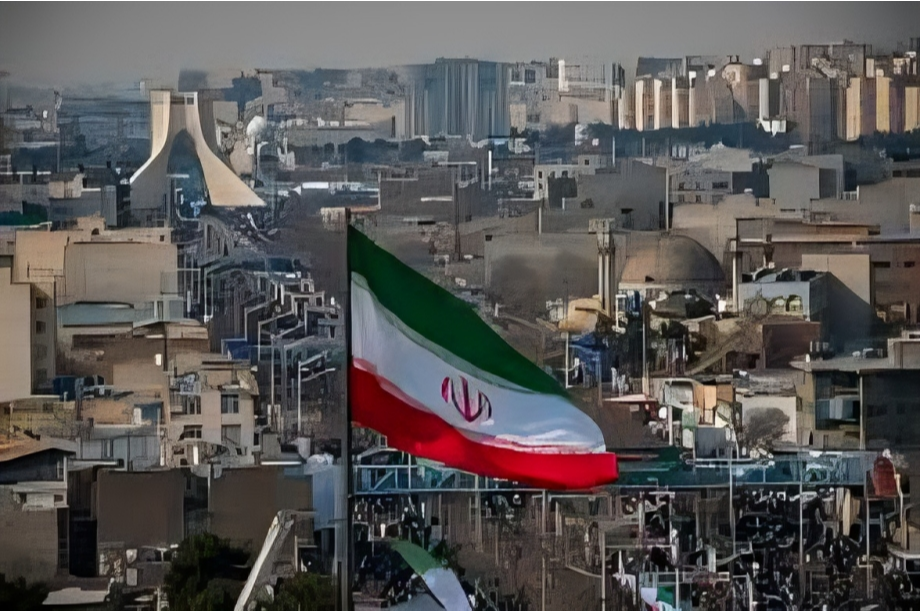
By Kayode Adebiyi
On Feb. 28, the U.S. and Israel launched a coordinated military campaign against Iran, codenamed “Operation Epic Fury” and “Operation Roaring Lion” respectively, conducting nearly 900 joint strikes on Iran within the first 12 hours.
Since then, the world could barely keep up with happenings in the Gulf region.
The opening bombardment on Iran successfully targeted a high-level meeting in Tehran, resulting in the death of Supreme Leader Ali Khamenei and several top military commanders.
President Donald Trump, who entered into the war while negotiations with Iran on shutting down its nuclear programme were ongoing, has been threatening fire and brimstone.
He said that the goal was to “raze the missile industry to the ground” and ensure that Iran never achieves nuclear capability.
According to reports, more than 2,000 strikes have targeted the Islamic Revolutionary Guard Corps (IRGC) facilities, air defenses, and nuclear research sites.
Iran has responded with hundreds of ballistic missiles and unmanned combat aerial vehicles and loitering munitions developed by Shahed Aviation Industries.
The Iranians have expanded their target list to include Gulf Arab states (Bahrain, Kuwait, Qatar, UAE, and Saudi Arabia), striking civilian infrastructure like desalination plants and airports to pressure the U.S. into a ceasefire.
Although this round of conflict has shifted from a shadow war into a direct, large-scale military confrontation, it has its roots in a previous crisis.
In June 2025, the long-simmering hostility between Israel and Iran erupted into overt military confrontation, putting the Middle East on a razor’s edge and sending shockwaves across the globe.
For weeks, the two regional powers exchanged deadly blows, with each strike pushing the spectre of a wider regional war closer to reality.
What began as a shadow war of proxies and covert operations has escalated dramatically, with resultant destruction of lives and property.
On June 13, 2025, Israel launched a series of targeted airstrikes on Iranian military infrastructure and nuclear facilities.
After the attacks, Israel claimed to have set back Tehran’s nuclear programme significantly and decapitated key military leadership.
As expected, Iran swiftly retaliated with barrages of missiles and drones, hitting Israeli cities and towns.
By the time the smoke of bombardments cleared, both parties had suffered significant casualties, with Iran’s Health Ministry stating more than 220 people had been killed, and Israel confirming more than 20 fatalities.
The audacious nature of Israel’s strikes, targeting nuclear sites like Natanz and Fordow, and even the headquarters of Iranian state TV, signified a profound shift in the intensity of the conflict.
Raphael Cohen, an expert at RAND, a nonprofit, nonpartisan think-tank, said then that Israel viewed Iran’s proxy attack as an existential threat.
“Israel believed it was almost out of time to stop an Iranian bomb and that the time was right for a preventative strike,” he said.
According to the White House, Trump framed the war as a “dawn of a new season” for the Iranian people.
Trump has also called for Iran’s “unconditional surrender” and stated that he intends to play a direct role in selecting Iran’s next leader, famously dismissing the late Supreme Leader’s son, Mojtaba Khamenei, as “unacceptable”.
Israeli Prime Minister Benjamin Netanyahu also justified the strikes as an “act of necessity against an existential threat”.
Polish President Karol Nawrocki and some leaders in the Baltics have also offered clear political backing, viewing the operation through a security lens similar to their stance on Russian aggression.
However, the UN Secretary-General, António Guterres, has repeatedly condemned the strikes as a violation of the UN Charter, warning that “when force replaces law, barbarism takes its place.”
Notably, he said that the conflict now directly impacts 16 countries.
While China and Russia have been observing the situation from afar, yet condemning the U.S. and Israel, analysts say they could determine the future of the conflict.
Many of the U.S. allies in Europe oppose or stay neutral, citing the violation of the UN Charter. However, Spain has been the most vocal Western critic of the U.S.
Prime Minister Pedro Sánchez vehemently refused to allow U.S. forces to use Spanish bases and doubled down even after threats of diplomatic retaliation from President Trump.
Regardless of support, neutrality or opposition to the war, conflict analysts are debating whether the world will, again, be plunged into an unending regional conflict.
The International Institute for Strategic Studies said the U.S. has transitioned from a state that uses diplomacy to one that chooses results over rules.
It warned that, while air superiority is near-complete, the shift toward targeting the 1.2 million-strong IRGC and Basij forces will require a massive increase in strike capacity.
The Center for Strategic & International Studies reported that the cost of the first 100 hours of the war was 3.7 billion dollars, most of which was unbudgeted, posing a significant long-term fiscal challenge for the U.S.
Middle East Institute (MEI) labelled the war as an intelligence gamble, questioning if the decapitation of leadership would lead to a collapse or if the regime would prove adaptive and resilient potentially leading to a protracted insurgency.
Others, such as the Just Security, argue that the preemptive justification of the war fails the legal test of imminent assault, setting a dangerous global precedent for unilateral regime change.
Meanwhile, a consensus is emerging among analysts that, while the military campaign has been seemingly successful, the political endgame is murky.
They claim that 80 per cent of Iran’s air defence system has been destroyed.
However, other analysts, such as those at the Council on Foreign Relations, point out that, by excluding allies from the initial planning, the U.S. may find itself without a coalition of the willing.
This, they warn, might disrupt the management of the post-war humanitarian and governance crisis that follows a regime collapse.
There are also consequences for global trade and cooperation, even in regions not directly affected by the conflict.
Already, oil prices have surged due to the crisis, with global supply chain disruption and economic growth decline further forecast by analysts.
According to the BBC, crude oil prices surged over 20 per cent to exceed 100 dollars to -114 dollars per barrel; the highest level since 2022.
It further reported that the trend is threatening regional and global shipping, causing sharp declines in global stock markets.
In Nigeria, the impact of the conflict has started to tell on citizens, with oil prices going up since the conflict started.
Of course, with oil price hike comes an increase in commodity prices, cost of living crisis and, ultimately, domestic inflation.
With conflicts in the eastern flank of Europe and elsewhere, public affairs analysts, including Azubuike Ishiekwene, believe that the U.S and Israel’s action amounts to war mongering and a deliberate destabilisation of global peace.
While Tehran’s regime is not far from blame, the urgent question remains: Can the international community sustain the cost of another protracted, unending conflict? (NAN)

By Ebuka Ukoh
Nigeria is once again arguing about whether election results should be transmitted electronically from polling units in real time.
At first glance, this sounds technical. Network strength. Server capacity. Connectivity gaps.
Legal wording. Beneath the technical vocabulary lie deeper questions: Do we want elections whose outcomes are traceable, verifiable, and difficult to manipulate? Or do we want elections that still leave room for “adjustments” between the polling units and the final collation centres?Recent comments by a former Resident Electoral Commissioner, Barr Mike Igini, have brought this issue back into sharp focus.
His warning is not about gadgets. It is about credibility. He argues that weakening mandatory electronic transmission risks eroding public trust ahead of 2027.This is not a minor legislative tweak. It is about whether Nigeria moves forward or backwards in electoral transparency.
I do not claim expertise in electoral technology. I am neither an engineer nor an INEC official. I occupy the office of a citizen … concerned enough to invite us to reason together.
When the rules governing the transfer of power become unclear, everyone should pay attention. If anyone believes this conversation is exaggerated or premature, they only need to revisit the theatrics that unfolded during the recent elections in Abuja.
Confusion, accusations, narrative battles, and public distrust filled the air long before final declarations were settled. That alone shows this is not a technical footnote. It is a stability question.
Electoral credibility is not a cosmetic issue. It belongs in the national security infrastructure. When citizens believe their votes count, they invest in ballots. When they believe outcomes are negotiable, frustration seeks other channels. No country can sustainably police its way out of democratic distrust. The cheapest form of stability is credible elections.
What e-transmission means
Many Nigerians hear “e-transmission” and imagine fully automated polls. That is not the case. Voting remains manual. Ballots are counted manually at the polling units. Party agents and observers are present. The result is entered on Form EC8A and jointly signed by all of those concerned.
The difference comes after counting. Under real-time electronic transmission, the presiding officer uploads a photograph or scanned copy of the polling unit result directly to INEC’s central server and the public viewing portal. That means the result becomes visible almost immediately.
Why does this matter?
Historically, the greatest and most recurring vulnerabilities in Nigerian elections have little to do with the polling units. It’s more to do with the collations. When results move physically (offline) from polling units to the wards, to the local governments and to the states, they pass through multiple hands. Each stage creates opportunities … and opportunities in a weak system invite unwholesome interferences.
Electronic transmission reduces that ugly window, creating a digital timestamp, a public record, and a trail. That is not perfection, but it is protection.
Real fear behind e-transmission resistance
The argument against mandatory e-transmission usually rests on infrastructure concerns, such as poor network coverage, power outages, and rural connectivity.
Legitimate as they are, these concerns must be tested against evidence. After all, Nigeria conducts electronic banking across remote communities, SIM registration is centralised, BVN verification works nationwide, telecommunications companies operate 3G and 4G networks covering most populated areas, and INEC uploads voter registration data and has tested electronic transmission before. If we can electronically verify bank transfers in real time, why can’t we transmit a polling unit result sheet? The deeper concern may not be connectivity, but control. Manual collation allows discretion.
Discretion allows negotiation. Negotiation allows influence. Technology narrows discretion. And systems built on discretionary power rarely surrender it willingly.
What is ahead if e-transmission dust doesn’t settle?
If the legal framework remains ambiguous going into 2027, several consequences are predictable:
Voter turnout rate will drop further. Litigations will multiply. Every disputed election will centre on whether electronic transmission was required or optional. Public trust will decline further. Citizens already sceptical of outcomes will interpret delays or technical failures as manipulation.
Post-election unrest may intensify. Where transparency is weak, conspiracy fills the vacuum.
International credibility will decline. Electoral observers evaluate transparency architecture, not speeches. Nigeria cannot afford another credibility crisis in 2027.
Governance gap
This e-transmission controversy exposes something larger than election procedure. It reveals how reform is often negotiated in fragments rather than explained in full. The public watched as tensions flared within both chambers of the national parliament over electronic transmission, with amendments proposed, resisted, reframed, and debated in ways that appeared more political than technical. The optics were troubling. When lawmakers publicly clash over transparency mechanisms without clearly communicating the evidence behind their positions, citizens are left to interpret motive rather than substance.
Democratic reform must not feel improvised or strategic. It must be evidence-driven and transparent. If parliamentarians believe electronic transmission is impractical, they must publish the data supporting that claim. If INEC believes it is feasible, it must present detailed technical assessments and infrastructure mapping. Democracy does not run on assumptions. It runs on clarity.
Actionable recommendations
If Nigeria is serious about credible elections, the following steps are urgent:
Make Real-Time E-Transmission the Legal Default
The Electoral Act should stipulate that electronic transmission from polling units is mandatory, not conditional. Where connectivity fails, the presiding officer should be required to post and/or move to the nearest viable transmission point within a defined time window. Ambiguity is the enemy of credibility.
Publish a National Connectivity Audit for Elections
INEC, with the Nigerian Communications Commission and mobile network operators, should release a publicly accessible map showing transmission readiness by polling unit cluster. Transparency builds confidence.
Build Redundancy Systems
Where network gaps exist, satellite uplink devices or portable signal boosters can be deployed. Other developing democracies use layered redundancy to protect election data.
Failure planning is part of system design, after all.
Conduct Nationwide Public Education
Citizens must understand how results move from the polling unit to the final declaration.
The more voters understand the chain, the harder it becomes to manipulate it quietly.
Democracy requires informed participants and Establish Criminal Penalties for Deliberate Non-Transmission
If a presiding officer fails to upload without a documented technical reason, clear sanctions must follow. Rules without enforcement are decorative.
Bigger question
Nigeria’s democratic future will not be determined only by who wins the polls. It will be determined by whether citizens believe those wins are legitimate. Technology is not magic. It cannot repair weak institutions or substitute for political will. But it can narrow the space for abuse. And in fragile democracies, narrowing that space is meaningful progress.
Nigeria is not technologically barren. According to data from the Nigerian
Communications Commission, the country has over 200 million active mobile subscriptions, with penetration extending deep into rural communities. Millions of Nigerians in villages conduct mobile transfers, receive alerts, use USSD codes, and verify identities electronically. Market women process digital payments. Farmers check prices on basic phones. Technology already mediates daily economic life far beyond major cities.
The question before us, then, is not whether electronic transmission is perfect. It is whether we are prepared to apply the same digital confidence we rely on in banking and commerce to the protection of our votes.
When results are clear at the source, they do not need to be defended later. When votes are protected at the polling units democracy becomes harder to manipulate.
If we get this wrong now, 2027 will not revolve around campaigns. It will revolve around credibility. And credibility, once lost, is far more expensive to rebuild than any server infrastructure.
Mr Ukoh, an alumnus of the American University of Nigeria, Yola, and PhD student at
Columbia University, writes from New York.


Ododo Inaugurates Ultra-Modern Hospital in Kabba, Bunu
ShareFrom Joseph Amedu, Lokoja Kogi State Governor, Usman Ododo on Tuesday inaugurated privately built Southward Hospital and Diagnostic Centre in Edumo, Kabba/Bunu Local Government...

Sri Lanka Issues Fuel, Energy Conservation Guidelines amid Mideast Tensions
ShareSri Lanka has issued guidelines to government institutions on the prudent use of fuel and energy amid possible disruptions to fuel imports caused by escalating...


FG Seeks Partnership to Relocate Urban Custodial Centres
ShareThe Minister of Interior, Dr. Olubunmi Tunji-Ojo, has urged all levels of government to collaborate in relocating custodial centres overtaken by urbanisation....

2027: INEC Unveils Draft Guidelines for Political Parties
ShareThe Independent National Electoral Commission (INEC) on Tuesday unveiled the draft 2026 Regulations and Guidelines for Political Parties, ahead of the...
Prosperity Cup 2026: Correctional Centre Team Secures Ticket to Next Round
ShareFrom Mike Tayese, Yenagoa The Okaka Correctional Centre team, Liberty FC have qualified for the next round of Nigeria’s biggest...

Zenith Bank Appoints Okwudili Executive Director
ShareZenith Bank Plc has announced the appointment of Kennedy Okwudili as an Executive Director of the bank, effective May 1....


EFCC, ICPC Bare Fangs on Political Heavyweights Ahead 2027 Polls
ShareBy David Torough, Abuja Nigeria’s anti-corruption landscape intensified yesterday as coordinated actions by key enforcement agencies placed two prominent political...


FG Tenders Apology over Nationwide Power Outages, Pledges Stable Supply
ShareBy David Torough, Abuja The Minister of Power, Adebayo Adelabu, has said that the current power outages across Nigeria are...


Troops Uncover Terrorists’ Burial Ground, Nab High-profile Collaborators in North-East
ShareTroops of Operation Hadin Kai have uncovered a suspected terrorist burial ground and apprehended high-profile collaborators in sustained operations across...


Expert Cautions Students against Over-reliance on AI
ShareAn Information and Communication Technology (ICT) expert, Abiona Solomon, has cautioned students against over-reliance on Artificial Intelligence (AI), urging them...