
view point
Can the Global Economy Survive a Protracted U.S./Israel–Iran War?

By Kayode Adebiyi
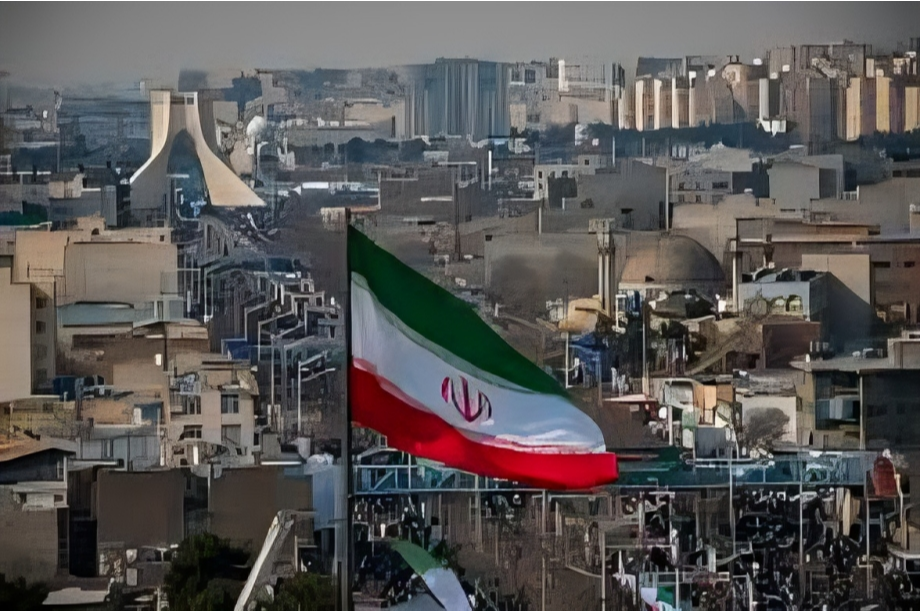
On Feb. 28, the U.S. and Israel launched a coordinated military campaign against Iran, codenamed “Operation Epic Fury” and “Operation Roaring Lion” respectively, conducting nearly 900 joint strikes on Iran within the first 12 hours.
Since then, the world could barely keep up with happenings in the Gulf region.
The opening bombardment on Iran successfully targeted a high-level meeting in Tehran, resulting in the death of Supreme Leader Ali Khamenei and several top military commanders.
President Donald Trump, who entered into the war while negotiations with Iran on shutting down its nuclear programme were ongoing, has been threatening fire and brimstone.
He said that the goal was to “raze the missile industry to the ground” and ensure that Iran never achieves nuclear capability.
According to reports, more than 2,000 strikes have targeted the Islamic Revolutionary Guard Corps (IRGC) facilities, air defenses, and nuclear research sites.
Iran has responded with hundreds of ballistic missiles and unmanned combat aerial vehicles and loitering munitions developed by Shahed Aviation Industries.
The Iranians have expanded their target list to include Gulf Arab states (Bahrain, Kuwait, Qatar, UAE, and Saudi Arabia), striking civilian infrastructure like desalination plants and airports to pressure the U.S. into a ceasefire.
Although this round of conflict has shifted from a shadow war into a direct, large-scale military confrontation, it has its roots in a previous crisis.
In June 2025, the long-simmering hostility between Israel and Iran erupted into overt military confrontation, putting the Middle East on a razor’s edge and sending shockwaves across the globe.
For weeks, the two regional powers exchanged deadly blows, with each strike pushing the spectre of a wider regional war closer to reality.
What began as a shadow war of proxies and covert operations has escalated dramatically, with resultant destruction of lives and property.
On June 13, 2025, Israel launched a series of targeted airstrikes on Iranian military infrastructure and nuclear facilities.
After the attacks, Israel claimed to have set back Tehran’s nuclear programme significantly and decapitated key military leadership.
As expected, Iran swiftly retaliated with barrages of missiles and drones, hitting Israeli cities and towns.
By the time the smoke of bombardments cleared, both parties had suffered significant casualties, with Iran’s Health Ministry stating more than 220 people had been killed, and Israel confirming more than 20 fatalities.
The audacious nature of Israel’s strikes, targeting nuclear sites like Natanz and Fordow, and even the headquarters of Iranian state TV, signified a profound shift in the intensity of the conflict.
Raphael Cohen, an expert at RAND, a nonprofit, nonpartisan think-tank, said then that Israel viewed Iran’s proxy attack as an existential threat.
“Israel believed it was almost out of time to stop an Iranian bomb and that the time was right for a preventative strike,” he said.
According to the White House, Trump framed the war as a “dawn of a new season” for the Iranian people.
Trump has also called for Iran’s “unconditional surrender” and stated that he intends to play a direct role in selecting Iran’s next leader, famously dismissing the late Supreme Leader’s son, Mojtaba Khamenei, as “unacceptable”.
Israeli Prime Minister Benjamin Netanyahu also justified the strikes as an “act of necessity against an existential threat”.
Polish President Karol Nawrocki and some leaders in the Baltics have also offered clear political backing, viewing the operation through a security lens similar to their stance on Russian aggression.
However, the UN Secretary-General, António Guterres, has repeatedly condemned the strikes as a violation of the UN Charter, warning that “when force replaces law, barbarism takes its place.”
Notably, he said that the conflict now directly impacts 16 countries.
While China and Russia have been observing the situation from afar, yet condemning the U.S. and Israel, analysts say they could determine the future of the conflict.
Many of the U.S. allies in Europe oppose or stay neutral, citing the violation of the UN Charter. However, Spain has been the most vocal Western critic of the U.S.
Prime Minister Pedro Sánchez vehemently refused to allow U.S. forces to use Spanish bases and doubled down even after threats of diplomatic retaliation from President Trump.
Regardless of support, neutrality or opposition to the war, conflict analysts are debating whether the world will, again, be plunged into an unending regional conflict.
The International Institute for Strategic Studies said the U.S. has transitioned from a state that uses diplomacy to one that chooses results over rules.
It warned that, while air superiority is near-complete, the shift toward targeting the 1.2 million-strong IRGC and Basij forces will require a massive increase in strike capacity.
The Center for Strategic & International Studies reported that the cost of the first 100 hours of the war was 3.7 billion dollars, most of which was unbudgeted, posing a significant long-term fiscal challenge for the U.S.
Middle East Institute (MEI) labelled the war as an intelligence gamble, questioning if the decapitation of leadership would lead to a collapse or if the regime would prove adaptive and resilient potentially leading to a protracted insurgency.
Others, such as the Just Security, argue that the preemptive justification of the war fails the legal test of imminent assault, setting a dangerous global precedent for unilateral regime change.
Meanwhile, a consensus is emerging among analysts that, while the military campaign has been seemingly successful, the political endgame is murky.
They claim that 80 per cent of Iran’s air defence system has been destroyed.
However, other analysts, such as those at the Council on Foreign Relations, point out that, by excluding allies from the initial planning, the U.S. may find itself without a coalition of the willing.
This, they warn, might disrupt the management of the post-war humanitarian and governance crisis that follows a regime collapse.
There are also consequences for global trade and cooperation, even in regions not directly affected by the conflict.
Already, oil prices have surged due to the crisis, with global supply chain disruption and economic growth decline further forecast by analysts.
According to the BBC, crude oil prices surged over 20 per cent to exceed 100 dollars to -114 dollars per barrel; the highest level since 2022.
It further reported that the trend is threatening regional and global shipping, causing sharp declines in global stock markets.
In Nigeria, the impact of the conflict has started to tell on citizens, with oil prices going up since the conflict started.
Of course, with oil price hike comes an increase in commodity prices, cost of living crisis and, ultimately, domestic inflation.
With conflicts in the eastern flank of Europe and elsewhere, public affairs analysts, including Azubuike Ishiekwene, believe that the U.S and Israel’s action amounts to war mongering and a deliberate destabilisation of global peace.
While Tehran’s regime is not far from blame, the urgent question remains: Can the international community sustain the cost of another protracted, unending conflict? (NAN)
By Kayode Adebiyi
There is a growing trend among state governments to initiate ambitious airport infrastructure projects, regardless of their economic viability.
From cargo airports to international terminals, governors across the country have presented these projects as symbols of development, economic expansion, and modernisation.
However, critics increasingly argue that many of these airports are turning into “white elephant” projects, because they are expensive infrastructure that delivers little practical value while consuming enormous public funds.
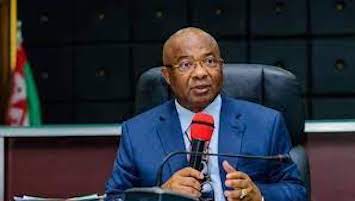
Recently, Gov. Hope Uzodimma of Imo said at a gathering of representatives of friendly nations and international institutions that the state government collected a net allocation of between N700 billion and N800 billion monthly.
His revelation aligns with figures from the Federation Account Allocation Committee (FACC), which show that allocations to subnational governments have risen significantly.
For instance, compared to February 2025, they saw about a 23 per cent increase in their revenues from FAAC in February 2026.
On average, FAAC revenues have almost tripled since the subsidy was removed on May 29, 2023.
However, the debate about the impact of these revenues has intensified as the country faces rising poverty, unemployment, inflation, inadequate healthcare, struggling education system, and poor infrastructure.
An analysis of media content shows that many citizens are questioning whether the billions of naira spent on airports could have been better invested in sectors that directly improve their welfare.
Some of the airport projects already commissioned operate significantly below capacity, while others under construction remain abandoned.
A case in hand is the Ebonyi International Airport initiated during the administration of former governor David Umahi.
Reports indicate that, after spending N63 billion and five years (2019–2024), the airport generated no revenue, while additional billions were spent fixing defective runways and leaking terminal roofs.
Similarly, the Lafia Cargo Airport in Nasarawa State has attracted criticism after reports revealed that the facility remained largely abandoned years after its commissioning, having gulped a whooping N15 billion.
There are many other such projects dormant, abandoned, under construction or proposed, in Abia, Kogi, Osun, Benue, Taraba and Cross Rivers, among others.
A civil servant based in Abuja, who simply identified himself as Dele, referred to airport projects by states as misplaced priorities.
“There is an airport in Akure which is already underutilised. Akure to Ado Ekiti, the Ekiti State capital, is under 45 minutes’ drive. Please, what does the government need an airport for?
“Also, Osogbo (Osun capital) is just under 90 minutes’ drive to Ibadan, where there is an airport, also already underutilised. Oyo is bigger and more strategic than Osun, yet its airport is not used to full capacity.
“What then is the guarantee that an airport in Osun will be more viable than the one in Ibadan?” he queried.
Like Dele, some stakeholders warned that multiple airports in neighbouring locations could struggle to attract enough passenger traffic to remain viable.
Sen. Smart Adeyemi, former Chairman, Senate Committee on Aviation, once warned that many state governments were embarking on wasteful airport projects while neglecting citizens’ welfare.
According to him, many states will benefit more from smaller and cheaper airstrips rather than full-scale airports costing tens of billions of naira.
He said that most of the airports owned by states were waste of public funds as they lack adequate technical capacity and passenger flow.
“Most of the airports built by the states lack the required facilities and passenger flow to be called airports.
“Aside from Lagos, which has 65 per cent of passengers’ traffic, Abuja, Port Harcourt, Kano and most of the other airports lack the required 500,000 to one million passenger traffic on a yearly basis.
“In fact, many of them cannot even record 100,000 passengers annually not to talk of the minimum of 500,000 by international standards.”
Experts within the aviation industry also expressed a similar concern.
Former Managing Director of the Federal Airports Authority of Nigeria (FAAN), Capt. Rabiu Yadudu, said those airports majorly lacked in commercial viability.
“An airport that needs N300 million a month and they have just 1,000 passengers a month there is no magic that can make them sustainable,” he said.
Also, former General Secretary of the Nigerian Union of Air Transport Employees, Olayinka Abioye, described the rush by governors to build airports as an “aberration and fraudulent”.
He argued that many states ignored more pressing developmental challenges while pursuing legacy projects that provide limited economic value.
According to aviation analysts, many governors justify airport projects by claiming they will attract investors, stimulate tourism, create jobs, and improve agricultural exports through cargo operations.
While these goals appear attractive on paper, the reality often differs because most states lack the industrial capacity, commercial activity, and passenger demand necessary to sustain airport operations.
A recent media report revealed that several states collectively spent more than N251 billion on airports considered largely non-viable.
The report noted that poor healthcare, bad roads, inadequate housing, and failing public services did not stop state governments from investing heavily in airport projects, often for political prestige rather than economic necessity.
For ordinary Nigerians, the implications of these projects are significant.
Critics say every billion naira invested in underutilised airports represents money unavailable for schools, hospitals, water supply, agriculture, electricity, and road construction.
“In many rural communities, people still struggle with inadequate healthcare facilities, overcrowded classrooms, and poor transportation networks.
“Government should therefore prioritise human development over legacy infrastructure.
“In states where civil servants cannot earn living wages and unemployment remains widespread, spending billions on airports can appear insensitive to citizens’ daily struggles, especially during these hard times.
“The maintenance costs of airports also create long-term financial pressure,” Dele said.
Indeed, airports require expensive runway maintenance, security systems, aviation equipment, staff salaries, and electricity supply.
Therefore, when passenger traffic is low, governments must continuously subsidise operations using taxpayers’ money.
Analysts say this creates recurring expenditure that may not generate corresponding economic benefits, as witnessed in the case of the Ebonyi airport and others.
Also, some airport projects have displaced local communities and farmlands without delivering promised economic opportunities.
Nonetheless, supporters of airport development argue that such infrastructure can stimulate long-term economic growth if properly planned.
They point to examples such as the Victor Attah International Airport in Akwa Ibom, which operates alongside the state-owned Ibom Air airline.
Although the airport still relies heavily on state support, it has achieved relative operational success compared to many other state-owned airports.
They also claim that airports can improve connectivity, encourage investment, and reduce travel stress for residents who previously depended on distant airports in neighboring states.
However, many analysts insist that airport construction should be based on detailed feasibility studies rather than political ambition, and that infrastructure should reflect actual economic demand, population size, industrial activity, and long-term sustainability.
Given that barely five per cent of the population flies, observers say the surge in state-owned airports suggests a preference for prestige projects over practical, people-focused development. (NAN)
By Daniel Nduka Okonkwo
As Nigeria gradually moves toward the 2027 presidential election, political conversations across the country are increasingly dominated by one central question: Can opposition forces rally strongly enough to defeat incumbent President Bola Ahmed Tinubu and the ruling All Progressives Congress?
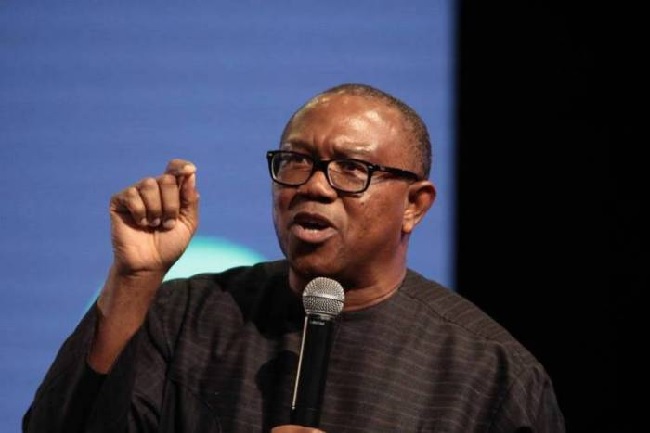
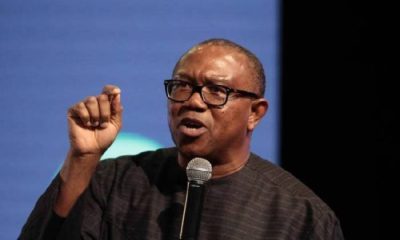
At the heart of the debate stands Peter Obi, the former Labour Party presidential candidate whose unexpected rise in the 2023 elections transformed Nigeria’s political landscape and galvanized millions of young voters under the now-famous “Obidient” movement.
Political analysts, party strategists, and civil society observers remain sharply divided over Obi’s chances. While supporters insist that the worsening economic realities facing many Nigerians have strengthened his appeal, critics argue that defeating an incumbent president backed by Nigeria’s powerful political machinery remains an enormous challenge.
For many Nigerians, the current political climate is being shaped largely by economic realities. Rising inflation, fuel subsidy removal, currency instability, and the increasing cost of living have generated frustration across several regions of the country.
Supporters of Obi believe these conditions may significantly reshape voter behavior ahead of 2027. They argue that public dissatisfaction with economic hardship could strengthen the appetite for alternative leadership, particularly among young voters and urban populations that already formed the backbone of Obi’s support base during the 2023 elections.
Obi’s image as a disciplined manager and businessman continues to resonate with sections of the electorate seeking economic reforms, accountability, and transparent governance.
However, public frustration alone may not automatically translate into electoral victory. Nigeria’s elections are historically influenced not only by popularity but also by political structures, grassroots mobilization, regional alliances, and elite negotiations.
Perhaps the most decisive factor in the 2027 calculations is that Obi’s path to victory may depend heavily on building a formidable Northern alliance capable of weakening the APC’s traditional dominance in the region.
Some political observers argue that a Southern candidate paired with a credible Northern political figure could create a competitive national ticket capable of challenging the ruling party. Obi’s reported openness to serving only a single term is also viewed by some analysts as a strategic attempt to reassure Northern stakeholders concerned about power rotation.
Political watchers are closely monitoring efforts by Obi and allied political actors to consolidate opposition forces under a more coordinated national structure.
Still, questions remain over whether such alliances can move beyond elite negotiations and translate into actual electoral strength across Nigeria’s diverse voting blocs.
Despite growing opposition discussions, the APC continues to project confidence.
Party loyalists insist that President Tinubu’s incumbency advantage, combined with the APC’s nationwide political structure, remains a powerful electoral weapon. The ruling party retains significant influence through governors, federal appointments, party networks, and institutional leverage that have historically provided strong advantages during elections.
Supporters of the administration also argue that some of the government’s economic reforms may begin yielding measurable results before the next election cycle. They point to gradual improvements in foreign exchange management, agricultural initiatives, and investment policies as possible factors that could improve public perception before 2027.
The Presidency has repeatedly dismissed claims that opposition coalitions pose a serious threat to the Tinubu-Shettima ticket, maintaining that fragmented opposition parties lack the cohesion necessary to defeat the APC.
While Obi remains one of Nigeria’s most visible opposition figures, questions persist over whether popularity on social media alone can guarantee electoral success.
He still faces difficulties expanding his influence in parts of Northern rural communities, where voting patterns are often shaped by long-established political structures, religious considerations, and local alliances.
Obi’s relatively calm and gentlemanly political approach may struggle against the aggressive and highly strategic political culture traditionally associated with Nigerian power politics.
Political commentators have previously warned that, without a united and strategic coalition, opposition forces could suffer what some describe as a “humiliating defeat.”
There are also arguments from some conservative Northern circles questioning whether Obi’s business background and investments in breweries may limit his appeal among certain demographics in the region. Although supporters dismiss such criticisms as politically motivated, they remain part of the wider political conversation ahead of the election. Nigerian political analysis
Across political camps, one point of consensus appears increasingly clear: the 2027 presidential race is likely to become one of Nigeria’s fiercest democratic contests in recent history.
Whether President Tinubu secures re-election or Peter Obi emerges as the face of a united opposition may ultimately depend on several critical factors, including economic realities, voter turnout, coalition-building, Northern alliances, grassroots mobilization, and the opposition’s ability to avoid fragmentation.
For now, Nigeria’s political atmosphere remains fluid, unpredictable, and intensely competitive.
As political maneuvering accelerates and alliances continue to evolve, the road to 2027 is shaping into a defining contest not only about personalities and political parties, but also about the future direction of Africa’s largest democracy.
Nigerians want credible leaders who will fulfill their campaign promises and build a greater Nigeria founded on unity, fairness, security, and opportunity for all. Nigerians are not asking for too much. They simply want leaders who will govern responsibly, improve living conditions, and place national interest above personal or political interests.
Daniel Nduka Okonkwo is a Nigerian investigative journalist, publisher of Profiles International, human rights advocate, and policy analyst whose work focuses on governance, institutional accountability, and political power.
By Abujah Racheal
Malaria elimination in West Africa is no longer hindered by a lack of solutions, but by execution.
Validated strategies and tools exist; the focus, stakeholders say, must now be on immediate, widespread deployment.
At the 27th Ordinary Session of the Assembly of Health Ministers of the Economic Community of West African States (ECOWAS), held in Freetown, the malaria question took centre stage.
Behind the formal speeches, technical presentations, and policy frameworks, one message echoed: West Africa does not lack plans; it struggles to consistently implement them.
Tales from the grassroots expose the menace of malaria and the urgency of evolving from promises to action.
In a small, dust-swept village in Kebbi State, 27-year-old Malama Maimuna Salisu watches her two-year-old son, Shehu, shiver under a thin blanket, his body burning with malaria fever.
In spite of repeated campaigns and the distribution of insecticide-treated nets, the realities of daily life often get in the way.
The heat makes the nets uncomfortable; the nearest primary healthcare centre is far; transport costs eat into the family’s modest farming income.
For Salisu, malaria is not just a disease, it is a cycle.
Her son is one of the nearly 110 million clinically diagnosed malaria cases recorded annually in Nigeria.
Records indicate that Nigeria carries the heaviest malaria burden globally, accounting for about a quarter of all cases and nearly a third of deaths worldwide.
In West Africa alone, Nigeria represents more than half of reported cases.
Malaria is responsible for more than 36 per cent of under-five mortality in Nigeria, with more than 300,000 deaths recorded each year.
For families like Salisu’s, repeated infections drain household income, reduce productivity, and deepen poverty.
At a nearby primary healthcare centre, community health worker Mrs Ruth Bala sees the consequences every day.
“We know the preventive methods, but behavioural change is slow, and resources are limited.
“We see too many children like Shehu when it could have been prevented,” Bala said.
Her experience reflects a broader reality across rural communities, where awareness exists, but access, affordability, and social factors continue to undermine progress.
With nearly 97 per cent of Nigerians at risk and a child dying every five minutes from malaria, the scale of the challenge remains staggering.
It is against this backdrop that regional leaders gathered in Freetown recently.
Speaking on behalf of the President of Sierra Leone at the Opening session, the Chief Minister, Dr David Sengeh, called for a shift from commitments to measurable results, highlighting malaria and maternal mortality as urgent priorities.
For Sierra Leone’s Minister of Health, Dr Austin Demby, the message was clear: “We have all we need to eradicate malaria; there is no reason why we should not; the time to end it is now.”
At the centre of discussions was a renewed push for coordinated regional action.
The West African Health Organisation (WAHO), led by Dr Melchior Aissi, Director-General of WAHO, emphasised that malaria could not be tackled in isolation.
The Regional Malaria Elimination Framework, presented by Dr Virgil Lokossou, Director of Healthcare Services at the West African Health Organisation (WAHO), sets ambitious targets, including a 90 per cent reduction in malaria incidence and elimination in at least three countries by 2035.
Complementing this is the Freetown Charter, introduced by Sattie Kenneth, which promotes real-time data systems and stronger accountability in health governance.
Back in Nigeria, new interventions are beginning to emerge.
The rollout of the R21 malaria vaccine in states like Kebbi and Bayelsa offers a glimmer of hope, particularly for children like Shehu.
Yet, for many families, access remains uneven, and the gap between innovation and impact persists.
One of the most pressing concerns raised during the assembly was sustainability.
Mr Aruna Fallah, Acting Director for Administration and Finance, WAHO, pointed to the risks of continued reliance on donor funding.
At the same time, the technical and financial partners, Mr Dionke Fofana, Lead of the WAHO partner, called for stronger domestic investment and institutional stability.
Without it, experts warn, progress may stall.
Increasingly, experts are recognising that malaria control is not just technical, it is deeply social.
Dr Monique Murindahabi, senior public health expert specialising in malaria control and elimination in Africa, highlighted the need to integrate community realities into interventions, from engaging traditional leaders to addressing gender dynamics and behavioural barriers.
Experts say, ultimately, the success of any intervention depends on whether it is accepted and used.
As Dr Alie Wurie, Director of Primary Health Care at the Ministry of Health and Sanitation (MOHS) in Sierra Leone, noted, cross-border surveillance and coordinated responses are essential in tackling malaria and emerging resistance.
As the meeting concluded, commitments were renewed and frameworks adopted.
But the real work lies ahead.
As Prof. Charles Senessie, Deputy Minister of Health, Sierra Leone, observed, the region had an opportunity to align ambition with action.
For Salisu in Kebbi, success will not be measured by declarations in Freetown.
It will be measured by whether her son survives, and thrives.
There is a consensus that ending malaria in West Africa will require more than plans; it will demand consistent action, sustained investment, and health systems that reach even the most remote communities.
Until that happens, analysts argue that the distance between policy and people will remain, and children like Shehu will continue to pay the price. (NAN)




How Rural Infrastructure is Transforming Lives Across the FCT
ShareBy Jumai Ahmadu While much attention has been given to the remarkable transformation taking place within the city centre of...


Again, Benue Journalists Tackle Alia’s CPS over Comments
ShareBy Elijah Oguche, Abuja Twelve concerned chapels of the Nigeria Union of Journalists (NUJ), Benue State Council, have again taken...
Fresh Lassa Fever Outbreak Kills Medical Doctor in Benue
ShareFrom Attah Ede, Makurdi Fresh Lassa Fever outbreak has claimed the life of a senior medical doctor working with APIN Foundation in Konshisha local government...


Ighalo Credits Houseman for Launching His 19-Year Football Career
ShareFormer Super Eagles striker, Odion Ighalo, has credited Argentine football scout, Marcelo Houseman, with playing a key role in launching his professional football career. Ighalo said that Houseman...
Guinea Bans Exports of Raw Gold to Boost Local Refining
ShareGuinea has banned the export of unrefined gold in an effort to promote domestic processing of the precious metal. The policy – effective immediately – comes after Guinea’s President Mamadi...
Kano Businessman Burnt to Death in Girlfriend’s Apartment
ShareFrom Aliyu Askira, Kano A 30-year old boutique and provision owner Ismail Makaye was feared dead in his girlfriend’s apartment named...

Katsina Extends Automatic Jobs to First-class Graduates
ShareKatsina State Gov, Dikko Radda has extended the offer of automatic employment to indigenes of the state who graduate with first-class degrees from higher institutions across the country. Radda...

Manufacturing Sector Records Sharp Decline in Tax Remittances
ShareBy Tony Obiechina, Abuja Manufacturers’ Company Income Tax (CIT) payments fell by 68.25 per cent year-on-year to N74.48 billion in...
Court Remands Sowore in Kuje Prison, El-Rufai Battles DSS Charges
ShareBy David Torough, Abuja The Federal High Court in Abuja on Monday witnessed significant developments in two separate cases involving...

Presidency Fiercesly Tackles Peter Obi over Tinubu Resignation Call
ShareBy David Torough, Abuja A war of words erupted on Monday between the Presidency and former Anambra State Governor Peter...