
COVER
Rivers: Tinubu ‘ll Lift Emergency Rule as Stability Returns – Presidency

By Joel Oladele, Abuja
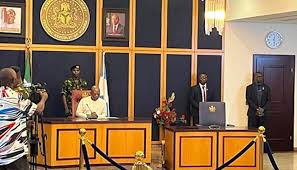
In a defense of President Bola Tinubu’s recent suspension of Governor Siminalayi Fubara and key political figures in Rivers State, the Presidency has tagged allegations of a power grab as unfounded.The government argued that the decisive action taken was imperative to avert a deeper crisis that threatened to plunge the state and potentially the nation into turmoil.
According to the Special Adviser to the President on Information and Strategy, Bayo Onanuga in a statement yesterday, an urgent intervention became necessary as the political standoff between Fubara and members of the State House of Assembly escalated into a governance crisis, raising alarms about potential violence and sabotage. Despite facing criticism from various quarters who label the suspension as an infringement on democracy, the Presidency maintains that this intervention is a “surgical reset” aimed at restoring governance, insisting, “This is no power grab.”Onanuga noted that the crisis in Rivers State, stemming from a bitter power struggle between Governor Fubara and members of the State House of Assembly loyal to FCT Minister Nyesom Wike, had crippled governance.Despite Supreme Court rulings affirming constitutional governance, the feuding factions refused to back down. According to the Presidency, intelligence reports confirmed that militants in the creeks were primed to sabotage critical oil infrastructure, posing a direct threat to Nigeria’s economic security.“Imagine a Rivers State where President Bola Ahmed Tinubu hesitated to declare a state of emergency. The political standoff between the State Assembly and Governor Siminalayi Fubara could have continued and degenerated into violence. Impeachment threats might have spurred attacks on lawmakers by the Governor’s supporters, while militants in the creeks—primed to sabotage critical oil infrastructure—could have plunged Nigeria’s oil production back to pre-2023 lows. “Sensational reporting of the crisis by journalists and opportunistic litigation would have inflamed tensions further, paralysing governance and risking lives. Schools and hospitals would shutter; investors would flee. We can only imagine the human and economic toll,” OnanugaHe added that by March 18, the situation had deteriorated beyond political resolution, making Presidential intervention unavoidable.“Thanks to the President’s intervention, Rivers State can breathe again today. Political tensions have eased, banal headlines have quietened, and stakeholders—encouraged by the newly appointed administrator—are charting a path to lasting peace.“Critics who argue the crisis “did not yet warrant” an emergency rule ignore a stark truth: waiting for the breakdown of law and order to escalate into anarchy before acting is like withholding firefighters until a house burns to ashes.“A responsible leader like President Tinubu, who swore an oath to protect the constitution and corporate existence of the country, cannot fail to act when a constituent part of the Federation is careering towards the precipice.“The political crisis in Rivers State between Governor Siminalayi Fubara and members of the State House of Assembly who owe allegiance to the Minister of Federal Capital Territory, Nyesom Wike, that blew open barely six months into the administration of the Governor has degenerated by 18 March.“A chain of events since the war of attrition started 14 months ago among the combatants had indeed paralysed the government of Rivers State to the point where Fubara, copying from the bad book of former Governor Obaseki in Edo, emasculated an arm of government entirely.“This reality informed the Supreme Court’s damning verdict about the absence of government in the State as enshrined in the 1999 constitution of Nigeria, as amended. The court also excoriated Fubara for acting like a despot,” the statement added.Tinubu to Lift Emergency Rule Once Stability ReturnsCritics have argued that the suspension of Governor Fubara and other political actors is an assault on democracy, but the Presidency insists that the move was a temporary reset, not a takeover.“This is no power grab,” the statement emphasized. “The intervention is temporary, surgical, and aimed at restoring—not replacing—democratic institutions. The six-month suspension is designed to disarm warring factions and stabilize governance.”It also pointed out the hypocrisy of some critics who remained silent on Fubara’s refusal to cooperate with the legislature, yet condemned the President’s move.“Democracy cannot thrive amid lawlessness—anarchy is its antithesis,” Onanuga stated.The Nigerian Constitution (Section 305) empowers the President to act when the nation faces a breakdown of law, order, and economic security—precisely the case in Rivers.The Presidency referenced historical precedents, including past states of emergency in Plateau and Borno, as well as the doctrine of necessity, to justify Tinubu’s decisive action.“The President’s oath demands that he must safeguard national stability, not watch idly as partisan strife strangles our democracy. Rivers is a vital economic artery, and any politically motivated disruption in its oil industry has nationwide consequences,” the statement asserted.With the appointment of Vice Admiral Ibok Ibas (Rtd.) as Administrator of Rivers State, efforts are already underway to restore peace and resume democratic governance.One of his first moves was meeting with traditional leaders to forge lasting solutions. The Presidency reassured Nigerians that the state of emergency would be lifted once stability is achieved, allowing elected officials to resume their duties.President Deserves Commendation, Not Condemnation – OnanugaDefending the President’s decision further, the statement quoted 18th-century philosopher Edmund Burke: “The only thing necessary for evil to triumph is for good men to do nothing.”It concluded with a strong message to critics: “President Tinubu chose courage over complacency. His action prioritized Nigeria’s interests over political expediency, averting a deeper crisis. To those calling him a ‘tyrant,’ ask yourselves—what democracy prospers in chaos? The calm in Rivers today vindicates the President’s decision. He deserves commendation, not condemnation.”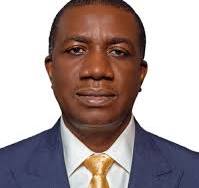
By Tony Obiechina, Abuja
The Development Bank of Nigeria Plc (DBN) has launched DAWN: DBN Action for Women in Nigeria, unveiled its Impact Report and presented MSME Data Assets at the seventh edition of Annual Lecture held in Abuja.
DBN, in a statement on Thursday, said while delivering a welcome address, its Managing Director and Chief Executive Officer, Dr Tony Okpanachi, said the central challenge was no longer reforms themselves but ensuring benefits reach businesses at end of the chain.
He asked how to make sure benefits reach traders in Onitsha, fabricator in Aba, farmer in Kebbi and young founder in Yaba, noting that MSMEs accounted for about half of Nigeria’s GDP and more than eight in every ten jobs, adding that when reform works for MSMEs it works for most Nigerians.
He explained that reform becomes prosperity only when entrepreneurs can act on it whether through long tenor loans to buy equipment, banks willing to take risk or skills and records needed to grow.
He said working through Participating Financial Institutions DBN provides longer term funding, partial credit guarantees through subsidiary Impact Credit Guarantee Limited and capacity building including Entrepreneurship Training Programme.
He disclosed that as at December 2025 DBN had disbursed a cumulative N1.4 trillion to MSMEs through 84 Participating Financial Institutions creating about 1.6 million jobs nationwide.
Under the new five year strategy, the Bank aims to reach more than two million MSMEs with deliberate targets for women led businesses, youth led businesses and underserved states.
On DAWN, Okpanachi said finance alone had not enabled enough women-led businesses to scale.
He said initiative brings together financing, guarantees and credit support, technical assistance, outcome linked grants and market linkages delivered through banks, microfinance institutions, fintechs, aggregators, cooperatives and direct channels.
Its priority sectors are agriculture and exports, healthcare, arts and creatives, technology and green business.
He said DAWN is about moving gender focused lending beyond intention and turning access into opportunity.
On the sidelines of the lecture DBN and African Development Bank held a signing ceremony of AfDB DBN 61 million United States dollars Gender Line of Credit development that reinforces Bank commitment to women led enterprises.
Okpanachi urged Participating Financial Institutions to extend lending into sectors and states where access to finance has been limited, policymakers and regulators to measure reform by what changes for business at end of chain and MSMEs to formalise, keep good records and use support now available.
The Vice President as Special Guest of Honour was represented by Dr Fred Iklaga Senior Technical Adviser in the Office of Special Adviser to the President on Economy.
Keynote speakers were Chief Executive Officer of MTN Nigeria, Dr Karl Toriola, and Chairman of Nigeria Sovereign Investment Authority, Dr Segun Ogunsanya.
Fireside chat featured Chief Executive Officer of Sterling Bank Abubakar Suleiman, manufacturing and trade entrepreneur Mrs Omoyemi Chukwurah and by video Kola Masha of Babban Gona.
The Secretary to the Government of Federation, represented by Augusta Warren Bekaredebo, said 2026 tax reforms would bring relief to many small businesses expressing optimism that a lot of businesses will be smiling by next year because they will be exempted from tax.
By Tambaya Julius, Abuja
The Nigeria Labour Congress (NLC) has threatened possible nationwide industrial action following the failure of talks with the Federal Government over workers’ welfare, petrol prices and other outstanding labour demands.
The warning came after a meeting between the government and organised labour at the Ministry of Labour in Abuja on Thursday, October 22, ended without an agreement.
The congress has given the Federal Government until Tuesday, October 27, to make meaningful progress on the issues, warning that its relevant organs would decide the next line of action if the next meeting fails to produce concrete commitments.
The NLC has also directed its affiliates, state councils and civil society allies to begin mobilising members for possible nationwide action.
In a statement issued after the meeting, the NLC Acting General Secretary, Benson Upah, expressed disappointment over what he described as the government delegation’s lack of preparedness for the negotiations.
According to the congress, organised labour presented its demands in good faith but left the meeting without any concrete commitments from the government.
The demands include a reduction in petrol prices to 2024 levels, renegotiation of the national minimum wage, implementation of agreed tax relief measures and resolution of the terms of settlement involving the Joint Health Sector Unions (JOHESU).
The congress also called for the resolution of issues raised by the Joint Public Service Negotiating Council (JPSNC) over peculiar allowances, wage awards and hazard allowances.
The NLC said the government delegation lacked the necessary authority to engage meaningfully on the issues presented by labour representatives.
“The meeting between the Federal Government and organised labour, convened at the Ministry of Labour in Abuja on 22nd October 2026, has ended without resolution,” the statement said.
It added that the Minister of Labour requested that the meeting be adjourned until October 27 to allow the government to prepare adequately for further discussions.
The preparations, according to the statement, would include bringing relevant ministers and heads of departments and agencies to the negotiating table.
The congress said it remained open to dialogue but would not accept continued delays in addressing workers’ concerns.
“We will report back to our organs, and if no meaningful progress is made on Tuesday, the relevant organs of the NLC will decide the next line of action,” it said.
The labour body urged workers and members of the public to remain calm while the negotiations continue, even as it directed its affiliates and allies to prepare for possible industrial action.
“However, we urge all affiliates of NLC and TUC; all state councils and our civil society allies to be alert and start mobilising for a possible action across the nation while we hope that the tenets of our demands are met by the government,” the statement added.
The October 27 meeting is expected to provide another opportunity for both sides to address the outstanding issues and prevent a possible escalation of the dispute.
However, the NLC’s decision to begin mobilisation suggests that tensions could rise if the next round of talks fails to produce meaningful progress.
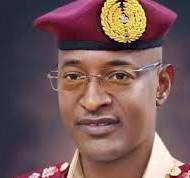
The Federal Road Safety Corps (FRSC) has barred its personnel from escorting politicians during campaigns for the 2027 general elections.
Zonal Commanding Officer, RS6, ACM Abimbola Owolabi, gave the directive during her maiden visit to the Cross River Command in Calabar on Wednesday.
Owolabi said patrol vehicles and sirens must not be used for political activities or private engagements, including weddings and funeral processions.
She directed officers deployed to campaign venues to focus exclusively on traffic management to prevent congestion and road crashes.
The zonal head warned personnel against leading political convoys or providing escorts for politicians, stressing that official vehicles must not be used for unauthorised purposes.




OPay Provides Update on Planned NYSE IPO, Reaffirms Normal Business Operations
ShareFintech company OPay has announced the postponement of its planned public offering on the New York Stock Exchange (NYSE), following...


Aba Commercial Smart City Celebrates COO, Mazen Kalassina at 39
ShareBy David Torough, Abuja Aba Commercial Smart City has celebrated its Chief Operating Officer (COO), Engr. Mazen Kalassina, on his...

Rebuilding Public Trust in Government Borrowing: The Case for Scaling Up Sukuk Financing in Nigeria
ShareBy Uche Joe Uwaleke The recent request by President Bola Tinubu to the National Assembly for approval to raise $20.52...
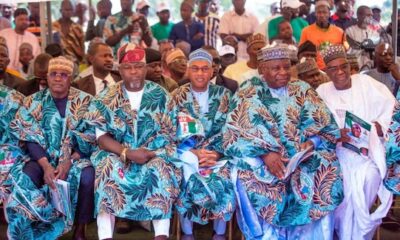

2027: Buba Yakub Mobilises Adamawa Support for Tinubu, APC
ShareFrom Yagana Ali, Yola The Director-General of the Nigerian Technical Aid Corps (NTAC), Rt. Hon. Yusuf Buba Yakub, has called...
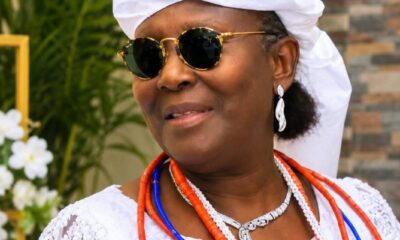

2027: FOOG Women Coordinator Urges Nigerians to Support Tinubu’s Re-election Bid
ShareBy Francis Sadhere, Warri Chief (Mrs) Esther Orighomisan Okotie-Eboh, Coordinator of Felix Omagbemi Ogbe Group (FOOG) Women Support Group for...
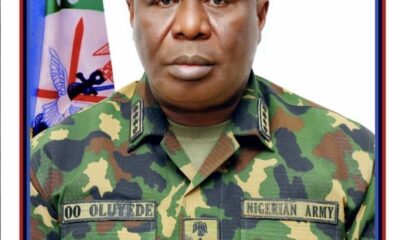

Troops Neutralise 217 Terrorists, Rescue 349 Kidnap Victims, Arrest 333 Suspects in Oct
ShareBy David Torough, Abuja The Armed Forces of Nigeria (AFN) say troops neutralised 217 terrorists and other criminals, rescued 349...


2027: Tompolo Mobilises Support for Tinubu in Ogun, says Economy Stabilising
ShareThe Grand Patron of the PBAT Door-to-Door Movement, Government Ekpemupolo, has called on the people of Ogun State to massively...

Henry Okeke Commends Mbah for Clearing Pension Arrears in Enugu
ShareBy Raphael Atuu, Abuja Barrister Henry Nnanna Okeke, a member of the Governing Council of Enugu State Polytechnic, Iwollo, has...


2027: ADC Urges ECOWAS to Insist on Credible Elections in Nigeria
ShareThe National Chairman of the African Democratic Congress (ADC), Sen. David Mark, has urged the Economic Community of West African...

Obi Promises Emergency Measures on Security, Corruption, Poverty
SharePresidential candidate of the Nigeria Democratic Congress (NDC), Peter Obi, has promised emergency measures to tackle insecurity, corruption, hunger and...