
Entertainment/Arts/Culture
Runsewe Tasks Stakeholders to Harness Arts Potential For Cultural Development

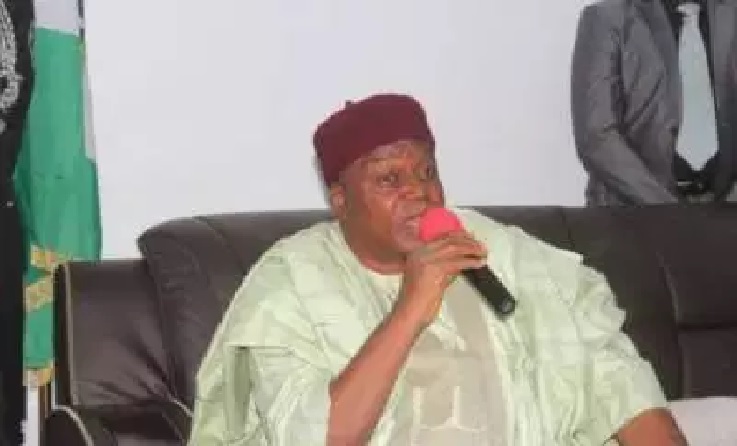
Director General (DG) National Centre for Arts and Culture (NCAC), Chief Olusegun Runsewe says there cannot not be any meaningful cultural development if stakeholders do not harness the large potentials in the art sector.
Runsewe stated this at a book presentation and exhibition of art works by renowned multi-dimensional artist, Mr Dimas Nwoko, in Abuja, on Friday.
He said the cultural industry was the only secret remaining in Africa; and that tapping into the sector by celebrating heroes of arts, while they were still alive, was an opportunity to promote Nigeria’s indigenous culture.
According to him, contemporary art is the sector that accommodates pure talent as one does not require a PhD to do a good painting.
Speaking at the occasion, the permanent Secretary, Federal Ministry of Information and Culture, Mrs Grace Gekpe, said culture had flooded all aspects of people’s lives, noting that Nwoko was one of the top rated multi dimensional and talented artists.
Gekpe said recognising the outstanding artist through the book presentation and exhibition of his art works was exemplary.
According to her, the legendary artist has in the last six decades, seamlessly executed enduring works in painting and sculpture that arouse admiration and respect across the country.
Gekpe said , “Today is another landmark of Nwoko’s immense contribution to the development of contemporary arts in Nigeria.
“His art works are exciting as one can always see the extra effort he puts into each work to ensure they blend with nature; as well as showcase Africa’s rich culture,’’ she said.
Similarly, a speaker at the event, Mr Simon Ikpakronyi, said Nwoko had been on the art scene in Nigeria like a Colossus for six decades; and he still remained a force to reckon with in the industry.
“In a world where specialisation is the order of the day with people sticking to their calling, he dares to be different,’’ Ikpakronyi said.
He described the artist as an exceptional stage designer, architect and a good painter.
According to him, the presentation marked the first leg of the packaging of an accomplished artist whose creativity had been brought to the fore through his works.
In his remarks, Nwoko thanked the Gallery of Arts for hosting the event and the honour accorded him by those who graced the event.
“The award winning 84-year-old prolific artist urged Nigerians to see Culture as a meeting point for addressing the Nation’s challenges.
“Culture is not about dancing, panting or singing; but is the business of everyone in their various spaces,’’ Nwoko said.
He urged the Minister of Culture and all stakeholders to wake up to their responsibilities of preserving the country’s heritage through the promotion of arts.
News Agency of Nigeria (NAN) reports that the book, entitled: Pre-eminent Artist, Outstanding Architect, is a publication of the National Gallery of Arts; which chronicles Nwoko’s works.
The high point of the event was the opening of images and art works of Nwoko by the DG. (NAN)



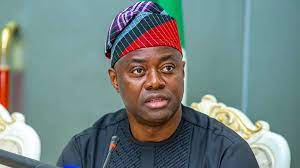





Afrobeats singer Spyro has revealed that 16 years of perseverance and struggle in the music industry finally paid off three years ago, attributing his success to divine intervention.
In a social media post, Spyro shared his testimony, recalling a period of profound struggle and disappointment that preceded his breakthrough.
He explained that it was at this critical juncture that his fortunes changed.
Following his past struggles, the singer now encourages others facing similar challenges, urging them to hold on to their dreams and never give up.
He attributes his turnaround to God, who transformed his life and propelled him to success three years ago.
Spyro wrote, “If someone had told me 3 years ago that I would become this fly, I would have argued it, and now I look at my life, and all I can say to someone reading this is please don’t give up…
“I have been in the industry hustling for 16 years, and I was at my lowest when JESUS changed it all, and that same JESUS is still in the business of changing lives, JUST BELIEVE.”
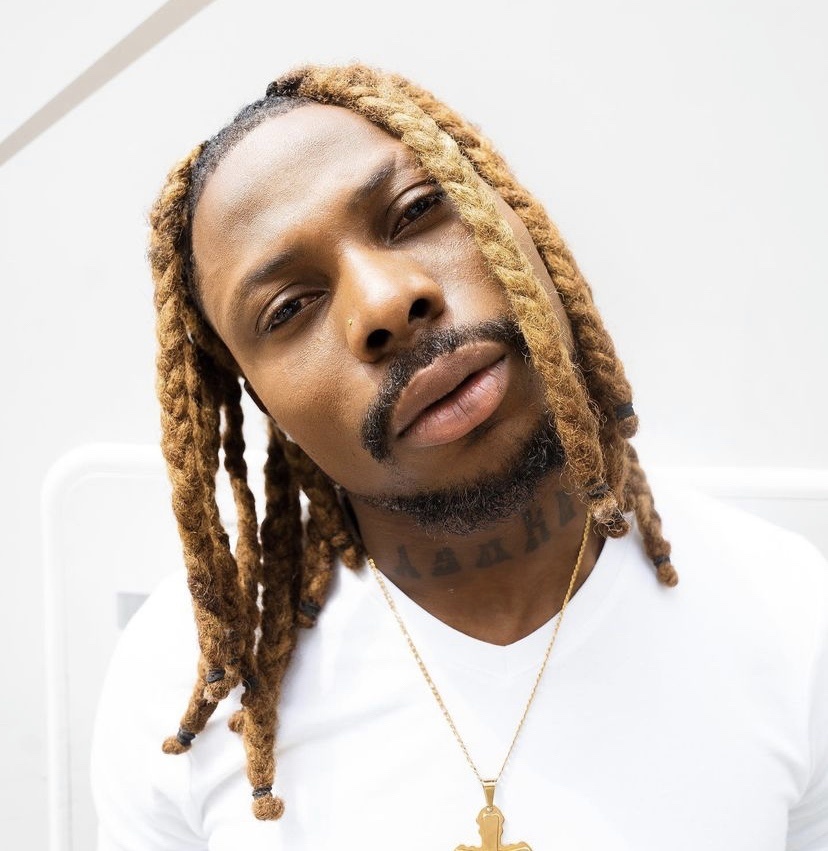
Afrobeats star Asake has reiterated his unwavering loyalty to his former label boss and mentor, Olamide, amid speculation of a fallout between the two artists.
Despite removing YBNL from his Instagram bio and unfollowing Olamide in December 2024, Asake in a recent interview with YouTuber Korty EO, emphasised that his perception of the rapper remains unchanged, stating, “Till the world ends, Baddo will always be Baddo.
The way I saw Baddo yesterday is the same way I see him today, and that will be the same way I will see him tomorrow, even if I become the president of America or Zimbabwe. Baddo will always be Baddo”.This development followed reports that Asake’s contract with YBNL may have expired, with the singer opting for independence rather than renewing the deal.
While neither Asake nor Olamide has publicly addressed the situation, industry insiders believe the split was amicable.
Asake has consistently credited Olamide for changing his life, and his latest comments reaffirm their enduring professional and personal bond.
Nigerian chef Gbolabo Adebakin, known as Chef Gibbs, has urged deliberate global rebranding of Nigerian cuisine to challenge misconceptions and present local dishes as nutritious, diverse, and competitive.
Adebakin said during an interview yesterday in Lagos that stronger culinary education and cultural storytelling was needed to project Nigerian dishes to the world.
He described food as a powerful cultural export and a critical tool for tourism development, noting its universal role in human interaction.
“Food is the oldest form of tourism. From the beginning of time, food has been served with every single moment, every party, every meeting, every celebration,” he said.
The chef, however, said Nigerian cuisine, though gaining international attention, remained widely misunderstood due to poor representation and lack of proper guidance on how it should be prepared and consumed.
Adebakin, convener of the Nigeria Food Summit, said that beyond showcasing meals, the rebranding initiative should focus on correcting widespread misconceptions about Nigerian cuisine, often described as too fatty, heavy, or dense.
According to him, the process of rebranding also involves teaching proper ways to eat and pair local dishes, a gap increasingly evident in viral social media trends.
“If you go on social media today, you see a lot of TikTok trends, and some of those challenges are actually not properly done because a lot of people do not know about Nigerian food.
“So, it’s our responsibility as culinary practitioners to educate people on how exactly to eat the food, how to pair the food, how to serve the food,” he said.
He noted that initiatives, already gaining traction through inbound tours and social media, were aimed at rebranding efforts.
“We’re letting people know that our food is very communal, very nutritious, very rich,” he said.
Citing an ongoing initiative by the Special Adviser to the Lagos State Governor on Tourism, Arts and Culture, Idris Aregbe, in which he has participated for about six years, he noted that giving tourists’ immersive experiences had been highly impactful.
Adebakin added that immersive experiences such as allowing foreign guests to participate in traditional cooking techniques like pounding yam helped to deepen their appreciation for the culture and effort behind Nigerian meals.
He said such moments highlighted the skill and intentionality involved in local food preparation.
He added that the activity had consistently drawn positive reactions from international participants, many of whom expressed surprise at the diversity and presentation of Nigerian dishes.
Recounting a previous engagement, he said: “They told us that they never knew that Nigerian food could be done this way or could taste this way or that they could experience Nigerian food this way.”
Adebakin said such feedback underscored the growing role of culinary diplomacy in shaping Nigeria’s global image.
He urged stakeholders to continue to leverage food as both a cultural bridge and an economic asset.


Nigerian Military Reports Major Gains in Nationwide Anti-Terror Operations
ShareBy David Torough, Abuja The Armed Forces of Nigeria has announced significant operational successes in its ongoing counter-terrorism and anti-crime...

Group trains 50 girls on Menstrual hygiene, skill acquisition etc
ShareBy Laide Akinboade, Abuja An expert in education, has urged adolescents girls in Abuja, to ensure they acquire vocational Skills...

SDP Leader, Adebayo Urges Nigeria to Reconnect With Independence-era Ideals at Stakeholders’ Summit
ShareBy Mike Odiakose, Abuja The national leadership and former presidential candidate of the Social Democratic Party (SDP), Prince Adewole Adebayo,...


Ododo Flags Off 728 Government-owned Renovated Public Schools in Kogi
ShareFrom Joseph Amedu, Lokoja Kogi state Governor, Usman Ododo has launched the renovation of 728 Government-owned Public Schools under the Adolescent Girls Initiative for Learning...


Super Eagles Set for Poland, Portugal Friendlies Ahead of World Cup
ShareThe Super Eagles will face Poland and Portugal in international friendlies in June as part of preparations for upcoming global competitions, the Nigeria Football...


Iran Threatens U.S, Israel with Harsher Attacks
ShareIran has warned the United States (U.S.) and Israel that it would launch further and more severe attacks, escalating tensions amid ongoing hostilities. A spokesman for...


EFCC Seeks Final Forfeiture of 57 Properties Linked to Malami
ShareThe Economic and Financial Crimes Commission, on Thursday, urged the Federal High Court in Abuja to order the permanent forfeiture...


Easter: NSCDC Deploys 57,000 Personnel Nationwide
ShareThe Nigeria Security and Civil Defence Corps (NSCDC) has deployed 57,000 operatives nationwide to ensure security of lives and property...


NSIA Grows Net Asset Value to $3.40bn in 2025
ShareBy Tony Obiechina, Abuja Nigeria Sovereign Investment Authority(NSIA) has announced its 2025 Group Financial Performance posting a net Asset value...


ADC, APC Clash over INEC Role as Leadership Crisis Deepens
ShareBy David Torough, Abuja A fresh political storm erupted on Thursday as the African Democratic Congress (ADC) and the All...