
POLITICS
Sacked Staff Urge Wike to Investigate N400m 2023 Budget Allocation

By Laide Akinboade, Abuja
The sacked staff of Abuja Film Village International Limited (AFVl), Monday, urged the Minister of Federal Capital Territory, Nyesom Wike, to immediately investigate N400 Millions allocated in the 2023 budget for the AFVI by the National Assembly.
Habila Isa Kayit, who spoke on behalf of the aggrieved Sacked Staff of Abuja Film Village, stated this while briefing journalists in Abuja.
He said they were employed on a full time basis as staff of AFVI FCT and some of them have been under the employment of the agency for over 15 years but their appointments were suddenly terminated on September 30, 2022.
Kayit lamented that nothing was given to the 27 unlawfully sacked film village staff other than their statutory monthly salaries and one month salary in lieu of the termination.
According to him, we wish to convey with dismay the unlawful termination of the employment of the Staff of Abuja Film Village International Limited by its then Managing Director, Barr. Mrs Francisca Ibezim.
“We were fully employed by the Federal Capital Territory Administration (FCTA) and had enjoyed every privilege that comes with the employment. We were invited on the 30th September, 2022 through a notice for staff meeting but received the greatest shock of our lives as the entire staff was issued termination letters with no specific reason for their action.
“However, we do not enjoy attracting negative publicity to the administration which we are also a part of. As a result, we have followed all administrative channels to seek reinstatement but all to no avail hence the resolve to cry out for help”.
The 27 aggrieved staff demanded that, “We call on the Honorable Minister of the Federal Capital Territory Administration, Barr. Nyesom Wike to wade in and intervened as the father of all on the injustice mated on the Aggrieved Sacked Staff of the Abuja Film Village.
“We demand for the immediate reinstatement of the unlawful termination of our employment and appeal for the full payment of our salaries and arrears over the time of the unlawful disengagement. We wish to state explicitly that the outstanding salaries arrears paid to us before the termination can never be paid off package as posited in some quarters. Therefore nothing was given to the unlawfully sacked film village staff other than our statutory monthly salaries and one month salary in lieu of the termination.
“Owing to the current economic realities and inability of the film village to pay our salaries from January till September 2022, we wrote an appeal letter to request payment of our arrears and we received an invitation for a meeting. We were at the meeting venue where we received the shock of our lives with an outright termination letter with one month salary in lieu of notice with no other benefit. However, no AFVI Staff was ever indicted for any form of misconduct whatsoever and at no point was anyone invited to face any disciplinary committee.
“We call for the immediate investigation of the Four Hundred Millions Naira (400 Millions) allocated in the 2023 budget for the AFVI by the National Assembly
Kindly note that Abuja Film Village as at now has no single permanent staff as the then Managing Director, Barr. Mrs. Francisca Ibezim was the only stay and has been relieved of her job by the Honorable Minister. Therefore, we call for urgent intervention as government properties and resources cannot be trusted in the hands of contract staff”.
He lamented the hardship of the aggrieved sacked staff in form of meeting up with family needs and the AFVI management is sending them to the street after putting up their most productive years.
The Abuja film Village International (AFVI) is a subsidiary of Abuja Investment Company Ltd (AICL), an agency of the Federal Capital Territory Administration (FCTA) envisioned to make Abuja and by extension Nigeria the centre for film and entertainment excellence. Over 5,000 hectares of land was allocated for the project in Kusaki and Yanga Districts of Kuje Area Council for the actualization of the Abuja Film village project from inception.
By Mike Odiakose, Abuja
The Amir and National Head of the Ahmadiyya Muslim Jama’at of Nigeria, Alatoye Abdulazeez, has urged Nigerian youths to unite politically and strategically, identifying Adewole Adebayo as a potential leader capable of driving national transformation if given collective support.
Speaking during an interview, Abdulazeez emphasized that Nigeria’s progress hinges largely on the ability of young people to organize themselves beyond tribal, religious, and financial inducements, and to rally behind credible leadership.
According to him, while several young candidates have emerged in past elections, their failure to build strong alliances allowed older political forces to maintain dominance.
He noted that the case of Adebayo, a lawyer and businessman who contested under the Social Democratic Party (SDP), presents an opportunity for a different political direction if youths can act in unity.
“If the younger generation is sure that Adewole Adebayo can deliver, they should team up with him, get things right, and encourage other youths across tribes to see themselves as one,” Abdulazeez said.
He stressed that Nigeria is currently in what he described as a “storming stage” of nationhood, where divisions along ethnic and regional lines continue to hinder development.
He warned that unless a “national norm” is established—where citizens prioritize unity over sectional interests—the country may struggle to reach its full potential.
The cleric further advised youths to avoid electoral inducement and reject divisive politics, urging them instead to focus on long-term nation-building.
“We must move from where we are to the next stage. Otherwise, we will keep moving in the same direction,” he added.
Beyond politics, Abdulazeez reiterated the Ahmadiyya motto, “Love for All, Hatred for None,” as a guiding principle for national cohesion, stressing that religion should be a force for peace rather than division.
He condemned terrorism and violence carried out in the name of religion, insisting that such acts contradict Islamic teachings.
On governance, he acknowledged efforts by President Bola Ahmed Tinubu, noting that while progress has been made in some areas, more attention is needed in critical sectors such as power and economic management.
Abdulazeez concluded with a call for collective responsibility among citizens, particularly the youth, to reshape Nigeria’s future through unity, moral discipline, and active participation in governance.
“Leadership is not just about those in office,” he said. “It is also about those who choose them.”
End
From Sylvia Udegbunam, Enugu
The Enugu State Independent Electoral Commission (ENSIEC) have released a revised timetable for the 2026 local government elections.
ENSIEC Chairman, Prof. Christian Ngwu, presented the updated schedule to journalists in Enugu.
Ngwu said the framework outlines activities leading to elections on Sept.
26 and re-run polls on Oct. 10.He explained the adjustments followed the repeal of the Electoral Act 2022 and enactment of the Electoral Act 2026.
“The revised timetable aligns with the new law and other relevant statutes guiding elections in the state,” he said.
He recalled ENSIEC earlier issued a notice on Aug. 20, 2025 alongside an initial timetable.
According to him, party primaries will be held from Jan. 23 to May 26.
“Campaigns will begin on April 29 and end on Sept. 25, 24 hours before polling,” Ngwu added.
He said submission of nomination forms closes on May 29, while candidates’ particulars will be published on June 19.
“The final list of candidates will be released on July 27,” he stated.
Ngwu added that submission of polling agents ends on Aug. 31, while the official notice of poll comes on Sept. 11.
He confirmed elections will be held on Sept. 26, with voting from 8:00 a.m. to 3:00 p.m. using the open secret ballot system.
“In case of inconclusive results, re-run elections will be conducted on Oct. 10,” he said.
Ngwu stressed the timetable was issued under the commission’s constitutional mandate and in compliance with the Electoral Act 2026.
By David Torough, Abuja
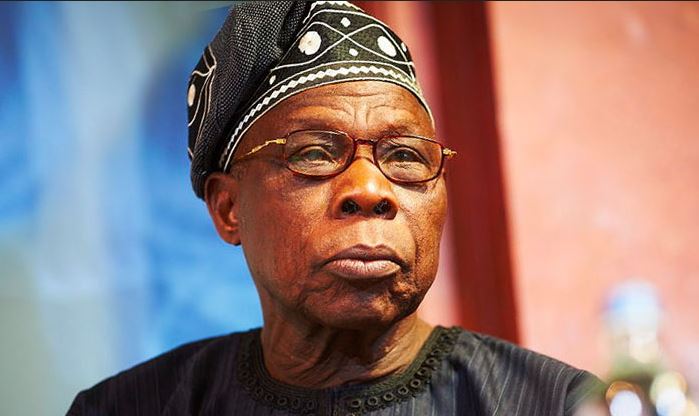
Former Presidents Olusegun Obasanjo and Goodluck Jonathan have issued a strong call for national unity, institutional reforms, and economic transformation, warning that Nigeria’s future depends on collective responsibility and a democracy that delivers tangible results.
Both leaders, who spoke at separate high-level engagements on Thursday, converged on a common message: Nigeria stands at a critical crossroads and requires urgent, coordinated action from citizens, leaders, and institutions.
At the 6th Annual Colloquium marking the 65th birthday of Itua Ighodalo, Obasanjo stressed that no external force would fix Nigeria’s problems unless Nigerians themselves unite across divides.
Represented by Prof. Adedeji Daramola, he emphasised that nation-building is a shared duty requiring contributions from all segments of society.“Until we come together to work and fix Nigeria, nobody will fix it for us,” Obasanjo declared, urging citizens—from grassroots traders to political elites—to take ownership of the country’s development.
He highlighted the importance of youth inclusion, describing young people as central to Nigeria’s future, and called for greater investment in technology and innovation to harness the country’s demographic advantage.
Echoing reformist sentiments, economist Eghosa Osagie advocated for increased local production, while Opeyemi Adamolekun of Enough is Enough Nigeria criticised the commercialization of politics. Technology investor Iyinoluwa Aboyeji pointed to infrastructural imbalances, noting that digital connectivity remains heavily concentrated in Lagos.
Meanwhile, at a policy convening in Abuja organised by the Goodluck Jonathan Foundation, Jonathan underscored the need to align democracy with economic growth to ensure its sustainability.
He warned that democracy, both globally and in Nigeria, faces increasing pressure from economic hardship, insecurity, and declining public trust. According to him, elections alone are insufficient without transparent institutions and policies that foster innovation and enterprise.
Jonathan raised concerns about governance effectiveness, comparing Nigeria’s democratic system with alternative models in countries like China and the United Arab Emirates, where structured leadership selection and economic progress have been notable.
Despite this, he maintained that freedom and justice remain democracy’s defining strengths, cautioning that any system that fails to uphold these values loses its legitimacy.
“Our democracy has endured, but endurance alone is not enough,” Jonathan said, stressing that economic performance is key to sustaining public confidence.
Both leaders agreed that Nigeria must not choose between democracy and development but instead ensure that both reinforce each other. They urged policymakers, civil society, and the private sector to act decisively in bridging governance gaps and delivering inclusive growth.
The convergence of views from the two former presidents reflects a growing consensus among stakeholders that Nigeria’s progress hinges on unity, accountable leadership, youth empowerment, and a democratic system capable of improving the lives of its citizens.


Mutfwang Holds Close Door with Former State Governors
ShareFrom Jude Dangwam, Jos Plateau State Governor, Caleb Mutfwang has convened a strategic meeting with former governors of the state towards addressing the security challenges bedevilling the state. The meeting held...

Lobi Stars Trim Squad to Push for Promotion
ShareThe Nigerian National League (NNL) side, Lobi Stars Football Club of Makurdi, has trimmed its squad and retained a few quality players to push for promotion to the...


Pope Criticises ‘Tyrants’ Who Spend Billions on Wars after Trump Spat
SharePope Leo has criticised leaders who spend billions on wars and said the world was “being ravaged by a handful of tyrants” in unusually forceful comments during a...


Nigerian Men Scared of Bold, Confident Women, Phyna Claims
ShareFormer Big Brother Naija winner, Josephine Otabor, popularly known as Phyna, has claimed that she is still single because Nigerian...

Residents Decry Persistent Power Outage in Abuja Community
ShareBy Raphael Atuu, Abuja Residents of Waru District in Apo, within Nigeria’s Federal Capital Territory, are raising the alarm over what they...

2027: Tinubu Meets Coordinators, Renews Plea for Unity, Rule of Law
ShareBy David Torough, Abuja President Bola Tinubu has called for unity, resilience and renewed commitment to nation-building, urging Nigerians to...

Gunmen Abduct 14 UTME Candidates in Benue Enroute Exams Centre
ShareFrom Attah Ede, Makurdi A wave of concern has trailed the ongoing Unified Tertiary Matriculation Examination (UTME) nationwide following the...
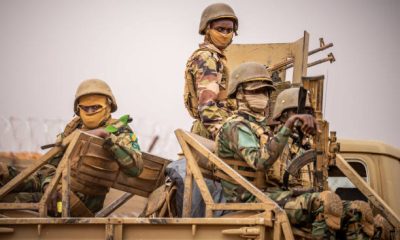

Army Honours Fallen Heroes as Brig. Gen. Braimah, Others Laid to Rest in Maiduguri
ShareFrom Muhammad Muhammad Al-amin, Maiduguri The Nigerian Army has conducted a solemn burial ceremony for Brigadier General Oseni Braimah, Captain...

Yusuf Congratulates Abubakar on Election as Int’l Academy of Food Science, Technology Fellow
ShareFrom Rabiu Sanusi, Kano The Governor of Kano State, Abba Yusuf has congratulated Professor Hafiz Abubakar on his election as...
NCA Urges Christians to Exercise Restraint amid ‘Rising Religious Provocations’
ShareFrom Agbo Emmanuel, Kaduna Chairman, Northern Christian Association (NCA) Rev. Joseph John Hayab has called on believers across Nigeria to...