
BUSINESS
Safeline Microfinance Bank Transfers Shares to ROBOPAY

By Tambaya Julius, Abuja
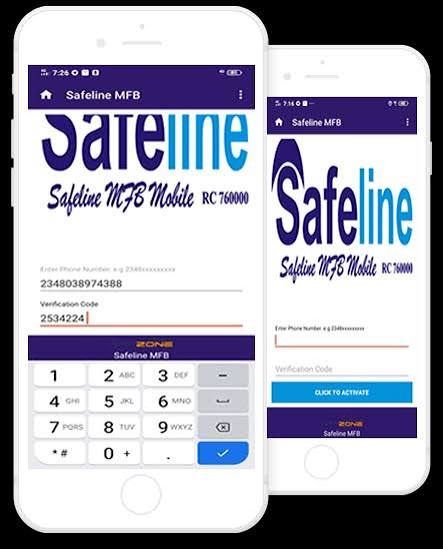
Safeline Microfinance Bank (SMFB), established by the Federal Road Safety Corps (FRSC), has formally transferred its shares to ROBOPAY NIG. LTD., in a move aimed at strengthening the bank’s capital base, technology and capacity for sustainable growth.
The share transfer ceremony took place on Monday, at the bank’s premises in Abuja.
Speaking at the ceremony, Chairman of the Board of Safeline Microfinance Bank, Engr. Ibrahim Babagana, fwc, Deputy Corps Marshal (Rtd.), said the decision followed the Board’s careful assessment of the changing regulatory environment and government policies affecting the microfinance banking sector.
Babagana said the changing financial landscape meant that the bank needed significant additional capital, greater investment in technology and stronger human resources to remain competitive.
He explained that the Board therefore decided to transfer ownership to an investor with the financial capacity and commitment to make the necessary investments and put the bank on a stronger path towards long-term sustainability.
The Board Chairman expressed confidence in ROBOPAY NIG. LTD., saying the company had demonstrated the commitment and vision needed to build on the foundation laid by the FRSC.
He said the new owners had shown particular interest in strengthening the bank’s capital base, introducing modern technology and investing in its workforce.
According to him, these areas would be critical to keeping Safeline Microfinance Bank competitive as the financial services industry becomes increasingly digital.
Responding on behalf of ROBOPAY NIG. LTD., Malam Aliyu Abiodun thanked the Board and Management of Safeline Microfinance Bank for the confidence reposed in the company.
Abiodun described the acquisition as a major milestone and an opportunity to unlock the bank’s existing potential.
He said the institution already had valuable assets, structures and an established foundation which ROBOPAY would build upon through strategic investments in capital, technology and human resources.
He added that ROBOPAY would deploy financial technology (FinTech) solutions to modernise the bank’s operations, improve service delivery and strengthen its position in the financial services market.
Abiodun assured that the company would build on the foundation established by the FRSC while introducing innovative solutions to reposition Safeline Microfinance Bank for the changing demands of Nigeria’s financial sector.
The share transfer marks a new phase for Safeline Microfinance Bank, with the new ownership expected to pursue a more technology-driven and investment-focused approach to the institution’s growth.
Both parties expressed their commitment to ensuring a smooth transition and strengthening the bank’s capacity to deliver sustainable value to its customers and other stakeholders.

The average prices of petrol and diesel have risen by 86 per cent in 2026, with the two products reaching their highest average price levels for the year by September 22, according to the latest fuel price trend report by price and promo.
The average price of Premium Motor Spirit, popularly known as petrol, rose to N1,378 per litre by September 22, while automotive gas oil, commonly known as diesel, increased to N1,899/litre.
It puts the increase in the price of petrol at 80.8 per cent from the January 13 base, while diesel recorded a 91.8 per cent rise over the same period. The average increase of the two products is 86.
3 per cent, which rounds to 86 per cent.The report stated, “The latest price and promo fuel price trend shows renewed upward movement following the relative stability observed between April and July.
“Petrol rose to an average of N1,378 per litre by 22 September, while diesel increased to an average N1,899 per litre, the highest average price levels recorded for both products in the displayed 2026 series.”According to the report, petrol prices had increased sharply in March before remaining relatively stable at elevated levels between April and July. “After the sharp March increase, fuel prices stabilised at higher levels through July before rising again in August and September,” it added
The renewed increase came amid heightened volatility in the international energy market, according to the report, which noted that the domestic market remained exposed to movements in global energy costs.
“The renewed increase comes amid heightened global energy-market volatility, highlighting the domestic market’s continued exposure to shifts in international energy costs,” the report added.
The report indicated that the latest movement in fuel prices could have wider implications for transportation, logistics and the cost of distributing goods, given the importance of petrol and diesel to economic activities.
The report noted that fuel prices remained an important channel through which changes in energy costs could feed into transportation and other consumer costs.
The report further warned that the renewed increase in both products is a development to monitor because of its potential implications for the movement of people and goods.
It said, “The renewed increase in both petrol and diesel is therefore an important market signal to watch, particularly for its potential implications for mobility, logistics costs and the wider cost of moving goods through the market.”
The report’s figures show that the increase in diesel prices has outpaced that of petrol, with AGO rising by 91.8 per cent compared with PMS’s 80.8 per cent increase.
The Nigerian Electricity Regulatory Commission (NERC) on Tuesday said that Electricity Distribution Companies (DisCos) installed 350,270 meters in the Second Quarter of 2026.
The commission disclosed this in its 2026 second-quarter report, released in Abuja on Monday.
According to the commission, the 350,270 meters installed in the quarter under review reduced by 17.
97 per cent from 426,985 installed in 2026/Q1.NERC said that 205,486 meters were installed under the Distribution Sector Recovery Programme (DISREP) framework.
It said 123,833 meters were installed under the Meter Asset Provider (MAP) framework and 13,028 meters were installed under the Meter Acquisition Fund (MAF) framework.
It added that 7,643 meters were installed under the Distribution Companies (DisCos) Financed framework, and 280 meters were installed under the Vendor Financed Framework.
The report showed that at the end of June, 7,743,839 out of the total 12,589,486 active registered customers in the Nigerian Electricity Supply Industry (NESI) were metered.
“As of the end of June 7,743,839 out of the total 12,589,486 active registered customers in the NESI were metered, translating to a metering rate of 61.51 per cent,” it said
”To protect unmetered customers from exploitation, the commission said it has continued to issue monthly energy caps for all feeders in each DisCo for states that have not transitioned.”it said.

By Tambaya Julius, Abuja
The newly appointed Acting Controller of the Western Marine Command, Deputy Comptroller Timothy Jonah, has pledged to intensify surveillance and intelligence gathering to tackle smuggling along the Lagos-Ogun waterways.
Jonah also promised to strengthen collaboration with sister security agencies and riverine communities, stressing that effective information and intelligence sharing would be central to his operational strategy.
He made the commitment while addressing officers and men of the command at its headquarters in Lagos.
His position was contained in a statement issued by the Customs Public Relations Officer, Deputy Superintendent of Customs Clarinet Nwosu, and made available to journalists in Lagos on Tuesday.
Jonah described the Western Marine Command as a hotspot for smuggling, saying sustained intelligence sharing would be crucial to strengthening operations and disrupting illicit activities.
He said the command would deepen its partnership with the Nigerian Navy, Marine Police and other security agencies to prevent the movement of illicit goods through the waterways.
The Acting Controller also disclosed plans to engage traditional rulers, riverine community leaders and other stakeholders to improve intelligence gathering and strengthen the fight against smuggling.
He, however, assured legitimate businesses operating along the waterways that enforcement would not be allowed to disrupt lawful economic activities.
According to him, trade facilitation remains a core responsibility of the Nigeria Customs Service, adding that enforcement must be carried out in a manner that supports legitimate trade.
Jonah noted that the World Customs Organisation places emphasis on safe and efficient trade flows, stressing that effective control measures were necessary to protect the integrity of the supply chain.
He assured compliant operators that the Customs Service had no issues with legitimate businesses, warning that those involved in illegal activities would face enforcement action.
He urged operators to comply strictly with existing customs and maritime laws, assuring legitimate traders of the Service’s support.
On officers’ welfare, Jonah said he would build on the welfare initiatives of the Comptroller-General of Customs, including health checks and sporting facilities, to improve officers’ fitness, morale and productivity.
He also announced that the command would begin visits to riverine community leaders and border kings from next week as part of efforts to strengthen community relations and improve intelligence gathering.
Jonah pledged to consolidate the achievements of his predecessor while introducing measures to further improve the command’s operational effectiveness.
The Acting Controller also charged officers and men to embrace teamwork, discipline and respect for constituted authority, stressing that operational success depended on collective effort.
He said no officer could succeed in isolation, adding that excellence in the Customs Service required cooperation, teamwork and unity of purpose.
Jonah reminded officers that the Nigeria Customs Service was a regimented organisation founded on discipline and respect for the chain of command.
He therefore urged them to follow established reporting channels and avoid bypassing their immediate supervisors when raising issues or seeking solutions.
He described unit heads as leaders at their respective levels and tasked them with developing strong problem-solving skills and taking responsibility for challenges within their areas of command.
According to him, effective leadership involves more than occupying a position; it requires the ability to solve problems, support colleagues and leave a positive impact in assigned areas.
Jonah also emphasised the importance of officers’ welfare, health consciousness, work-life balance and reputation management.
He urged officers to maintain a professional appearance, dress appropriately, demonstrate courage and professionalism when engaging sister agencies, and embrace continuous learning to improve their knowledge and effectiveness.



Safeline Microfinance Bank Transfers Shares to ROBOPAY
ShareBy Tambaya Julius, Abuja Safeline Microfinance Bank (SMFB), established by the Federal Road Safety Corps (FRSC), has formally transferred its...


Petrol, Diesel Prices Rise 86 Per Cent in Eight Months – Report
ShareThe average prices of petrol and diesel have risen by 86 per cent in 2026, with the two products reaching...
DisCos Install 350,270 Meters in Q2 -NERC
ShareThe Nigerian Electricity Regulatory Commission (NERC) on Tuesday said that Electricity Distribution Companies (DisCos) installed 350,270 meters in the Second...


Customs Tightens Surveillance Along Lagos-Ogun Waterways
ShareBy Tambaya Julius, Abuja The newly appointed Acting Controller of the Western Marine Command, Deputy Comptroller Timothy Jonah, has pledged...

2027 Elections: Customs Intensifies Border Security
ShareBy Tambaya Julius, Abuja The Nigeria Customs Service (NCS) has stepped up measures to strengthen border security ahead of the...


Pension Reforms Scheme Targets More Nigerians, says PenCom DG
ShareBy Tony Obiechina, Abuja The Director-General of the National Pension Commission (PenCom), Omolola Oloworaran, says the commission’s ongoing Pension 2.0...
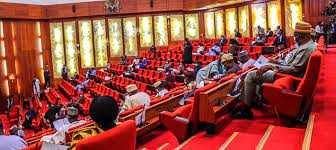

NAF Crash: Senate Postpones National Security Summit
ShareBy Tambaya Julius, Abuja The Senate has postponed its two-day National Security Summit earlier scheduled for October 12 and 13,...

2027 Polls: INEC Adopts AI for Result Verification, Cybersecurity
ShareBy Tambaya Julius, Abuja The Independent National Electoral Commission (INEC) said it will deploy artificial intelligence (AI) to strengthen the...


NNPCL 2025 AFS: The Numbers Tell a Story of Transformation
ShareBy Uche Uwaleke The publication of NNPC Limited’s 2025 Audited Financial Statements (AFS) represents another important milestone in the transformation...


Portuguese Football Federation Backs Ronaldo to Continue with Portugal
ShareThe Portuguese Football Federation has reaffirmed its support for Cristiano Ronaldo’s continued involvement with the national team, with president Pedro...