
BUSINESS
Sallah: Dutse Residents Groan over Soaring Ram Price


Some residents of Dutse in Jigawa have decried the rising price of ram and other sacrificial animals for the Eid-el-Kabir celebration.
They said the trend would not allow them to sacrifice animals for the festivities.
A check at Dutse cattle market, showed that prices had shot up by over 300 per cent compared to the previous season.
A big size ram was sold at N500,000, and a well-bred bull sold for N1 million, as against its previous prices of N130,000 and N400,000, respectively.
Traders at the market attributed the price hike to the high cost of animal feeds.
Malam Musa Ayuba said animal rearing was no longer easy due to the rising cost of feed and medication.
“Aimal feed is extremely expensive resulting in soaring livestock prices,” he said.
Alhaji Abubakar Jamilu, a resident, lamented that most families could not afford to slaughter ram for the season due to exorbitant prices.
“Animals are costly for sacrifice now. Many people cannot afford it like before,” he said.
Corroborating an earlier opinion, Umar Abdu, described the trend as unbearable and challenging, adding that most families had resorted to alternative measures to cope with the situation.
Also, Nuhu Iliyasu said that he would contribute money with others to buy a cow and share the meat.
He said that contribution was the only option for the low income earners to enable them to slaughter animals for the season.
“I cannot afford to buy a ram. I joined a contribution group to buy a cow and share the meat,” he said.
On his part, Ishak Ibrahim, said that he would buy chickens to celebrate the season with his family in a good mood.
From Attah Ede, Makurdi
Benue State Government through the Benue Investment and Property Company Limited (BIPC) has worked out modalities to commence immediate revival of the long-abandoned Taraku Mills Limited, with plans to begin rehabilitation work on the facility next week.
The facility located at Gwer East Local Government Area of the State which has remained functional since 2009, is expected to create over 2,000 direct jobs and strengthen agricultural value chains across the state if revived.
Managing Director of the Benue Investment and Property Company (BIPC), Dr.
Raymond Asemakaha, announced this during an inspection visit to the facility.Dr. Asemakaha maintained that the company is valued at over $50 million (about N70 billion) and was designed to process maize, animal feed and soybean products.
He described it as a strategic asset capable of driving industrialisation and economic growth in Benue State, stating that the government was committed to restoring the factory to full operation, as eviving existing assets is more cost-effective than constructing new facilities.
According to Asemakaha, “despite years of inactivity, most of the equipment remains intact and in near-new condition due to the vigilance of the host community and security personnel who protected the facility from vandalism.”
He explained that an ongoing asset audit would determine the exact condition of the plant and the level of investment required for operations to resume saying “former technical personnel with institutional knowledge of the facility will conduct assessments and dry-run tests.”
Asemakaha said the government had learnt lessons from previous attempts to lease public assets to operators without the capacity to manage them effectively, stressing that “the revitalisation of Taraku Mills would create markets for farmers and stimulate economic activities in transportation and other sectors.”
He projected that the facility would directly employ at least 2,000 youths while generating thousands of indirect jobs.
The GMD announced the immediate payment of five months’ outstanding allowances owed to security personnel at the plant.
He commended the host community for safeguarding the facility over the years, noting that despite the prolonged shutdown, no cables or major components had been vandalized.
Dr. Asemakaha further emphasized that the revitalization of the mill would create a ready market for agricultural produce and improve the livelihoods of farmers across the state through value addition and industrial processing.
A pioneer engineer at the factory, James Ikuve, said Taraku Mills was established as an integrated agro-processing company with maize and feed milling, as well as oil processing divisions.
Ikuve said the maize processing plant has an installed capacity of 120,000 tonnes annually, while the feed mill can produce 172,300 tonnes of animal feed yearly. He added that the soybean processing units can handle hundreds of tonnes daily, with the refinery capable of processing 100 tonnes per day.
According to Ikuve, the factory previously operated at about 75 percent of its installed capacity, with its last production run carried out in 2013 under Growrich Resort Limited.
Chairman of Gwer East Local Government Area, Timothy Adi, Civil Protection Guard Commander Joseph Sough and Assistant Director at the Ministry of Industry, Trade and Investment, Emmanuel Atsia, commended Governor Hyacinth Alia for the initiative, expressing optimism that the revival of the facility would create jobs, support soybean farmers and restore economic benefits to the community
By Tony Obiechina, Abuja
The African Tax Administration Forum (ATAF) ATAF-supported audit interventions in member countries generated USD 907.8 million in tax assessments, of which USD 685.8 million was successfully collected.
The revenue gains included $47.
1 million from transfer pricing audits, $3. 57 million from digital services tax and $142.96 million from cross-border Value Added Tax compliance measures.Throughout the year, ATAF provided technical assistance to 35 countries, trained 2,433 tax officials from 43 countries, including Nigeria, and supported legislative and administrative reforms across the continent.
This is contained in the recently released 2025 Annual Report of ATAF, highlighting the organisation’s growing contribution to strengthening tax systems, advancing domestic revenue mobilisation and amplifying Africa’s voice in global tax policy discussions.
The organisation said the additional revenue is helping governments strengthen public finances and improve their capacity to fund infrastructure, healthcare, education and other development priorities without excessive dependence on borrowing.
The report reflects a year of significant progress across ATAF’s strategic priorities, including capacity building, technical assistance, research, digital transformation, international tax cooperation, and institutional strengthening. In 2025 alone.
The report also highlights ATAF’s expanding role in shaping global tax discourse and ensuring African perspectives are reflected in international tax policy processes, including engagements with the United Nations Framework Convention on International Tax Cooperation and broader discussions on illicit financial flows, digital taxation, and tax transparency.
Speaking on the release of the report, ATAF Executive Secretary, Mary Baine, said the report demonstrates the growing urgency and importance of domestic resource mobilisation in Africa’s development agenda.
She added that ATAF stands ready, working with members, partners, and all stakeholders committed to strengthening development financing through DRM, to support reforms that deliver real impact in the lives of Africa’s people.
The African Tax Administration Forum (ATAF) has said its growing technical assistance programmes across the continent are helping African countries strengthen tax administration, improve revenue collection and reduce opportunities for tax avoidance by multinational companies and wealthy individuals.
According to ATAF’s 2025 Annual Report, the organisation has expanded its technical support to member countries through specialised programmes aimed at improving domestic resource mobilisation at a time many African governments are facing rising debt burdens, weak revenue generation and growing development financing needs.
The report explained that ATAF’s interventions have supported the revision of transfer pricing laws in several African countries to ensure multinational corporations pay fair taxes in jurisdictions where economic activities take place.
It stated that the organisation also assisted tax authorities in introducing anti-tax avoidance measures designed to block aggressive tax planning schemes that often deprive governments of badly needed revenue.
ATAF said part of its support included the establishment of dedicated transfer pricing units within tax administrations to improve the monitoring of multinational companies and strengthen the ability of African tax authorities to detect profit shifting and tax base erosion.
The report added that the organisation also helped countries create exchange-of-information units to improve cooperation among tax authorities and support access to cross-border financial information needed to investigate tax evasion and illicit financial flows.
ATAF also said it is strengthening its internal systems to improve governance, financial sustainability and operational efficiency as the organisation expands its activities across the continent.
The report stated that efforts are ongoing to improve internal governance structures, financial management systems and debt management processes in order to ensure transparency, accountability and long-term institutional stability.
It added that ATAF is also reviewing its membership fee systems while deepening partnerships with donor organisations and development partners to secure additional funding for capacity building, research and technical assistance programmes.
The organisation noted that maintaining financial sustainability has become increasingly important as African countries demand more technical support on complex international tax matters and emerging areas of taxation.
ATAF further disclosed that it is increasing attention on emerging policy areas that are expected to shape the future of taxation globally and across Africa.
Among the major policy areas identified in the report are carbon taxation and climate-related tax measures aimed at helping governments respond to environmental challenges while generating additional revenue.
The report explained that the organisation is also studying the implications of Carbon Border Adjustment Mechanisms (CBAM), which are trade-related climate policies being introduced by some advanced economies and which could affect African exports.
ATAF said it is equally focusing on the taxation of the digital economy as more commercial activities move online, making it increasingly difficult for traditional tax systems to capture revenue from cross-border digital transactions.
The organisation added that attention is also being placed on gender-inclusive tax systems to ensure tax policies do not disproportionately affect vulnerable groups and to promote fairness in revenue administration.
According to the report, ATAF is also supporting African countries in developing better frameworks for the taxation of high-net-worth individuals as governments seek to widen the tax base and improve equity in taxation.
The organisation further stated that it is encouraging the use of artificial intelligence-driven compliance systems to improve taxpayer monitoring, risk assessment and revenue collection efficiency.
ATAF said its long-term strategic objectives remain focused on achieving financial sustainability, deepening regional cooperation and building stronger tax institutions across Africa.
The report explained that the organisation intends to continue training future African tax professionals through specialised programmes aimed at improving technical expertise and strengthening local capacity in tax administration.
It added that ATAF is working toward stronger tax administration systems, better African tax data and improved research capabilities to support evidence-based policymaking across member countries.
The organisation also said one of its major priorities is ensuring that Africa has a stronger voice and greater influence in global tax governance discussions, especially on issues affecting developing economies.
According to ATAF, stronger tax systems are critical for reducing Africa’s dependence on foreign borrowing and external financial support.
The report stressed that efficient and transparent tax administration would help governments mobilise domestic revenue needed to fund national development priorities, improve governance and support inclusive economic growth across the continent.
ATAF maintained that improving tax collection efficiency and strengthening fiscal institutions remain essential for building resilient African economies capable of addressing poverty, unemployment, infrastructure deficits and rising social demands.

Immediate past Customs Area Controller, Nigeria Customs Service (NCS), Tin-Can Island Port Command, Assistant Comptroller-General Frank Onyeka, has handed over leadership of the command after recording revenue collection of N1.609 trillion in 2025.
The Public Relations Officer of the command, Oscar Ivara, confirmed this in a statement on Saturday in Lagos, following Onyeka’s elevation to the rank of Assistant Comptroller-General of Customs.
Onyeka said the command exceeded its 2025 revenue target of N1.524 trillion, describing his tenure as one of the most fulfilling periods of his career in the service.
He formally handed over to Comptroller Joe Anani, who previously served as Customs Area Controller at Ports and Terminal Multiservices Ltd.
“This moment is both emotional and historic for me. Serving as the Customs Area Controller of this great command has been one of the greatest honours of my career,” Onyeka said.
He disclosed that under his leadership, the command generated N1.60 trillion in 2025, surpassing its target, and also recorded N401.01 billion in the first quarter of 2026.
Onyeka attributed the performance to discipline, intelligence-driven operations, improved compliance measures, stakeholder engagement, and the deployment of modern trade facilitation tools.
Beyond revenue, he said the command recorded significant anti-smuggling successes, including seizures of illicit drugs and prohibited goods valued at over N35 billion.
“These seizures underscore our collective resolve to protect the nation from criminal networks and safeguard public health and security,” he said.
He also noted strengthened collaboration with port stakeholders, including freight forwarders, terminal operators, shipping companies, importers and exporters, aimed at improving efficiency and compliance.
According to him, staff capacity development was prioritised through training, workshops and professional development programmes to enhance operational effectiveness.
“I believe that the strength of any institution lies in the quality and preparedness of its personnel,” he said.
Onyeka further acknowledged support for the Customs Officers’ Wives Association (COWA), noting their humanitarian contributions to families and surrounding communities.
He commended the Comptroller-General of Customs, Dr. Bashir Adeniyi, for his leadership and support, and thanked the media and stakeholders for their cooperation during his tenure.
He urged continued collaboration with the incoming management, stressing that unity and continuity were key to sustaining the command’s performance.


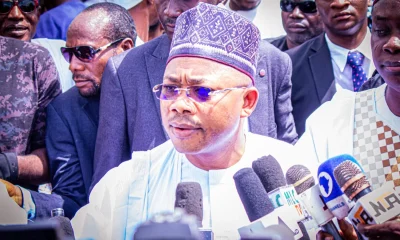

Ododo Vows To Eliminate Criminals From Kogi Forests
ShareFrom Joseph Amedu, Lokoja Kogi State governor, Alhaji Ahmed Usman Ododo has vowed to eliminate criminals across the state’s forest zones, declaring...


Trump to Attend World Cup Final, Present Trophy
ShareUnited States president Donald Trump will attend the World Cup final and help present the trophy, says Fifa president Gianni Infantino. Trump, 80,...
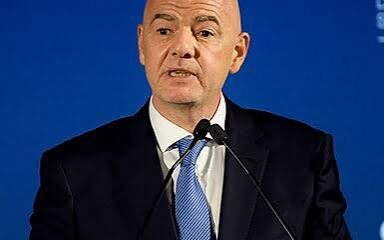

No Extra Revenue for FIFA from Hydration Breaks – Infantino
ShareHydration breaks at the World Cup are “purely a sporting matter” and bring “no additional revenue for Fifa”, president Gianni Infantino has said. Three-minute pauses midway through both...


Niger Pulls out of International Criminal Court
ShareNiger has officially submitted its request to withdraw from the International Criminal Court (ICC), nine months after announcing its intent to leave. In...


Army Disowns Fundraising for NADCEL 2026
ShareThe Nigerian Army has disowned ongoing fundraising and sponsorship solicitations being carried out in the name of the Nigerian Army Day Celebration (NADCEL) 2026. Army warned...
Bayelsa Establishes Waterways Agency
ShareFrom Mike Tayese, Yenagoa Bayelsa State would soon establish an agency to regulate activities that result in erosion and other environmental menace on its waterways. This...


Jaiz Bank Profit Rises 28 Per Cent, Eyes SME, Retail Banking Growth
ShareBy Tony Obiechina, Abuja Jaiz Bank Plc has unveiled plans to deepen its retail and Small and Medium Enterprises (SME)...


Insecurity: Mutfwang Vows Justice after Bokkos Massacre
ShareFrom Ifeanyichukwu Nwannah, Gusau and Jude Dangwam, Jos The worsening security crisis across parts of Northern Nigeria deepened on Wednesday...


Senate Approves State Police Bill after Manual Voting Process
ShareBy Eze Okechukwu, Abuja The Senate on Wednesday, recorded a historic milestone in Nigeria’s constitutional reform process as it passed...


Customs Intensify Fight Against Smuggling, Seize N273m Prohibited Imports in Cross River
ShareBy Tambaya Julius, Abuja The Nigeria Customs Service has intercepted prohibited imported goods with a Duty Paid Value (DPV) of...