
Education
Schools in Katsina Eight LGAs Shutdown Following Insurgency, Banditry -Wazirin Katsina

From Alfred Babs, Ilorin
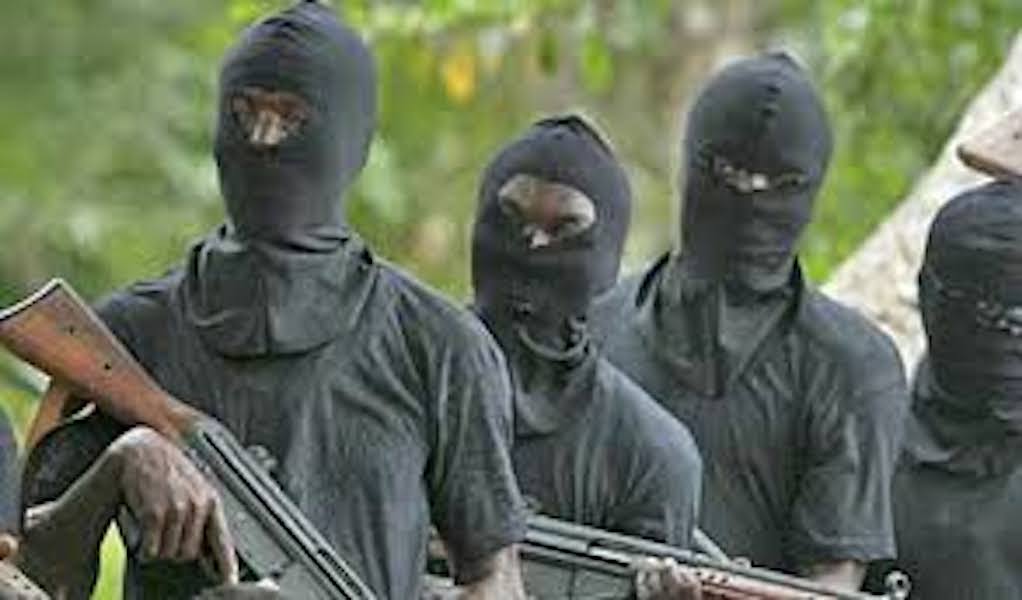
Wazirin Katsina, Professor San Lugga on Monday revealed that banditry and insurgency have led to the closure of all schools and other institutions in eight local government areas of Katsina state.
He added that all the district heads of the eight local government areas had relocated to Katsina, the state capital, no thanks to banditry and insurgency.
Lugga made the revelation while presenting a paper as a guest speaker at a strategic management retreat organised by Institute for Peace and Conflict Resolution (IPCR) on Monday in Ilorin, Kwara state capital.
The theme of the retreat is “repositioning IPCR for sustainable peace, security and national integration.”
The Wazirin Katsina said that two major roads in the state had been closed to vehicular movement due to the activities of bandits.
“There is no single day in the last two and half years that somebody will not be killed or abducted in the state. It is really a state of war. It is more than conflict,” he said.
He lamented that he had been a member of no fewer than 48 presidential committee on insecurity in the country, adding only one out of the committees’ recommendations had been implemented.
He identified poverty and unemployment; out of school children; proliferation of light arms and ammunition; corruption; poor police welfare and misuse of religion as some of the causes of insecurity in the country.
He recommended the use of war contractors to end banditry and insurgency in the country.
Said he: “For the first time to the best of my knowledge, recommendation on presidential community on insecurity was implemented by President Goodluck Jonathan. That was why elections went on peacefully in Borno state in 2015 without blood shed.
“The committee members worked tirelessly. We made contact with the key Boko Haram commanders minus Shekau who refused to key into the programme. After successful consultation they agreed to a ceasefire. What we did was to agree with the commanders in Kaduna, Kano and all the states where Boko Haram was operating.
“Then we wrote a letter to Shekau through one of his commandants who gave him facts and figures in Islam to dialogue with the then President Jonathan. What we did then was to ensure that Shekau was pushed to Sambisa forest which ensured peaceful conduct of the 2015 elections.
“The war contractors (mercenaries) we contracted helped to put Shekau in place. Unfortunately, the current government has refused to use war contractors. Even the United states of America used mercenaries in Afghanistan.”
Also speaking, Minister of Foreign Affairs, Geoffrey Onyeama represented by Ambassador Samson Itegboye urged IPCR to partner with states to establish peace agencies.
Onyeama said that “I will like to encourage states to set up state peace agents. Currently there three states Plateau, Kaduna and Adamawa that have established peace agencies and commissions to address communal conflicts and the role of insurgents.
“These strategies in my view, offer precautionary approach to tackling root causes of violence. The hope of a stable Africa is hinged on Nigeria being a major player in the continent. To play the role very well we need to restructure our country on the path of sustainable peace.
“Traditional rulers play pivotal roles in settling community disputes and conflicts which are the major causes of security threat bedeviling our country today. The partnership with the National Assembly is apt in that everyone in the country is represented in the National Assembly through their representatives in both the Senate and House of Representatives, making the zonal intervention project a strategic avenue through which a strategically designed and implement projects to build capacity and empower traditional rulers and all community stakeholders to strictly community peacekeeping structures and foster peaceful coexistence across the country,” he said.






The Zamfara State Universal Basic Education Board (ZSUBEB) has flagged off the training of 75 State and Local Government Education Authority Social Mobilisation Officers (SMOs) on the utilisation of School-Based Management Committee (SBMC) operational documents.
The training, held at the ZSUBEB Headquarters, Gusau, on Monday, was aimed at strengthening the capacity of the officers to engage communities and stakeholders on improving retention and the quality of basic education in the state.
At the formal flag-off, the Executive Chairman, ZSUBEB, Prof. Nasir Garba Anka, represented by the Permanent Member I, Madawaki Alhaji Dahiru Shehu, said social mobilisation remains critical to the success of government interventions in the education sector.
“Social Mobilisation Officers are an important link between government, schools, parents, communities, traditional and religious institutions, as well as civil society organisations and other stakeholders.”
Madawaki explained that the responsibilities of Social Mobilisation Officers go beyond information dissemination.
“They are expected to build trust, create awareness, encourage community participation, identify barriers to education and promote ownership of educational programmes.”
He emphasised that sustainable progress in basic education cannot be achieved by government alone, but requires the active participation of parents, communities, traditional and religious leaders, teachers, SBMCs and development partners.
In a goodwill message, the State Coordinator of UBEC, Zamfara State Office, Malam Tanimu Abdulkadir, who spoke on behalf of the Executive Secretary of UBEC, Dr. Aisha Garba, and the management of the Commission, commended ZSUBEB for organising the training.
Malam Abdulkadir cited the recent Enrolment Drive Campaign at JNI Primary School, Gusau, where 87 out-of-school children were enrolled, as an example of what effective community mobilisation can achieve.
He further disclosed that UBEC has made SBMC functionality an important indicator in its school monitoring exercise.
Representatives of the Teachers Service Board, Senior Secondary Education Board and Ministry of Education, Science and Technology also pledged their continued support and collaboration.
In his remarks, the Director of Social Mobilisation, ZSUBEB, Alhaji Sani Usman Gummi, thanked the participating institutions, development partners, facilitators, organisers and other stakeholders for their contributions.
Kano State Governor, Abba Kabir Yusuf, has approved the implementation of the January and July 2026 promotions of 18,984 teaching and non-teaching staff of the State Universal Basic Education Board (SUBEB).
The approval also provides for the release of N235, 116,339.
09 to facilitate the implementation of the promotions across the state’s 44 Local Government Education Authorities (LGEAs).The decision followed a request by the Executive Chairman of SUBEB, Yusuf Kabir, for funds to implement the promotions for eligible staff whose promotions for the two 2026 cycles had been processed.
In a letter dated September 2, 2026, the Board said it had completed the necessary processes, including verification of staff eligibility and computation of the corresponding salary adjustments.
According to SUBEB, the timely implementation of promotions is essential to staff motivation, career development, capacity strengthening and improved service delivery in the basic education sector.
The Board noted that SUBEB, one of the largest public institutions in Kano State, has approximately 60,000 teaching and non-teaching personnel serving across the 44 LGEAs.
It further disclosed that the present administration inherited outstanding promotion backlogs, involving arrears spanning seven years, as well as another backlog of about one-and-a-half years.
SUBEB said Governor Yusuf had previously approved and facilitated the implementation of the outstanding promotions, describing the intervention as having improved staff morale and restored confidence among personnel.
The Board said the latest approval further demonstrates the administration’s attention to the welfare and career progression of public servants in the state.
The request was subsequently ratified at a recent meeting of the Kano State Executive Council, paving the way for the release of the approved funds and the implementation of the January and July 2026 promotions.
The Registrar of the Joint Admissions and Matriculation Board, Prof. Segun Aina, has explained the decision to establish a Unified Tertiary Matriculation Examination centre in Canada, saying the move is aimed at expanding access to education rather than generating revenue.
Aina said the proposed centre in Ottawa would serve Nigerians living in Canada and other parts of North America who wish to sit the examination for admission into Nigerian tertiary institutions.
The registrar gave the explanation in a series of posts on X on Tuesday, following public questions about the planned centre, which is expected to begin operations for the 2027 UTME.
He said JAMB currently conducts the examination in about 10 foreign countries as a service to candidates, adding that the number of applicants was not the primary consideration for establishing such centres.
“UTME is currently being written in about 10 countries as a service to enhance access to education. We also conduct the exams in correctional service centres for the same reason. So the number of candidates is not the main driving force,” Aina wrote.
He noted that although JAMB had multiple examination centres across Africa, there was none in North America before the planned Ottawa centre.
According to him, the board had received enquiries from prospective candidates and expected more interest following the announcement.
Asked who would use the centre, Aina said Nigerians relocated abroad for various reasons each year, including the children of Nigerian public servants posted overseas.
“Anyone of the 100s of people who move back yearly for one reason or the other, including the children of many service personnel with tenured postings all around the world,” he said.
Aina also dismissed concerns that the board would need to acquire or rent a building and employ additional personnel to operate the centre.
He explained that JAMB works with Nigerian diplomatic missions in countries where it conducts the UTME, using temporary spaces within high commission premises and the assistance of their staff.
“We partner with the Nigerian High Commissions in various countries. We set up temporary spaces within their premises and use their staff to assist us run the exams,” he said.
The registrar further said no money had been spent on the proposed Canadian centre, explaining that the arrangement was initiated during a visit to Canada for a conference.
“Not a single kobo has gone into this exploration so far — I was in Canada for a conference and used the opportunity to make the connection,” he wrote in another post.
He added that the board did not maintain permanent facilities or computer-based test centres in Ottawa, saying the examination would be conducted within the Nigerian High Commission’s premises to keep costs low.
Aina said the board’s foreign examination centres were not established primarily on the basis of financial viability but to make access to Nigerian tertiary education easier for eligible candidates.
In a separate post, he argued that the absence of a centre in North America had meant there could not previously have been candidates sitting the UTME there.
“There couldn’t have been any candidates in North America since we didn’t have any centres there, sir. You are making our point whilst seeming to argue against it,” he wrote in response to a question about demand.
JAMB’s spokesperson, Fabian Benjamin, also defended the decision, urging critics to seek clarification before questioning the board’s plans.
Benjamin said the board had received indications of interest from more than 100 candidates who wished to sit the examination in Canada.
“How will you feel if you know that over 100 candidates have already indicated their interest to sit the exam in Canada. Let us promote the nation please,” he wrote.
He added that the board would continue working to promote Nigerian universities by facilitating admissions for international students, despite criticism of its efforts.
JAMB announced plans to establish a UTME centre in Ottawa, Canada, where Nigerians living in the country and other parts of North America would be able to sit the examination from 2027.
The board disclosed the plan following a visit by Aina to the Nigerian High Commission in Ottawa, saying the centre would provide eligible candidates with easier access to the examination.



Nigeria’s Oil Reforms will Unlock $50bn Deep Offshore Investments – Tinubu
SharePresident Bola Tinubu said recent reforms in Nigeria’s oil and gas sector are designed to unlock up to 50 billion...
Ododo Condoles Families of NAF Personnel, Armed Forces Over Ondo Crash
ShareFrom Joseph Amedu, Lokoja Kogi State Governor, Ahmed Ododo has commiserated with the families of the Nigerian Air Force personnel...
WUEDA Tasks Journalists on Verification, Development Reporting
ShareFrom Francis Sadhere, Delta The Warri, Uvwie and Environs Special Area Development Agency (WUEDA) has urged journalists to strengthen investigative...
Dauda Joins FG’s Delegation for Nigeria- Ethiopia Leadership Exchange, Learning Visit
ShareFrom Ifeanyichukwu Nwannah, Gusau President Bola Tinubu has approved a high-level Nigerian delegation to Addis Ababa for a leadership exchange...
Civic Education Vital for Future Leaders – Ekiti Commissioner
ShareThe Ekiti State Government said on Tuesday that exposing students to civic education played a vital role in preparing them...
DSIRS Threatens Prosecution of Fake Tax Collectors, Warns Taxpayers
ShareFrom Francis Sadhere, Delta The Delta State Internal Revenue Service (DSIRS) has warned individuals and groups issuing fake tax demand...
Alabere Urges Corps Members to Preserve Yoruba Culture, Uphold Good Character
ShareFrom Ayinde Akintade, Osogbo A revered traditional ruler in Osun State, the Alabere of Abereland, Oba Obafemi Adelakin Mutalib Abiade...
Nigeria Since 1999: When will the Years Begin to Count?
ShareBy Dakuku Peterside Think of a Nigerian born in 1999, the year civilian rule came back. That person is twenty-seven...

Tinubu’s Return: An Update
ShareBy Reuben Abati Exactly a week ago, President Bola Ahmed Tinubu, now jokingly renamed a citizen of Kano with a...


NDLEA Seizes over 10 Tonnes of Illicit Drugs, Recover Firearms in Kogi
ShareBy Elijah Oguche, Abuja The National Drug Law Enforcement Agency (NDLEA) in Kogi said it has seized more than 10...