
OPINION
Science, Technology as Pillars of Nigeria’s Economic Growth

By Sylvester Thompson
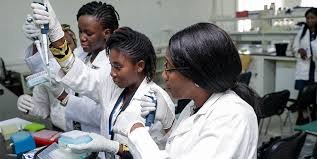
With the aim of boosting productivity and fostering inclusive growth, Nigeria is increasingly anchoring its economic reform agenda on science, technology, and innovation.
Across agriculture, healthcare, manufacturing, education and the digital economy, government agencies and indigenous research institutions are deploying scientific solutions to improve livelihoods and strengthen economic resilience.
To foster economic diversification, President Bola Tinubu has frequently emphasised leveraging research and digital innovation to propel Nigeria’s growth, particularly through initiatives like the 3MTT programme and the 2025 Industrial Policy.
“We must invest in knowledge, innovation and technology to build a competitive, resilient and inclusive economy.
“Nigeria’s future prosperity depends on how well we deploy science to solve our development challenges.”
In addition, Tinubu has emphasised the importance of science-backed agriculture in tackling hunger and poverty.
“Food security is national security; we must apply science, innovation and modern technology to agriculture to ensure that Nigerians have access to affordable and nutritious food,” he said.
Experts note that biotechnology research, improved crop varieties and modern farming techniques are helping to boost yields and reduce vulnerability to climate shocks.
The National Biotechnology Research and Development Agency, an agency under the Federal (NBRDA), Ministry of Innovation, Science and Technology, provides insights.
According to NBRDA, biotechnology is critical to achieving food security and nutrition sustainability.
The Director-General of the NBRDA, Prof. Abdullahi Mustapha, said scientific innovation offers practical solutions to longstanding agricultural challenges.
“Biotechnology enables us to improve crop productivity, enhance nutritional value and develop resilience against pests and climate stress.
“These innovations are essential for food security and rural economic growth,” he said.
Stakeholders are also of the submission that science and technology are also central to Nigeria’s industrialisation agenda, particularly in reducing import dependence and strengthening local value chains.
According to the Raw Materials Research and Development Council (RMRDC), research-driven utilisation of indigenous raw materials is critical to repositioning Nigeria’s manufacturing sector.
At the Nigeria Manufacturing and Equipment (NME) and Nigeria Raw Materials (NIRAM) Expo in Lagos in August 2025, Prof. Nnanyelugo Ike-Muonso, Director General of the RMRDC, warned that Nigeria’s heavy reliance on imported industrial inputs was undermining economic growth.
“Nigeria has abundant raw materials, but without science-driven value addition, industrial growth will remain weak,” he said.
He said there was a need for stronger collaborations between research institutions and manufacturers.
Similarly, the National Agency for Science and Engineering Infrastructure (NASENI), says local engineering solutions and indigenous manufacturing capacity are essential for sustainable development.
At the unveiling of NASENI’s fabricated products and prototypes in Abuja in 2025, the agency’s Executive Vice Chairman, Mr Khalil Halilu, said Nigeria must prioritise home-grown technology to drive industrial growth.
“Science and Engineering infrastructure are the backbone of industralisation.
“Our mandate is to ensure that Nigerian solutions power Nigeria’s development,” he said.
Recall that Tinubu has also consistently aligned with this approach, stressing the need for value addition and innovation-driven growth.
“We cannot continue to export raw materials and import finished goods. Industrialisation, driven by innovation and local capacity, is the pathway to economic strength,” Tinubu said.
In the healthcare sector, science and technology are improving diagnostics, pharmaceutical research and disease surveillance.
Officials say investments in biotechnology and local pharmaceutical production are essential for health security and economic stability.
“Strengthening local research capacity in healthcare reduces our dependence on imports and improves resilience,” an official in the ministry said.
Nigeria’s digital economy continues to expand, driven by innovation in software development, fintech and digital services.
Technology hubs, research centres and innovation programmes are nurturing startups and creating jobs, particularly for young people.
According to sector analysts, the digital economy’s contribution to
Gross Domestic Product (GDP) is expected to grow with improved broadband penetration and digital skills development.
Experts describe the digital economy as a strategic growth sector, and that technology is a powerful driver of jobs and economic inclusion.
What’s more, science and technology are also reshaping education and skills development; hence, the emphasis on science, technology, engineering and mathematics (STEM) education is aimed at building a future-ready workforce.
The Federal Ministry of Innovation, Science and Technology acknowledges that strengthening research institutions and aligning education with industry needs remain priorities.
Uche Nnaji, the immediate past Minister of Innovation, Science and Technology, said research outcomes must translate into real economic value.
“Our goal is to ensure that science and technology deliver measurable benefits to Nigerians,” Nnaji said.
More so, education experts argue that investing in scientific skills is critical for long-term competitiveness.
Beyond the productive sectors, science and technology are improving governance through data-driven policymaking, digital public services and innovation-led reforms.
Analysts say evidence-based research enhances transparency, efficiency and service delivery.
In spite of progress, stakeholders acknowledge challenges including limited research funding, infrastructure gaps and weak linkages between academia and industry.
However, experts agree that sustained investment and policy consistency can unlock the full potential of science and technology.
“There is no alternative to innovation-led development,” Peter Essien, a technologist said.
He advised that the country must place science and technology at the heart of its development agenda to witness growth.
As Nigeria navigates complex socioeconomic challenges, science and technology are increasingly shaping solutions across key sectors of the economy.
By strengthening institutions such as NBRDA, NASENI and RMRDC, supporting innovation and aligning research with national priorities, stakeholders say Nigeria can accelerate inclusive growth and build a resilient, knowledge-driven economy.(NAN)
By Tunde Rahman
WHEN the 2023 presidential election results were announced, many analysts and commentators gave a largely unanimous verdict regarding the voting pattern in the South-east. The region had voted almost entirely along the ethnic line.
The figures told part of the story: Mr Peter Obi of the Labour Party swept the zone with over 1. 8 million votes.In comparison, Asiwaju Bola Tinubu of the All Progressives Congress recorded just about 127,000 votes across the five South-east states. Three years into the President Tinubu administration, that electoral map is already being redrawn not by rhetoric, but by landmark projects, appointments in strategic positions and deliberate political engagement.
The South-east has historically complained of federal neglect, specifically in relation to federal presence. President Tinubu has moved to close that gap with visible infrastructure projects. The federal projects, completed or ongoing in the zone, are now too numerous and one could easily lose count. They include the renewed federal push on the Enugu-Onitsha Expressway, Calabar-Ebonyi-Benue Trans-Saharan Superhighway, Enugu-Port Harcourt Road, and the Second Niger Bridge access roads.
For a region whose economy runs on trade, fixing these arteries will directly impact businesses in Onitsha, Aba, Nnewi, and other commercial hubs in the region. I saw some of these iconic roads and the high quality of work being done during a recent National Media inspection tour of the federal and state government projects in the South-east organised by the Renewed Hope Ambassadors in collaboration with the Presidential Media Team.
President Tinubu has also committed to the Eastern Rail Corridor from Port Harcourt to Maiduguri, under which the South-east segment is prioritised. This revives a transport mode that collapsed decades ago. The import becomes even more significant when some facts are considered. Some of the projects now being brought to life under President Tinubu, according to the Minister of Works, Engineer Dave Umahi, were conceived during the colonial era but left unrealised for decades.
Such renaissance is not limited to road infrastructure. On energy, the inclusion of South-east states in the Siemens Power project and renewed attention to gas infrastructure to power industrial clusters in Aba and Nnewi is important.
During the inspection tour, we visited the ANOH gas project (Assa North-Ohaji South Gas project), one of Nigeria’s largest natural gas development projects and a cornerstone of the Federal Government’s decade-long gas initiative. The processing plant, operated by ANOH Gas Company as a 50-50 joint venture between Seplat Energy Plc and Nigerian Gas Infrastructure Company, a subsidiary of NNPC Limited, was inaugurated by President Tinubu on May 15, 2024. It is already supplying processed gas to offtakers like Indorama Petrochemical Company.
The road and rail projects that crisscross the South-east landscape are not campaign promises. They are budget lines with contractors on site. In politics, delivery takes slogans for lunch. Inclusion in government and important appointments for South-easterners also matter. The 2023 figures showed APC’s vote deficit. However, the 2023-2026 appointments show a deliberate effort to correct the
representation deficit. Key South-Easterners now hold strategic positions in foreign affairs, defence, works, science & tech, and security agencies. The Minister of Foreign Affairs, Mrs Bianca Odumegwu-Ojukwu, from Anambra State (although Enugu-born), for instance, is today the biggest female political appointee in the Federal Executive Council.
Beyond the titles, the message is clear: the South-East is being brought to the centre of decision-making, not kept at the margins. This has started shifting the conversation from “exclusion” to “what more can we get done together.” The President’s economic reforms, such as unification of foreign exchange rates, removal of fuel subsidy, and recalibration of tax, may be tough. Still, the South-East is positioned to benefit most from the pivot to production and exports.
Aba’s Made-in-Nigeria campaign, Onitsha’s trading network, and Nnewi’s manufacturing base are being linked directly to federal grants, CBN intervention funds, and export support. And with the recent formal handover of the Akanu Ibiam International Airport, Enugu, to the concessionaire, the region’s logistics and commercial hub dream has received a massive boost.
The Tinubu administration is treating the South-east not just as a voting bloc, but as Nigeria’s industrial engine. In terms of political realignment, the numbers are also moving up. Elections are about addition. In 2023, APC polled 127,370 votes in the South-east.
The goal of the Tinubu administration for 2027 is not to win every state on day one, but to grow that base state by state, LGA by LGA. That growth is already visible: from not a single state in 2019, two states in 2023, APC has now moved to three.
The other two states in the zone are not opposed to President Tinubu. Anambra State Governor Chukwuma Soludo of the All Progressives Grand Alliance and his Abia State counterpart, Governor Alex Otti of the Labour Party, are strong supporters of President Tinubu, his reforms and reelection plans.
All the governors, not only South-East governors, acknowledge and say President Tinubu’s reforms have freed resources to the subnationals, which have, in turn, enabled them to engage in infrastructure projects. Governor Hope Uzodimma, who is also the Chairman of the Progressive Governors, has remained vocal in his support for the President and loud campaign for his second term.
Uzodimma is the Director-General of the Renewed Hope Ambassadors, the main campaign group for Tinubu’s reelection. Speaking at a state dinner for the National Media Team comprising over 50 journalists, editors and members of the Presidential Communications Team in Owerri, Imo State capital, two weeks ago, Uzodimma described President Tinubu as the Lee Kuan Yew of Nigeria. “In President Tinubu, I have seen another Lee Kuan Yew,” he said, praising the President’s bold economic reforms and expressing confidence that his performance would secure him a second term in 2027. “The old order is gone and there is now a new order. President Tinubu knew exactly what he came to do. He started implementing the reforms immediately because he understood the task before him,” he said.
Importantly, governors and stakeholders in the South-East zone are now in regular dialogue with the Presidency. Federal projects are being inaugurated with bipartisan presence. Youth and business groups who sat out in 2023 are now engaging with APC structures because they see tangible projects in their communities.
Politics in the South-East has always been pragmatic. Where federal presence is felt, political alignment follows. The 2023 electoral map showed where President Tinubu and APC were. Now, President Tinubu’s governance story in the South-East is showing where things are headed.
By linking infrastructure delivery with political inclusion and economic empowerment, the administration is redrawing the South-East political map from one defined only by election-day figures, to one defined by roads constructed, factories powered, and people included in governance.
The South-East deserves to be at the centre of Nigeria’s growth story. Under President Tinubu, I dare say that repositioning has begun.
Rahman is Senior Special Assistant to the President on Media & Special Duties.
Necessity of Nigeria’s Response to Xenophobia in South Africa
As the federal government collaborates with public-spirited airliners to bring back hundreds of Nigerians stranded in South Africa, the latest wave of xenophobia and Afrophobia in that country deserves a drastic response from the Federal Government of Nigeria. Days ago, the sixth evacuation flight returned to Nigeria.
It is appalling that the voluntary repatriations were delayed, and Nigeria still lacks a concerted response to the undignified treatment of citizens globally. Beyond the rancorous debates at the National Assembly, it is high time Nigeria took drastic reciprocal action, at least to announce to South Africa and other unfriendly countries that the dignity and respect of Nigerians are no longer negotiable.
The ongoing xenophobia in South Africa is neither the first nor most likely the last. Socioeconomic struggles for scarce resources and jobs routinely motivate anti-migrant crises. Unlike the past episodes in South Africa, the current protest has been deeply politicised and weaponised into a well-organised and publicised Afrophobia and mob violence against fellow Africans.
For context, South Africa faces structural challenges, with attendant social anger over high unemployment, livelihood security, healthcare, and housing. Decades after independence, 72 per cent of arable land and economic power remains in the care of the white minority. Instead of addressing these structural inequalities, political elites and sections of capital often channel public frustration towards migrants and refugees.
Coinciding with preparations for the November provincial elections, Afrophobia functions as a political diversion for the current administration’s inadequacies and failure of the post-Apartheid transformation plan in meeting the socioeconomic demands of average unemployed South Africans. The unemployed South African worker is encouraged to blame Zimbabwean and Nigerian street vendors, Ethiopian spaza shop owners, and Somali and Congolese traders instead of asking why wealth remains concentrated, why services collapse, and why economic opportunities are so scarce.
According to reports from the United Nations and the International Organisation for Migration, South Africa’s immigrant population is estimated at between three million and four million, accounting for approximately four to six per cent of the country’s total population.
Among them are the estimated 30,000 to 50,000 Nigerians in South Africa as of 2022. In contrast, the unemployment rate stands at around 32 to 33 per cent, rising to approximately 41 to 43 per cent when discouraged job seekers are included.
Young people constitute a significant proportion of these figures, with youth unemployment exceeding 45 to 60 per cent in some measures. So, how do the migrants account for the spike in unemployment, or do the political elites aim to shoehorn millions of poorly educated and disenchanted South Africans into the “stolen jobs” undesirable migrants have left behind? It is clearer that the current self-destruct spell on the rainbow nation is more political and a fool’s errand of chasing foreigners away as the solution to endemic social vices and economic exclusion.
In the wake of the June 30 deadline for all ‘illegal’ immigrants to flee South Africa, no fewer than 10,000 Africans have been repatriated by countries like Nigeria, Ghana, Zimbabwe, Malawi, and DR Congo. The South African minister in the presidency, Khumbudzo Ntshavheni, warned that fabricated videos were being circulated to undermine South Africa’s international reputation. Indeed!
It is a shame that modern Africa’s hatred for fellow Africans has assumed this self-destructive dimension. Post-Apartheid South Africa clearly loves its oppressors (whites) more than it does its fellow blacks.
This is evident in street protests and xenophobic violence culminating in the beatings, humiliation, and killing of their brothers and sisters whose forebears were actively instrumental to the independence South Africans enjoy today. Notably, those migrants who are now ridiculed as “illegal” or “undocumented” were created by immigration policies.
Many migrants initially entered South Africa legally and later became undocumented because of the dysfunction and hostility of the Department of Home Affairs. Applications are lost, permits are delayed, and people are effectively rendered illegal through bureaucratic exclusion.
From a continental perspective, the development is a betrayal of the old solidarity and Pan-Africanism. It made a mockery of the ethos of Ubuntu (“I am because we are”) a jussive value and the philosophical driving force through which African countries rallied behind South Africa in friendship, shared identity and brotherhood during the dark colonial era.
For instance, Nigerians’ contributions in resources and armaments to the apartheid struggle are blighted by the epistemic ignorance of the current generation of South Africans. Nigeria’s Prime Minister, Sir Abubakar Tafawa Balewa, wrote to the African National Congress in solidarity as early as April 1961, within a year of Nigeria’s own independence, and Nigeria went on to chair the United Nations Special Committee against Apartheid until 1994. From the South African Relief Fund paid by every civil servant, Nigeria funded the ANC and the Pan Africanist Congress for decades, hosted South African exiles, offered scholarships to South African students, and sent teachers, doctors, and architects into the struggle. Estimates of Nigeria’s total financial contribution to the anti-apartheid cause range into tens of billions of dollars. Nelson Mandela himself, on a visit to Lagos in 1990, thanked Nigeria as among the most generous of the movement’s benefactors.
Suffice to state that anti-immigrant protest documented or undocumented – is a modern phenomenon. Growing anti-migrant sentiment is not unique to South Africa; similar trends have emerged in countries such as the United States, the United Kingdom, and elsewhere.
Recall that Nigeria once experienced the Ghana-must-go episode, which saw the exodus of hordes of Ghanaian-origin teachers and students. The same malaise, though at a higher temperature, is afflicting South Africa, with a detestable uprising against Africans while the whites, Chinese, Indians and so on are securely protected. In that light, it is high time for Nigeria and every African nation whose citizens have been hunted, humiliated, or killed on South African soil to reconsider the terms of friendship with Pretoria.
Specifically, it behoves the Nigerian government to take a proactive measure to push back on the insidious hatred of the South Africans. Be it for killings of Nigerians, street humiliation or unprovoked aggression against kids, the onus is on the Nigerian government to reciprocate for each of the xenophobic aggressions against Nigerians.
Reciprocity is permissible in international diplomacy, and the odds favour whoever acts decisively. The Nigerian officials should not just demand compensation or allow the National Association of Nigerian Students (NANS) to take the law into their hands.
Nigeria must identify South African business establishments in Nigeria as those of the country that stripped Nigerians of dignity and respect. Those business interests would send the message home and across the world that Nigerian citizens can no longer be maltreated without dire consequences.
The long-term measure is for the Nigerian government to also fix Nigeria and make it liveable for all. The well-established fact is that more than half of Nigerians slaving away as irregular migrants in South Africa and around the world would not venture if Nigeria gave prospects for their hopes and aspirations.
This is also evident in the accounts of those who were repatriated from South Africa, with the impression that many lack sufficient skills to improve their chances of integration into the challenging economic environment. A more functional South Africa would have avoided the current xenophobic episode.
The misguided average South Africans are growing Afrophobic with the hope that it will ‘fix’ their country. Nigeria should delay no further till the day Nigerians, in protests, start leading mass protests against the government in the bid to ‘fix’ the country.
By Ebuka Ukoh
This piece highlights the systemic barriers – physical, attitudinal, and institutional – that prevent persons with disabilities (PWDs) in Nigeria from fully participating in society. Observing the global significance of July 26, which marks the signing of the Americans with Disabilities Act (ADA), the calls for a shift in perspective: moving away from viewing disability as an object of charity toward recognising it as a matter of fundamental human rights and citizenship.
The piece emphasises the urgent need for robust implementation of Nigeria’s Discrimination Against Persons with Disabilities (Prohibition) Act, 2018 (actually signed in 209), and urges the government, religious institutions, and the general public to dismantle barriers and foster an inclusive environment where all Nigerians can flourish.
July 26, being my birthday, has always been a day of personal celebration. It is a day to reflect on life, purpose, and gratitude; it also carries a profound global meaning: every year on this day, the world marks National Disability Independence Day, commemorating the 1990 signing of the Americans with Disabilities Act (ADA).
The ADA was more than a legal reform; it was a declaration that disability should never diminish a person’s dignity, rights, or opportunities. It affirmed a simple truth: barriers created by society, not disability itself, are what truly exclude people from community life.
As I celebrate another year, my thoughts turn not to my own voice, but to the voices we too often fail to hear. The World Health Organisation’s 2011 report estimated that approximately 25 million Nigerians live with some form of disability.
They are our students navigating inaccessible schools, entrepreneurs building businesses in environments designed without them in mind, job seekers overlooked despite their qualifications, and commuters unable to safely access public transport.
Perhaps the most painful injustice is that this exclusion is often invisible. We pass people every day without questioning whether our schools, offices, worship centres, and public buildings are actually accessible.
We design policies without consulting those they impact, and we speak of inclusion while leaving many outside the conversation. A society reveals its moral character, not by how it treats the powerful, but by how it treats those who are most easily ignored.
PWDs are not objects of charity; they are citizens. Yet, unequal citizenship remains the reality: it is arriving at a polling unit to find no accessible entrance; it is earning a degree only to be rejected by employers who mistake disability for inability; it is struggling to navigate public transport or worship services that were designed with exclusionary assumptions. These are not mere inconveniences; they are structural barriers that prevent fellow Nigerians from participating in the so-called national life of their own country.
These folks are handiCAP ABLE, not handicapped.
The language we use also matters. Too often, disability is defined only by limitation. Yet, across Nigeria, PWDs are teachers, lawyers, artists, athletes, and community leaders. Their contributions are not “exceptions” to disability; they are powerful expressions of human potential when opportunity is allowed to flourish.
What if we stopped seeing disability as the absence of ability and began recognising that those who experience the world differently often develop unique resilience and problem-solving skills? Inclusion is not an act of generosity; it is an act of justice.
Nigeria has taken a significant step forward with the Discrimination Against Persons with Disabilities (Prohibition) Act, 2018 (signed by PMB in 2019). This law formally recognises that accessibility and equal opportunity are matters of right.
Yet, legislation achieves its purpose only when it transforms everyday life. It must be visible in the way schools are built, employers recruit, architects design spaces, and the media tells our stories.
Faith communities also hold a unique responsibility. In Nigeria, churches and mosques are among our most trusted institutions. Yet, too often, we celebrate miracles while neglecting accessibility. We pray for healing but fail to remove the physical and attitudinal barriers that prevent PWDs from joining our choirs, serving in leadership, or participating in the ordinary life of the congregation. A truly welcoming community does not ask whether PWDs belong; it asks whether inclusion is woven into its very fabric.
The government must continue to strengthen the enforcement of disability rights, and each of us must examine our own assumptions.
Inclusion benefits us all; it makes a country easier to navigate for older adults, parents with young children, and anyone recovering from injury. Accessibility is not a favour to a minority; it is an investment in the dignity of every human being.
On this birthday, I ask for no special gift. I ask only that we become a nation where no Nigerian is made invisible because they experience the world differently, for the measure of our humanity is not how we treat the strongest among us. It is whether those most easily overlooked know, without question, that they belong.
Mr Ukoh, a PhD student and coauthor of Built By The Ancestors, writes from his base in New York, the United States.
By Prince Charles Dickson, PhD
Our ancestors did not endure wars, disease, displacement and impossible journeys merely to produce citizens with the attention span of a disappearing Instagram story. The 4,094 ancestral positions behind each of us represent accumulated survival.
We owe that inheritance more than temporary indignation.To produce one living Nigerian today, biology required a spectacular ancestral relay race.
Two parents, four grandparents, eight great-grandparents, and so forth, doubling backward until the arithmetic reaches 2,048 ancestors in the eleventh preceding generation. Added together, the listed generations total 4,094 ancestral positions.Strictly speaking, the popular calculation describes eleven generations, not twelve, and probably stretches across roughly three centuries rather than one hundred years. Pedigree collapse also means some ancestors may occupy more than one position in the family tree. Still, the moral survives the mathematics: thousands of human journeys, migrations, quarrels, reconciliations, harvests, heartbreaks and stubborn acts of hope converged so that each of us could arrive here.
Imagine surviving all that history only for your descendant to inherit a country where an institution can allegedly appear from bureaucratic mist, acquire official-looking stationery, enter government offices, obtain accounting recognition, open Central Bank accounts and stroll into the national budget wearing a presidential name tag.
That is the dark comedy of the Presidential Foreign Intervention Promotion Council, variously described in official and media accounts as PFIPC, PEAC/PFIPC and, in some reports, the Presidential Foreign Investment Promotion Council. The Presidency insists that the body was never legally created, possessed no presidential approval and had no foundation in any law or executive instrument.
Adeniyi Adeyemi Matthew, who presented himself as its Director-General, has been charged with offences including forgery, impersonation and operating a fictitious government agency. He denies wrongdoing and maintains that the courts should determine the truth.
Ordinarily, that should be the whole story: somebody allegedly forged documents, the security agencies caught him, and the judicial machinery began turning.
But Nigeria will never serve you an ordinary meal.
Documents reviewed by investigators and journalists indicate that correspondence associated with the organisation moved through the Office of the Secretary to the Government of the Federation, the Office of the Accountant-General and the Central Bank.
The organisation reportedly received self-accounting status, a budget code, office accommodation and two foreign-currency accounts. It interacted with senior officials and members of the diplomatic community before the Ministry of Foreign Affairs sought clarification about its legitimacy.
This transforms the matter from a possible case of one audacious impersonator into a national audit of institutional susceptibility. The central question is not merely, “Who is Adeyemi?” It is also, “What kind of administrative system can be persuaded to recognise an organisation that, according to the Presidency, never existed?”
A ghost may frighten one civil servant. But when the ghost obtains office space, a budget code and domiciliary accounts, it has stopped haunting the building. It has joined the civil service.
PFIPC reportedly appeared alongside the Presidential Economic Advisory Council in the 2026 Appropriation Act, with about ₦1.3 billion allocated to the disputed entity. The Budget Office has since stated that although the appropriation appeared in the budget, no money was released because expenditure controls prevented the allocation from becoming actual public spending. That distinction matters.
Appropriation is legal permission to spend, not proof that spending occurred. Yet the absence of financial loss does not erase the governance failure that allowed a questionable body to travel so far through the state’s verification corridors.
A burglar who reaches the vault but finds the final lock intact has not proved that the entire security system is excellent. He has proved that the last padlock deserves a medal while the other doors require urgent counselling.
The controversy widened when Adeyemi accused the President’s Chief of Staff, Femi Gbajabiamila, of corruption, bribery and involvement in the disputed council. Gbajabiamila has emphatically denied the allegations and instituted a ₦15 billion defamation action. Adeyemi has also demanded an independent investigation.
These claims remain allegations and should not be converted into conclusions by social-media enthusiasm, partisan loyalty or the Nigerian habit of appointing ourselves judge immediately after reading three WhatsApp broadcasts.
President Bola Tinubu directed the Independent Corrupt Practices and Other Related Offences Commission to investigate the entire affair and submit a report within thirty days. Gbajabiamila subsequently appeared before the commission.
The House of Representatives also constituted an ad hoc committee, although its hearings have already encountered the familiar national sport of invited officials sending representatives, explanations or atmospheric silence. The Senate, meanwhile, twice declined to open a separate investigation, citing the pending court case and the ICPC inquiry.
Every relevant institution deserves a fair hearing. But fairness must not become fog. The investigation must establish who prepared the documents, who authenticated them, who authorised the budget code, who initiated the appropriation, who processed the bank accounts, who allocated or permitted the use of office space, who recruited personnel, who received warnings and why public clarification took so long.
This is where Nigeria’s most dependable accomplice enters: collective amnesia.
Our scandals arrive as blockbuster cinema. For seventy-two hours, everyone becomes a forensic accountant. Television panels ignite.
Hashtags reproduce. Party spokespersons perform verbal acrobatics. Then another drama lands: a minister quarrels with a governor, a celebrity marries during breakfast and divorces before evening, or somebody’s microphone develops political opinions. The previous scandal is quietly escorted into the national warehouse of unfinished outrage.
We confuse attention with accountability. They are not twins.
Attention asks, “Have you heard?”
Accountability asks, “What happened next?”
Democratic vigilance requires institutional memory: published timelines, accessible documents, named responsible officers, fixed reporting deadlines and consequences for obstruction, negligence or wrongdoing. Citizens and journalists should track the ICPC’s thirty-day deadline, the House committee’s findings, the criminal proceedings, the defamation case and every administrative reform promised afterward.
Civil-society organisations should maintain a public PFIPC accountability dashboard until each question is answered.
The government should establish a single authoritative digital register of all federal ministries, departments, agencies, councils and presidential committees.
Every entity should have a verifiable establishment instrument, leadership record, budget code, supervising authority and official domain. No agency should receive accounting status, office accommodation, recruitment approval or a bank account until its existence has been digitally authenticated across the relevant institutions. The #FixPolitics Initiative has similarly called for such a unified register.
Our ancestors did not endure wars, disease, displacement and impossible journeys merely to produce citizens with the attention span of a disappearing Instagram story. The 4,094 ancestral positions behind each of us represent accumulated survival. We owe that inheritance more than temporary indignation.
PFIPC must not become another national folktale beginning with “Once upon a scandal” and ending with “Nigerians moved on.”
This time, we must remain at the scene after the cameras leave. We must demand the reports, examine the evidence, distinguish accusation from proof, punish wrongdoing, correct institutional failures and record the lessons.
Otherwise, our ancestors may be forced to constitute their own ad hoc committee. And judging by their numerical strength, quorum will not be a problem. May Nigeria win.



NCS Wins Commonwealth Gold Award for Customs Cares Initiative
ShareBy Tambaya Julius, Abuja The Nigeria Customs Service (NCS) has earned international recognition after its flagship Corporate Social Responsibility (CSR)...


Lawyers Ask Sanwo-Olu To Suspend Onise Of Ise Appointment Over Pending Court Cases
ShareBy David Torough, Abuja A Lagos-based law firm, Law Pharm LP, has petitioned Lagos State Governor, Mr. Babajide Sanwo-Olu, urging...

Borrowing to Build: Reforming Nigeria’s Public Debt Architecture
ShareBy Uche Uwaleke Nigeria’s public debt has become one of the defining economic policy issues of our time. While debates...


Emulate Komaiyas Kingdom First Leadership Style, Ashimolowo Urges Leaders
ShareBy David Torough, Abuja The Senior Pastor of, Kingsway International Christian Centre (KiCC), Pastor Mathew Ashimolow has called on leaders...

Troops Neutralise Over 102 Terrorists, Rescue 393 Kidnap Victims, Arrest 345 Suspects in July
ShareBy David Torough, Abuja The Armed Forces of Nigeria (AFN) neutralised more than 102 terrorists and other criminal elements, arrested...

Kanye West, Former Assistant Settle Sexual Harassment Case
Share‘Supergirl’ hits N164m, ‘Moana’ earns N86m in West Africa ‘Supergirl’ and ‘Moana’ have recorded impressive box office performances, highlighting the...

Phyno Releases ‘Na Afa Nna’ Freestyle, Hints at Forthcoming Album
ShareNigerian rapper and songwriter, Chibuzor Nelson Azubuike, popularly known as Phyno, has released a new freestyle titled “Na Afa Nna.”...


Peter Okoye Calls Out Rudeboy for Shading Him amid Public Criticism
SharePeter Okoye, one-half of the defunct Nigerian Afrobeats duo, P-Square, has accused his twin brother, Rudeboy of always joining popular...


Singers BNXN, Asake Release First Collaborative Single ‘Eja Meja’
ShareNigerian music stars Daniel Benson, popularly known as BNXN and Ahmed Ololade, aka Asake, have released their first collaborative single...


Abuja Millennium Tower Costs N400b, Says Wike
ShareBy Laide Akinboade, Abuja The Minister of Federal Capital Territory (FCT), Nyesom Wike on Thursday explained that the cost of...