
NEWS
SEC DG Pushes for Capital Market Integration to Unlock West Africa’s Growth


By Tony Obiechina Abuja
The Director-General of the Securities and Exchange Commission (SEC), Dr. Emomotimi Agama has urged West African countries to accelerate the integration of their capital markets, describing it as the only way to mobilise the scale of investment needed to drive the region’s development.
Speaking at the Experts Meeting on Validation of the WASRA Charter and Recognition of WASRA as the Regulatory Body for Cross-Border Securities Market in ECOWAS, held Thursday in Abuja, Agama who is also the WASRA Chairman, said the initiative represents “a watershed moment” in the region’s financial history. According to him, West Africa faces urgent developmental challenges ranging from infrastructure deficits and climate adaptation to digital transformation and job creation.He said: “To meet these challenges, we require capital at scale, and the truth is simple: no single national market can provide it alone. An integrated regional capital market is no longer a luxury; it is a necessity”.The SEC boss lamented the slow pace of regional integration, warning that “each year of delay is a lost opportunity to mobilise resources for critical projects that can transform our economies.”He pointed to Africa’s annual infrastructure financing gap of over $100 billion, stressing that West Africa alone requires tens of billions of dollars to modernise transport corridors, upgrade energy systems, and build resilient digital infrastructure.“Without integrated markets that pool liquidity and broaden investor participation, our governments and private sector will remain constrained, relying on limited fiscal space and expensive borrowing,” Agama said.Drawing lessons from global models, he noted that the European Union and ASEAN achieved significant economic transformation by harmonising rules, fostering investor confidence, and facilitating seamless cross-border funding.“The creation of a single market enabled European firms to access funding seamlessly across borders, boosting innovation and competitiveness. Closer to home, ASEAN coordinated standards and deepened financial cooperation, strengthening its resilience as a regional bloc.”He emphasised that West Africa, with its population of more than 400 million and a combined GDP of about $800 billion, has even greater potential, cautioning that “potential means little without decisive action,” he cautioned.Agama outlined how integration would bring benefits beyond infrastructure, noting that “In agriculture, integrated markets can mobilise capital for value-chain development, agro-processing, and food security, which are critical priorities for our region”.He added: “In the digital economy, regional capital can support innovation hubs, fintech scale-ups, and broadband expansion, ensuring that West Africa fully participates in the fourth industrial revolution.”He further stressed that cross-border pools of capital, backed by harmonised regulation, could deliver “transformative impact” across multiple sectors, including youth empowerment and job creation.Presenting the objectives of the West Africa Securities Regulators Association (WASRA), Agama said the body was established with a clear mandate to anchor market integration.“First, to contribute to the establishment of appropriate mechanisms for the regulation of capital markets; ensuring their proper functioning and the protection of investors. This speaks directly to the heart of investor confidence, without which no market can thrive,” he said.He added that WASRA would foster integration through joint programmes and common projects, promote mutual assistance across the region, and set common standards for effective regulation. “Integration is not only about policy declarations; it is about practical collaboration and shared initiatives that deliver results for our markets and our people,” he stressed.Agama called on policymakers, especially finance ministers within ECOWAS, to champion the WASRA initiative, stating that “The political will of our leaders is the single most important factor in moving from aspiration to reality”.“WASRA stands ready, in partnership with ECOWAS, WACMIC, and WAMI, to provide the technical leadership required.”Also speaking at the meeting, the Minister of Finance and Coordinating Minister of the Economy, Mr Wale Edun noted that the gathering marked a significant step in the collective “journey toward a harmonized regulatory framework, one that reflects the shared aspirations of ECOWAS member states to deepen capital market integration, enhance cross-border investments, and promote financial stability.”Edun, represented by Mr. Hassan Adamu Jibrin Principal Economist Federal Ministry Of Finance, pointed out that validation of the draft WASRA Charter is not merely a procedural formality, but a critical foundation for institutional coherence, regulatory cooperation, and sustainable market development across our sub-region.On his part while speaking on behalf of ECOWAS Commission, Mr. Peter Oluonye Acting Director Private Sector noted that for capital markets integration to gain traction in ECOWAS, there need to be need concerted efforts of all stakeholders at harmonizing rules, practices and regulations, to the standards acceptable to all jurisdictions.”We are well aware that our member states depend much on external capital flows and direct investment to sustain and deliver on economic development programmes of our governments. The region is in dire need to develop critical economic infrastructure projects, requiring huge capital investment and facilitating gross capital formation. The capital market is a major vehicle that should support this aspiration”The need to drive our capital markets integration initiative to break down barriers to movement of capital within the region by ensuring a harmonized regulatory space, common market information platforms, interlinked trading systems, cross-border trade and payments settlement, harmonized accounting standards and internationally acceptable governance standards and institutions cannot be over-emphasized at this juncture in our economic integration initiatives”, he added.
An 18-year-old woman, Fatima Dalha, has allegedly stabbed her 30-year-old husband in the stomach in Lirr Bajar, Dass Local Government Area of Bauchi State.
She stabbed the husband during a disagreement over wrappers, a phone and some money she claimed belonged to her.
Police Public Relations Officer (PPRO), Nafi’u Habib, who confirmed the incident to journalists in Bauchi, said it occurred on Sunday, 25th October, 2026 at about 06:00 o’clock.
He said the argument between the couple turned violent after the wife took a knife and stabbed the husband in the stomach.
Habib explained that trouble started after the wife confronted the husband and demanded her money, wrappers and a phone she claimed were with him.
“In a moment of rage and desperation, Fatima reached for a knife lying close by and stabbed her husband in the stomach. The husband fell, bleeding. The neighbourhood erupted. An angry mob gathered, ready to lynch the young woman.
“Police operatives from Dass Division raced to the scene and saved her from instant jungle justice, while the wounded husband was rushed to a Hospital, where he is now receiving treatment.
“Behind the uniform, behind the case file, are two young lives, a marriage of barely months, now shattered by anger that could have been resolved with words.”
Habib said the suspect had been detained while the knife allegedly used in the attack was recovered, adding that the case will be transferred to the State Criminal Investigation Department (SCID), Bauchi for discreet investigation.
According to the PPRO, the Commissioner of Police, Sani-Omolori Aliyu, expressed concern over rising domestic violence cases among young couples and advised couples to seek peaceful means of resolving disagreement, through family, elders and lawful channels, instead of resorting to violence.
He warned against jungle justice and reiterated the Command’s resolve to ensure justice is served professionally and humanely.
By Samson Itodo
To address this issue, it is important to understand the election results management process. Election results are first announced at the polling unit level and immediately made public through verbal declaration and the posting of result sheets.
The purpose of this public announcement is to promote transparency. Once results are announced at the polling unit, they become public information.Furthermore, the introduction of the INEC Result Viewing Portal (IReV) was designed to deepen transparency in the electoral process. The objective is to make results accessible to citizens and stakeholders, enabling them to follow the results management process, while reducing opportunities for manipulation during collation.
In that context, the media can report results that have already been officially announced at polling units because those results are already in the public domain.This is particularly important given the widespread concerns and distrust surrounding the results management process. Historically, the collation stage has often been viewed as the weakest link in the electoral process and the point at which political actors may seek to compromise outcomes. Media and citizen oversight therefore serve several important purposes:
It protects INEC from political pressure.
There is no doubt that electoral management bodies can come under pressure from powerful political interests. When results have already been publicly announced, documented, and aggregated by independent observers and media organisations, it becomes more difficult for any attempt to alter them to succeed. Public awareness of the results strengthens INEC’s ability to resist undue pressure and uphold the integrity of the process.
It strengthens the integrity and credibility of the electoral process.
Independent reporting, monitoring, and aggregation of officially announced polling unit results create an additional layer of transparency and accountability. This helps build public confidence in the process and discourages attempts at manipulation.
At the same time, it is important to distinguish between announcing results and declaring a winner. INEC is the constitutional authority empowered to declare election results and return a candidate as duly elected. Declaration goes beyond publishing polling unit outcomes; it is the formal legal pronouncement that a candidate has won an election and has been returned as the winner. Until INEC makes that declaration, no candidate can legally be regarded as having won the election.
However, reporting or aggregating results that have already been officially announced at polling units does not amount to declaring a winner. The media may report and analyse such publicly available results, provided this is done responsibly, accurately, and within established professional and ethical standards. That said, media organisations must remain conscious of the realities of the results management process. During collation, several factors can affect the final outcome. INEC may cancel results where there is confirmed over-voting, while adjustments may also arise from polling units where elections did not hold, were postponed, or were disrupted by violence or other incidents. These considerations are taken into account during the collation process and can ultimately influence the final results.
For instance, there are constitutional thresholds that candidates must satisfy before they can be declared and returned as winners. It is therefore possible for election results to be announced without an immediate declaration and return of a winner, if those constitutional requirements have not been met. In presidential and governorship elections, for example, the Constitution requires not only that a candidate secure the highest number of lawful votes cast, but also that s/he obtain at least 25 per cent of the votes cast in no fewer than two-thirds of the states in a presidential election, or two-thirds of the local government areas in a governorship election.
Determining whether these conditions have been satisfied requires a comprehensive assessment of the final collated results, a responsibility that rests exclusively with INEC. This underscores the distinction between reporting results and declaring a winner. While the media may responsibly share and aggregate results that have already been officially announced at polling unit, ward, local government, and state levels, only INEC has the constitutional authority to determine whether all legal thresholds have been met and to formally declare and return a candidate as the winner of an election.
This is precisely why all actors, including the media, should avoid declaring winners before INEC completes the collation process and makes its official declaration. Reporting results that have already been announced by INEC at the polling unit, ward, local government, or state level is entirely different from declaring an electoral outcome. The former promotes transparency and public oversight, while the latter remains the exclusive constitutional responsibility of INEC.
Therefore, media organisations can responsibly share and aggregate officially announced results as part of their public information role, but they must be careful not to present such reporting as a final declaration of the election outcome. Until INEC officially declares and returns a winner, all reported figures should be understood as part of an ongoing results management process. Ultimately, all actors, including the media, civil society organisations, and observers, must operate in accordance with the principles of integrity, professionalism, accuracy, and ethical conduct.
The publication of false, inaccurate, or misleading results can undermine public trust and attract legitimate institutional sanctions. However, where the media responsibly reports and analyses results that have already been officially announced by INEC, such reporting enhances transparency, strengthens public oversight, and contributes to democratic accountability without encroaching on INEC’s exclusive constitutional mandate to declare and return a winner.
Samson Itodo is an election, democracy, and public policy enthusiast. Itodo serves as the Executive Director of Yiaga Africa, Principal Partner of the Election Law Center and Chairperson of the African Union Advisory Group on AI in Peace, Security and Governance. He is also a member of the Kofi Annan Foundation board and the Board of Advisers of the International Institute for Democracy and Electoral Assistance (IDEA).
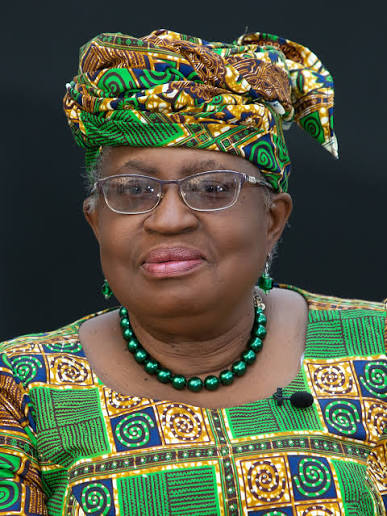
The Director-General of the World Trade Organisation, Dr Ngozi Okonjo-Iweala, has paid tribute to her mother, Prof. Kamene Okonjo, who died last Friday at the age of 96.
The former Minister of Finance described her late mother as a woman who lived a quality life until the end.
In a post on her official X handle on Sunday, Okonjo-Iweala thanked friends and followers for their messages of condolence and support to her family.
She wrote, “Today, I have been overwhelmed with messages of condolences and tributes to my wonderful mother. I just want to thank all my friends and followers and let you know how appreciative my entire family and I are of your support.
“My mother lived a quality life till the end and we are very grateful we had her for so long. May her soul rest in perfect peace.”
The 96-year-old was the matriarch of the Umu Obi Obahai Royal Family and mother of the Obi of Ogwashi-Uku, Obi Ifechukwude Okonjo II.
She was also the wife of the immediate past traditional ruler of Ogwashi-Uku, Delta State, late Obi (Prof.) Chukwuka Okonjo, with whom she shared 66 years of marriage.
Her death was announced in a statement issued on Sunday by Palace Secretary of Ogwashi-Uku, Ifeakanachukwu Emordi, on behalf of the royal family.
The statement described the late Okonjo as an extraordinary woman whose life was defined by intellectual brilliance, humility, compassion, dignity and an unwavering commitment to the advancement of humanity.
“An internationally recognised and foremost sociologist, Prof. Kamene Okonjo distinguished herself through her outstanding academic accomplishments, intellectual contributions and lifelong advocacy for women’s rights and empowerment.
“She was a woman of exceptional intellect, yet possessed a rare gentleness of spirit, humility and grace that endeared her to everyone privileged to know her.
“Her achievements transcended the boundaries of Ogwashi-Uku and Nigeria, earning her admiration and respect within academic and intellectual circles internationally,” the statement read.
The statement further described her as a devoted mother, grandmother, great-grandmother and a cherished pillar of the royal family.
“Her wisdom, kindness, quiet strength and exemplary character will remain an enduring inspiration to generations yet unborn,” it said.
The family added, “While we mourn her passing, we celebrate a life exceptionally well lived.”
It noted that at 96, the late scholar left behind an enduring legacy of scholarship, service, family values and advocacy for the dignity and advancement of women.
“We take comfort in our Christian faith and the assurance that she is resting peacefully with the Lord, having completed her earthly journey with grace and distinction,” the statement said.
The Umu Obi Obahai family extended its condolences to the Obi of Ogwashi-Uku and the deceased’s children, including Ngozi Okonjo-Iweala, Dr Njideka Okonjo-Udochi, Onyema Okonjo and Chichi Okonjo, as well as their spouses, grandchildren, great-grandchildren and the wider Okonjo royal family.
The family also called on the people of Ogwashi-Uku to join in celebrating the life and enduring legacy of the late scholar and matriarch, whose contributions to humanity, it said, would never be forgotten.



Delta Police Arrest School Bus Driver over Minor’s Kidnapping, Assault
ShareA 28-year-old school bus driver, Onome Ughagha, has been arrested by operatives of the Delta State Police Command for allegedly...


Wife Stabs Husband Over Phone in Bauchi
ShareAn 18-year-old woman, Fatima Dalha, has allegedly stabbed her 30-year-old husband in the stomach in Lirr Bajar, Dass Local Government...

Can the Media Announce Election Results Before INEC’s Official Declaration?
ShareBy Samson Itodo To address this issue, it is important to understand the election results management process. Election results are...
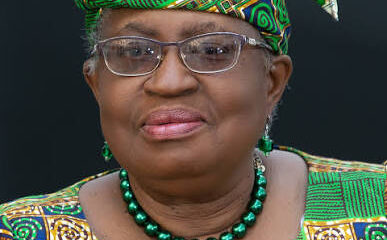

Okonjo-Iweala Pays Tribute to Late Mother
ShareThe Director-General of the World Trade Organisation, Dr Ngozi Okonjo-Iweala, has paid tribute to her mother, Prof. Kamene Okonjo, who...

Tinubu blames Opposition for Nigeria’s Challenges
SharePresident Bola Tinubu on Saturday blamed opposition leaders for Nigeria’s hunger and poverty, accusing them of creating problems they now...

Nearly 83 Per Cent Uneducated Nigerians Live in Poverty – W’Bank
Share Nearly 83 per cent of Nigerians without formal education are living in poverty, according to the World Bank, highlighting...
Ebola: NCDC Tracks 53 Contacts, Offers Each N100,000 Weekly
ShareBy Elijah Oguche, Abuja The Nigeria Centre for Disease Control and Prevention (NCDC) has stepped up efforts to contain the...
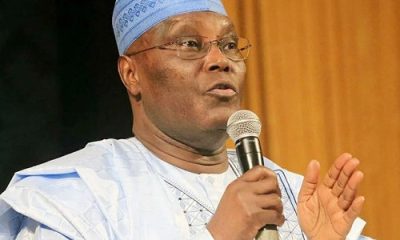

2027: Atiku Challenges Tinubu Over Alleged Ministerial Bribes
ShareBy Elijah Oguche, Abuja Former Vice President Atiku Abubakar has challenged President Bola Tinubu to identify those who allegedly collected...
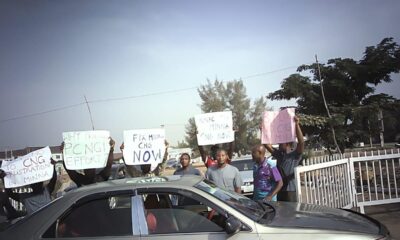

Motorists Storm Minna NNPC Mega Station, Threaten Mass Protest Over CNG Scarcity
Share From Dan Amasingha, Minna. Angry vehicle owners on Sunday staged a peaceful protest at the NNPC Mega Station along...

Lokoja CMD Seeks More Investments in Healthcare Delivery
ShareFrom Joseph Amedu, Lokoja The Chief Medical Director of the Federal Teaching Hospital, Lokoja, Professor Abdulrahman Shehu, has called for...