
NEWS
Security Guards Allegedly Kill Final Year Student in Kogi


From Joseph Amedu, Lokoja
Security guards at Nana College of Health, Ibana Okpo in Olamaboro Local Government Area of Kogi state were alleged to have tortured and shot dead Andrew Amehson Aziko, a final-year student of the institution.
Daily Asset gathered that this is the second alleged extrajudicial killing in the council area in the last two months.
Reliable source had it that the incident, which reportedly occurred at Nana College of Health, Ibana Okpo, was first brought to public attention by Hon. Danjuma Onoja, former Secretary of Olamaboro LGA.
According to available information written by Onoja: “At the early hours of today, Tuesday, 28 April 2026, a life was taken wrongly at Nana College of Health, Ibana Okpo.
I call on the Chairman of the Local Government to please investigate this matter thoroughly so that the perpetrators of this act are brought to book.”Reacting to the video in the Okpo Unity Initiative WhatsApp group, Sunday Fedejo asked: “What exactly did he steal from them that warrants him to be treated in this manner? Very, very unfortunate.”
Responding via voice note in the group, Onoja clarified that Andrew “didn’t steal anything.” He explained that the victim had mental health issues and was brought back home from Anyigba for treatment, but escaped from a rehabilitation centre and wandered to the school before the incident “that is putting the local government in a bad light.”
He called the action barbaric, noting that Andrew had no bad record. He queried the school authorities and those urging calm, saying the management of Nana College of Health, on whose campus the incident occurred, had yet to visit the family.
Ujah also lamented the death of Andrew’s father, saying he would have gone after the security guards without delay. He tasked the Commissioner for Youths and Sports Development and the Local Government Chairman to “up their game” in addressing the killing to avoid a recurrence.
Failure to act, he warned, could push grieving families toward retaliation or plunge the town into unrest. “It is akin to how Boko Haram started after the killing of their leader in 2009 in Maiduguri,” he said.
Sherifat Zakari, another resident and member of the group, added: “If any action isn’t taken, this might still happen next time. This guy really needs justice. This is so painful.”
This marks the second reported case of extrajudicial killing in Olamaboro within two months, allegedly involving local security actors.
In a similar incident, a young man reportedly died after members of a local vigilante group assaulted him in a remote part of the council area. His mother had called the vigilantes to separate a fight between him and his sister. Witnesses said the youth was beaten severely after being accused of wrongdoing, and his death triggered anger and grief among relatives who demanded justice.
Residents say the pattern of killings and impunity has left the community in fear. When youths protested the earlier vigilante incident, innocent young men from the community were arrested after clashes with State Security personnel. It is alleged that some of them are still being held by the Police and DSS, leaving parents in distress.
The killing has drawn widespread reactions online. Adam Suleiman, identified as Distinguished Senator on the group, compared what happened in Okpo with a police shooting in Effurun, Delta State:
“Sometimes it is like we are on the wrong side of the world. See how the guy that was shot by police in Delta dey trend online. That’s how justice is quickly gotten. We are experiencing similar things in our place right now, no news even reports it,” he said.
Also, Richard (known. As Rich Express) on WhatsApp, berated stakeholders: “If the Local Government Chairman had really handled the same incident in Ukoh village last time, history would not have repeated itself.”
He described the killing of Andrew as “pure wickedness and unprofessional” on the part of the school’s security guards.
When contacted, the Kogi State Commissioner of Police, Naziru Bello Kankarofi said that arrests have been made and a press statement will be released to that effect.

The political theatre of Benue State has taken a decisive turn with the declaration of Inyom Dooyum Gideon to contest for the Buruku Federal Constituency seat in the House of Representatives. His entry into the race is not the typical announcement of ambition that often characterizes Nigerian politics.
It is instead the culmination of a career defined by service, innovation, and intellectual depth. Gideon comes to the contest not as a product of political patronage, but as a professional whose record of accomplishment speaks louder than promises.His journey into public life began with his appointment as Senior Special Assistant to Governor Gabriel Suswam on Information and Communications Technology.
In that role, he was not a ceremonial figure but a strategist who helped shape Benue’s digital governance framework at a critical moment in the state’s development. His contributions laid foundations that continue to influence ICT policy today. Beyond government service, Gideon established I-Compliance Tech Nig Ltd, a company that reflects his conviction that the private sector must be a co-driver of national transformation. As a technology entrepreneur in a region where such ventures are rare, he demonstrated that progress must be built on innovation rather than politics alone.Years before the Federal Government introduced its whistleblower reward policy, Gideon had already envisioned and developed an anti-corruption software platform designed to protect whistleblowers in Nigeria. This foresight was not accidental; it was the product of a mind deeply engaged with governance challenges and capable of designing solutions ahead of their time. His reputation as a pioneer was further strengthened when he developed a cutting-edge Security Surveillance Technology to confront rural insecurity, banditry, and terrorism. This system integrates military-grade surveillance, real-time data gathering, precision response mechanisms, and artificial intelligence-backed intelligence support. For Buruku constituency, which has endured violent attacks and displacement, the arrival of a legislator who has already engineered practical frameworks to address insecurity represents an unprecedented asset.
Gideon’s voice has also been heard in moments of crisis. In August 2025, when armed attacks ravaged communities in Guma Local Government Area, he stepped forward to confirm tactical deployments, document patterns of land seizure, and call for a humanitarian emergency. At a time when officials were silent, he spoke with clarity and compassion, ensuring that displaced communities were not forgotten. His interventions were precise, data-driven, and rooted in empathy—qualities that distinguish him from aspirants who only find their voice when elections approach.
His academic disposition further sets him apart. Rooted in the discipline of History, Gideon has cultivated the analytical tools to understand policy outcomes and societal trajectories. He holds a Master’s degree in Development Studies and is currently pursuing a PhD in Development Studies, deepening his expertise in infrastructure-led development and policy systems. He is also a holder of an Executive Certificate in Innovation for Economic Development from the Harvard Kennedy School, Boston, Massachusetts, USA.
His academic work is not abstract theory but a practical engagement with real-world development challenges. His research has examined how roads, bridges, water systems, and electricity infrastructure directly shape the livelihoods of ordinary people—positioning him to legislate with evidence, not impulse. In addition to his scholarly pursuits, Gideon is an accomplished author. He wrote One Woman Man: Choosing God, Marriage, and Destiny in the World of Side Chics, published on Amazon Kindle, as well as Bishop Nathan Nyitar Inyom, The Man of God in a Godless Society (2024), a profound tribute to faith, leadership, and purpose. He has also contributed chapters to published works on governance and development, cementing his reputation as a public intellectual whose ideas resonate far beyond his constituency.
Buruku Federal Constituency, like many parts of Nigeria’s Middle Belt, stands at a crossroads. Its people carry scars of insecurity, underdevelopment, and political marginalization. What they require is not a representative who will merely occupy a seat in Abuja, but one who will arrive armed with ideas, evidence, and credibility. Gideon’s combination of government experience, private sector leadership, technological innovation, security expertise, academic depth, and community advocacy makes him one of the most comprehensively prepared aspirants in a generation. His movement, #NoLimitsIDG, has already built a significant national following, inspiring many through incisive political analysis and developmental commentary. This digital presence is not vanity but proof of a man who has been leading public conversation long before seeking public office.
Nigeria’s democracy is maturing, and electorates are increasingly discerning between those who seek power for privilege and those who seek office as a platform for sacrifice. Gideon belongs firmly to the latter category. His credibility did not begin with the collection of an Expression of Interest form; rather, the form is a formal acknowledgment of years of service, innovation, and advocacy. His life’s work in government, technology, scholarship, and community engagement is itself his campaign manifesto.
The people of Buruku now face a defining choice. They can send to the National Assembly a representative whose ambition is not merely to be present, but to matter. Gideon Inyom has demonstrated that he is prepared for that responsibility. His candidacy is not about rhetoric but about substance, not about privilege but about service. By every measurable standard, he represents the kind of leadership Nigeria’s democracy urgently needs.
By all indications, Buruku is ready. And so is Gideon Inyom.
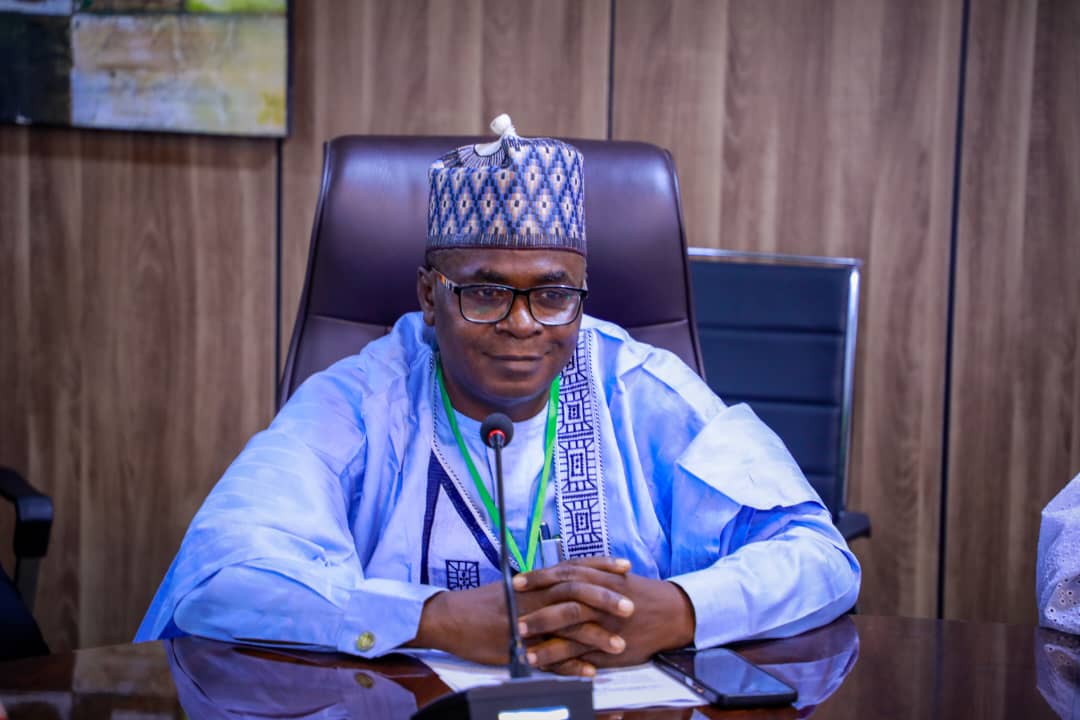
As Nigerians mark workers Day, the President Chartered Institute of Professional Printers of Nigeria (CIPPON), Koko T. Clement has lauded printer stakeholders calling for Government Action on Import Duties, Sector Recognition, and Decent Work Conditions for Print Professionals
A statement signed by the CIPPON President on 1st May 2026 said “the Chartered Institute of Professional Printers of Nigeria (CIPPON), the statutory regulatory body of the Nigerian printing industry established under Act No.
24 of 2007, today joins the global community in celebrating International Workers’ Day.It said “CIPPON extends warm felicitations to every printing professional across Nigeria, from press operators and pre-press technicians to graphic designers, bookbinders, packaging specialists, and the thousands of artisans and entrepreneurs who sustain one of Nigeria’s most essential productive sectors.
Speaking on the occasion, Printer Koko T. Clement, BSc, MBA, FCIPPfN, President and Chairman of the Governing Council of CIPPON, declared: “The Nigerian print worker is the unsung backbone of our democracy, our commerce, our education, and our culture. Every ballot paper, every textbook, every packaging material, every publication that informs and enlightens our people bears the fingerprints of a skilled printer. Today, we honour that labour and reaffirm our commitment to ensuring that it is rewarded with dignity, fair conditions, and a policy environment that protects and grows this industry.”
“Since the inauguration of CIPPON’s new Governing Council on 15th December 2025, the Institute has been executing a robust multi-front agenda to reposition the Nigerian printing industry at the highest levels of national policy.
He said the Council has submitted a comprehensive Advocacy Memorandum to the Federal Government calling for the removal of import duties on paper, printing ink, printing plates and other raw materials, a long-standing burden that drives capital flight, stifles investment, and forces Nigerian printers to operate at a structural disadvantage against imported finished goods.On this Workers’ Day, CIPPON makes the following specific calls to the Federal Government of Nigeria:
i.Immediate removal of import duties on paper, printing inks, printing plates, and allied raw materials to reduce production costs and halt industrial capital flight;
ii. Full enforcement of CIPPON’s statutory mandate by Ministries, Departments, and Agencies (MDAs), ensuring that all federal government printing contracts are awarded exclusively to CIPPON-certified establishments;
iii. Establishment of the Office of the Printer General of the Federation to provide dedicated policy leadership, coordination, and technical oversight for the sector in line with global best practice; and
iv.Expedited approval of CIPPON’s National Qualifications Framework (NQF/NSQF) Assessor Workshop programme to formalise skills certification and raise professional standards across the printing workforce.The Nigerian printing industry employs an estimated two million workers, making it one of the country’s largest industrial employers. Yet the sector remains underserved by public policy, underrepresented in national economic frameworks, and under-protected from unfair competition by subsidised imported printed materials. CIPPON is committed to changing this narrative through sustained advocacy, professional development, and strategic engagement with all arms of government.
“We honour the dignity of labour today not with words alone, but with purposeful institutional action, CIPPON stands as a shield and a voice for every printing professional in Nigeria. As we celebrate this May Day, we rededicate ourselves to the task of building a regulated, respected, and prosperous printing industry one that contributes maximally to Nigeria’s Renewed Hope Agenda and to the economic wellbeing of our members and their families,” he stressed.
The Ivorian government announced a 25 per cent reduction in passenger and security charges for flights within the Economic Community of West African States (ECOWAS).
Three decrees were adopted to reduce and standardise passenger, security and safety charges for domestic flights, flights within Africa and international flights outside Africa, a government statement said.
According to the statement, the measure is designed to reduce the high cost of air travel, which has often included taxes making up over 60 per cent of total ticket prices.
It also intended to align Cote d’Ivoire’s strategy to boost the competitiveness of national carrier Air Cote d’Ivoire and its public airports with the ECOWAS common aviation charges.
This initiative is an ECOWAS-wide directive aimed at fostering economic integration, trade, and tourism across West Africa, the statement said.



Gideon Dooyum Inyom, Declares for Buruku Federal Constituency Seat
ShareThe political theatre of Benue State has taken a decisive turn with the declaration of Inyom Dooyum Gideon to contest...

Workers Day: CIPPON Salutes Print Stakeholders, Task FG On Import Duties
ShareAs Nigerians mark workers Day, the President Chartered Institute of Professional Printers of Nigeria (CIPPON), Koko T. Clement has lauded...


Security Guards Allegedly Kill Final Year Student in Kogi
ShareFrom Joseph Amedu, Lokoja Security guards at Nana College of Health, Ibana Okpo in Olamaboro Local Government Area of Kogi state were alleged to have...

Cote D’ivoire Announces 25 Per Cent Reduction in Airport Charges on ECOWAS Flights
ShareThe Ivorian government announced a 25 per cent reduction in passenger and security charges for flights within the Economic Community of West African States (ECOWAS). Three...
Prosperity Cup 2026: Quarter Finalists Emerges
ShareFrom Mike Tayese, Yenagoa Quarter finalists have emerged in Nigeria’s biggest grassroots football fiesta, the Bayelsa Governor’s Football Tournament, tagged the Prosperity Cup,...


SSANU, NASU Begin Indefinite Strike
ShareMembers of the Non-Academic Staff Union of Educational (NASU) and Associated Institutions and the Senior Staff Association of Nigerian Universities...
Expert Advocates Ear Screening before Employment
ShareAn Ear, Nose and Throat (ENT) surgeon has urged Ministries, Departments and Agencies (MDAs) to conduct ear screening and thorough medical examination on...

Tinubu Nominates Olasunkanmi Tegbe as Power Minister
Share President Bola Tinubu has nominated Joseph Olasunkanmi Tegbe as Minister of Power, subject to confirmation by the Senate. This...
Amnesty Int’l Raises the Alarm over Deaths in Kwara Camp
ShareBy David Torough, Abuja Amnesty International has called on Nigerian authorities to urgently investigate the reported deaths of at least...


Supreme Court Restores Mark as ADC Chairman, Voids PDP Ibadan Convention
ShareBy David Torough, Abuja In a series of far-reaching decisions and interventions, the Supreme Court on Thursday delivered landmark rulings...