
POLITICS
Sen. Nwoko Dumps PDP, Defects to APC


Sen. Chinedu Nwoko, a.k.a (Ned), member representing Delta North Senatorial District at the National Assembly, has formally defected to the All Progressives Congress (APC).
Nwoko, a former member of the Peoples Democratic Party (PDP) under which platform he rode through during the May 29, 2023 general election, on Friday, dumped the PDP.
The Senator picked up the APC party membership card at his ward in Idumuje- Ugboko, Aniocha North Local Government Area of Delta.
The Senator, a foundation member of the PDP since 1999 in Delta, with this demonstrated will and action, has laid to rest the speculations among diverse groups including journalists in the state.
The defection of Nwoko to the APC, all the senators representing the three senatorial districts in the state are now in APC.
According to Nwoko in his resignation letter dated Thursday, Jan. 30, 2025 to the Chairman, PDP Ward 8, Aniocha North LGA of Delta, his defection is informed by the divisions, fighting and fractionalisation in the PDP.
“My decision to resign from the PDP is first and foremost due to deep division and fractionalisation within the party.
“This fragmentation has made it increasingly difficult to foster unity and advance the collective interest of our people.
“Just this Jan. 29, the top party functionaries degenerated to the lowest levels by physically fighting themselves arising from the stated factions which have become irreconcilable.
“I also deeply appreciated the platform the PDP provided me to contest the 2023 senatorial election. It was an opportunity that allowed me to engage directly with the people of my constituency and present my vision for a brighter future.
The senator said that he made a solemn campaign promise to his people, but regrettably, the current PDP structure in the state had made it difficult for him to realise those promises.
Nwoko said that his decision to quit PDP was rooted in the best interest of those he served, adding that he remained committed to the progress and prosperity of Delta and Nigeria.
“After careful consideration, I have come to the conclusion that stepping away from the PDP is necessary to fulfil my obligations to my people.
“While I bid farewell to my membership in the PDP, I assure all party members and my constituents of my unwavering dedication to statesmanship, unity and advancement of Delta state.
“I extend my gratitude to the party and members for their support and wish the PDP continued success in its endeavours,” Nwoko said.(NAN)
From Ayinde Akintade, Osogbo
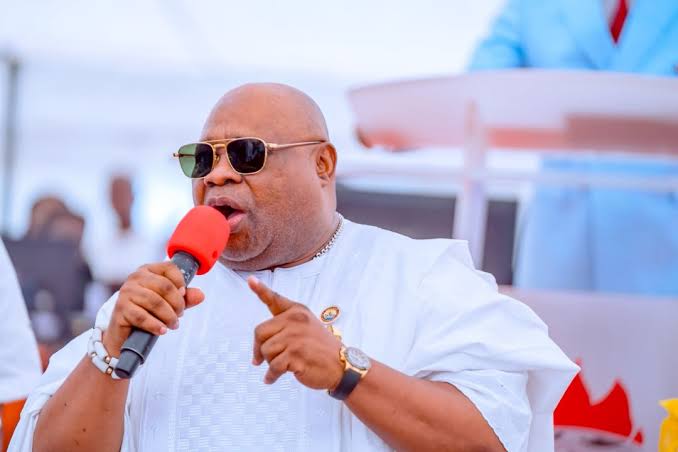
The Governor of Osun State, Senator Ademola Adeleke, yesterday charged newly inaugurated members of the Osun Central Senatorial District Accord Campaign Committee for Aare Ganiyu Olaoluwa Asejere to deploy their experience and political networks for effective grassroots mobilization, wider public engagement, and strong support for Aare Asejere.
Governor Adeleke gave this charge while speaking at the official Inauguration of the Osun Central Senatorial District Accord Campaign Committee for Aare Ganiyu Olaoluwa Asejere, at Adebimpe event hall, adjacent Osogbo City Stadium, along Ikirun Road,Osogbo.
The Governor who was represented by his deputy, Prince Kola Adewusi said, the campaign council committees should intensify grassroots mobilization from now till Election Day.
Governor Adeleke admonished entire people of Osun Central Senatorial district to see themselves as one and remain under the umbrella of the Accord while they should continue to demonstrate their unalloyed love and support for Aare Asejere for him to emerge as the next Senator for the area in January 2027.
“I am appealing to you all my dear people to extend the same love you gave me in the just concluded Governorship election in Osun State to Alhaji Asejere in the forthcoming election as he must be in the Red Chamber by January 2027 by the power of the Almighty God” Governor Adeleke stressed.=
Yeye Dupe Adeleke Sanni, the Speaker of the Osun State House of Assembly, Rt. Hon. Adewale Egbedun and a current Commissioner in Osun, Hon Bunmi Jenyo, while inaugurating the committee, charged them to be up and doing and work towards the victory of Aare Asejere in the coming election.
“The committee should make sure our Accord candidate for Osun Central Senatorial district wins the Senatorial election to the Senate as Aare Asejere’s Senatorial ambition is a round peg in a round hole towards the development and betterment of the people”.
The Chairman of the Campaign Committee and Secretary to the Osun State Government, Alhaji Teslim Igbalaye as well as the Director-General of the Asejere Campaign Committee and the incumbent Commissioner for Information and Public Enlightenment Oluomo Kolapo Alimi, while speaking congratulated Aare Asejere in advance saying, nothing will stop his emergence as Senator representing Osun Central Senatorial district in the coming election by God’s Grace and people’s support.
Also the Osun Accord Chairman, Pastor Victor Akande enjoyed the newly inaugurated committee for the emergence of Aare Asejere to see the assignment as a task which they should not take with levity.
“Our man, Aare Asejere has been tested, he has never been found wanting, he’s a man of his word and he is a complete grassroots politician who loves to develop people, let us join hands together and support his ambition”, Pastor Akande said.
Responding, Aare Asejere who was highly elated for seeing large numbers of people from far and near promised not to let the people of Osun Central Senatorial district down, adding that he will ensure he involves the whole people in his performance while his representation will be meaningful.
Aare Asejere once again called on the people of Osun Central to vote him in as the Senator representing the district assured that he will not fail them.
He appreciated Governor Ademola Adeleke in absentia, his deputy, the SSG, Bobagunwa Igbalaiye, Oluomo Alimi, Yeye Dupe-Sanni, the Speaker of the State Assembly, Hon Egbedun, Hon Abesin, Hon
Funso Ishola, party leaders, members of the Accord, community leaders, Iyaloja-General and her team, Oluomo Rasaki, Hon Adigun Olaide, among others.
By Ubong Ukpong, Abuja
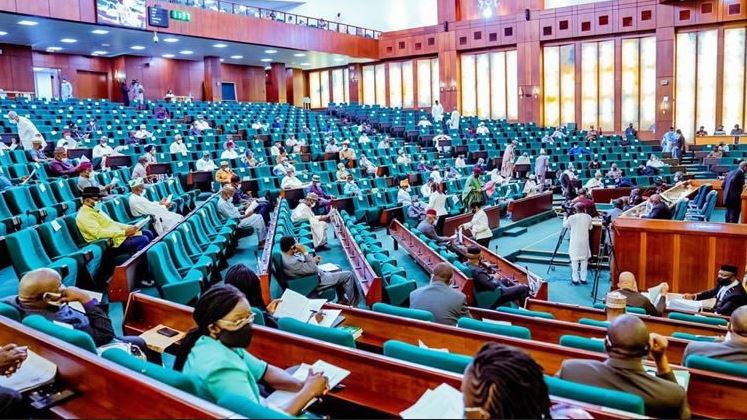
The House of Representatives on Thursday unanimously called for urgent and coordinated actions to protect Nigerian girls from child marriage and other harmful practices.
The call followed a motion of urgent national importance moved by the member representing Kosofe Federal Constituency, Lagos State, Rep.
Kafilat Ogbara, in commemoration of the International Day of the Girl Child, marked every October 11th.Ogbara, while moving the motion, decried the prevalence of child marriage and other harmful practices against the girl child.
She called on government at all levels to strengthen national programmes aimed at preventing child marriage and protecting girls at risk.
The Speaker, Rep. Abbas Tajudeen, in adopting the motion, also urged governments at all levels to ensure that every girl child has access to education, and quality healthcare.
The theme for the 2026 commemoration siught to reaffirm commitment to ending child marriage and upholding the fundamental rights of every girl child.

The Independent National Electoral Commission (INEC) has restated its commitment to an inclusive electoral process.
The Resident Electoral Commissioner (REC) in Oyo State, Prof. Adeniran Tella, stated this on Wednesday in Ibadan at a training programme for Persons with Disabilities (PWDs) ahead of the 2027 general election.
Tella noted that persons with one form of disability or another constitute an important segment of the society.
He said such individuals are citizens with equal rights, responsibilities, aspirations and contributions to make towards the development of the country.
He said: “The commission recognises that electoral inclusion goes beyond permitting PWDs to register and vote.
“It also involves ensuring that they have access to reliable electoral information, understand electoral procedures, can access polling units and are able to participate in other aspects of the electoral process.”
Tella said the commission would provide relevant assistive devices such as magnifying glasses, Braille guides and posters for voters with hearing impairments at polling units to give Persons with Disabilities a more pleasant voting experience on election days.
He added that INEC guidelines and regulations provide that priority should be accorded to PWDs at polling units without them having to wait in long queues during voting.
He further said that eligible PWDs would be engaged and trained as ad-hoc staff during the elections.
The REC explained that the objective of the commission was to ensure that eligible PWDs in the state were not discouraged, excluded or prevented by avoidable barriers from exercising their franchise during the elections.
He further asserted that “democracy is stronger when every eligible citizen has a fair opportunity to participate in shaping its future.”
He urged PWDs across the state to cooperate with the commission to remove avoidable barriers, promote electoral awareness and encourage peaceful participation.
The state Chairman of the Joint National Association of Persons with Disabilities (JONAPWD), Oluwaranti Abiodun, commended INEC for giving special consideration to PWDs ahead of the forthcoming general election.
Abiodun urged the electoral body to give priority to the plights of Persons with Disabilities when planning its activities towards the conduct of the elections.
He demanded that more consideration should be given to eligible PWDs who are interested in working as ad-hoc staff.
He also called on members of the association to support INEC and be ready to perform their civic responsibilities during the 2027 elections. (NAN)



Senator Abba Moro: It is Time to Go Home
ShareBy Cleopas Agada For seven years in the National Assembly, what has Benue South actually felt? For a man who...


NCDs Fastest-growing Disease Burden in Nigeria — Pate
ShareThe Coordinating Minister of Health and Social Welfare, Prof. Muhammad Pate, said Non-Communicable Diseases (NCDs) have become one of the...

2027: Adeleke Inaugurates Aare Asejere’s Campaign Council
ShareFrom Ayinde Akintade, Osogbo The Governor of Osun State, Senator Ademola Adeleke, yesterday charged newly inaugurated members of the Osun...

INEC Seeks Stakeholders’ Collaboration for Credible, Peaceful Elections
ShareThe Independent National Electoral Commission (INEC) has reaffirmed its commitment to strengthen collaboration with the National Orientation Agency (NOA), security...

Reps Reject Child Marriage, Demand Protection of Girl Child
ShareBy Ubong Ukpong, Abuja The House of Representatives on Thursday unanimously called for urgent and coordinated actions to protect Nigerian...


Court Awards N125, 000 Cost against Odumodublvck
ShareAn Abuja High Court on Wednesday awarded N125, 000 against a rapper, Tochukwu Ojogwu, popularly known as “Odumodublvck”, for asking...


Hunger Changed My Mind, Timini Egbuson on Embracing YouTube movies
ShareNollywood actor Timini Egbuson has reflected on his changing perception of YouTube movies, joking that he might have struggled financially...


Peller Announces Livestream with Peter Obi
SharePopular Nigerian TikTok streamer, Hamzat Adelaja, popularly known as Peller, has announced an upcoming livestream with the presidential candidate of...

Nigeria’s inflation drops from 15.39 Per Cent to 14.63 Per Cent in September
ShareBy Tony Obiechina, Abuja The National Bureau of Statistics (NBS) on Thursday disclosed that Nigeria’s inflation has eased from 15.39...


Senate Oders Investigation into Corps Member’s Death in Enugu
ShareBy Tambaya Julius, AbujaThe Senate has ordered an investigation into the death of a National Youth Service Corps (NYSC) member,...