
POLITICS
Senate Approves 2025-2027 MTEF/FSP

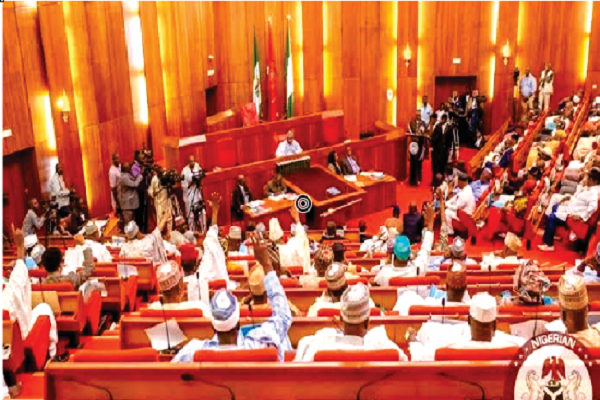
The Senate, on Tuesday, approved the 2025-2027 Medium Term Expenditure Framework (MTEF) and Fiscal Strategy Paper (FSP).
The approval was sequel to presentation and adoption of the report of Joint Committee on Finance, National Planning and Economic Affairs at plenary in Abuja.
The report was presented by the Chairman of committee, Sen.
Sani Musa (APC-Niger).NAN also reports that highlights of the approved recommendations of 2025-2027 MTEF/FSP include: approval of projected oil benchmark prices of $75.3 per barrel for 2025, 2026 and 2027 fiscal years.
The senate also approved the three-year projection for domestic crude oil production, which had a significant increase from 1.78 million barrels per day in the preceding year to 2.6, 2.1 and 2.35 for 2025, 2026 and 2027.
It equally approved the projected exchange rate of N1,400 to one dollar for 2025, 2026 and 2027 fiscal years, subject to review in the early 2025, based on monetary and fiscal policies.
The upper legislative chamber approved the projected inflation rates of 15.75 per cent, 14.21 per cent and 10.04 per cent for 2025, 2026 and 2027.
It further approved the projected Gross Domestic Product (GPD) growth rate of 4.6 per cent, 4.4 per cent and 5.5 per cent for 2025, 2026 and 2027 fiscal years.
Given the criteria on review of framework for revenue and expenses, the approved 2025 budget proposed spending stood at N47.9 trillion, of which N34.82 trillion was retained.
New borrowings, which stood at N9.22 trillion, consisting of domestic and foreign borrowings, were also approved.
While debt service was valued at N15.38trillion, pensions, gratuities and retirees’ benefits stood at N1.443trillion, and fiscal deficit at N13.08 trillion.
The senate approved the projected capital expenditure of N16.48 trillion, exclusive of statutory transfers which stood at N4.26trillion, while sinking fund was projected at N430.27 billion.
Another approval was the projected total recurrent non-debt of N14.21trillion and special intervention for recurrent and capital of N200 billion and N7 billion.
It further approved issuance of promissory note programme and bond issuance to settle outstanding claims and liabilities of the Federal Government to state governments.
The senate also approved a quarterly investigative hearing with revenue generating agencies to track their compliance with Fiscal Responsibility Act and reprimand clear contravention of the act.
The upper legislative chamber equally approved that Committee on Finance and Customs initiate an investigative inquiry into operations of import duty exemption certificate programme, with focus on import waivers, its impact on revenue losses by the Federal Ministry of Finance and Nigerian Customs Service.
The Senate President, Godswill Akpabio, in his remarks after the passage of the expenditure framework, commended members of the joint committee and other lawmakers for their legislative inputs, leading to the approval of the 2025, 2026 and 2027 MTEF and FSP. (NAN)




By Tambaya Julius, Abuja
The Independent National Electoral Commission (INEC) has completed nine of the 14 activities on its timetable for the 2027 general elections, while addressing complaints from political parties over alleged omissions and discrepancies in candidates’ lists.
The development emerged at a youth engagement programme in Abuja, where electoral stakeholders also called for measures to protect young voters from violence and strengthen public confidence in the electoral process.
The INEC Chairman, Prof. Joash Amupitan, represented by the National Commissioner for Information and Voter Education, Dr.
Mohammed Haruna, said the commission was reviewing its preparations and working to resolve outstanding issues ahead of the polls.The event, titled “The Electorate: A Youth Dialogue with INEC,” was organised by Abuja Global Shapers Community (AGC) in partnership with Nigeria Youth Futures Fund, Yiaga Africa Abuja and Enough is Enough Nigeria, under the theme, “Let’s Talk About the 2027 Elections.”
Haruna said the commission had made progress on key activities, including the publication of candidates nominated by political parties for elective positions.
He acknowledged that the publication had generated complaints from some parties over alleged omissions and discrepancies, adding that INEC had invited the affected parties to submit petitions for consideration before finalising the list.
He described the voters’ register as central to the electoral process, noting that it would serve as the basis for identifying and accrediting eligible voters on election day.
Haruna also said INEC had increased the frequency of its meetings to review preparations, assess progress and take decisions necessary for the smooth conduct of the elections.
He explained that the commission comprises a chairman and 12 national commissioners responsible for policy decisions, alongside resident electoral commissioners across the 36 states and the Federal Capital Territory.
The Curator of Abuja Global Shapers Community, Solape Sonuga, urged participants to engage INEC on its readiness for the elections and the measures needed to ensure credible polls.
Sonuga described the 2027 elections as particularly important to young Nigerians, saying the engagement was designed to promote youth participation, strengthen voter education and encourage civic responsibility beyond election day.
The Programme Manager for Governance at Yiaga Africa, Yetunde Bakare, called for deliberate efforts to ensure that young Nigerians could participate safely and meaningfully in the elections.
Citing Yiaga Africa’s voting intention survey, Bakari said 84 per cent of Nigerians surveyed were likely or very likely to vote in 2027. She said 61 per cent feared electoral violence could prevent them from participating, while only 40 per cent of young respondents said they were very likely to vote.
She described the figures as a concern for electoral stakeholders, stressing that voter mobilisation alone would not be sufficient without a safe and accessible environment for participation.
Bakare commended INEC’s preparations, including online voter registration, printable Permanent Voter Cards, planned nationwide mock accreditation exercises and efforts to strengthen the governance of electoral technology and artificial intelligence.
She urged the commission to communicate promptly with voters when technical or operational challenges arise, ensure transparency in the use of electoral technologies and make adequate provisions for eligible voters in hard-to-reach communities.
She also encouraged young Nigerians to seek credible information, reject electoral violence and misinformation, and hold elected officials accountable beyond election day.
Bakari said transparency, effective communication and credible electoral processes were essential to building public trust and ensuring that the 2027 elections reflected the will of Nigerians.
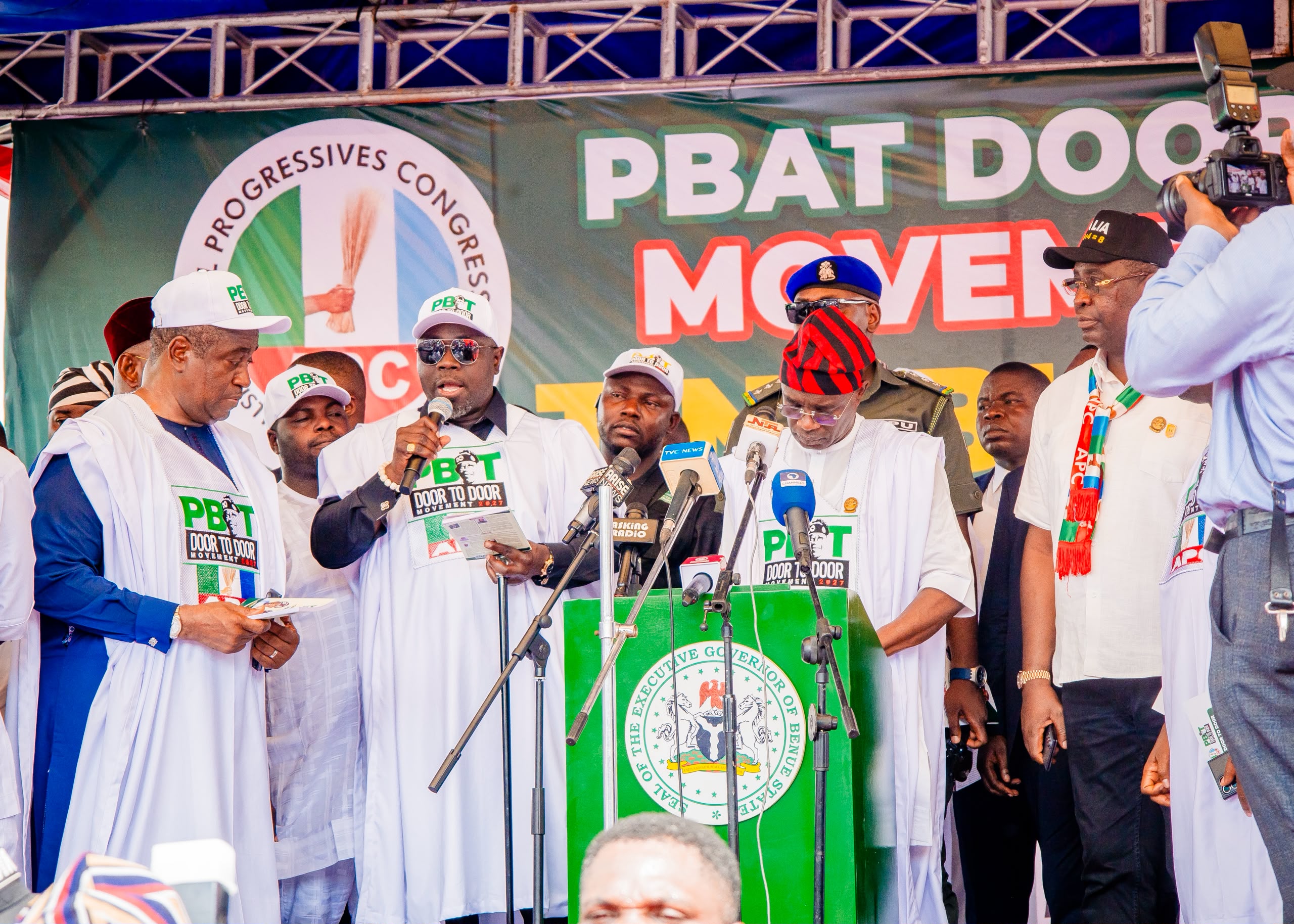
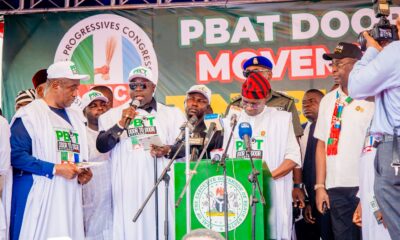
Leader of the PBAT Door-to-Door Movement, Government Tompolo, has called on the people of Benue state to come out enmasse and vote for President Bola Tinubu in the 2027 election as he has demonstrated great concern for the security of life and property of the people, with the creation of the 5 Division of the Nigerian Army with headquarters in Makurdi, the state capital.
He described Tinubu as a leader, who said meant well for Nigeria and has shown this through bold policies and reforms including the State Police Bill, Local Government Autonomy Bill, Electricity Bill, and removal of petrol subsidy as well as the student loans programme, NELFUND, among others.
Ekpemupolo, also known as Tompolo, stated this in Makurdi, on Thursday, during the inauguration of the state chapter of the movement and distribution of 25 campaign vehicles to the state coordinators.
According to Tompolo, who was represented by Kestin Pondi, Managing director of Tantita, only a leader with love for his people could come up with such policies within such a short period of time.
“He is a president that wants Nigeria to be better than he met it. Tinubu is doing what no leader before him had the courage to do even though he knew it will turn the people against him.
“We like to compare Nigeria with Asian countries that are doing so well but one thing we forget to remember is that these countries reforms were done in more than eight years,” he said.
Continuing, Tompolo said: “They had bold leaders, they had courageous leaders who said we must reform and they stood by those reforms and today, they are the envy of the world. They are some of the most developed and civilised countries of the world.”
“Here in Nigeria, we have Tinubu, a man that is as courageous or even more courageous than those leaders. The man said we must reform and he has embarked on the reforms,” he added.
Governor Hyacinth Alia, in his remarks said President Tinubu was the secret behind all the development the people of the state praise him for.
“Each time you thank me for working for Benue people, that is the man behind it,” he stated.
Alia showered praises on President Tinubu for making it possible for governors to work for their people, emphasising that Benue is working because of Tinubu’s support.
He called on the people to campaign assiduously and vote massively for Tinubu’s re-election to continue to enjoy the policies and programmes of his administration.
The governor appreciated the president for prioritising the security of Benue, particularly for siting the 5 division in Makurdi earlier in the year, a development that had led to deployment of the military to crisis areas and borders, bringing about security, such that some previously internally displaced persons were returning home on their own to continue with farming.
This development, the governor pointed out, will ensure Benue maintains its place as the food basket of the nation.
Alia also listed factories the state had built, the 670 kilometres road network, free basic education, rehabilitation, mechanised agriculture, and upgrade and equipping of health centres and hospitals as some of the things the state was enjoying from the Tinubu administration, adding that there is more in stock if he gets re-elected.
Earlier, National Coordinator of the Movement, Comrade Sunday Asuku, noted that Nigeria is currently on the right trajectory be ause a competent leader is in the saddle.
According to him, the security of Benue, which had been plagued by insecurity for years, is a priority by the Tinubu administration, hence the establishment of an army division in the state among other measures, which have improved the state’s security.
Asuku said a vote for Tinubu will ensure that his good initiatives for the state are fully delivered.
The National coordinator also advised the voters to ignore leaders who swore to remove petrol subsidy but became turncoats after seeing that it is a tough choice, but rather vote for a leader like Tinubu who has brought bold reforms are laying a solid foundation for a better Nigeria.
“Say no to cowardice, no to those only interested in selling Nigeria’s assets. Ask them what they did when they were in office. A vote for Tinubu is a vote for NELFUND, improved security and better infrastructure,” he added.
Also speaking, former governor of the state, Senator Gabriel Suswam, called on the people to vote for Tinubu, pointing out that his policies are laying a foundation for young Nigerians.
“Yes, there’s suffering now but there’s no way you can build a future without experiencing some pains. You’re experiencing some hardship but tomorrow will be better.
“We are suffering today because those steps were not taken by previous administrations. So if you have a leader that is taking steps towards building a nigeria for the future he deserves support,” he stated.
By Ubong Ukpong, Abuja
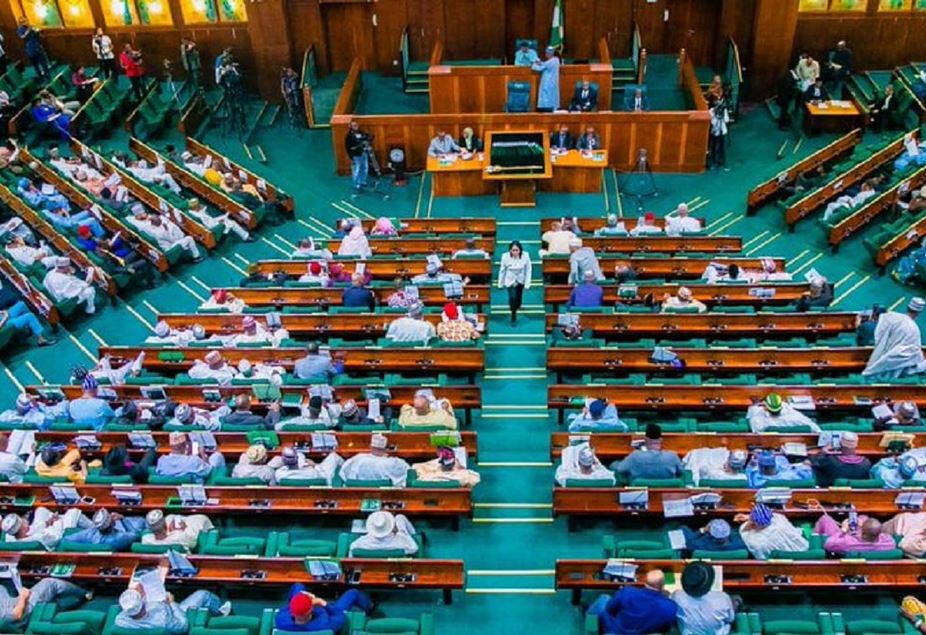
A bill for an Act to move the nation to developing the capacity to design, manufacture and commercialize drones, passed second reading on Wednesday, in the House of Representatives.
The “Bill for an act to provide for the development, promotion and industrialisation of the Nigerian drone industry; and for related matters,” was sponsored by the Deputy Speaker, Rep.
Benjamin Kalu and 12 others.Leading the debate, one of the co-sponsors, Rep. Satomi Ahmad said the Bill seeks to establish a legal and institutional framework for the development, promotion and industrialisation of Nigeria’s drone industry.
Ahmad explained that it focused on indigenous research, design, manufacturing, commercialisation; reducing dependence on imported technology; building local content and technical capacity.
He said that it is also aimed at attracting investment; creating jobs; and positioning Nigeria as a competitive regional and international centre for drone manufacturing and related services.
Ahmad lamented that Nigeria’s dependence on imported technology has limited opportunities for local innovation, job creation and industrial growth and without coordinated support for manufacturing, commercialisation.
According to him, indigenous enterprises may struggle to translate promising ideas into viable products.
He therefore urged his colleagues to support the Bill as it sought to
address these gaps through targeted incentives, government procurement
preferences, innovation funding and local-content requirements.
Ahmad expressed optimism that the bill would transform Nigeria from a consumer of drone technology into a producer of
indigenous solutions, skilled professionals and competitive industrial products.
The lawmaker said that its successful implementation could stimulate investment, create employment,
strengthen national security and open new markets for Nigerian innovation.
“It is important to note that the future belongs to nations that can transform technological innovation into industrial capacity, economic prosperity and national security.
Drone technology is increasingly vital to agriculture,
infrastructure, emergency response, scientific research and defence,” he said.
The lawmaker said that Nigeria must therefore move beyond dependence on imported technology towards developing its own capacity to design, manufacture and commercialise drones.




UK, Nigeria to Deepen Defence, Security Cooperation
ShareThe United Kingdom has reaffirmed its commitment to deepening defence and security cooperation with Nigeria, with emphasis on military training,...


2027: INEC Steps Up Preparations, Completes Nine Activities
ShareBy Tambaya Julius, Abuja The Independent National Electoral Commission (INEC) has completed nine of the 14 activities on its timetable...

2027: Tinubu Accords Benue Security Top Priority, Tompolo Tells Supporters
ShareLeader of the PBAT Door-to-Door Movement, Government Tompolo, has called on the people of Benue state to come out enmasse...


Senate Demands Compulsory Screening of Foreign Arrivals
ShareBy Eze Okechukwu, Abuja The Senate yesterday ordered mandatory health screening for every international passenger arriving Nigeria airports, seaports, land...

Reps Summon Telecom Operators over Poor Network Services
ShareBy Ubong Ukpong, Abuja The House of Representatives on Wednesday, summoned telecommunication operators in the country to appear before it...


Bill to Design, Manufacture, Commercialize Drones Passes Second Reading in Reps
ShareBy Ubong Ukpong, Abuja A bill for an Act to move the nation to developing the capacity to design, manufacture...


Otu Presents N987.8bn Budget Estimate to Assembly
ShareFrom Ene Asuquo, Calabar Cross River State Governor, Sen. Bassey Edet Otu, has presented a proposed budget of ₦987, 808,...

Borno Police Arrest Six Suspects over Mobile Phone Theft, Recover N5.65m
ShareThe Police Command in Borno has arrested six suspects over alleged mobile phone theft and fraudulent withdrawal of ₦5.65 million...

Election Campaigns: FRSC Bars Officers from Politicians’ Escort
ShareThe Federal Road Safety Corps (FRSC) has barred its personnel from escorting politicians during campaigns for the 2027 general elections....

2027: NITDA Raises The Alarm Over AI-driven Election Manipulation
Share By Elijah Oguche, Abuja The National Information Technology Development Agency (NITDA) has warned that artificial intelligence (AI)-powered misinformation, deepfake...