
NEWS
Senate Criminalises Hospitals’ Rejection of Emergency Patients

By David Torough, Abuja
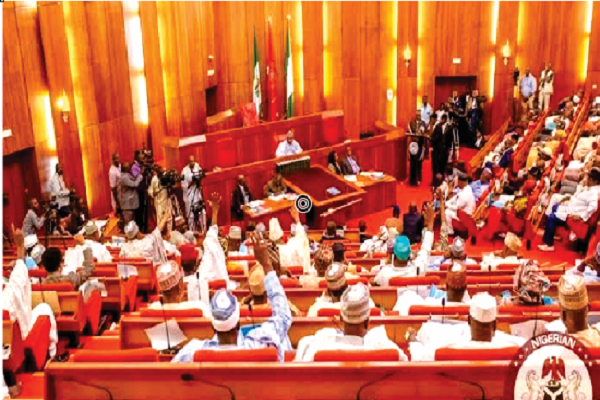
The Senate has advanced a bill seeking to criminalise the rejection or neglect of patients requiring emergency medical attention, proposing a six-month jail term, a fine of up to N300,000, or both for healthcare facilities and personnel found guilty of violating prescribed emergency treatment standards.
The National Health Act Amendment Bill 2026, sponsored by Senator Abdulaziz Musa Yar’Adua (APC, Katsina Central), was passed for second reading at Wednesday’s plenary.
It seeks to amend the National Health Act 2014 by establishing enforceable timelines for emergency assessment, treatment, stabilisation and patient referral across public and private healthcare facilities in Nigeria.Leading the debate, Yar’Adua said the proposed legislation was designed to address critical gaps in the country’s healthcare system and curb preventable deaths arising from delays in accessing emergency medical services.
He stressed that every Nigerian must receive timely and life-saving medical attention during emergencies, irrespective of social status, wealth, influence or geographical location.
According to him, the bill proposes that hospitals assess emergency patients within 15 minutes of arrival and commence initial stabilisation within 30 minutes, while life-saving interventions must begin immediately once a life-threatening condition is identified.
The proposed measures include oxygen administration, intravenous fluids, pain relief and preliminary diagnostic procedures, alongside urgent interventions such as cardiopulmonary resuscitation, airway management and bleeding control.
The bill also provides for the assignment of hospital beds within two hours of a patient’s arrival, subject to availability. Where beds are unavailable, facilities would be required to stabilise patients and initiate referral arrangements within two hours or as soon as they are assessed and considered stable for transfer.
Hospitals referring patients to other facilities would also be required to commence ambulance dispatch or arrange alternative transportation within 30 minutes of making the referral decision. The proposed referral framework is expected to strengthen coordination among primary, secondary and tertiary healthcare institutions.
Yar’Adua further disclosed that the amendment would require the Medical and Dental Council of Nigeria and the Nursing and Midwifery Council of Nigeria to jointly develop and maintain a standardised national emergency care curriculum.
Healthcare workers involved in emergency medical services would be required to undergo training and certification at intervals not exceeding 18 months.
He said the bill was consistent with international practices in countries including Ghana, South Africa, Kenya, the United Kingdom and the United States.
The senator also noted that Nigeria accounts for approximately 10 per cent of global maternal deaths, attributing part of the challenge to delays in accessing emergency obstetric care.
Supporting the proposed legislation, Senate Whip, Senator Mohammed Monguno (APC, Borno North), said it would help address avoidable deaths arising from road accidents, maternal emergencies and other life-threatening situations.
He lamented that some hospitals neglected emergency patients, resulting in preventable fatalities, adding that criminal liability would discourage such practices and strengthen accountability in the healthcare sector.
Similarly, Senator Diket Plang (APC, Plateau Central) backed the bill, describing it as particularly important for rural communities where complications during childbirth often require urgent referrals from primary healthcare centres to higher-level facilities.
Plang emphasised that patients must be stabilised before transportation to prevent avoidable deaths during emergency transfers.
However, Senator Francis Faduyile (APC, Ondo South) cautioned against imposing criminal sanctions on healthcare professionals without first addressing the systemic challenges confronting hospitals.
He argued that inadequate medical equipment, shortages of doctors, insufficient oxygen supplies and poor funding could make compliance with the proposed timelines difficult.
Faduyile questioned how a doctor attending to several patients simultaneously could be held criminally responsible when another emergency case arrived, stressing that healthcare workers should not be punished for circumstances beyond their control.
He also raised concerns about the financial burden on private healthcare providers, who often provide emergency services without immediate reimbursement.
The senator called for a broader review of the National Health Act to address the structural weaknesses of the healthcare system rather than concentrating primarily on punitive measures.
The Senate Minority Leader, Senator Abba Moro (PDP, Benue South), said the debate had exposed several gaps requiring legislative attention.
He expressed optimism that the committee stage and a proposed public hearing would provide opportunities for healthcare professionals and other stakeholders to contribute to the bill.
Moro also condemned the practice of hospitals demanding police reports before treating emergency patients, insisting that saving lives must take precedence over administrative procedures.
He cited experiences in Mexico, where emergency responders and ambulances reportedly attend promptly to accident victims, helping to prevent avoidable deaths.
In his remarks, Senate President Godswill Akpabio said the debate had highlighted significant challenges in Nigeria’s healthcare delivery system, urging lawmakers to support the bill’s progression while ensuring that identified shortcomings were addressed through further deliberations.
Akpabio stressed the need for the Federal Government, state governments and local government authorities to work together to provide the infrastructure, personnel and resources required for effective healthcare delivery.
The proposed amendment is expected to balance accountability for hospitals that wilfully neglect emergency patients with safeguards for healthcare workers acting in good faith under documented resource constraints.
Following its passage for second reading, the Senate referred the bill to its Committee on Health, directing it to report back within four weeks.
The proposed legislation will subsequently undergo further scrutiny, including stakeholder consultations, before lawmakers decide on its final passage.
By David Torough, Abuja
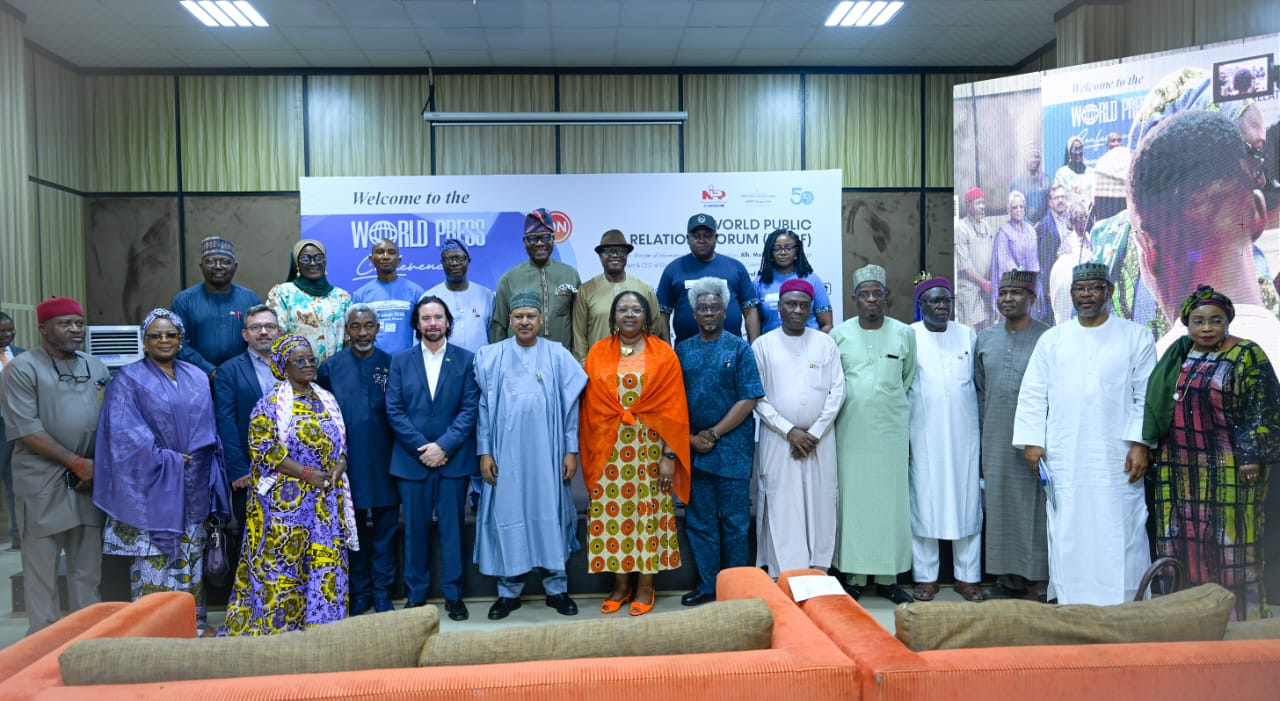
The Federal Government has declared its readiness to host the 2026 World Public Relations Forum (WPRF), assuring the international community of Nigeria’s capacity to deliver a successful event.
The Minister of Information and National Orientation, Mohammed Idris, gave the assurance on Wednesday, at a world press conference in Abuja, ahead of the Forum scheduled for November 15–22, with President Bola Tinubu serving as Chief Host.
Over 126 countries and leading international institutions are expected to participate.Idris described the Forum as an opportunity to showcase Nigeria’s capacity and strengthen its role in global communication discourse.
He thanked the Global Alliance for Public Relations and Communication Management and the African Public Relations Association (APRA) for selecting Nigeria to host the global and continental gatherings simultaneously. He noted that Nigeria is the first country in West Africa and the second in Africa to host the WPRF.
“On behalf of the Federal Government of Nigeria, and particularly His Excellency, President Bola Ahmed Tinubu, who is the Chief Host of the historic 2026 World Public Relations Forum, I wish to express our profound appreciation to the Global Alliance for Public Relations and Communication Management and the African Public Relations Association for the confidence reposed in Nigeria,” the Minister said.
Speaking on the theme, “Responsible Communication: The Voice of the World,” Idris said the rapid transformation of the information ecosystem through digital platforms, artificial intelligence and emerging technologies had heightened concerns around misinformation, disinformation and declining public trust. He urged public relations professionals to uphold truth, accuracy, transparency, ethical standards and the public interest.
“Public relations professionals must recognise that their responsibility goes beyond managing reputations or promoting institutional interests. They have a duty to uphold truth, accuracy, transparency, ethical standards and the public interest,” he stated.
The Minister also highlighted the Federal Government’s support for the establishment of the UNESCO Category 2 International Media and Information Literacy Institute (IMILI) in Abuja, describing it as a strategic intervention to equip citizens, particularly young people, with the skills to identify misleading information and navigate the digital environment responsibly.
He stressed that government communication must go beyond explaining policies to listening to citizens, addressing legitimate concerns and providing credible information that builds public trust.
“For governments, communication must be a two-way process. It must not only explain policies and programmes but also listen to citizens, address legitimate concerns and provide accurate information that enables people to make informed decisions,” he said.
Idris said the Ministry was working with NIPR and relevant institutions to coordinate protocol, security, logistics, hospitality and stakeholder engagement for the Forum. He welcomed delegates to Nigeria and urged them to explore the country’s cultural heritage, hospitality and economic opportunities.
“The 2026 World Public Relations Forum is an opportunity for Nigeria to demonstrate its capacity, strengthen its international partnerships, and help shape the future of responsible communication. We are ready, our doors are open, our people are welcoming, and the Federal Government stands firmly behind this important undertaking,” the Minister declared.
Earlier, the President of the Nigerian Institute of Public Relations (NIPR), Dr Ike Neliaku, commended Idris for his support during Nigeria’s bid and preparations for the Forum. He recalled the Minister’s directive to the team to secure the hosting right and praised the contributions of government agencies and Ministry officials.
“You said, ‘Go, don’t come back without result.’ You gave us that marching order, and we made sure that we started it from there,” Neliaku recalled.
The Secretary-General of APRA, Dr Omoniyi P. Ibietan, described Nigeria’s hosting of the WPRF alongside the 37th APRA Conference as a historic opportunity for Africa to strengthen its collective voice and influence global communication discourse. He commended the Minister’s leadership and support, noting the importance of the continent’s participation.
“We want to speak with one voice as a continent,” Ibietan said.
The President and Chief Executive Officer of the Global Alliance for Public Relations and Communication Management, Professor Justin Green, disclosed that more than 126 countries were expected at the Forum, alongside representatives of the United Nations, World Bank, African Union and European Commission.
He praised President Tinubu and Minister Idris for their support, describing the Minister’s commitment as crucial to bringing the event to Nigeria.
“Your minister, your minister, because without him, this event would not be happening,” Green declared.

By David Torough, Abuja
The Chartered Institute of Professional Printers of Nigeria (CIPPON) has renewed its call on the Federal Government to introduce targeted incentives for the printing industry, enforce local content policies and establish the Office of the Printer General of the Federation (PGF), following an assessment visit to the state-of-the-art facilities of Marvelous Mike Press Limited in Abuja.
The call followed an inspection tour by the Industrial Development and Export Concessions (IDEC) Committee of CIPPON, led by the Institute’s President, Koko T.
Clement, alongside the Ex-Officio, Dr. Samson Omoniyi Adesoye, and members of the Industry, Trade and Investment Committee, headed by Suleiman Usman Olowoniyi.The visit formed part of CIPPON’s nationwide assessment of printing facilities to determine the industry’s investment capacity and identify operators eligible for available industrial development and export concessions.
At Marvelous Mike Press Limited, the delegation was received by the company’s Managing Director, Printer Michael Akinola, who conducted the team around the facility and showcased its extensive production infrastructure and advanced printing technologies.
The delegation expressed amazement at the scale of investment and technological sophistication deployed by a single Nigerian-owned printing company without significant government incentives.
The facilities inspected demonstrated the industry’s capacity to handle large-scale printing, packaging and security document production to international standards.
Speaking after the inspection, CIPPON President, Koko Clement, described the investment as a strong indication that Nigeria possesses the resources, technology and professional expertise required to meet its domestic printing needs and compete effectively in the international market.
He said the experience had strengthened the Institute’s resolve to intensify its engagement with the Federal Government, particularly on the need to ensure that educational books and other government-related printing jobs are undertaken within Nigeria.
“What we have witnessed at Marvelous Mike Press is beyond imagination. The scale of investment by a single Nigerian entrepreneur, without government incentives, demonstrates the enormous capacity and readiness of our printing industry. If government recognises and supports this capacity, there will be no justification for taking our educational book printing jobs outside the country,” Koko stated.
He expressed concern that despite its enormous economic potential, employment opportunities and contribution to national development, the printing industry has continued to receive inadequate attention in government incentive programmes, concessions and industrial interventions.
According to him, the facilities visited possess modern technologies capable of producing millions of copies of books, packaging materials and security documents while meeting internationally recognised quality standards.
Koko further disclosed that Nigerian printing companies are already undertaking substantial printing and packaging contracts for other African countries, demonstrating their competitiveness and readiness to serve wider regional markets.
“This is not just about printing. We have facilities in Nigeria handling high-volume printing and packaging assignments for other African countries with precision and quality comparable to the best in the world. Nigerian printers are not asking government to create capacity for them.
“We already have the technology, expertise, manpower and investment. What we need is the right policy framework and political will to unlock this potential,” he said.
The CIPPON President explained that retaining printing contracts within Nigeria would generate far-reaching economic benefits beyond the printing companies themselves. Such a policy, he noted, would stimulate demand for locally produced paper, printing inks, finishing materials and packaging products, thereby strengthening several interconnected industries.
He maintained that the initiative would advance the local content objectives of President Bola Ahmed Tinubu’s Renewed Hope Agenda while reducing capital flight, conserving foreign exchange and expanding employment opportunities for Nigerian youths.
In a major policy recommendation, CIPPON urged President Bola Ahmed Tinubu to consider establishing the Office of the Printer General of the Federation (PGF) or the Printers Commission of Nigeria (PCN) to provide institutional leadership, coordination and effective regulation of the country’s printing industry.
The Institute believes that such an institution would provide a dedicated government framework for developing printing policies, promoting local production, protecting domestic printing jobs, coordinating industry stakeholders and strengthening the entire printing value chain.
“The establishment of the Printer General of the Federation will give the Federal Government a focused institutional structure for coordinating printing policies, enforcing local printing requirements, protecting employment and ensuring that printing contracts generated in Nigeria are retained for Nigerian printers. This is the missing link in building a productive and globally competitive printing economy,” Koko added.
CIPPON also called on the Federal Ministry of Education, the Universal Basic Education Commission (UBEC), Tertiary Education Trust Fund (TETFund) and all state governments to immediately strengthen the implementation of local content policies by ensuring that educational books at primary, secondary and tertiary levels are printed in Nigeria.
The Institute stressed that the country stands to save billions of naira in foreign exchange, create hundreds of thousands of employment opportunities, expand the operations of local paper mills, stimulate ink and packaging manufacturing, and accelerate economic growth if printing activities are domiciled within the country.
Koko therefore appealed to the Federal Government to recognise the printing industry as a strategic pillar of national industrialisation and give Nigerian printers the necessary policy support to maximise its potential.
“Printing in Nigeria is a huge economic opportunity. It can save billions of naira in foreign exchange, create jobs for our youths, revive our paper mills, strengthen manufacturing and grow the national economy. It is time for government to believe in Nigerian printers and give them the opportunity to handle the country’s printing needs. Nigerian printing jobs must remain in Nigeria for Nigerians,” he declared.
Meanwhile, CIPPON disclosed that the IDEC assessment exercise would continue across other printing facilities nationwide as part of efforts to identify investments and operators that can benefit from the scheme.
The Institute consequently appealed to printing companies and individual practitioners who have invested in modern printing equipment and machinery to contact the CIPPON President to initiate the necessary IDEC assessment processes and procedures.
The Institute reaffirmed its commitment to promoting investment, strengthening professional standards, expanding local printing capacity and positioning Nigeria as a major printing and packaging hub in Africa.

By David Torough, Abuja
A call has been made on the Nigerian Government to engage prominent Nigerian Christian leaders, including the Founder and Presiding Bishop of Living Faith Church Worldwide, Bishop David Oyedepo, alongside his spiritual sons, Pastor David Ibiyeomie, Dr Paul Enenche and Pastor Korede Komaiya, to explore how their institutions could contribute to addressing some of Nigeria’s development challenges.
The call, contained in an opinion article titled “Why the Nigerian Government Must Invite Bishop David Oyedepo and His Spiritual Sons Immediately,” argues that the churches led by the four clerics have established institutional structures and community-based initiatives that could provide useful lessons for national development.
According to the article, the ministries have made contributions in areas such as education, healthcare, transportation, employment generation, infrastructure development, poverty reduction and human capital development.
It noted that their respective church organisations operate transportation arrangements that enable worshippers and other participants to attend services and programmes without paying transport fares, describing the initiative as an example of organised social support.
The article also highlighted their investments in education, particularly the establishment of primary and secondary schools as well as universities, with modern learning facilities aimed at developing academic excellence and character among young Nigerians.
On healthcare, it cited medical outreaches, financial assistance for patients, support for surgeries and sponsorship of individuals requiring specialised medical treatment outside Nigeria as some of the interventions attributed to the ministries.
The opinion further drew attention to scholarship programmes operated by the churches, arguing that educational support has created opportunities for young people from disadvantaged backgrounds to acquire professional qualifications and improve their economic circumstances.
It also identified electricity generation and infrastructure development as areas where the religious institutions have demonstrated capacity, pointing to their investments in uninterrupted power arrangements, roads, pedestrian bridges and water facilities within their operational environments.
On employment, the article claimed that the four church organisations collectively provide jobs for more than 300,000 people, describing them as significant employers whose activities extend beyond religious services into administration, education, healthcare, hospitality, logistics and other sectors.
It further argued that their large-scale conventions and international conferences attract participants from different parts of the world, creating economic opportunities for hotels, transport operators, traders, food vendors and other businesses in host communities.
Beyond physical infrastructure and economic activities, the article emphasised the role of religious institutions in social transformation, particularly through counselling, moral instruction, family development, entrepreneurship training and programmes aimed at discouraging destructive lifestyles.
It maintained that these activities could offer useful insights into addressing social challenges, strengthening families and promoting responsible citizenship.
The article also acknowledged the importance of resource management, institutional discipline and long-term planning, arguing that the sustainability of large religious organisations could provide useful case studies for public administrators and development practitioners.
It therefore proposed that the Federal Government initiate a structured engagement with Bishop Oyedepo and the other three clerics to examine their institutional experiences, identify transferable practices and explore possible areas of collaboration in national development.
The proposed engagement, according to the article, should not be politically motivated or limited to ceremonial recognition, but should focus on practical discussions around education, healthcare delivery, employment, infrastructure, social welfare, entrepreneurship and community development.
It concluded that Nigeria could benefit from drawing lessons from successful non-governmental institutions, faith-based organisations and private-sector initiatives, particularly where their experiences offer approaches that can complement existing public development programmes.
The proposal comes amid continuing national conversations about the role of religious organisations, private institutions and civil society in supporting government efforts to improve living conditions and expand development opportunities across the country.



FG Hosts World Public Relations Forum as Delegates from over 126 Countries Set to Attend
ShareBy David Torough, Abuja The Federal Government has declared its readiness to host the 2026 World Public Relations Forum (WPRF),...


CIPPON Urges FG to Protect Nigerian Printing Industry
ShareBy David Torough, Abuja The Chartered Institute of Professional Printers of Nigeria (CIPPON) has renewed its call on the Federal...


FG Urged to Engage Bishop Oyedepo, Spiritual Sons Leadership Models on National Development
ShareBy David Torough, Abuja A call has been made on the Nigerian Government to engage prominent Nigerian Christian leaders, including...

Regional Devt Ministry Trains Commissions’ Officers on Digital Quarterly Reporting Template
ShareBy David Torough, Abuja The Ministry of Regional Development has commenced a capacity-building training programme for desk officers from the...


Actress Ademoye Rejects Apology over Movie Demonetization
ShareNollywood actress and filmmaker, Bimbo Ademoye, has rejected an apology from a man who filed a copyright claim against her...


Army Rescues 21 Kidnap Victims after Gun Battle with Terrorists in Niger
ShareBy David Torough, Abuja Troops of the Nigerian Army’s 18 Brigade have rescued 21 kidnapped victims following a fierce gun...


CBN Digitalises Fiscal Data Reporting Across 36 States, FCT
ShareBy Tony Obiechina, Abuja The Central Bank of Nigeria (CBN) has commenced the digitalisation of sub-national fiscal data reporting across...


NNPC Audit: Kyari Denies N210trn Missing Funds
ShareBy David Torough, Abuja Former Group Chief Executive Officer of the Nigerian National Petroleum Company Limited (NNPCL), Mele Kyari, has...


2027: APC Bets on Reforms, Unveils Tinubu’s Blueprint
ShareBy Eddy Ochigbo, Abuja The All Progressives Congress (APC) has unveiled an ambitious four-pillar manifesto for President Bola Tinubu’s proposed...


Troops Neutralise over 60 Terrorists, Rescue70 Kidnap Victims in One Week
Share By David Torough, Abuja The Armed Forces of Nigeria (AFN) have neutralised more than 60 terrorists and rescued at...