
POLITICS
Senate to Amend NDLEA Law Over Light Punishment as Bill Passes 2nd reading.


A bill seeking to amend the National Drug Law Enforcement Agency (NDLEA) law to check the incidence of light sentencing for drug offenders, has passed second reading in the Senate.
This followed the presentation of the lead debate on the general principles of the bill by the sponsor, Sen.
Dimka Hezekiah (Plateau Central), during plenary, on Tuesday.The bill entitled, “a Bill for an Act to amend the National Drug Law Enforcement Agency Act CAP N 30 Laws of the Federation of Nigeria, 2004.” was read for the first time on Thursday, Dec. 19, 2019, according to the sponsor.
“The National Drug Law Enforcement Agency Act Cap. N 30 Laws of the Federation of Nigeria, 2004 provides for stringent penalties for persons involved in the importation and exportation of hard drugs such as cocaine or heroin.
“These penalties range from life imprisonment to 15 years which is the minimum penalty’’.
Hezekiah, however, raised concerns that in spite of the fact that the Supreme Court had held that the minimum penalty for those dealing in hard drugs was a term 15 years, some judges of the Federal High Court had continued to pass ridiculously light and illegal sentences on convicts.
“Rather than a term of imprisonment of 15 years, the maximum sentence passed on any convict was a term of 3 years for heroin. Some of these have been as low as 4 months imprisonment for 1.44 kg of cocaine.
“Worse stil,l is the fact that when some of the Judges pass these light terms of imprisonment, the convicts are further given options of fines, which are not provided for under the NDLEA Act.
Hezekiah further said that the arbitrariness that was being perpetrated by the trial judges by not following the provisions of the Act could lead to corrupt practices and encouragement of the drug trade.
He said that the proposed amendment would close any loopholes by having a clear, unambiguous and unequivocal provision that judges could not vary the sentences provided by the Act.
“There is equally a minor but significant error in the principal Act; the word ‘heroine’ instead of ‘heroin’. The two words mean different things and are not synonymous.
“An amendment is, therefore, being proposed to change the word “heroine” which means a girl or woman who does something brave or good to “heroin” which means a powerful illegal drug made from morphine which is intended in the Act.”
Supporting the second reading of the bill, Sen. Istifanus Dung (PDP-Plateau), said the prevalence and menace of drugs and its destructive effects on the lives of citizens, particularly youths had attained an alarming stage.
“A whole generation is at risk of been lost to drugs. The production and sale of illicit drugs require strong regulation and enforcement powered by NDLEA.
“And this bill is seeking to strengthen and stiffen the sanctions against drug abuse in such a way that it will end in breaking and ending the destructive drug trade.”
Dung further said that one of the ways to address the menace was to restrict access to drugs, adding that without stiffer sanctions, drug barons would persist in their nefarious practices.
Also, speaking, Sen. Abba Moro (PDP-Benue) said that the bill “is germane to the circumstances in which we find ourselves here”.
“The scary situation in which we find ourselves in this country today emanates partly from a combination of factors of proliferation of firearms and light weapons.
“The second dimension to our very scary security situation is the question of drugs.”
He said that what the country had in its circumstances, was not necessarily the absence of laws and the absence of enforcement of laws, but the presence of some loopholes in such laws.
“The loopholes we have in our laws provide avenues for criminals to evade the enforcement of our laws,” he said.
Moro added that amending the NDLEA Act would make enforcement of drug laws easy and effective.
In his remarks, President of the Senate, Ahmad Lawan, referred the bill to the Senate Committee on Drugs and Narcotics and to report back within four weeks. (NAN)




By David Torough, Abuja
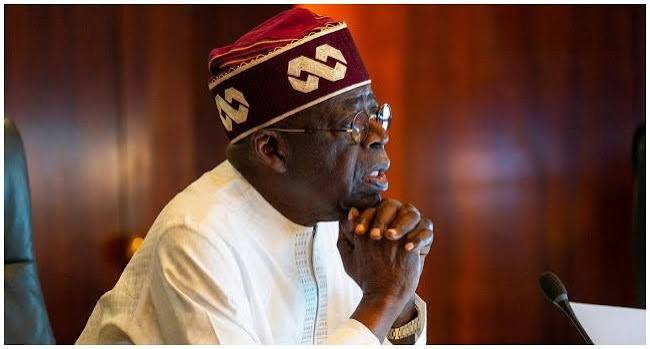
President Bola Tinubu has signed the Appropriation (Amendment) (No. 4) Bill, 2025, extending the implementation period of the 2025 budget from September 30, 2026, to December 31, 2026.
The amendment was passed by the Senate and the House of Representatives on Tuesday, September 29, 2026, before being transmitted to the President for assent.
According to a statement issued on Wednesday by Bayo Onanuga, Special Adviser to the President on Information and Strategy, the extension will give Ministries, Departments and Agencies (MDAs) additional time to complete ongoing capital projects.
The statement said the move would ensure that funds already appropriated are fully utilised without disrupting critical government programmes.
“The extension gives Ministries, Departments and Agencies more time to complete ongoing capital projects,” the statement said.
“It ensures that funds already appropriated are fully put to work for Nigerians, without disrupting critical programmes.”
Tinubu also commended the leadership and members of the National Assembly for what the statement described as the prompt consideration of the amendment.
The president said the development demonstrated continued cooperation between the Executive and Legislative arms of government in the interest of the country.
The amendment therefore allows the Federal Government to continue implementing the 2025 budget until December 31, 2026, instead of the earlier September 30 deadline.
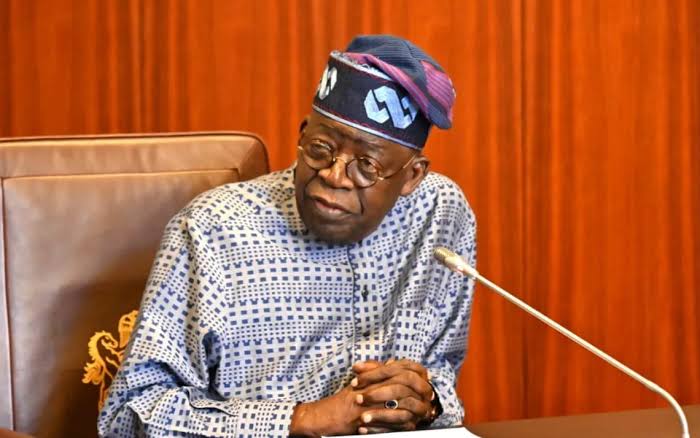
President Bola Tinubu has submitted the 2026 Statutory Budget Proposal of the Niger Delta Development Commission (NDDC) to the House of Representatives for consideration and passage.
This is contained in a letter dated Aug.
20, 2026, addressed to the Speaker of the House of Representatives, Rep. Abbas Tajudeen and read by the Deputy Speaker, Rep. Benjamin Kalu at plenary on Tuesday in Abuja.In the letter, Tinubu said that the budget was prepared by the Minister of Niger Delta Development in line with the provisions of Section 121 of the 1999 Constitution.
According to him, the proposal was based on the NDDC’s revenue and expenditure forecasts and it aligned with the fiscal and developmental policies of the Federal Government and the Renewed Hope Agenda.
He said that the proposal also took into consideration the 2024–2026 Economic Recovery Growth Plan as well as key assumptions of the 2026 Appropriation Act of the Federal Government.
The President said the NDDC had prioritised programmes aimed at improving youth empowerment, energy and power supply, education, industrial and enterprise development, health and security.
He also listed increased agricultural productivity among the commission’s priorities, saying the interventions were intended to lift a significant number of citizens out of poverty.
Tinubu urged the House to give the proposal consideration and ensure its timely passage.
“I look forward to the timely passage of the 2026 Statutory Budget Proposal of the NDDC by the House of Representatives,” he said. (NAN)
By David Torough, Abuja
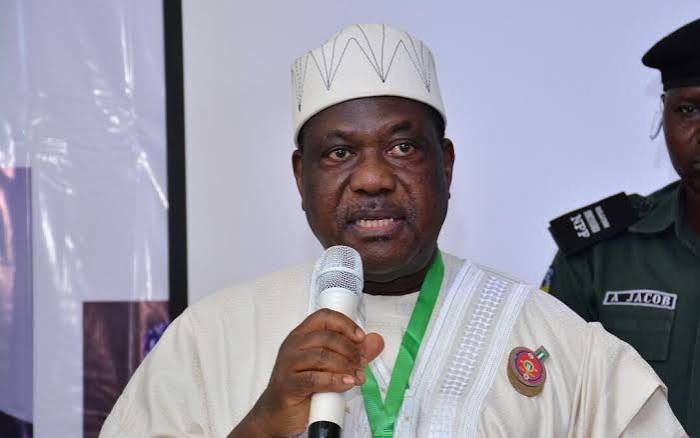
The Secretary to the Government of the Federation, Sen. George Akume, has charged Ministries, Departments and Agencies (MDAs) to translate the findings of the 2026 Transparency and Integrity Index (TII) into concrete improvements in their operations in order to strengthen accountability and public trust.
He gave the charge while delivering the keynote address at the presentation of the 2026 Transparency and Integrity Index held at the Auditorium of the Federal Ministry of Finance, Abuja.
The SGF said the administration of President Bola Tinubu, remains committed to open, accountable and responsible governance, stressing that public institutions must ensure that their policies, programmes and actions are transparent, visible and understandable to Nigerians.
According to him, the Index has become a vital instrument for assessing accountability, openness and ethical standards across government institutions, while providing MDAs with clear benchmarks to identify areas of strength and gaps requiring improvement.
He urged heads of MDAs to integrate the findings and indicators of the Index into strategic planning, performance management, budget priorities, procurement processes, staff training and digital disclosure rather than allow the report to become another document left unused.
“The report should not sit on the shelf and should inform management decisions, budget priorities, procurement processes, staff training, digital disclosure, and how you communicate with the public,” he said.
Akume emphasised that transparency should be viewed as an institutional asset rather than an administrative burden, noting that integrity must be embedded in the procedures and culture of public institutions through clear policies, proper record-keeping, effective oversight, ethical leadership and consequences for wrongdoing.
He further tasked MDAs to take advantage of technology by ensuring that their websites and data portals provide accurate, timely and user-friendly information, including current budget, contract and service information, to enable citizens to effectively engage government and track the utilisation of public resources.
The SGF explained that the 2026 TII assesses public institutions in five critical areas comprising fiscal transparency, open procurement and contracting, human resources and inclusion, control of corruption and citizens’ engagement, adding that the initiative complements existing public service reforms, anti-corruption measures and Nigeria’s Open Government Partnership commitments.
He noted that the ultimate objective of transparency and integrity should go beyond institutional rankings to building public institutions that Nigerians can understand, engage with and hold accountable, while safeguarding public resources and improving service delivery.
“The Federal Government remains fully committed to this goal. We will continue building institutions that are transparent, accountable, professional and responsive to the needs of the people,” the SGF said.
Akume commended the Bureau of Public Service Reforms (BPSR) and the Centre for Fiscal Transparency and Public Integrity (CeFTPI) for sustaining the initiative, while calling for stronger collaboration among government, civil society, professional bodies, development partners and the media in strengthening transparency and bringing corruption to its knees.



Insecurity: FCTA Completes Ushafa, Saburi Divisional Police Headquarters, 10 Underway
ShareBy Laide Akinboade, Abuja In order to boost security, the Federal Capital Territory Administration (FCTA) on Wednesday said it has...
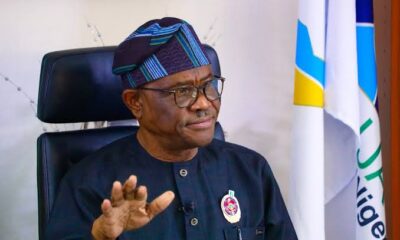

2027: I ‘ll Resign As Minister If Tinubu Loses FCT, Rivers – Wike
ShareBy Laide Akinboade, Abuja The Minister of the Federal Capital Territory (FCT), Nyesom Wike, has declared that he will step...


JAMB Extends Deadline for 2021–2025 Outstanding Admissions to Nov 30
ShareThe Joint Admissions and Matriculation Board (JAMB) has extended the deadline for candidates with outstanding admission offers from the 2021...

BIPC Board Inspects Taraku Mills Preparatory to Test Running
ShareFrom Attah Ede, Makurdi The Board of Directors of the Benue Investment and Property Company Limited (BIPC) has inspected the...


UBEC Renovates 287 Schools, over 4,000 Classrooms Nationwide
ShareThe Universal Basic Education Commission (UBEC) said it has renovated 287 schools and more than 4,000 classrooms across the country...
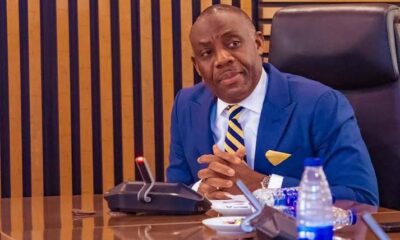

Nigeria at 66: FG Declares Thursday, Public Holiday
ShareThe Federal Government has declared Thursday as a public holiday to mark Nigeria’s 66th Independence Anniversary. The Minister of Interior,...
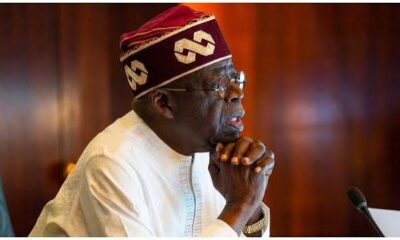

Tinubu Signs 2025 Budget Amendment Bill
ShareBy David Torough, Abuja President Bola Tinubu has signed the Appropriation (Amendment) (No. 4) Bill, 2025, extending the implementation period...

NAN Backs Insurance Sector’s Transformation Agenda, hails NAICOM
ShareBy Tony Obiechina, Abuja The National Association of Nigerian Students (NANS) National Secretariat, the umbrella body representing over 40.1 Million...


Don Calls for More Investment in Entrepreneurship/Innovation in Nigeria
ShareFrom Joseph Amedu, Lokoja A Professor of Entrepreneurship and Corporate Strategy at the Federal University, Lokoja, John Alabi has called...


Tinubu Submits NDDC 2026 Appropriation Bill
SharePresident Bola Tinubu has submitted the 2026 Statutory Budget Proposal of the Niger Delta Development Commission (NDDC) to the House...