
POLITICS
Senator Sunday Karimi’s Remarkable Progress in 200 Days


By Ralph Omololu-Agbana
For Senator Sunday Karimi who represents Kogi West, two hundred days into the life of the 10th National Assembly has been one of remarkable contribution to law making and reforms in the larger interest of the country.
Streaming the instruments of law sponsored by Senator Karimi, one cannot but say that his bills and motions, so far, are, by nature, nationalistic; undeniably premised on his belief that national economic stability takes preeminence and serves as prerequisite for sectional legislative initiatives toward achieving his primary objective of lifting his backward constituency.Since sworn-in as Senator of the Federal Republic on the 13th June 2023, Karimi has sponsored the following legislative Instruments: motion on urgent need to prioritize nation building, national unity and development in the 10th Senate; motion on urgent need to appraise the condition of the Nigerian federal roads and to re-think financing options; motion on the need to halt the disbursement of $800m Dollars subsidy palliative Loan and channel it to people centered self- financing developmental projects; motion on urgent need to investigate turn around maintenance projects of Nigerian refineries in order to uncover waste and continued plundering of public resources; motion on urgent need to step up efforts to stem the tide of oil theft in the Niger Delta Region and better safeguard the oil and gas infrastructure in the Region; motion on urgent need to investigate the Central Bank of Nigeria Naira Redesign Project; motion on urgent need to investigate the Subsidy Regime from 2011 to 2023.
Within the short period, Senator Karimi also sponsored the Central Bank of Nigeria (Amendment Bill 2023). The Bill is aimed at abolishing use of dollar or any foreign currency in domestic transactions. It also seeks to make the CBN more transparent and accountable and to stop the Governor and Deputy Governors of the Bank from participating in partisan politics whilst in office, among others; Dishonored Cheques Repeal and Re-enactment Bill 2023: To update the law and widen the scope of what constitutes Dishonored Cheque, increase the penal provisions to ensure the law serves as deterrent to offenders and to bring the law in tandem with current realities of today’s world; ICPC Amendment Bill 2023: Objective is to make the Commission more efficiently positioned to combat corrupt practices; Penal Code Amendment Bill 2023: The Bill seeks to amend the offence of rape to make the offence gender neutral and to bring the legal framework in tandem with current realities.
By nature, to those who know Senator Karimi from his days in the college, he is not loquatious. But, beyond his softspokeness, carefully selecting his words, is the veneered intelligence and accuracy in the presentation of issues laced with facts and figures. And this was the trait he carried with him from his eight, productive years in the House of Representatives between 2011 and 2019, to the current senate.
Indeed, Karimi’s multisectoral agenda setting towards bringing government close to Kogi West people can be visualized from his knowledge of the challenges and likely solutions.
As a ranking Senator, Karimi understands the workings of the national assembly. His appointment as Chairman, Senate Services Committee, speaks volume of his relevance and capabilities, which further placed him with the advantage to make things happen for the greater good of constituents and country.
However, given the enormity of the challenges facing Kogi West people, a Senator must not only give vent and voice to their collective yearnings and aspirations, he must have the requisite drive, energy, resourcefulness to transcend the confines of the of the hallowed chambers, to practically and visibly ensure the delivery of the democratic dividends to his people.
From zero roads and accesses, lack of such basic amenities as portable water and the epileptic power supply, ecological challenges, the sore taste of many graduates roaming the streets without employment and poverty, amid zero industrialization and mass empowerment to collapsed local government system, etcetera, Kogi West is massively underdeveloped.
But none has pulled at the heartstrings of the people of Kogi West like road infrastructure.
The Abuja-Lokoja road construction which started since 2003 and is yet to be completed. It has become a recurring decimal for the failed portions of Kabba-Iyamoye-Omuo-Ekiti road to become impassable yearly, especially during the raining season. This is a federal road that links the north to the southwest and has been so useful for the movement of people and goods between the two regions.
Likewise, the abandoned kabba-Egbe-Ilorin road, constructed in the 1970s and last rehabilitated in the 1990s through the defunct Petroleum Trust Fund (PTF). In some cases, kidnappers capitalize on the poor state of the road to abduct travellers, who either pay ransoms to regain their freedom or get killed. The recent siege on the road by heavy trucks has worsened the Aiyetoro-Gbedde-Isanlu-Egbe section of the road.
The 231km ‘Trunk A’ road was approved and awarded for reconstruction in 2014 and 2016, but was abandoned after the flag-off exercise, with the exception of the 17km that was constructed from Kabba to Aiyetoro Gbede in Ijumu Local Council. After some time, the condition of the road deteriorated. The matter is worse because vehicles, especially trailers, petrol and gas tankers, and other heavy trucks plying the collapsed Kabba-Ekiti road, from the northern parts of the country, have now found a detour in the Kabba-Egbe road.
No fewer than 500 trailers ply the road on a daily basis, thereby rendering the road impassable. It has also degraded the environment and caused tension to residents of Yagba communities along that road. The collapse of the road has rendered the people, mostly farmers, who dwell along the road, poorer, as travellers who normally buy farm produce displayed by the roadside are no longer doing so.
A journey of 231 kilometres from Ilorin to Kabba, and 315 kilometres from Ilorin to Lokoja, which used to take between three hours and four hours, when the road was still motorable now takes about two days.
Asked during an interview what would be his priorities if he has the opportunity of meeting President Bola Tinubu and has to present three cases of challenges facing Kogi West people for immediate federal government attention, Senator Karimi said his three requests would be “road, road and road”.
He noted, “Roads are the key to development. Any country that wants to develop must first build roads. Without roads, you cannot be thinking of development. It is on those roads that goods are transported”.
According to him, “One of the major problems in my senatorial district that I have been brainstorming on even before the election is our roads. All the communities I visited to campaign, they kept mentioning road and I have been brainstorming on how to go about the rehabilitation and reconstruction of federal roads in Kogi West. If you look at the constituency fund, it can not do anything looking at the deplorable condition of these roads. Look at Kabba-Egbe-Ilorin road, we have to remember that the contractor abandoned the road because they were not adequately funded in the budget”.
What has he done, doing or planning to do? Karimi said, “The Kabba-Egbe-Ilorin road is in the 2024 appropriation bill, but with little money from the ministry of works, efforts through lobby will be made to increase the amount to be appropriated in the 2024 Appropriation Act.However, due to the shrinking government revenue, especially as capital expenditure accounts for only about 28 percent in the national budget, talks are ongoing on alternative funding arrangements such as concessioning. Like the Keffi-Llafia Road, other alternative financing models are also been appraised in the face of a shrieked federal purse.
“Kabba-Egbe-Ilorin road has not been motorable in the last 15 years. The last contactor that handled the job left site since 2014. How do we move forward. I am considering government terminating the contract and finding other means of funding that project. May be we will have to explore public/private partnership. FG would need money to do those roads and many other infrastructures, hence, the need to block revenue leakages”.
On the epileptic power supply in Okunland, he said, “I have initiated talks already with Development Association of Communities to try and ascertain the root cause of the problem in order to propose best line of legislative action”.
Still on road infrastructure, contributing to a motion on the “Dilapidated State of Nigeria Roads” on the floor of the Senate. Karimi noted: “It pierces through my heart seeing the state of the roads in my Senatorial District have not been motorable for a very long time. It is imperative and a matter of urgency that we source for adequate means of funding these road constructions and repairs with quick action plans”.
On empowerment of constituents, between July and September, Karimi encouraged interested and qualified candidates from Kogi West Senatorial District to apply for recruitment into the Nigeria Police Academy, the Nigerian Army and Immigration Service, among others, with a view to assisting successful candidates enlisted. A portal, he disclosed, was opened for unemployed graduates to drop their applications for submission.
Official statement from Karimi’s office in the National Assembly confirmed that employment slots given to some of the applicants were successful and the candidates already deployed.
The beneficiaries however applied only to those that met all requirements as stipulated. Similar gesture was extended to candidates that applied for admission into federal universities.
The Sunday Karimi Media Team however noted that the slots could only be available to candidates who indicated interest.
Karimi has also initiated subsidy palliative measures for constituents. In the scheme, a list of 100 names from each ward has been compiled and forwarded to Abuja.
A statement from Karimi’s Media Team explained that “The Distinguished Senator Karimi consider his efforts with regards to facilitating employment opportunities and admissions into federal universities as one that should not be a matter for self glory or advertisement. He is satisfied that his efforts are yielding the desired results. Also note that the number of successful candidates will always be based on the response he gets from interested candidates. There is no making a fuss about our principal doing what is expected of him for his constituents in his capacity as their servant”.
The media team recalled that the strategy that worked for Karimi in his eight years in the Lower Chamber is what is being deployed and expanded upon in this current assignment in the Upper Chamber.
It noted that his time in the House of Representatives witnessed a period of significant achievements and progress, marked by infrastructural development, legislative initiatives, a commitment to empowering constituents and equitable spread of the dividends of democracy.
“In terms of making laws for good governance, Karimi sponsored over 26 bills and moved a plethora of motions during his time in the House of Representatives. He was one of the most vibrant in the House. As a Rep, notable areas of intervention by Karimi across the 34 electoral wards in Yagba Federal Constituency included water projects, education, rural electrification, youth, women, students and direct empowerments, handcrafts and market infrastructure development. It will not be out of place to state that Karimi was elected twice to represent Yagba Federal Constituency on account of performance”.
Karimi’s experience in the lower chamber no doubt had prepared him for the bigger role in the Upper Chamber. Notably, the immediate distraction was defending his mandate at the election petitions tribunal. Fortunately, Karimi’s popular victory at the February 25 Kogi West Senate election was upheld by the appeal court on October 30. With the distraction over, Karimi will have no excuse not to concentrate on delivery of democracy dividends to an expectant constituents consisting seven large local government areas and 85 electoral wards.
Asked if he saw the larger areas to be covered as a burden, Karimi said he saw it as a challenge instead, but one that is not unsurmountable.
From Francis Sadhere, Delta
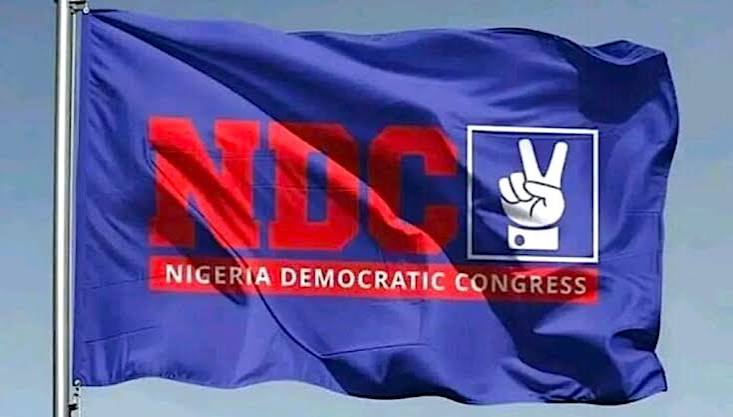
The Federal High Court sitting in Warri, Delta State, has nullified the nomination of former Deputy President of the Senate, Senator Ovie Omo-Agege, as the Nigeria Democratic Congress (NDC) candidate for Delta Central Senatorial District in the 2027 general elections.
The court, presided over by Justice Hyeladzira Ajiya Nganjiwa on Tuesday, also directed the Independent National Electoral Commission (INEC) to remove Omo-Agege’s name from its list of candidates and restrained him from parading himself as the NDC senatorial candidate.
In addition, the court held that the statutory period for conducting fresh primaries to nominate another candidate had elapsed, effectively leaving the party with no opportunity to conduct another primary for the senatorial seat under the applicable electoral timeline.
The judgment followed a suit instituted by Prof. Alexander Osondu Akpodiete, marked FHC/WR/CS/120/2026, challenging the validity of Omo-Agege’s nomination on grounds bordering on his resignation from the All Progressives Congress (APC), membership of the NDC and eligibility to participate in the party’s senatorial primary.
Delivering judgment, Justice Nganjiwa dismissed five preliminary objections raised by Omo-Agege, the NDC and INEC, challenging the competence of the suit, before proceeding to determine the substantive issues.
The court found that the NDC failed to comply with the mandatory provisions of the Electoral Act concerning the submission of its membership register to INEC ahead of its primary election.
According to the court, Omo-Agege’s name was not contained in the NDC membership register submitted to INEC at least 21 days before the party conducted its primary.
Justice Nganjiwa further held that the NDC failed to provide credible evidence to establish that the membership register was subsequently updated and submitted to INEC within the statutory period.
The judge also relied on INEC’s revised electoral timetable, noting that Omo-Agege participated in the APC senatorial primary held on May 18, 2026.
The court held that the development established that the former Deputy Senate President was still a member of the APC at the material time, raising questions about his eligibility to participate in the NDC primary.
Justice Nganjiwa stressed that only persons whose names appeared in a political party’s membership register, in accordance with the provisions of the Electoral Act, were eligible to participate in its primary elections.
On the issue of a previously withdrawn affidavit, the court held that a party was entitled to withdraw an affidavit already filed in a proceeding, adding that once withdrawn, such an affidavit ceased to form part of the court’s records and could no longer be relied upon in determining the matter.
The judge maintained that a political party could not secure a valid nomination through a process that failed to meet statutory requirements, stressing that INEC was not permitted to include a candidate whose nomination violated the Electoral Act on the ballot.
Consequently, the court invalidated Omo-Agege’s nomination, ordered INEC to delist his name and restrained him from presenting himself as the NDC candidate for Delta Central Senatorial District in the forthcoming election.
The ruling raises questions over the NDC’s participation in the 2027 senatorial election in Delta Central, particularly following the court’s pronouncement that the statutory window for conducting fresh primaries had expired.
The full certified judgment and reactions from Omo-Agege, the NDC and INEC were not available at the time of filing this report.
By Orjime Moses, Abuja
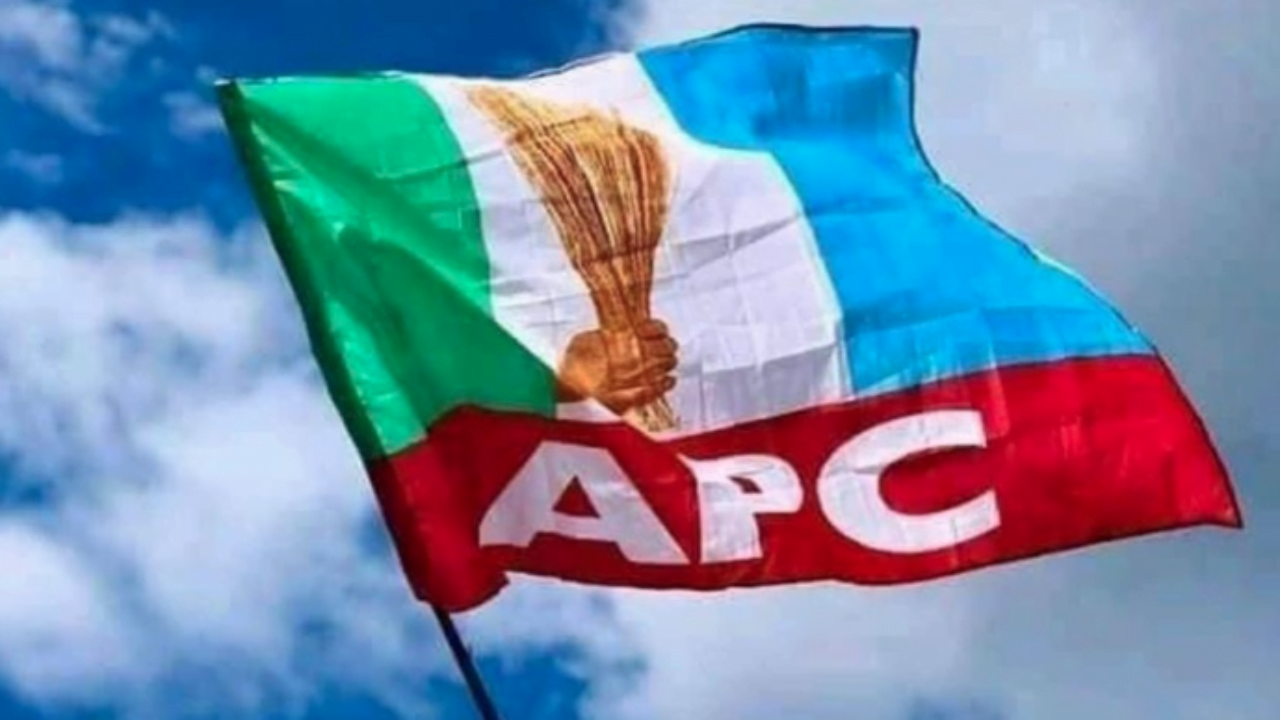
The All Progressives Congress (APC) has mourned 15 of its members and supporters reportedly killed in a road accident in Zamfara State.
The party said the victims were travelling from Gummi Local Government Area to Talata Mafara to attend its governorship campaign flag-off when the accident occurred.
In a statement issued on Tuesday, and signed by its National Publicity Secretary, Felix Morka, the APC said several other people sustained injuries in the accident.
The party extended its condolences to Governor Dauda Lawal, the bereaved families, the government and people of Zamfara State, as well as its leadership and members.
It described the incident as a painful loss to the party and commended the decision to postpone the scheduled campaign rally in Maru Local Government Area in honour of the deceased and in solidarity with their families.
The APC also prayed for the speedy recovery of those injured and for the repose of the souls of the deceased.
From Attah Ede, Makurdi
Former Benue State Commissioner for Lands and Survey, John Tondo, has criticised former Governor Samuel Ortom over what he described as his failure to deliver meaningful infrastructural development to Guma Local Government Area despite spending eight years in office.
Tondo said Ortom failed to bring appreciable development to his immediate local government area throughout his two-term administration, particularly in addressing insecurity and the plight of displaced residents.
He alleged that although Ortom enacted the Open Grazing Prohibition and Ranches Establishment Law in 2017 to curb open grazing and promote ranching, the policy ultimately resulted in the displacement of residents, who were confined to internally displaced persons (IDP) camps instead of cattle being ranched.
The former commissioner made the remarks while hosting journalists to a luncheon in Makurdi. He, however, commended Governor Hyacinth Alia for what he described as deliberate efforts to reverse the situation and facilitate the return of displaced persons to their ancestral communities.
Speaking about the security situation in his community, Uvir, Kasiyo Council Ward, Guma LGA, Tondo said the former governor failed to translate the anti-open grazing law into a practical solution that would protect both farmers and their communities.
Explaining his recent political involvement, Tondo said he was not a career politician but a technocrat and businessman who became interested in supporting the present administration because he believes it is prioritising service delivery.
He recalled his experience as a commissioner, saying he gave his best during his time in government because he understood public office as an opportunity to serve the people.
Tondo also expressed concern over what he described as the commercialisation of IDP camps by some non-governmental organisations (NGOs), alleging that certain groups were frustrating Governor Alia’s efforts to return displaced persons to their ancestral communities because of the financial benefits associated with maintaining the camps.
He accused some organisations and their alleged agents of encouraging displaced persons to remain in camps to sustain the flow of humanitarian assistance from international partners.
According to him, the situation was undermining the state’s efforts to restore normalcy in affected communities.
He maintained that many residents of his community had returned home and resumed farming activities, adding that the process of resettlement was ongoing.
“In September 2023, my people started returning home after spending more than five years in IDP camps. As I speak, all of them have returned and are going about their farming activities. Nobody is being ranched again.
“This development endeared me to Governor Alia, and I decided to support him so that my people could continue to enjoy peace.
“The IDP issue has become a source of business for some people, especially NGOs. They have allegedly recruited agents to ensure that displaced persons do not return home so that they can continue to benefit from humanitarian assistance.
“I can drive you to my village and you will see that people have returned. However, some people are keeping others in the camps because they want to continue doing business and receiving assistance from foreign partners.
“These are the issues. The communities are sufficiently safe for residents to begin returning, and it is a continuous process. Even last Saturday, I attended a burial in my village. I had not visited the community until that day,” he said.
The former commissioner further applauded Governor Alia’s infrastructural interventions, particularly the construction and rehabilitation of access roads across the state.
He said the governor was addressing some of the developmental priorities he had identified during his own governorship aspiration.
Tondo, who served as Commissioner for Lands and Survey, said he had earlier been concerned about the unplanned expansion of Makurdi, where residents constructed buildings without due consideration for existing urban development plans.
He commended the Alia administration for opening and constructing access roads, noting that the interventions would improve urban development and ease movement.
On workers’ welfare, he also praised the governor for what he described as the timely payment of salaries and pensions, saying the development had positively affected civil servants, pensioners and their families.
Tondo also denied being a member of the All Progressives Congress (APC), insisting that membership of a political party was not a prerequisite for supporting good governance.
He said his support for the Alia administration was based on its performance rather than party affiliation, adding that he also supported policies of the Federal Government that he considered beneficial to the country.
Citing the removal of fuel subsidy by President Bola Tinubu, Tondo argued that although the policy initially imposed economic hardship on citizens, it had increased the resources available to federal, state and local governments for development.
“I do not need to belong to a political party to support good governance. The APC, from the national to the state level, is doing what the PDP did not do.
“Governance is not about emotions. When you are given a responsibility, you must be seen discharging it. If I am in a position of authority and see people doing the right thing, I will support them.
“On fuel subsidy, for instance, we all know that it was a system through which Nigeria’s resources were shared among a few people. The President came in and had the courage to remove it.
“Although people may suffer temporarily, in the long run, the policy can benefit them through increased resources for development. Leadership is about taking difficult decisions and remaining focused on achieving set objectives.
“At the national and state levels, the President and the governor are delivering on their mandates and promises to the people. I do not have to belong to a political party to support a system that is doing well,” he said.
Explaining his financial contribution to Governor Alia’s campaign fundraising, Tondo said he donated because he believed the governor was using public resources to deliver services to the people and deserved support for his re-election bid.
He maintained that Alia’s performance motivated his decision to contribute to the campaign fund, expressing confidence that the governor would do more if returned to office.
Tondo urged the people of Benue State to prioritise the state’s image, welfare and security, while supporting development initiatives capable of improving the lives of residents.
He called for collective commitment to the state’s progress, saying sustained support for policies and projects that promote development would help build the Benue of their dreams.



Court Nullifies Omo-Agege’s NDC Senatorial Candidacy
ShareFrom Francis Sadhere, Delta The Federal High Court sitting in Warri, Delta State, has nullified the nomination of former Deputy...


APC Mourns 15 Supporters Killed In Zamfara Road Accident
ShareBy Orjime Moses, Abuja The All Progressives Congress (APC) has mourned 15 of its members and supporters reportedly killed in...
Ortom ‘Ranched’ Benue People in IDP Camps Instead of Cattle – Tondo
ShareFrom Attah Ede, Makurdi Former Benue State Commissioner for Lands and Survey, John Tondo, has criticised former Governor Samuel Ortom...


2027: INEC Chairman Seeks Stronger Security Cooperation Ahead Of Elections
ShareBy Orjime Moses, Abuja The Chairman of the Independent National Electoral Commission (INEC), Prof. Joash Ojo Amupitan, SAN, has called...


CBN Retains Interest Rate at 23 Per Cent
ShareBy Tony Obiechina, Abuja The Monetary Policy Committee (MPC) of the Central Bank of Nigeria (CBN) has retained the benchmark...


2027: Emovworho Warns Delta Politicians Against Exploiting Youths
ShareBy Orjime Moses, Abuja A concerned son of the Urhobo Nation, Austin Obule Emovworho, has warned political leaders in Delta...

Katsina Suspends Daura Emir, Orders Probe into Sexual Assault Allegation
ShareBy David Torough, Abuja The Katsina State Government has suspended all official engagements and travels of the Emir of Daura,...
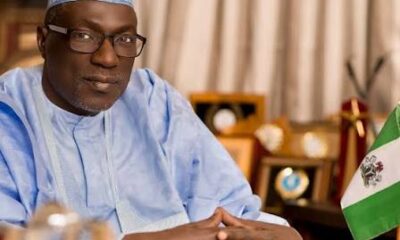

Makarfi Chairs DAILY ASSET 10th Anniversary, Awards
ShareBy David Torough, Abuja Former Kaduna State Governor, Senator Ahmed Mohammed Makarfi, has accepted the invitation to chair the 10th...
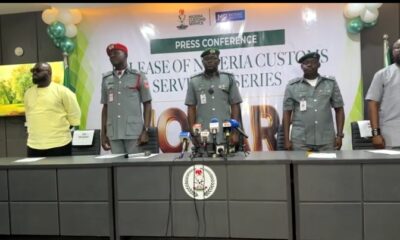

Customs Unveils Novara to Spotlight Officers’ Challenges
ShareBy Tambaya Julius, Abuja The Nigeria Customs Service (NCS) has unveiled a 79-episode television drama series, Novara, to showcase the...

FCT Upgrades 20 PHCs Under World Bank-supported IMPACT Project
ShareBy Laide Akinboade, Abuja The Federal Capital Territory Administration (FCTA) has upgraded 20 Primary Health Centres (PHCs) across the territory...