
Foreign News
Senegal Approves Tougher Anti-gay Law as Rights Groups Raise Concerns

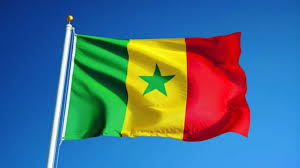
Senegal’s parliament has approved a new law doubling to 10 years the maximum prison term for sexual acts by same-sex couples and criminalising the “Promotion” of homosexuality.
A total of 135 MPs voted in favour, zero against and three abstained.
The next step will be for the president to sign it, then it will become law.The legislation, which was a campaign promise of President Bassirou Diomaye Faye and Prime Minister Ousmane Sonko, was sent to parliament after a wave of arrests over alleged same-sex relationships, already banned under Senegalese law.
The government spokesman dismissed international criticism of the bill, arguing that the move reflected the views of Senegalese people.
“The majority of Senegalese do not accept homosexuality. Our culture rejects it and we are firmly opposed to it,” said Amadou Moustapha Ndieck Sarré.
Some conservative activists in Senegal have long demanded harsher penalties.
The movement And Sàmm Jikko Yi, which campaigns to defend what it calls Senegalese moral values, has repeatedly urged authorities to adopt stricter legislation criminalising homosexual acts. Its leaders argue the law is necessary to protect Senegalese cultural and religious norms.
However, rights groups warn the move could worsen discrimination and violence against sexual minorities. Human Rights Watch researcher Larissa Kojoué said the proposed changes were worrying.
“Criminalising same-sex conduct and arresting people for their sexual orientation violates multiple internationally protected rights, including equality and non-discrimination.”
She added that such measures risked exposing people who were already stigmatised to “violence and fear.”
Alioune Tine, founder of the think-tank Afrikajom Center, said that the current climate could worsen social tensions. “If it is true that social concerns must be addressed, [the law] also has to respect human rights and protect public-health policies.”
Others have pointed out that same-sex relationships are a part of life and cannot be abolished by a law.
“Most of the same-sex relationships were hidden anyway. There are even people who are married in the society and who are still entertaining a safe-sex relationship because of the norm and the cultural norm in that society,” Senegal LGBTQ Association head and medical doctor Charles Dotou said.
All that will happen is “people will be hiding more, it will create more fear and people will be scared to live normally in that community. So there will be an exodus of people, particularly people who were already exposed so that that creates a bit of chaos in society,” Dr Dotou added.
The toughening of Senegal’s law follows a wave of arrests last month over alleged same-sex relationships. Police detained 12 men – among them two public figures and a prominent journalist.
Some supporters of the tougher legislation say they have concerns about HIV transmission, although it has long been scientifically established that people of any sexuality can contract and spread the illness.
Experts warn that further criminalising same-sex relations could vilify gay people living with HIV to the point that they shy away from receiving the vital medical care they need.
Senegal has been praised for its efforts to control HIV. Between 42,000 and 44,000 people are living with the virus in the country, with a national prevalence of about 0.3% among adults, one of the lowest rates in West Africa, according to the health ministry.
At the Fann University Hospital in Dakar, the executive secretary of the National Council for the Fight Against Aids (CNLS) – the body that has coordinated the country’s HIV response for decades – is worried about the situation with LGBTQ+ people.
“We have managed to control the HIV epidemic and we are moving towards eliminating Aids as a public health problem in Senegal,” Dr Safiétou Thiam said. “But what is happening now risks undermining the results of 30 to 35 years of efforts in the fight against the disease.”
Ousmane Sonko, the longtime firebrand opposition leader appointed prime minister in 2024, had told lawmakers the bill would punish what it describes as “acts against nature” with fines of up to 10,000,000 CFA francs ($17,600; £13,000) and prison sentences ranging from five to 10 years, compared with the current one- to five-year terms in the Muslim-majority country.
Several other African countries have also introduced tough new laws against the LGBTQ+ community in recent years.
In September last year, Burkina Faso’s transitional parliament approved a bill banning homosexual acts, following its neighbour Mali in 2024.
In 2023, Uganda voted in some of the world’s harshest anti-homosexual legislation meaning that people engaging in same-sex relationships can be sentenced to death in certain circumstances.
Ghana is also planning to re-introduce an anti-homosexual bill that activists say threatens basic human rights, safety and freedom.

President Donald Trump on Sunday ordered a US naval blockade of the Strait of Hormuz in response to Iran’s “unyielding” refusal to give up its nuclear ambitions during peace talks in Islamabad.
While acknowledging that the marathon negotiations in Pakistan had gone “well” and “most points were agreed to,” Trump said Tehran had refused to concede on the issue of its nuclear program.
“Effective immediately, the United States Navy, the Finest in the World, will begin the process of BLOCKADING any and all Ships trying to enter, or leave, the Strait of Hormuz,” Trump said on his Truth Social platform.
“Any Iranian who fires at us, or at peaceful vessels, will be Blown To Hell!”
US Vice President JD Vance left Pakistan without a deal after weekend talks with a team led by Iran’s parliamentary speaker Mohammad Bagher Ghalibaf — the highest-level meeting between the two sides since the 1979 Islamic revolution.
Tehran’s delegation also included Foreign Minister Abbas Araghchi.
“We leave here with a very simple proposal, a method of understanding that is our final and best offer. We’ll see if the Iranians accept it,” Vance told reporters.
In two lengthy posts on Truth Social, Trump slammed Iran for promising to open the Strait of Hormuz, a strategic waterway through which a fifth of the world’s crude oil passes, and “knowingly” failing to deliver.
“They say they put mines in the water, even though all of their Navy, and most of their ‘mine droppers,’ have been completely blown up. They may have done so, but what ship owner would want to take the chance?” Trump said.
Iran had effectively blocked the Strait of Hormuz for weeks, since the United States and Israel launched a bombing campaign against the Islamic republic more than six weeks ago.
On Saturday, the US military announced that two US warships had transited the strait at the start of a mine clearance operation.
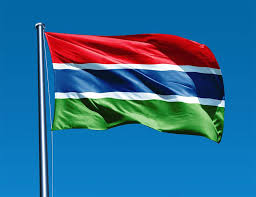
British barrister Martin Hackett has been appointed as The Gambia’s first special prosecutor to try those responsible for human rights abuses carried out during the 22-year rule of ex-President Yahya Jammeh, which ended when he went into exile in 2017.
Hackett will head a newly created office charged with dealing with the cases from a period characterised by widespread repression, enforced disappearances and extrajudicial killings.
The Truth, Reconciliation and Reparations Commission (TRRC) was set up to document the extent of the alleged abuses.
In its final report, handed to current President Adama Barrow in 2021, it identified those most responsible and recommended their prosecution.
The TRRC, which heard harrowing testimony from victims, former security operatives and other witnesses, also called for reparations to be paid to the victims, warning that failure to act risked entrenching impunity.
The TRRC has started phased compensation payments, starting with victims of abuses committed shortly after the 1994 coup when Jammeh first came to power.
But for many survivors, financial compensation is secondary to accountability.
Among the most notorious cases highlighted by the TRRC were the 2004 killing of journalist Deyda Hydara and the murder of more than 50 mainly West African migrants, executed by security forces after being wrongly accused of plotting a coup.
A handful of perpetrators have already been convicted abroad under the principle of universal jurisdiction, including former members of the notorious paramilitary unit and death squad known as “the Junglers” – some of whom have been jailed in Germany and the US.
The appointment of Hackett, who has previously served at the UN-backed Special Tribunal for Lebanon and who investigated war crimes committed by senior military commanders during the Kosovo war, is seen as a decisive step towards domestic accountability.
Attorney General Dawda Jallow was quoted as saying that Hackett had a four-year mandate and was chosen from a wide selection of candidates.
Jammeh, who refused to co-operate with the TRRC, only left power at the insistence of regional leaders.
They sent in troops to The Gambia when he refused to step down after his shock election defeat in December 2016.
Now aged 60, Jammeh has previously denied wrongdoing and is believed to be living in exile in Equatorial Guinea.
By Ademola Bakare
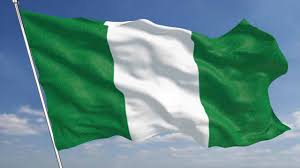
The Nigeria banking sector has witnessed significant recapitalization and consolidation exercises, dating back to 1952. The most recent were in 2004 that terminated in 2006, and 2010. Professor Charles Soludo, then governor of the Central Bank of Nigeria, raised the minimum capital benchmark from N2 billion to N5 billion.
The effort reduced the number of banks in Nigeria to 25 from 89, and Mallam Sanusi Lamido Sanusi, also a former governor, in 2010 established Asset Management Company {AMCON}, “bad bank” to ‘buy toxic assets off commercial banks, and recapitalized distressed financial institutions.That era was largely an abuse of banking industry ethics, hugely perpetrated internally by chief executives, and board members of many banks.
The Central Bank of Nigeria’s {CBN} just concluded effort was announced in 2024 with a two-year timeline, prescribing a new recapitalization regime of minimum capital benchmark of N500 billion, N200 billion, and N50 billion for commercial banks with international, national, regional licences respectively.
The new capital targets were ₦500 billion for international commercial banks, ₦200 billion for national commercial banks, ₦50 billion for regional commercial banks, ₦50 billion for national merchant banks, ₦20 billion for national non-interest banks, and ₦10 billion for regional non-interest banks
Recapitalization of banks in Nigeria is not novel, it has always been a regulatory measure employed by the Central Bank of Nigeria (CBN) to strengthen the financial system, protect depositor funds, and enhance the banking sector’s capacity to support economic growth. The first exercise was carried out in 1952 (Banking Ordinance), caused by the failure of indigenous banks. The then colonial government adopted tight regulations, raising the capital requirement for foreign banks to £400,000. The Banking Act of 1969, was another effort to strengthen banks. It raised the capital base to £1.5 million for foreign banks and £600,000 for indigenous commercial banks.
In 1997/1998 (Bank Failures) following widespread distress and failures within the sector, minimum benchmark capital was once again raised, which ultimately led to the failure of 26 banks.
The Olayemi Cardoso recapitalization programme which started on April 1, 2024 was considered a herculean odyssey deadline for the banks to bolster their capital bases. But the governor has been consistent and uncompromising with his policies. He said “the era of fragile balance sheets was over”. He wasn’t just desirous of bigger and fat figures on a ledger, he was seeking a financial ecosystem capable of financing huge infrastructure, and a $1 trillion economy envisioned by President Bola Tinubu’s administration, as well as structuring the sector to be able to withstand any shock associated with the volatile global economy.
As of March 31, 2026, 33 banks have met the new requirements, raising ₦4.65 trillion in new capital. These efforts aimed to strengthen Nigeria’s banking sector, improve resilience, and support economic growth. The programme was executed seamlessly, devoid of any rancour, and recorded a very strong participation from domestic and international investors, with 72.55 per cent of capital sourced locally and 27.45 percent from international markets. This demonstrated growing and sustained confidence in the Nigerian banking sector, and by extension, the Nigerian economy.
The concluded programme offers several implications and benefits for the Nigerian economy. Among which, but not limited are – increased lending capacity. With stronger capital bases, banks can lend more to businesses, particularly the small and medium enterprises (SMEs), and individuals yearning for capital to expand their businesses. Surely, this will strengthen financial stability as higher capital requirements will reduce the likelihood of bank distress and contagion, thereby promoting financial system stability.
For the $1 trillion economic aspiration of the government, a well-capitalized bank will attract more foreign investors to support Nigeria ‘s economic development, making it competitive. Larger banks are now, not a pack of local lenders, equipped, and can compete effectively with international banks, fostering innovation, and efficiency.
Among other benefits is economic stimulation, to ensure increased lending support for infrastructure development, industrialization, and job creation. With stronger shareholder net worth, banks performance will improve and the shareholders’ confidence boosted.
CBN’s strong regulatory framework employed by Olayemi Cardoso ensured that banks adopt more robust risk management practices, thereby reducing the risk of financial crises. The apex bank, he has often said, will continue to improve on governance, transparency, and accountability in the banking industry.
The recapitalization program when it was wrapped up earned commendation from industry players, and financial technocrats, who viewed the program as the prescription the economy required for its transformation.
However, not all banks operating in the country met the deadline. Some couldn’t, and are still continuing with the process of shoring up their capital adequacy. To these banks, the CBN assured the banking public, will remain functional.
Cardoso said, “Sustainable economic growth is unattainable without a resilient financial system. This recapitalisation ensures Nigerian banks can fund the scale of transactions needed to drive a $1 trillion economy”. Stressing that “the recapitalisation programme has strengthened the capital base of Nigerian banks, reinforced the resilience of the financial system and ensured it is well-positioned to support economic growth and withstand domestic and external shocks”.
The Olayemi Cardoso era will be etched in annals of banking sector history not for complexity of his monetary policies, but for clarity of his vision for the sector and the country.
Ademola Bakare, writes from Abuja.



Justin Bieber Headlines Coachella with Nostalgia-fuelled Set
ShareJustin Bieber made a nostalgia-fuelled return to the major stage as Coachella’s much-anticipated headline act. The 32-year-old spent much of...

Sule Rewards First-Class Graduates, Honours Tanzania’s President at NSUK 8th Convocation
ShareBy Tambaya Julius, Abuja The Nasarawa State University, Keffi over the weekend celebrated its 25th silver jubilee anniversary and combined...


OPay Named Nigeria’s Most Trusted Digital Financial Company at 2026 ISO Awards
ShareOPay, a leading financial institution in Nigeria, has been awarded The Most Trusted Quality Mobile Money and Digital Financial Services...

Kogi Dismisses Claims of Ethnic Exclusion in Employment
ShareFrom Joseph Amedu, Lokoja The Kogi State Government has responded to a viral voice note allegedly recorded by a female civil servant,...
Prosperity Cup 2026: LGA Finals Get Dates
ShareFrom Mike Tayese, Yenagoa The Central Organizing Committee (COC) of Nigeria’s biggest grassroots football spectacle, the Bayelsa Governor’s Football Tournament,...


Trump Orders US Naval Blockade of Strait of Hormuz
SharePresident Donald Trump on Sunday ordered a US naval blockade of the Strait of Hormuz in response to Iran’s “unyielding” refusal to give up its nuclear ambitions during...
Psychiatrist Decries High Cost of Mental Illness Treatment, Seeks Interventions
ShareA Consultant Psychiatrist, Prof. Taiwo Obindo has decried the cost of care and drugs for individuals undergoing treatment for various mental health conditions, calling for interventions to reverse the...

ENSIEC Fixes 2026 Council Election Timetable Sept 26
Share From Sylvia Udegbunam, Enugu The Enugu State Independent Electoral Commission (ENSIEC) have released a revised timetable for the 2026 local...
Afreximbank Total Assets Grow to $48.5bn in 2025
ShareBy Tony Obiechina, Abuja The African Export-Import Bank (Afreximbank) said it has grown its total assets and contingencies to $48.5...

FG Tasks Dangote Sugar on 600,000MT Capacity Expansion
ShareBy Tony Obiechina, Abuja The Federal Government has urged the Dangote Group to expand the annual production capacity of its...