
Education
Sexual Harassment: ICPC Arraigns Suspended UniCal Professor


The Independent Corrupt Practices and other related offensives Commission (ICPC) said it was set to arraign Prof. Cyril Ndifon, the suspended Dean of Faculty of Law, University of Calabar (UNICAL) at a Federal High Court in Cross River state.
The ICPC’s Spokesperson, Azuka Ogugua, said this in a statement in Abuja.
Ogugua said the commission had filed a criminal charge against Ndifon, following the conclusion of investigation into the professor’s alleged gross misconduct against some of his students.
The commission said a four-count charge bordering on sexual harassment, official corruption and abuse of office contrary to Sections 8, 18 and 19 of the Corrupt Practices and Other Related Offences Act, 2000, had been preferred against the senior lecturer.
In the charge marked: FHC/ABJ/CR/511/2023, one of the counts reads: “That you, Professor CYRIL OSIM NDIFON (m) between June-September, 2023 at Calabar, within the jurisdiction of this honourable Court.
“And, while being a public officer charged with responsibility for the certification of students as fit in learning and character as a prerequisite for the award of Bachelor’s degree in law and admission into the Nigeria Law School.
“Used your office and position as the Dean, Faculty of Law, University of Calabar to gratify yourself.
“By soliciting for nude photographs and videos from one Ms. ABC (not real name), a year 2 diploma student of the University of Calabar, through WhatsApp chats on your telephone number 0803***.
“And, thereby committed an offence contrary to and punishable under Section 19 of the Corrupt Practices and Other Related Offences Act, 2000.”
It said Ndifon would be arraigned in court on a date to be given by the court.
The News Agency of Nigeria reported that ICPC, in collaboration with the Department of State Services (DSS), had, on October 4, arrested Ndifon in Calabar, after shunning several invitations extended to him.
Academic Staff Union of Universities (ASUU) has authorised 20 federal and state universities across Nigeria to commence varying degrees of industrial action.
The decision was reached during a critical National Executive Council (NEC) meeting held in Abuja between August 8 and 9, 2026.
ASUU National President, Prof.
Christopher Piwuna, disclosed this at the weekend, expressing the union’s deep frustration over the “haphazard implementation” of the landmark December 2025 FGN-ASUU Agreement.The union warned that a full-scale resurgence of campus unrest is now inevitable.
Regarding the 20 approved universities facing looming strikes, the NEC resolved to grant permission for industrial action once individual institutions successfully satisfy internal union requirements.
The affected institutions include: Adekunle Ajasin University, Akungba (AAUA); Nasarawa State University, Keffi (NSUK); Ibrahim Badamasi Babangida University, Lapai (IBBUL); University of Medical Sciences, Ondo (UNIMEDO); Gombe State University (GSU), Gombe; Plateau State University (PLASU), Bokkos; Emmanuel Alayande University of Education (EAUED), Oyo; Ambrose Alli University, Ekpoma (AAUE); Olusegun Agagu University of Science and Technology (OAUSTECH), Okitipupa; Abia State University (ABSU), Uturu; University of Education and Entrepreneurship (UEE), Akamkpa; Kaduna State University (KASU), Kaduna.
Others are Aliko Dangote University of Science and Technology (ADUSTECH), Wudil; Northwest University, Kano (NWUK); Enugu State University of Science and Technology (ESUT), Enugu; Imo State University (IMSU), Owerri; Niger Delta University (NDU), Wilberforce Island; University of Africa, Toru-Orua (UAT); Bayelsa Medical University (BMU), Yenagoa; and Taraba State University (TSU), Jalingo.
ASUU also disclosed that the implementation status of universities within the Lagos Zone is currently under review, with separate declarations expected in due course.
Speaking on the core grievances driving the crisis, ASUU noted that while Vice-Chancellors at the federal level face severe challenges due to underfunded monthly salary bills, the situation at the state level is considerably worse.
According to the union, only about 10% or fewer of state governors have openly endorsed the new salary package established in December 2025.
The rest were accused of “playing the ostrich” and passing financial burdens onto Governing Councils that lack the funding to back them.
The union also explicitly blamed officials within the Federal Ministry of Finance and the Office of the Accountant-General of the Federation. These bodies are accused of deliberately stalling promotion arrears, dragging their feet on monthly salary releases, and illegally withholding the remittance of academics’ deductions to their respective Pension Fund Administrations (PFAs).
Furthermore, ASUU raised concerns over the unpaid, withheld three-and-a-half months’ salaries dating back to the 2022 nationwide strike. While ASUU initially praised President Bola Tinubu for releasing four months of those salaries, the refusal to remit the balance has left a “strong bitter taste.”
The union also condemned the prolonged delays in paying the 25/35% wage award and outstanding promotion arrears to its members.
Meanwhile, ASUU issued a stern warning regarding the recent harassment of its branch leaders and members by Vice-Chancellors at ESUT, IMSU, and ABSU.
The NEC declared that it will strictly refuse to call off any industrial action in these specific institutions until all forms of victimization stop completely.
Beyond the immediate academic crisis, the NEC reviewed the worsening socio-political and economic landscape of Nigeria.
The union strongly condemned the ongoing atmosphere of pre-election violence, political killings, and economic instability as the country approaches upcoming election cycles, noting that these existential threats directly undermine the living and working conditions of everyday Nigerians and university lecturers alike.
Despite praising the mediation efforts of Senator Lanre Tejuoso, the Chairman of the Implementation Monitoring Committee (IMC), ASUU maintains that it will stop at nothing to enforce the full scope of the agreement.
The union has announced that it will convene an emergency NEC meeting in the next few weeks to appraise the situation. If the government fails to act swiftly to clear outstanding financial entitlements and halt the harassment of lecturers, a wider, coordinated national academic shutdown may follow.
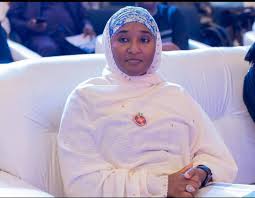
The Minister of State for Education, Prof. Suwaiba Ahmad has expressed satisfaction with the conduct of the National Examinations Council (NECO) Computer-Based Test (CBT) Senior School Certificate Examination,
Ahmad, while monitoring the ongoing examination at Redeemers Teap School and Anglican Girls’ Grammar School on Wednesday in Abuja, described the exercise as a major step towards eliminating examination malpractice.
She said feedback from candidates at both centres indicated that most of them preferred the CBT format to the traditional paper-based examination.
According to her, the candidates also confirmed that they experienced no technical glitches and that the examinations commenced on schedule.
”I spoke with a lot of the students and most of them said they prefer the CBT examination.
”They also confirmed that they had not seen the examination questions before the test and that each candidate answered a different set of questions randomly.
”The CBT makes communication between candidates impossible and is one of the best ways of tackling examination malpractice,” she said.
The minister said the successful deployment of CBT represented significant progress in the education sector, adding that the government would only proceed with full transition after ensuring adequate infrastructure nationwide.
”We will not begin the full transition until we have everything in place because we do not want to put any student at a disadvantage.
”We are working with the National Assembly, state governors, private partners and other stakeholders to provide the facilities required for a seamless nationwide transition,” she said.
Ahmad added that the adoption of CBT would ultimately improve the quality of education by promoting merit and integrity in examinations.
Also speaking, the Registrar of NECO, Prof. Ibrahim Wushishi, said the council recorded no technical hitch since the commencement of the examination.
”They assured me that since the commencement of this year’s examination, they have not experienced any technical glitch. The exams were ready, they started on time, no hiccups, no network problems, nothing like that.”
He disclosed that 1,378,048 candidates registered for this year’s Senior School Certificate Examination, with female candidates slightly outnumbering their male counterparts.
According to him, the increasing participation of girls reflects the impact of government policies promoting girl-child education.
Wushishi also said NECO had about 10 CBT centres in the Federal Capital Territory (FCT), adding that the council is expected to release the examination results by the first week of September to support the 2026 admission process.
He reaffirmed that the CBT system, through question randomisation, had greatly reduced opportunities for examination malpractice while enhancing the credibility of the examination process.
One of the candidates, Ambassador Alabi, from Redeemer’s teap described the CBT experience as seamless and more convenient than the traditional paper-based examination.
Another Candidate from the Anglican girls school Isaac Abioro said CBT examination has been efficient and easy to answer questions and there have not been any technical glitch in the process so far
On her part the Principal of Anglican Girls’ Grammar School, Mrs Nkiruka Nwafor, said the transition to CBT was preparing students for a technology-driven future.
According to her, the school adopted the system early to familiarise students with computer-based examinations before external assessments.
”The CBT experience is what we’ve all been waiting for. The future our girls are going into is dynamic and heavily ICT-driven.
”We are excited that our proprietor got on board. We have also introduced CBT for some of our internal examinations so that from JS1 and JS2, the students gradually get used to the system. So it’s about time, and it’s good that it’s happening,” she said.
The monitoring exercise at Redeemer’s Teap Secondary School and Anglican Girls’ Grammar School showed candidates writing the examination in an orderly environment without reported technical challenges.
By Tony Obiechina, Abuja
The Federal Government has suspended the proposed review of registration fees for the 2027 West African Senior School Certificate Examination (WASSCE) and the National Examinations Council (NECO) Senior School Certificate Examination (SSCE).
The federal government last week announced the jacking up of the fees from N27,500 to N50,000.
However, in a statement on Monday July 13, 2026, signed by Director, Press and Public Relations, Boriowo Folasade, the Federal Ministry of Education announced that the letter conveying the proposed fee adjustment, dated June 18, 2026, has been withdrawn to allow for a comprehensive review and broader consultations with all relevant stakeholders before a final decision is taken.
According to the statement, the Ministry acknowledged the concerns and constructive feedback received from the public and appreciates the keen interest shown by Nigerians in matters relating to access to quality education.
The statement read: “The proposed review was informed by the prevailing economic realities and the rising cost of conducting credible national examinations.
“The current examination registration fees have remained largely unchanged for several years despite significant increases in operational costs, including logistics, security, printing of examination materials, technology deployment, quality assurance and other essential services required to maintain the integrity and credibility of public examinations across the country.
“Nevertheless, the Honourable Minister of Education, Dr. Maruf Tunji Alausa, has directed that the proposal be placed on hold in line with the Federal Government’s commitment to inclusive, transparent and evidence-based policymaking.
“This decision underscores the Ministry’s determination to ensure that policies affecting millions of Nigerian students and their families are carefully considered, socially responsive and reflect the collective interest of the nation.
“As part of the fresh review process, the Ministry will further engage extensively with examination bodies, State Ministries of Education, school proprietors and administrators, parents’ associations, organised labour, education stakeholders and other critical partners to ensure that any future decision is fair, sustainable, transparent and responsive to prevailing realities while safeguarding access to education.
“Accordingly, the proposed review of examination registration fees will not take effect, as earlier communicated, pending the conclusion of the consultation process.
“The Federal Ministry of Education reassures Nigerians that the welfare of students, equitable access to quality education and responsible policy decisions remain at the heart of the Renewed Hope Agenda of President Bola Tinubu, for the education sector.
“The Ministry appreciates the understanding, patience and continued support of all stakeholders and remains committed to keeping the public fully informed throughout the consultation process.”, it added.


Cheap Surgery, Costly Injustice
ShareBy Fransiscus Nanga Roka The flourishing market in overseas cosmetic surgery offers you a dream — the promise of a...


NUJ Felicitates Babangida at 85
ShareBy Dan Amasingha, Minna The Nigeria Union of Journalists (NUJ), Niger State Council, has congratulated former Military President, General Ibrahim...


Why I Married My Husband In Our Living Room – Ronaldo’s Wife
ShareGeorgina Rodríguez has disclosed that she chose their everyday family space to get married to Cristiano Ronaldo so that their...
ASUU Approves Strike in 20 Varsities over Breached 2025 Agreement
ShareAcademic Staff Union of Universities (ASUU) has authorised 20 federal and state universities across Nigeria to commence varying degrees of...

Nigeria’s Inflation Rate Drops to 15.43 Per Cent in July – NBA
ShareBy Tony Obiechina, Abuja Nigeria’s headline inflation rate fell to 15.43 per cent in July 2026, down from 15.91 per...


Igbinedion Varsity, EduTech Global Partner On Digital Education, Access
ShareBy Julius Tambaya, Abuja Igbinedion University, Okada, one of Nigeria’s leading private universities, has entered into a strategic partnership with...
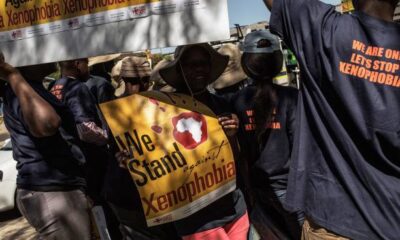

Xenophobia: FG Evacuates 83 More Nigerians from South Africa
ShareBy David Torough, Abuja The Federal Government has announced the arrival of another batch of 83 Nigerians evacuated from South...


Kaduna Varsity Lecturers’ Exodus Worsens as ASUU Issues Strike Ultimatum
ShareFrom Agbo Emmanuel, Kaduna More than 200 lecturers, including professors and other experienced academic staff, have left Kaduna State University...

NES 32 to Drive National Dialogue on Jobs, Productivity, Shared Prosperity
ShareBy Ayanyinka Ayanlowo Nigerian Economic Summit to Chart the Next Phase of Nigeria’s Economic TransformationThe Nigerian Economic Summit Group (NESG)...


Komaiya Wife Celebrates 29 Years of Marriage, Calls Husband ‘Divine Covering’
ShareBy David Torough, Abuja Pastor Mrs Esther Komaiya has poured out heartfelt tributes to her husband, Pastor Korede Komaiya, as...