
NEWS
Shame of a Nation: Cacophony Trails Igbokoba Naf Aircraft Crash

The tragic crash of a Nigerian Air Force (NAF) ATR-42 aircraft, registration number NAF 931, in the swampy terrain of Igbokoda, Ilaje Local Government Area of Ondo State, is more than an aviation tragedy. It is a painful national moment that demands accountability, transparency, and a thorough examination of the circumstances surrounding the loss of 25 lives.
When a military aircraft goes down with everyone on board, the nation is entitled to mourn.
But mourning must not become a substitute for investigation, and official expressions of sympathy must not be allowed to overshadow legitimate questions about the operation, maintenance, and management of the aircraft.The title is not a verdict on the cause of the crash or an accusation against any individual. It is a moral challenge to a system in which preventable tragedies must never be reduced to public grief, ceremonial condolences, and promises that eventually fade from national memory. Nigeria’s military is on top as the most disciplined institution.
However, The questions surrounding the Igbokoda crash are serious, and the public deserves answers supported by evidence.
The first disturbing aspect of the tragedy was the cocophone and confusion over the number of people aboard the aircraft.
Initial official reports put the number at 32, while the Nigerian Air Force subsequently confirmed that 25 people were on board: five crew members and 20 passengers. On October 8, the NAF reportedly explained that the discrepancy arose from differences in how civil air traffic controllers and military authorities interpreted the expression “souls on board.”
That explanation deserves to be examined on its merits. Nevertheless, the episode raises a fundamental question: Why should a tragedy of this magnitude be accompanied by conflicting figures at a time when families, friends, and the public are desperately seeking reliable information?
In a modern aviation system, the passenger manifest, crew list, flight plan, and operational records should provide a clear account of who boarded an aircraft and who was authorised to be on it.
The identities of the victims also make this tragedy deeply personal. Among those who perished were military personnel serving in different capacities, as well as civilian passengers. Reports that a victim had married only weeks before the crash further illustrate the devastating human consequences behind the official statistics.
Each name represents a family, a future interrupted and a circle of loved ones left to confront an unimaginable loss.
The authorities must therefore ensure that every victim is accounted for and that the final investigation report reconciles the manifest with the circumstances of the flight. Where communication fails, the failure should be acknowledged and corrected.
The second aspect requiring clarification is the presence of civilians aboard a military aircraft.
The NAF described the ill-fated aircraft’s journey as a routine mission from Benin City to Lagos. Reports identified military personnel and civilian passengers among those on board. Their presence raises questions that deserve clear, factual answers.
Who were the civilians? What was the purpose of their journey? Were they military dependents, authorised passengers travelling on official business, or persons carried under another approved arrangement? What operational rules governed their presence on the flight?
These questions are not an attempt to diminish the humanity or worth of any victim. Every life lost deserves equal dignity. Rather, they concern the standards by which public assets are used and the procedures designed to protect everyone who boards an aircraft.
The public is also entitled to understand the rules governing the alleged practice of picking up and dropping off civilians during military flights. Was the aircraft operating a formally approved transport arrangement, or were there any unscheduled passenger movements or stops? The available public information does not, by itself, establish that unauthorised pick-ups or drop-offs occurred.
That distinction is crucial. If the aircraft was used to transport civilians, investigators should establish whether the passenger arrangements were properly authorised, documented, and consistent with the mission’s operational requirements. If allegations of unauthorised boarding, disembarkation, or deviations from the approved flight plan emerge, they should be tested against flight logs, passenger manifests, crew statements, and other verifiable evidence.
A military aircraft is not a private taxi. Its use must be governed by operational necessity, clear authorisation, and strict safety procedures. Where civilian passengers are permitted, the rules should be explicit, consistently enforced, and open to appropriate oversight.
The objective should not be to manufacture scandal, but to establish whether procedures were followed and whether any breach contributed to the tragedy.
A third question that can not be ignored is the airworthiness of the aircraft. The ATR-42 involved in the crash was identified as NAF 931, aircraft was said to be configured primarily for maritime patrol, intelligence, surveillance, and reconnaissance operations. Published reports indicated the aircraft was delivered around 2010, following an acquisition arrangement involving the manufacturer Alenia Aeronautica.
Its age, therefore, naturally raises public interest in its maintenance history. But age alone does not prove that an aircraft was unsafe to fly. Airworthiness depends on its technical condition, maintenance standards, compliance with required inspections, the status of critical components, and the operational decisions made before and during a flight.
The relevant questions are whether the aircraft had valid technical clearance for the mission, whether all scheduled and mandatory maintenance had been completed, whether any
outstanding defects had been properly assessed, and whether the crew received accurate information about the aircraft’s condition.
Investigators should examine maintenance logs, engine and component records, inspection reports, defect reports, flight hours, previous technical incidents, and any applicable airworthiness directives. They should also assess the aircraft’s weight and balance, weather conditions, flight data where recoverable, communications and the crew’s actions.
If maintenance deficiencies or institutional failures are established, the findings should lead to corrective action and, where warranted, accountability. If the aircraft was technically sound, that conclusion should equally be supported by evidence.
The nation needs facts, not assumptions.
The Nigerian Air Force has announced an investigation into the crash. That is a necessary step, but public confidence will depend on the quality of the process, the evidence examined, and the clarity of the findings eventually released. Where the evidence points to procedural shortcomings, the relevant institutions must address them. This is very important against the background of the rashes involving no fewer than 15 NAF aircraft crashes in the last 10 years.
The authorities should provide periodic, factual updates without compromising the integrity of the investigation or the privacy of bereaved families. A final report should identify the causes and contributing factors, make practical safety recommendations, and explain how implementation will be monitored.
A probe that merely announces that an investigation has been opened, without eventually communicating meaningful findings and corrective measures, would do little to restore public confidence.
The Igbokoda crash is a sobering reminder that aviation safety cannot depend on institutional prestige, reassuring statements or the hope that tragedy will not strike again.
Aviation demands discipline. Passenger records must be accurate. Aircraft must be maintained to prescribed standards. Flight plans must be followed or deviations properly authorised. Operational decisions must be documented, and safety concerns must be addressed before they become disasters. The same principles apply whether an aircraft belongs to the military, a commercial airline or a government agency.
The families who lost their loved ones deserve more than condolences. The Nigerian public deserves to know whether established procedures were followed. And the men and women who serve in the Armed Forces deserve a system that places their safety and that of every authorised passenger above convenience or administrative expediency.
The tragedy at Igbokoda should not become another entry in Nigeria’s long catalogue of national disasters that provoke temporary outrage before public attention moves elsewhere

From Mike Tayese, Yenagoa
The Director-General of the National Youth Service Corps (NYSC), Brigadier General O. O. Nafiu, has urged Corps Members to remain security-conscious, build lasting relationships and use social media responsibly throughout their service year.
Nafiu gave the charge while addressing the 2026 Batch ‘C’ Stream I Corps Members during his visit to the NYSC Bayelsa State Permanent Orientation Camp, Boro Town.
Commending the Corps Members for their cheerful disposition, the Director-General encouraged them to take advantage of the diversity of the Orientation Course to build meaningful networks, noting that relationships formed during national service could prove valuable as colleagues advance into leadership and other positions of responsibility.
He also cautioned them to be mindful of their digital footprints and ensure that their online activities reflect positively on themselves and the Scheme.
On self-reliance, Nafiu urged the Corps Members to embrace the Skill Acquisition and Entrepreneurship Development (SAED) programme and acquire practical skills capable of creating opportunities beyond the service year.
The NYSC Bayelsa State Coordinator, Samuel Amaramiro Pepple, welcomed the Director-General and described the Corps Members as disciplined and committed.
Pepple assured him of adequate security and welfare arrangements in the camp, noting that the facility enjoys round-the-clock security, stable water and electricity supply, as well as adequate medical services.
The visit also featured a colourful cultural performance by the NYSC Cultural Troupe. The Director-General joined Corps Members celebrating their birthdays to cut a cake and presented cash gifts to groups in camp, bringing the visit to a memorable and lively conclusion.

By Tony Obiechina, Abuja
The Federal Government of Nigeria, the European Union (EU) and the European Bank for Reconstruction and Development (EBRD) have signed a grant agreement to support the development of the country’s nationwide fibre-optic backbone.
The signing in Abuja on Wednesday, marked a significant step towards expanding affordable broadband connectivity, strengthening institutional capacity, and accelerating Nigeria’s digital transformation.
The initiative, supported by the European Union and administered by the EBRD, provides up to €14 million in funding for project scoping, fibre-optic network design, project preparation, and capacity-building activities for Nigeria’s nationwide fibre-optic backbone programme.
The project aims to deploy approximately 90,000 kilometres of fibre-optic infrastructure nationwide to improve broadband access and support inclusive economic growth.
The ceremony brought together representatives of the Federal Government, the European Union, the EBRD and other stakeholders committed to advancing Nigeria’s digital development agenda.
Speaking at the event, the Minister of Budget and Economic Planning, Senator Atiku Abubakar Bagudu, welcomed the participating delegations and emphasised the importance of the partnership among the Federal Government of Nigeria, the European Union and the EBRD in advancing the country’s digital infrastructure and economic development priorities.
He highlighted the grant’s significance in supporting the design and preparation of Nigeria’s nationwide fibre-optic infrastructure project, noting that the intervention would extend beyond technical design to include capacity building, institutional development, and knowledge transfer.
The minister emphasised that these components are essential for effective project implementation, for strengthening national expertise and for promoting the long-term sustainability of investments in digital infrastructure.
Bagudu also acknowledged the complementary responsibilities of the participating institutions, explaining that the Federal Ministry of Budget and Economic Planning would provide coordination and oversight, while the Federal Ministry of Communications, Innovation and Digital Economy would share responsibility for technical implementation through established project coordination and implementation structures.
He further expressed appreciation for Nigeria’s longstanding relationship with the European Union and other development partners, recognising their contributions to the country’s economic reforms and development priorities.
The minister reaffirmed the Federal Government’s commitment to sustained international cooperation, effective coordination and strategic partnerships to expand digital connectivity, strengthen institutional capacity and promote inclusive economic growth.
In her remarks, the Permanent Secretary of the Federal Ministry of Budget and Economic Planning, Dr Deborah Odoh, described the signing of the grant agreement between the Federal Republic of Nigeria and the EBRD, supported by the European Union, as an important milestone in strengthening Nigeria’s digital infrastructure and implementation capacity.
Dr Odoh thanked the European Union and the EBRD for their continued support and reaffirmed the government’s commitment to transparent coordination, effective implementation, and sustained collaboration with development partners.
She clarified that the Federal Ministry of Budget and Economic Planning would execute the grant agreements on behalf of the Federal Government of Nigeria, while the Federal Ministry of Communications, Innovation and Digital Economy would oversee technical implementation through its project implementation units.
The European Union leader to Nigeria, Massimo De Luca, reaffirmed the EU’s commitment to strengthening its digital partnership with Nigeria through investment, effective collaboration and the timely implementation of projects designed to support the country’s digital transformation.9p
Massimo emphasised the importance of sustained engagement between Nigeria and its international partners to advance shared development objectives and to support the expansion of digital infrastructure.
He also thanked the minister and all stakeholders whose contributions and collective efforts advanced the partnership, underscoring the value of continued cooperation in achieving development outcomes.
In a virtual address, a representative of the Federal Ministry of Communications, Innovation and Digital Economy expressed appreciation to the European Union delegation, Nigerian partners, colleagues and other stakeholders for their contributions to the successful organisation of the signing ceremony.
The speaker highlighted the importance of the agreements in strengthening institutional cooperation, promoting innovation, developing technical skills, and supporting sustainable development.
The address further emphasised that the partnership demonstrates what Nigeria, the European Union and other development partners can achieve through coordinated efforts and a shared commitment to national development.
The representative expressed optimism about the project’s potential impact, describing the initiative as a key foundation for deeper cooperation and future achievements in Nigeria’s digital sector.
By Tambaya Julius, Abuja
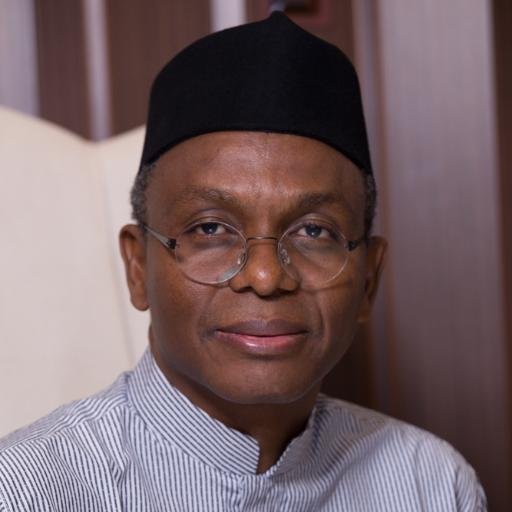
A forensic investigator with the Department of State Service (DSS), Segun Kayode, on Tuesday told a Kaduna State High Court that former governor Nasir El-Rufai and some of his associates allegedly earmarked $600,000 to pay officials of the Economic and Financial Crimes Commission (EFCC) and intermediaries.
Kayode, the first prosecution witness in the ongoing trial, made the allegation while testifying before the court sitting in Kawo, Kaduna, presided over by Justice Darius Khobo.
He told the court that $500,000 and $100,000 were allegedly set aside for the payments, adding that forensic audio recordings captured conversations involving El-Rufai and some of his suspected associates.
According to the investigator, the conversations centred on alleged efforts to frustrate an EFCC investigation into a company identified as Singularity.
Kayode named a Senior Advocate of Nigeria (SAN), AU Mustapha; Jimi Lawal; and Bashir El-Rufai among those allegedly mentioned in the recordings.
He further alleged that Mustapha and Lawal were directed to meet one Ahmadu Sule to obtain a template previously used to liquidate another company, with the intention of applying a similar process to Singularity.
The investigator said the discussions also covered plans to liquidate the company in Nigeria and Mauritius, where it was reportedly under investigation by the Nigerian Financial Intelligence Unit.
Kayode also told the court that the recordings contained discussions about preventing the EFCC from investigating IHS, which he said was listed on the New York Stock Exchange.
The allegations formed part of the prosecution’s evidence against the former governor and have yet to be established by the court.
Earlier, El-Rufai’s lead counsel, Paul Erokoro (SAN), challenged Kayode’s testimony, arguing that the witness’s name and summary of evidence were not included in the prosecution’s proof of evidence.
Erokoro said the omission undermined his client’s right to a fair hearing, insisting that the defence needed to know the evidence it was expected to answer to prepare adequately for the trial.
However, counsel for the Independent Corrupt Practices and Other Related Offences Commission (ICPC), Ayodeji Adedipe (SAN), argued that Kayode was a subpoenaed witness and that the omission did not automatically make his testimony inadmissible.
Adedipe told the court that the subpoena was issued and signed by the court on June 30, 2026. He added that the defence would have the opportunity to cross-examine the witness.
Erokoro maintained that the issue was not whether Kayode could testify but whether the defence had been given adequate notice to prepare for his evidence.
He cited Section 210 of the applicable Administration of Criminal Justice Law, 2017, arguing that the prosecution should have served the subpoena on the defence.
In its ruling, the court acknowledged that Kayode’s name and summary of evidence were missing from the proof of evidence but noted that the records showed he had been subpoenaed.
Justice Khobo held that the omission did not automatically render the testimony inadmissible, provided the defence was allowed to cross-examine the witness.
The judge subsequently overruled the objection and directed Kayode to continue his testimony.
After Kayode submitted a hard copy of his findings to the court clerk, the defence complained that the document should have been served earlier to allow counsel to study its contents.
The judge ruled that the defence could obtain a certified true copy of the document admitted as Exhibit One for examination.
Proceedings lasted nearly eight hours, from 12:26 p.m. to 8:18 p.m., with about two hours devoted to playing the recorded conversations.
The court adjourned the case until November 30 and December 1, 2026, for the continuation of cross-examination, following an agreement between the prosecution and defence.
El-Rufai Arrives Under Tight Security
El-Rufai arrived at the court premises at about 11:50 a.m., ahead of the scheduled noon hearing, amid tight security.
He was accompanied by the African Democratic Congress governorship candidate in Kaduna State, Isa Ashiru.
His appearance followed an order by Justice Khobo directing the ICPC to produce him in court for the resumed proceedings.
The previous sitting was adjourned on Monday after the former governor was absent, following information that he had requested access to his personal physician to review medical test results.
The resumed hearing came days after the Court of Appeal in Kaduna dismissed El-Rufai’s appeal challenging the refusal of bail by the state high court.
In its judgment delivered on October 9, the appellate court upheld the lower court’s decision, ruling that the former governor had failed to establish sufficient grounds to justify interference with the refusal of bail.
El-Rufai has been in ICPC custody since February 18, 2026, over allegations of financial misconduct linked to his administration of Kaduna State between 2015 and 2023.
The Kaduna State House of Assembly had petitioned the ICPC over the alleged diversion and mismanagement of more than N423 billion in public funds during his eight-year administration.
The former governor is facing multiple cases involving allegations of money laundering, abuse of office, fraud and other financial offences before different courts.
He has denied wrongdoing and pleaded not guilty to the charges. The allegations remain subject to judicial determination.


Shame of a Nation: Cacophony Trails Igbokoba Naf Aircraft Crash
ShareThe tragic crash of a Nigerian Air Force (NAF) ATR-42 aircraft, registration number NAF 931, in the swampy terrain of...
CBN: Nigeria’s Foreign Reserves hit $58.81bn, Highest in 18 Years
ShareBy Tony Obiechina Abuja Nigeria’s foreign exchange reserves rose to $58.81 billion on October 12, 2026, their highest level since...

INEC Engages PWDs, Reaffirms Commitment to Inclusive Electoral Process
ShareThe Independent National Electoral Commission (INEC) has restated its commitment to an inclusive electoral process. The Resident Electoral Commissioner (REC)...


2027: Governance Won’t Take Back Seat to Campaigns –Tinubu
SharePresident Bola Tinubu has assured Nigerians that governance will not take a backseat to electioneering ahead of the 2027 presidential...

NYSC DG Task Corps Members on Safety, Networking
ShareFrom Mike Tayese, Yenagoa The Director-General of the National Youth Service Corps (NYSC), Brigadier General O. O. Nafiu, has urged...


Nigeria, EU, Euro Bank Sign €14m Grant Agreement on Fibre-Optic Infrastructure
ShareBy Tony Obiechina, Abuja The Federal Government of Nigeria, the European Union (EU) and the European Bank for Reconstruction and...
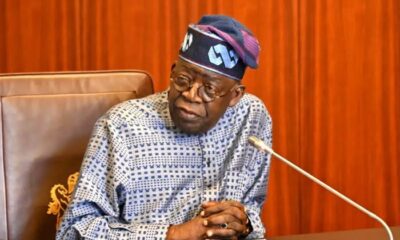

Tinubu: I Won’t Abandon Governance for 2027 Campaigns
ShareBy Tambaya Julius, Abuja President Bola Ahmed Tinubu has said he will not allow political campaigns ahead of the 2027...
El-Rufai, Associates Earmark $600,000 to Pay EFCC Officials, DSS Tells Court
ShareBy Tambaya Julius, Abuja A forensic investigator with the Department of State Service (DSS), Segun Kayode, on Tuesday told a...


LITFCMB Condemns Illegal Use of Facility, Commends NAFDAC on Enforcement
ShareBy David Torough, Abuja The Management of the Lagos International Trade Fair Complex Management Board (LITFCMB) has strongly condemned the...


Makurdi Old Boys Association Inaugurates BOT October 17, Launches N1bn Secretariat Project Fund
ShareGovernment College Makurdi Old Boys Association (MOBA) has completed arrangements to inaugurate its Board of Trustees (BOT) October 17, at...