
Foreign News
South Sudan Plagued by Violence and Corruption, Human Rights Council

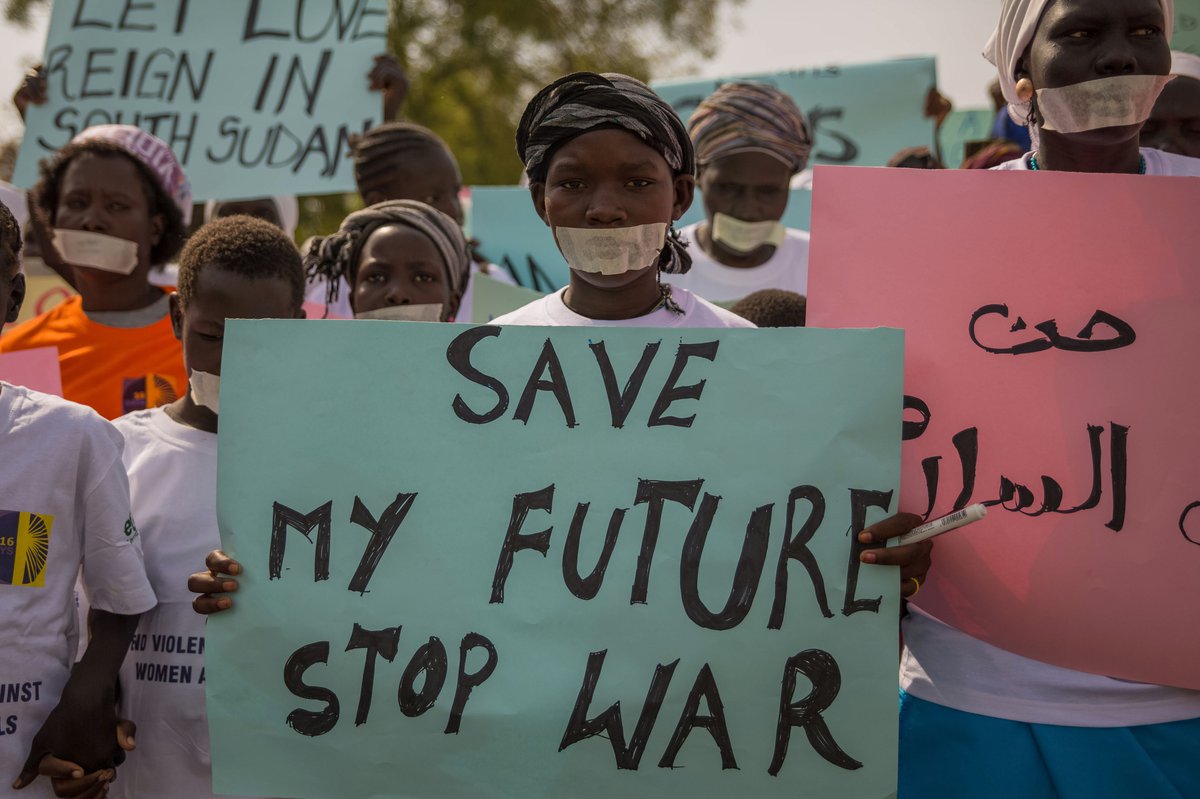
Delivering an update to the forum in Geneva, Deputy UN High Commissioner for Human Rights, Nada Al- Nashif, highlighted “staggering levels of localised violence”.
She attributed this to community-based militias who were responsible for almost all killings, injuries, abductions and sexual violence between April and June this year.
According to the UN Mission in South Sudan, (UNMISS), the three-month period saw 585 people killed, 305 injured and thousands forcibly displaced throughout the country – particularly in Jonglei and the Greater Pibor Administrative Areas.
Despite the many allegations of serious violations of human rights and humanitarian law, progress in the fight against impunity had been minimal, Al-Nashif said, before “strongly” encouraging the government to work closely with local leaders to achieve peaceful conflict resolutions.
Also reporting to the Human Rights Council in Geneva, the chairperson of the Commission on Human Rights in South Sudan, Yasmin Sooka, said that since last March, the human rights situation in the country had deteriorated considerably and that a human rights’ crisis of “epic” proportions was unfolding in a dramatic way.
She noted that there had been an increase in extrajudicial killings, forced disappearances and torture, as well as rape and conflict-related sexual violence.
The government’s intolerance to criticisms had also led to a brutal attack on fundamental freedoms and the suppression of dissent, using excessive force against civilians, she said.
According to Sooka, between June and August of this year, more than 100 civilians were killed in an ethnic conflict at Tambura, in Western Equatoria.
Between 80,000 and 120,000 people have also been reportedly displaced by the conflict, with thousands fleeing to neighbouring Bahr el Ghazal state and Ezo County.
The chairperson also warned that the humanitarian community in the country was increasingly coming under attack, resulting in the suspension of their activities and the relocation of aid workers.
The UN correspondent quoted her as saying that more than 4.3 million people have been displaced, with almost 80 per cent of the population believed to be living in extreme poverty, and more than 7.2 million people experiencing food insecurity.
Sooka also pointed out that the UN humanitarian appeal for South Sudan amounted to approximately $1.7 billion dollars, less than half of which had been committed by the international community.
South Sudan was ranked seventh among 8 countries in the world with the worst humanitarian crises, she said.
She also maintained that the country’s leaders had continued to divert “staggering amounts of money…from (the country’s) public coffers”, which had resulted in undermining human rights and endangering people’s security in the country.
According to investigations carried out by the Commission over the past two years, more than $73 million dollars had been siphoned off since 2018.
She also noted that the figure was only a fraction of the overall amount looted, as South Sudan’s ruling elites had diverted more than $4 billion dollars, since 2012 – the year after independence. (NAN)


By Eze Okechukwu, Abuja
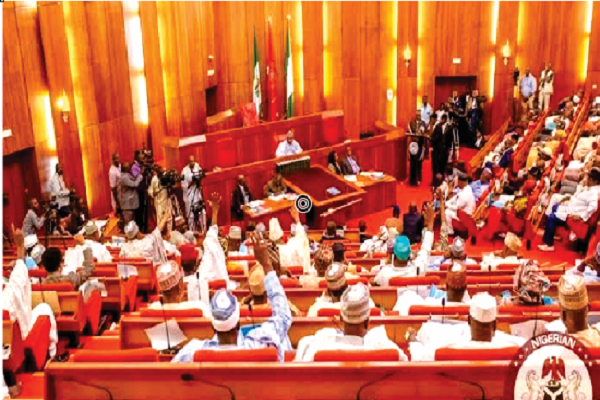
The Senate yesterday ordered mandatory health screening for every international passenger arriving Nigeria airports, seaports, land borders as Ebola resurfaces in the Democratic Republic of Congo with a scare case reported in the FCT.
The resolution followed an urgent motion by Senator Francis Fadahunsi, who warned that with Lassa fever already ravaging states, Nigeria cannot afford another outbreak.
“Protecting our entry points is far cheaper than managing Ebola,” Fadahunsi told the chamber.
Lawmakers insisted screening must be total and indiscriminate — no exemptions based on nationality or departure country because infected travellers can transit through safe-listed nations.
Senator Diket Plang raised the stakes further, demanding immediate funding for NCDC and Port Health Services, including release of withheld funds and emergency budget.
Senate President Godswill Akpabio said the Federal Government has started releasing Ebola response funds but ordered relevant committees to track every kobo.
“Ascertain whether the funds were released and judiciously utilised. Any outstanding debt must be released by the Finance Ministry without delay,” Akpabio directed.
At least 72 civilians who had been prospecting for gold in a border region of Sudan have been killed in air strikes, a regional rights group said.
Emergency Lawyers, based in the Sudanese capital, Khartoum, said jets targeted the so-called artisanal miners at a popular gold mining site on Saturday.
Neither the Egyptian government nor the de facto Sudanese authorities have so far commented.
Cairo has previously faced accusations of deadly strikes on gold prospectors as part of a crackdown on illicit activity along its southern border.
Emergency Lawyers noted the previous alleged attacks and said they represented not only a violation of Sudan’s sovereign territory but demonstrated the government’s lack of control over the region.
“The deliberate targeting of unarmed civilians violates international humanitarian law and the right to life,” it said in a statement on Sunday. “These acts may constitute war crimes.”
It noted that its death toll was provisional and could rise.
The Paris-based Sudan Tribune reported that the death toll could far exceed the number reported by Emergency Lawyers, citing a survivor of Saturday’s attack who said many more people had been injured.
Eyewitnesses said the attack began around 06:00 local time (04:00 GMT), with the aircraft firing more than five missiles directly at the miners’ camps, destroying them and excavation pits with people still inside, the newspaper wrote.
The Sudan Tribune reported claims in June that Egyptian forces had used drones and artillery to target artisanal mining sites in the same region, killing several, after sporadic incidents of Egyptian border guards of burning equipment, torching temporary shelters, and firing live ammunition to disperse mine workers.
Days later, Egypt’s border agency announced that it and the military had begun a sweeping security campaign along the border to foil illegal migration, drug smuggling and illegal mining.
At the same time, Sudan’s de facto leader announced an investigation into the alleged strikes, which were said to have killed dozens.
Gold lies at the core of the border tensions.
Sudan’s ongoing civil war has led to a surge in artisanal mining – and often risky practice conducted by civilians with rudimentary tools and without official permission – particularly in remote areas near its borders.
Gold-rich areas lie along porous borders in terrain historically associated with cross-border smuggling routes, with artisanally mined gold potentially feeding into those channels.
Egypt’s border force said in June that it had seized 86 tonnes of gold ore along with amateur prospecting equipment.
Artisanal mining has also reportedly continued in Sudan’s conflict zones and smuggled gold may be a source of income for armed insurgent groups.
This has raised concerns of illicit Sudanese gold undermining the legitimate Egyptian gold market.
Several German fighter jets will take part in the Northern Atlantic Treaty Organisation (NATO) annual nuclear defence exercise this week as troops from 17 countries take part in the Steadfast Noon drill.
The German Air Force said three Tornado jets will take part in the exercise hosted by Italy, which starts Tuesday and runs for about a week and a half.
The jets are normally stationed in Büchel in the German state of Rhineland-Palatinate.
NATO has not revealed the exercise scenario but said its scale would be comparable to last year’s drill, which involved around 2,000 personnel and more than 70 aircraft.
Last week, NATO’s head of nuclear policy, Nassima Barrows, said the exercise was designed to demonstrate the alliance’s readiness and ability to defend its territory.
No real nuclear weapons will be used, she added.
NATO said the exercise was not linked to current events or directed at any specific country.
Military experts say the drills, held regularly in October, include practising the safe transport of weapons from underground storage facilities to aircraft and mounting them on fighter jets.
Only practice bombs without real nuclear warheads are used during the drills.




BBNaija’s Dorathy Begins Breast Reduction Journey
ShareFormer Big Brother Naija housemate, Dorathy Bachor, has taken the first step towards breast reduction surgery, three years after first...


They Planted Juju in my Jacket at Davido’s House – Peruzzi
ShareSinger Peruzzi has narrated how a charm was planted in his jacket during his stay at Davido’s house. Peruzzi was...


Withdraw all Charges within Two Weeks, Speed Darlington Appeals to Burna Boy, Apologises
ShareControversial Nigerian singer Speed Darlington has appealed to Grammy-winning artiste Burna Boy to withdraw all charges against him within two...
AFSNET Business Conference Kicks off in Calabar
ShareFrom Ene Asuquo, Calabar The 6th African sub – sovereign Governments Network Investment Conference has started in Calabar the cross...
NAFOWA Empowers 18 Widows, Donates Tricycles in Bayelsa
ShareFrom Mike Tayese, Yenagoa The Nigerian Air Force Officers’ Wives Association (NAFOWA), Mobility Command, Yenagoa, has empowered 18 widows of...


RMAFC Advocates Fair Share of 13 Per Cent Revenue Derivation Among Oil Producing States
ShareBy Tony Obiechina, Abuja The Revenue Mobilisation Allocation and Fiscal Commission (RMAFC) has advocated a fair distribution of the 13...


Customs CG Tasks Officers on Discipline, Integrity
ShareBy Tambaya Julius, Abuja The Comptroller-General of the Nigeria Customs Service (NCS), Bashir Adewale Adeniyi, has called on officers and...


2027: ADC Asks EFCC, INEC to Probe Alleged APC Cash Distribution
ShareBy Mvendaga Orjime, Abuja The African Democratic Congress (ADC) has called on the Economic and Financial Crimes Commission (EFCC) and...
NIMC Vows to Strengthen Nigerians’ Digital Identity
ShareThe National Identity Management Commission (NIMC) has reiterated its commitment to strengthening Nigerians’ digital identity, cybersecurity and privacy safeguards under...

Afreximbank Facilitates $3bn Investment Opportunities in 21 African Countries
ShareThe African Export-Import Bank (Afreximbank) said its African Sub-Sovereign Governments Network (AFSNET) has facilitated investment opportunities worth more than three...