
BUSINESS
Stakeholder-Consultations Key to Maritime Sector Growth, Says Bello

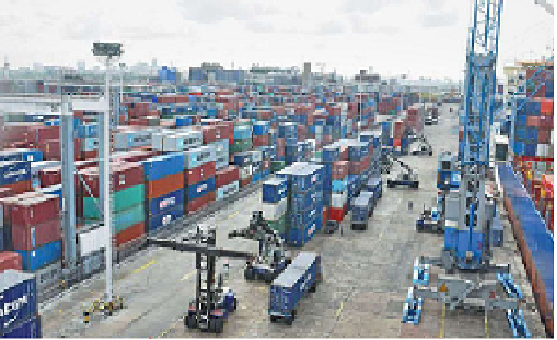
From Anthony Nwachukwu, Lagos
Immediate past Executive Secretary/Chief Executive Officer of the
Nigerian Shippers’ Council (NSC), Mr. Hassan Bello, has charged heads
of all maritime regulatory agencies to unite and harness the immense
benefits of consulting sister-agencies and other stakeholders in
decision-making for better results.
Bello, who spoke in Lagos over the weekend during the NSC
long-service awards and his farewell party after eight years as head
of the agency, disclosed that the agency uses layers of consultation,
and has the most stakeholders in Nigeria.
He warned: “We cannot do without stakeholders because you will come
back to do it all over. Remove arrogance and ignorance and serve the
people, because that is what you are there to do. Unfortunately, some
of us in some institutions think they are there as the lords. No, it
is the stakeholders.”
Condemning the lack of cooperation among some of heads of maritime
agencies, Bello charged them to start the building block of unity
“because there is a lack of synergy. We have to operate on the basis
of equality because no agency is better than the other, all of us have
a role to play.”
According to him, “agencies are not graded by their budget but by
what they contribute. It is very unfortunate that some agencies think
that maritime starts and stops with them. No, it cannot be.
“Some agencies are all the time defending charities and that is not
good. They spend so much money defending charities and neglect what
they have to do. That is why we have problem, and that is what the
Nigerian Shippers’ Council will not take from anybody, not now, not
tomorrow, forever.”
He commended the Nigerian Maritime Administration and Safety Agency
(NIMASA) for heeding his call and promoting electronic documentation
for shipping companies, stating: “We are all equal and have
contributions to make; (we need) real, and not cosmetic cooperation.
“We must have the digitisation of our ports, otherwise we are
joking. I have seen the cooperation given by the shipping companies
and the terminal operators. We have to export or perish. Export is
another vista for trade facilitation that we have to look at and make
sure we translate to the economy.
“We are working together with the Nigeria Customs Service, and the
Central Bank of Nigeria, saving the economy. Why can’t I have
cooperation with a sister-company in my ministry?”
Relieved that the erroneous exclusion of the NSC from port
concession agreement is now over, he commended the Ministry of
Transportation for its intervention, stating that from inception, the
economic significance of the Shippers’ Council was never lost on the
government.
Therefore, its first chief executive officer was seconded from the
CBN, and another, a transporter who studied the economy of
transportation. According to him, “nothing contributes more to the
Gross Domestic Product of this country than shipping, and
transportation is key to the economy.
“What is wrong with us being in the concession agreement? You are
only party to that, why not democratise? Why won’t freight forwarders
have something to say on Lekki Deep Seaport? And now that the
Shippers’ Council is being invited to participate at looking at the
Lekki Deep Seaport in the quarterly meeting, that is good because we
bring ideas together.
“If Shippers’ Council’s idea on traffic was bought and executed,
there would never have been traffic on the Apapa Port road. So, I want
this to be taken into consideration that we need and must have genuine
collaboration.
“Shippers’ Council is the lead agency of the port manual and this
came because of its neutrality and professionalism, and this has to be
looked at. We cannot have an agency lording over us. An agency is as
good as its relationship with its ministry; you can’t be above your
ministry.”






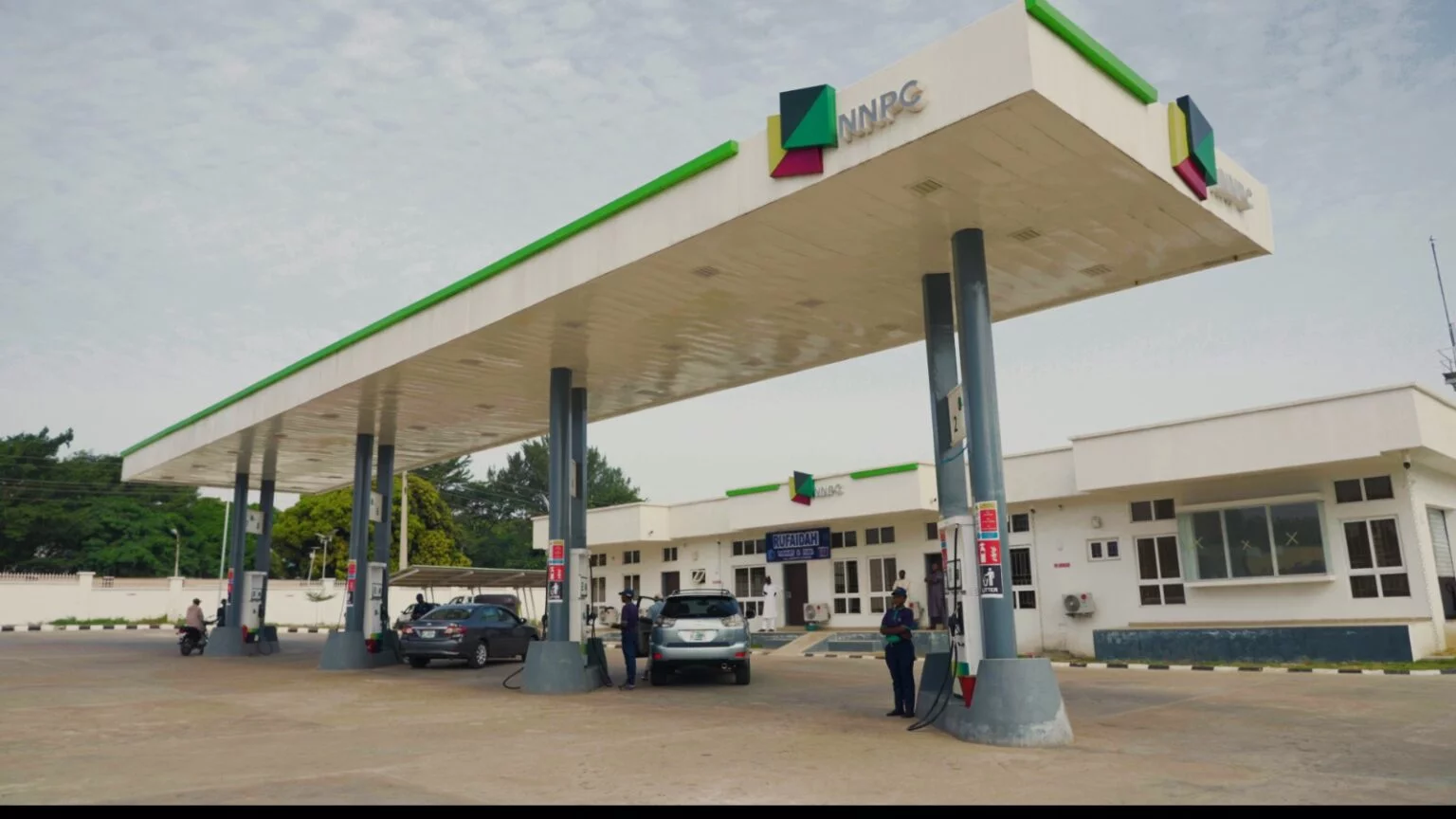
The Nigerian National Petroleum Company Ltd. (NNPC Ltd.) recorded N7.2 trillion Profit After Tax (PAT) in 2025, a 33 per cent increase from N5.4 trillion.
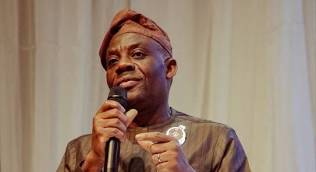
Group Chief Executive Officer, Bayo Ojulari, disclosed this on Tuesday in Abuja at a media briefing after the company’s AGM and second Earnings Call.
Revenue declined to N34.
5 trillion from N45.1 trillion in 2024.Ojulari attributed the 24 per cent revenue decline to lower crude oil prices and reduced product volumes following market deregulation.
He said earnings per share rose to N35.
90 from N27.07, while return on equity improved by 200 basis points to 16 per cent.The company’s declared dividend increased by 35 per cent to N5.8 trillion, while taxes, royalties and other government remittances rose 39 per cent to N22.3 trillion.
“Stronger earnings in spite of this pressure demonstrate the resilience of NNPC Limited’s operations,” Ojulari said.
He said profit grew because NNPC had improved its operations and maintained discipline across its businesses.
Ojulari said crude oil and condensate production reached a five-year peak of 1.77 million barrels per day.
He added that gas supply reached a three-year high of 7.2 billion standard cubic feet per day.
“Stronger performance gives NNPC Limited more capacity to invest, contribute to public revenue and strengthen Nigeria’s energy security,” he said.
On infrastructure, Ojulari said the mainline of the Ajaokuta-Kaduna-Kano gas pipeline had been completed.
He said work was ongoing on tie-ins to delivery points, beginning with Abuja, followed by Ajaokuta and Kaduna.
According to him, the next milestone is to commence gas flow through the pipeline to industries and power plants.
Ojulari said the company completed the Obiafu-Obrikom-Oben (OB3) gas pipeline in 2026 after several years of challenges.
On the refineries, he said prospective partners under NNPC’s technical equity partnership model had conducted a three-month onsite review.
He said more than 34 engineers participated in the review, adding that NNPC was now concluding the report.
Ojulari said the company was targeting self-sustaining and profitable refineries, with a pathway expected to be defined soon.
He reaffirmed NNPC’s target of producing two million barrels of crude oil daily by 2027 and three million barrels by 2030.
He said gas production targets were 10 billion cubic feet per day by 2027 and 12 billion by 2030.
“NNPC plans to mobilise over 60 billion dollars of investment across the energy value chain,” he added.
Ojulari said more than 1,000 newly recruited professionals joined NNPC in 2025 under its Talent to Value programme.
He said the recruits completed a one-year internship and training programme before being deployed across the company. (NAN)
The Federal Competition and Consumer Protection Commission (FCCPC) says there is a need for sustained capacity building in competition reporting and issues.
The Executive Vice Chairman of FCCPC, Tunji Bello, said this in a statement made available to the News Agency of Nigeria (NAN) in Abuja on Sunday.
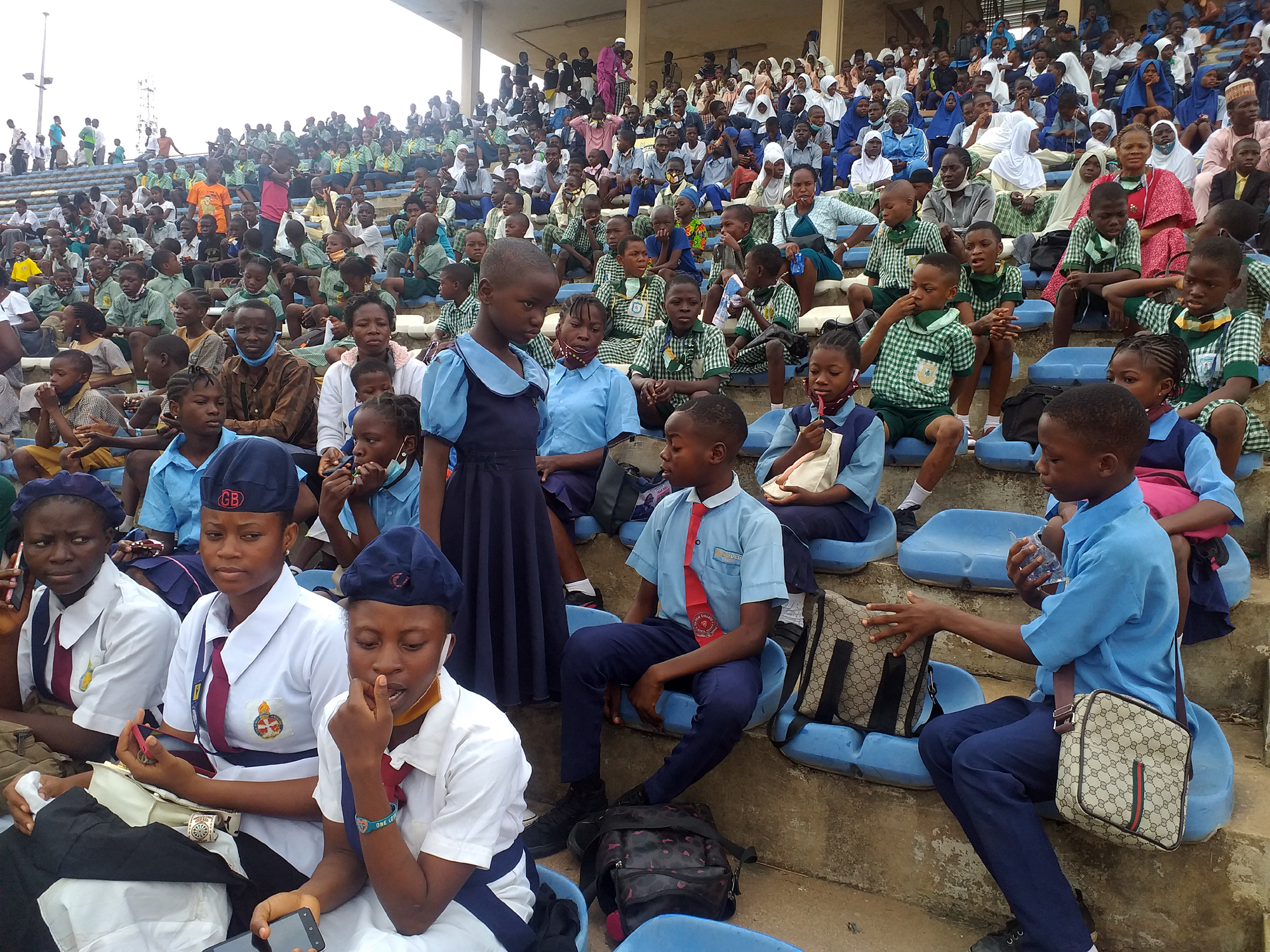
Bello described competition matters as a relatively new area in the country adding that it required specialised knowledge among journalists, regulators and other stakeholders.
He said that competition law and consumer protection regulations had made stakeholders’ education a priority for the commission.
Bello said that the FCCPC recently supported the training of judges through the National Judicial Institute (NJI) to deepen understanding of competition-related matters.
He noted that members of the judiciary also required exposure to the nuances of the emerging field.
“We recognised that because it is a new terrain, the judges themselves are not familiar with the nuances.
”So we brought in experts on competition,” he said.
Bello stressed that the media had a critical role in promoting public understanding of competition and consumer protection issues.
“If FCCPC is becoming more known to the public, it is as a result of the kind of publicity you have given us,” he said. (NAN)

Fire gutted the Nigeria Customs Service (NCS) Western Marine Command office in Apapa, Lagos, on Monday, destroying property worth millions of Naira.
The fire, which reportedly started at about 10:23 a.m. from an electrical surge in the conference room, spread to other sections of the building.
Officers on duty made frantic efforts to contain the fire before officials of the Lagos State Fire and Rescue Service arrived at about 10:45 a.
m.The Deputy Comptroller of Customs, Timothy Jonah, who just resumed at the Command, to take over the affairs from his predecessor, described the incident as unfortunate.
He said: “I just resumed duty to take over, only to witness this fire outbreak.
“Every challenge, though negative, is an opportunity to strengthen our operations.
“In the meantime, we will set up a committee to investigate the cause of the fire.”
He commended the swift response of the personnel on duty and their collaboration with the fire service, saying measures would be taken to strengthen safety protocols and prevent a recurrence. (NAN)



Atiku Abubakar: Perhaps it is Time to Give Him a Fair Hearing
ShareBy Ishaya Inuwa Durkwa There comes a time when a people must decide whether yesterday’s grievances will continue to determine...


Zamfara at 30: At Last, Zamfara Has Begun to Fly
ShareBy Suleman Ahmad Tudu On October 1, 1996, Zamfara State was carved out of the old Sokoto State by the...

FG Moves to Automate Teachers’ Awards, Ends Manual Selection Process
ShareBy Tony Obiechina, Abuja The federal government has digitalised the selection process for the 2026 President’s Teachers’ and Schools’ Excellence Awards (PTSEA),...

Utsev Leads Nigerian Delegation to World Water Congress in Glasgow
ShareBy David Torough, Abuja Minister of Water Resources and Sanitation, Engr. Prof. Joseph Terlumun Utsev, will on Saturday, October 3,...


BBNaija Season 11: Keivo Becomes Second Housemate to be Disqualified
ShareKeivo has become the second Big Brother Naija housemate to be disqualified from Season 11. This follows his physical altercation...

Mofe-Damijo Envisions Bright Future for Nigeria at 66
ShareVeteran actor and public speaker, Richard Mofe-Damijo, has expressed optimism about Nigeria’s future, describing the country as a work in...


My Wife Paid $20k for Her Surgery Herself, Peller Fires Back at Carter Efe
ShareNigerian content creator and streamer, Peller, has fired back at Carter Efe after the streamer compared their relationships while praising...


I Didn’t Want to be in the Spotlight – Tems
ShareGrammy-winning Nigerian singer Temilade Openiyi, popularly known as Tems, has revealed that despite wanting musical success, she was uncomfortable with...
Nigeria at 66: Which Way Nigeria?
ShareBy Tochukwu Jimo Obi Sixty six years after independence, Nigeria should be asking itself a question that can no longer...

Nigeria at 66: Booming Banks, Struggling Nation, Where Is the Promised Prosperity?
ShareBy Blaise Udunze As Nigeria celebrates 66 years of independence, it must ask whether the country has delivered the prosperity...