
NEWS
State Police, a Critical Intervention in Banditry, Kidnapping – Igboke

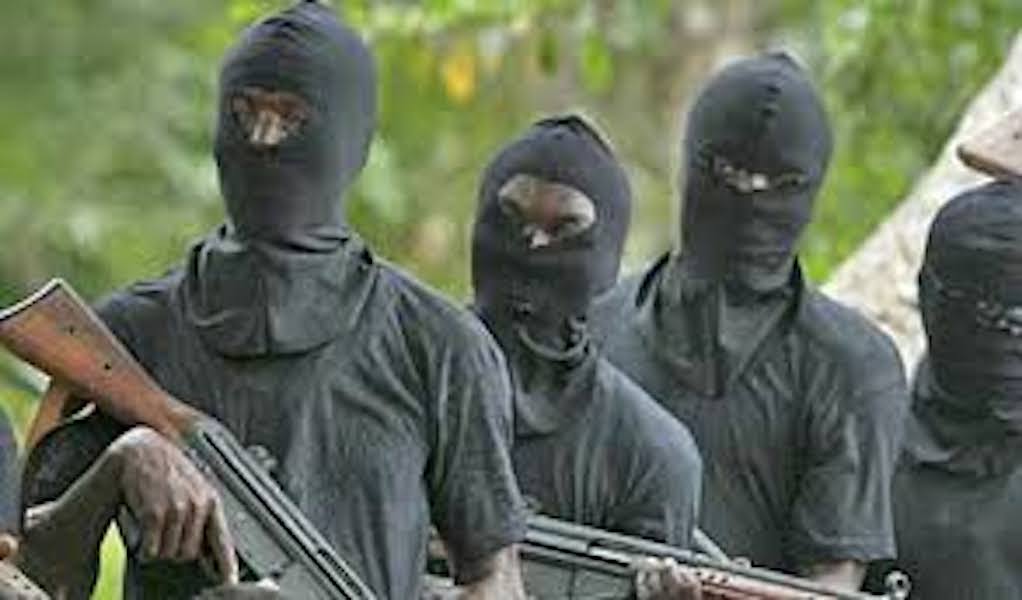
Mr Ambrose Igboke, a public affairs and social analyst, has said state policing is a critical intervention for security challenges currently bedeviling the country.
Igboke said this on Saturday in Abuja while reacting to President Bola Tinubu and State governors agreement on establishment of state police to curb the nation’s security challenge.
The analyst who said that constitutionally, state governors were the chief security officers, however, noted that they were not in charge of any security apparatus.
According to him, based on that, when crime happened, nobody was actually held responsible “because you transfer somebody from Borno State as Police DPO in charge of Nsukka in Enugu and what does he know”.
He described this as a disconnect with police architecture and crime threat in the country.
“Every crime is local and policing is not local that is already a paradox that cannot be allowed to stand, where a central police command is ruling a population of over 200 million people is not going to be sustainable.
“Centralised policing as currently practised in Nigeria is no more effective in tackling modern insecurity trends. All crimes are local, so the solutions to crimes should be local.
“The governor is the Chief Security Officer of the state but does not control any security agency. This is an aberration that will be corrected with state police.
“As an elected public officer, the governor is accountable to his people and will be held liable for security breaches if only he/she is in charge of policing in the state.”
Igboke said every elected governor was responsible to the citizens, being the chief security officer, according to the constitution, and should be liable for any crime committed within his vicinity.
“This time around, governor cannot be held accountable because he is not in charge of the Commissioner of Police, Director of DSS and Civil Defence Commander, so he is handicapped in security matters concerning the state.
” So, a state governor should not be left incapacitated like that in a modern society; he should have some form of control, especially when the constitution has said that he is the chief security officer of the state.
“He should truly be the chief security officer of the state so that crime can be nipped in the bud; insecurities can be tackled locally because every crime is local.
“Before an outsider comes to commit a crime in a place, it means there are some collaborators within and only the collaborators know the outsider. “
On the abuse of such power by state governors, he advised that the law establishing state police should take into consideration measures of controlling unwholesome behaviours by governors. (NAN)
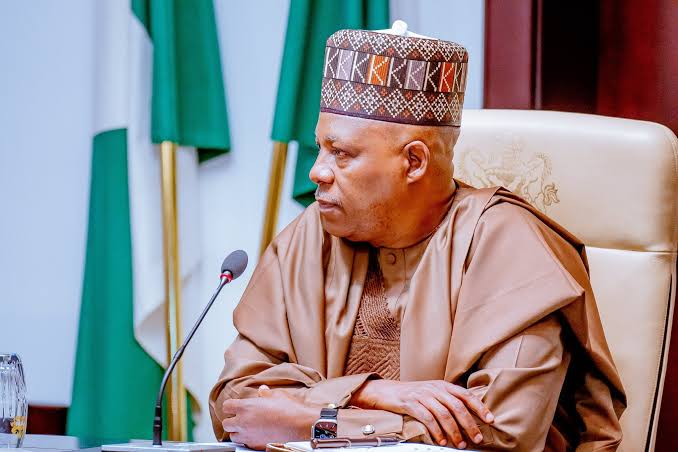
President Bola Tinubu said recent reforms in Nigeria’s oil and gas sector are designed to unlock up to 50 billion dollars in new deep offshore investments.
Tinubu, who was represented by Vice-President Kashim Shettima, said this on Tuesday in Abuja at the fifth anniversary of the Nigerian Upstream Petroleum Regulatory Commission (NUPRC), established under the Petroleum Industry Act (PIA) 2021.
The President said the Deep Offshore Oil and Gas Projects Incentive Tax Order 2026 had replaced uncertainty with clear and published investment criteria.
“The order replaces that uncertainty with clear, published criteria and requires projects to be executed in Nigeria wherever applicable.
“It is designed to unlock up to 50 billion dollars in new investment, beginning with the Bonga South-West project.
“The message to the world is simple: Nigeria is open for long-term investment and the terms are clear,” Tinubu said.
He said the measure was particularly important because some of Nigeria’s largest oil prospects were located deep offshore but had remained undeveloped for years.
According to him, the incentive is expected to unlock as much as 50 billion dollars in new investment, beginning with the Bonga South-West project.
Tinubu said the development reinforced the Federal Government’s message that Nigeria was open to long-term investment and committed to providing clear and predictable terms.
He said the PIA had provided a strong foundation for investment by establishing clear rules, a predictable regulatory framework and mechanisms for greater participation of host communities.
The President said Nigeria had also recorded progress in restoring security in oil-producing areas, attracting investors and improving upstream investment opportunities through open and competitive processes.
He said investors who previously looked elsewhere were returning to Nigeria, which had become Africa’s leading destination for upstream investment for two consecutive years.
Tinubu also highlighted the Host Communities Development Trusts, saying more than 170 host-community trusts had been funded to support projects in education, healthcare and other areas.
He said the development of host communities was particularly significant because sustainable peace in oil-producing areas depended on fairness, inclusion and shared benefits.
The President said the administration was determined to use petroleum resources to support a broader economy driven by agriculture, manufacturing, digital and creative industries.
He said the oil and gas sector would continue to provide gas for power, industries and factories while creating opportunities for Nigerian engineers, fabricators and indigenous service companies.
He said policy reforms would only deliver results when effectively implemented, placing a major responsibility on NUPRC to ensure predictable, transparent and reliable regulatory processes.
Tinubu charged the commission to work closely with sister agencies to ensure investors were not subjected to conflicting requirements or unnecessary delays.
He also urged operators to comply with their work programmes, local-content obligations, environmental standards and commitments to host communities in return for government incentives.
The President said the government would uphold the rule of law, sanctity of contracts and accountability as key pillars for sustaining investor confidence in the sector.
He said the administration would also pursue an energy transition strategy suited to Nigeria’s needs, with greater gas supply for power, industry and clean cooking, alongside expansion of renewable energy.
Tinubu congratulated the NUPRC on its fifth anniversary, urging its management and staff to sustain the commitment, integrity and sense of purpose required to consolidate gains in the upstream sector. (NAN)
From Joseph Amedu, Lokoja
Kogi State Governor, Ahmed Ododo has commiserated with the families of the Nigerian Air Force personnel who lost their lives in the tragic aircraft crash in the Igbokoda area of Ondo State.
The condolence message signed by Special Adviser on Media to the Governor, Ismaila Isah, was made available to DAILY ASSET on Tuesday.
Governor Ododo also extended his condolences to President Bola Tinubu, the Chief of Air Staff, Air Marshal Sunday Kelvin Aneke, and the Nigerian Armed Forces over the painful loss.
The Governor described the incident as a sad moment for the nation, particularly the Nigerian Air Force, whose personnel continue to make sacrifices in combating insecurity on different fronts of military operations across the country and in the service of the nation.
GovernmentGovernor Ododo also commended the Nigerian Air Force, the Ondo State Government, federal and state emergency services and other first responders for their swift response following the incident.
He assured families of the fallen officers of the Nigeria Airforce, President Tinubu and the Nigerian Armed Forces of the solidarity and prayers of the Government and people of Kogi State at this difficult time.
He prayed for the repose of the souls of the departed and asked Almighty God to grant their families, colleagues and loved ones the strength and fortitude to bear the loss.
From Francis Sadhere, Delta
The Warri, Uvwie and Environs Special Area Development Agency (WUEDA) has urged journalists to strengthen investigative and verification practices in their reportage to prevent misinformation and promote sustainable development in Warri, Uvwie and adjoining communities.
The Director General of WUEDA, Hon.
Prince Okakuro Godwin Eguriase Ejinyere, gave the charge on Monday when the newly inaugurated executives of the Warri Correspondents Chapel of the Nigeria Union of Journalists (NUJ) paid a courtesy visit to the agency at its headquarters within the Delta State Development and Property Authority (DDPA), Effurun.Ejinyere said journalists had a critical responsibility to verify allegations and facts before publication, noting that inaccurate reports could mislead members of the public, damage the reputation of institutions and undermine confidence in government programmes.
He called on members of the Correspondents Chapel to see themselves as partners in development while maintaining the independence and ethical standards of the journalism profession.
According to him, journalists should go beyond reporting announcements by examining government projects, their objectives, implementation challenges and the extent to which they are improving the lives of residents.
The WUEDA boss said the agency was committed to executing quality infrastructure projects in accordance with approved engineering specifications, assuring that contractors engaged by the agency would be properly supervised to ensure compliance with required standards.
He said WUEDA’s interventions in drainage construction, road development and other infrastructure were designed to address some of the critical challenges confronting residents of Warri, Uvwie and their environs.
Ejinyere also reaffirmed the commitment of Governor Sheriff Oborevwori’s administration to restoring the lost glory of Warri and its adjoining areas, saying WUEDA’s interventions formed part of the broader effort to tackle infrastructural deficits in the Oil City.
Earlier, the Chairman of the Warri Correspondents Chapel, Comrade Akpokona Omafuaire, said the visit was aimed at formally introducing the new executive to the WUEDA management and strengthening the relationship between the media and the agency.
Omafuaire said the chapel would give professional attention to WUEDA’s activities, particularly its intervention projects, while ensuring that such reportage remained objective and guided by journalistic ethics.
He described WUEDA as a performing interventionist agency whose activities had become increasingly visible across Warri, Uvwie and neighbouring communities.
The former Chairman of the Delta State Council of the NUJ, Comrade Michael Ikogwu, commended Ejinyere and his team of engineers for their efforts, but stressed the need for sustained monitoring and supervision of projects to ensure contractors delivered quality work and value for public funds.
Similarly, the immediate past Chairman of the Warri Correspondents Chapel, Comrade Okakuro Okies Victor Okpomor, urged WUEDA to maintain close supervision of its ongoing projects to guarantee their quality and durability.
The visit was also attended by the Vice Chairman of the Chapel, Comrade Francis Sadhere; Secretary, Comrade Edeki Igafe; Assistant Secretary, Comrade Samuel Ogude; Treasurer, Comrade Onyekachukwu Menuwa; Financial Secretary, Comrade Success Okuchemiya; and Auditor, Comrade Odeya Ogbetuo.
Also present were the immediate past Chairman of the Chapel, Okies Victor Okpomor, and former Delta NUJ Chairman, Michael Ikogwu.
WUEDA’s Director of Administration and Finance, Ochuko Mofe-Ojeke, and Chief Accountant, Mrs. Roseline Okorigba, were among the management officials present.
The engagement highlighted the need for closer interaction between development agencies and the media, particularly as government interventions increasingly attract public attention.
While WUEDA requires effective communication of its projects and achievements, the media also has a responsibility to independently assess the quality, impact and challenges associated with such interventions.
For residents, the value of such a relationship lies not merely in publicity but in ensuring that accurate information is available about projects that directly affect their communities.
The engagement therefore provides an opportunity for WUEDA and the media to maintain an open channel through which facts can be obtained, concerns can be raised and shortcomings identified without compromising the independence of journalists.
At a time when unverified claims can spread rapidly through social media, Ejinyere’s call for proper verification also underscores the need for journalists to rely on facts and credible sources before publishing reports capable of shaping public opinion.
The partnership, if sustained on the basis of transparency and professional independence, could strengthen development reporting in Warri and its environs while ensuring that government interventions receive both the publicity and scrutiny required to deliver lasting benefits to the people



Nigeria’s Oil Reforms will Unlock $50bn Deep Offshore Investments – Tinubu
SharePresident Bola Tinubu said recent reforms in Nigeria’s oil and gas sector are designed to unlock up to 50 billion...
Ododo Condoles Families of NAF Personnel, Armed Forces Over Ondo Crash
ShareFrom Joseph Amedu, Lokoja Kogi State Governor, Ahmed Ododo has commiserated with the families of the Nigerian Air Force personnel...
WUEDA Tasks Journalists on Verification, Development Reporting
ShareFrom Francis Sadhere, Delta The Warri, Uvwie and Environs Special Area Development Agency (WUEDA) has urged journalists to strengthen investigative...
Dauda Joins FG’s Delegation for Nigeria- Ethiopia Leadership Exchange, Learning Visit
ShareFrom Ifeanyichukwu Nwannah, Gusau President Bola Tinubu has approved a high-level Nigerian delegation to Addis Ababa for a leadership exchange...
Civic Education Vital for Future Leaders – Ekiti Commissioner
ShareThe Ekiti State Government said on Tuesday that exposing students to civic education played a vital role in preparing them...
DSIRS Threatens Prosecution of Fake Tax Collectors, Warns Taxpayers
ShareFrom Francis Sadhere, Delta The Delta State Internal Revenue Service (DSIRS) has warned individuals and groups issuing fake tax demand...
Alabere Urges Corps Members to Preserve Yoruba Culture, Uphold Good Character
ShareFrom Ayinde Akintade, Osogbo A revered traditional ruler in Osun State, the Alabere of Abereland, Oba Obafemi Adelakin Mutalib Abiade...
Nigeria Since 1999: When will the Years Begin to Count?
ShareBy Dakuku Peterside Think of a Nigerian born in 1999, the year civilian rule came back. That person is twenty-seven...

Tinubu’s Return: An Update
ShareBy Reuben Abati Exactly a week ago, President Bola Ahmed Tinubu, now jokingly renamed a citizen of Kano with a...

NDLEA Seizes over 10 Tonnes of Illicit Drugs, Recover Firearms in Kogi
ShareBy Elijah Oguche, Abuja The National Drug Law Enforcement Agency (NDLEA) in Kogi said it has seized more than 10...