
OPINION
Strengthening AU Frameworks to Deepen Cooperation among Member States


By Fortune Abang
At a time when Africa is confronting complex development, governance and security challenges, Ministers of Foreign Affairs from across the African Union (AU) have called for renewed commitment to strengthening the organisation’s institutional frameworks.
They emphasised that a more sustainable, united and responsive Union is essential to addressing the continent’s evolving priorities through shared responsibility and deeper cooperation.
This position formed the centrepiece of deliberations at the 48th Ordinary Session of the AU Executive Council, held in Addis Ababa, Ethiopia, from Feb. 11 to Feb. 12, 2026.
As one of the AU’s principal policy organs, the AU Executive Council; comprising foreign ministers and designated representatives of member states, provides a strategic platform for aligning continental policies with Africa’s long-term aspirations.
Against this backdrop, the session underscored the Union’s continued resolve to strengthen continental governance, advance peace and security, and accelerate implementation of Africa’s shared development blueprint under Agenda 2063.
With the theme, “Assuring sustainable water availability and safe sanitation systems to achieve the goals of Agenda 2063,” discussions placed water security and sanitation firmly at the centre of Africa’s socio-economic transformation.
In practical terms, ministers reviewed the report of the Permanent Representatives Committee (PRC), examined AU participation in the G20, and considered elections, legal instruments and institutional governance reforms.
While acknowledging progress recorded in 2025, delegates nevertheless stressed that deeper coordination would be required to consolidate achievements, especially in advancing regional integration through the African Continental Free Trade Area (AfCFTA).
Furthermore, participants observed that although previous Executive Council resolutions had largely been implemented, the current session must lay solid foundations for subsequent stages of collective continental action.
Opening the meeting, Angola’s Foreign Minister and Chair of Council, Tete Antonio said the gathering was a defining moment not only to assess progress, but also to project the future of the Union.
He said: “During this 48th Ordinary Session, the Council will consider key agenda items, examine the reports of the 51st Ordinary Session of the Permanent Representatives’ Committee and the participation of the AU in the G20, reflecting on the strategic positioning of our continent in global governance fora.
“We reaffirm firm commitment to strengthening the institutional framework of the Organisation and to building a more sustainable, united, and responsive African Union capable of addressing the continent’s priorities, in a spirit of shared responsibility and cooperation among Member States.
“In this context, I call for the active engagement, constructive collaboration, and sense of responsibility of all Member States to ensure the smooth conduct of our work and the fulfilment of the tasks entrusted to us”.
He therefore highlighted structural reform, strengthened multilateral engagement, and sustained peace and security efforts as essential pathways towards realising the aspirations of Agenda 2063; popularly framed as “The Africa We Want.”
In addition, António referenced mediation and facilitation roles assigned to regional leaders, including Évariste Ndayishimiye and Faure Gnassingbé, as part of AU efforts to stabilise conflict-affected regions.
Similarly, Ethiopia’s Foreign Minister, Gedion Timothewos, warned that unconstitutional changes of government and weakening multilateral cooperation continue to threaten Africa’s normative foundations.
“African unity must be real and the African Union must be strong if we are to defend our continent from predatory moves that might come from all corners.
“What we need is not mere charity or goodwill of others, but true partnership, and that more than anything requires true strength which emanates from unity.
“Therefore, I hope that this session of the Executive Council will contribute to bolstering our unity and revitalising our commitment to our shared objectives,” he said.
From a development perspective, the Chairperson of the AU Commission, Mahmoud Youssouf, linked the session’s sanitation theme directly to climate resilience, noting that water must be treated as a shared continental asset and a catalyst for peace.
“In the face of observed climate disruptions, the prudent use of water in all aspects of daily life is a major imperative.
“This vital resource must be perceived as a collective good to be preserved at all costs and as a vector for bringing our States closer together and for peace,” he added.
Supporting this position, the Executive Secretary of the United Nations Economic Commission for Africa, Claver Gatete, highlighted the need for coordinated economic strategies to sustain environmental and development gains.
Meanwhile, Nigeria’s Foreign Affairs Minister, Yusuf Tuggar, called for stricter fiscal discipline, institutional accountability and timely implementation of audit recommendations across AU organs.
According to him, expanding personnel without measurable output risks weakening institutional efficiency.
He expressed concern over procurement irregularities and slow recovery of advances, urging clear timelines to implement outstanding audit decisions.
Taken together, interventions by member states reiterated the importance of African ownership of African solutions, anchored on constitutional order, peace and sovereignty.
They also renewed demands for fairer representation in global governance, including reform of the United Nations Security Council, stronger influence in international economic decision-making, and equitable access to climate finance and debt relief mechanisms.
In addition, greater participation in global health governance, especially during public health crises, was identified as essential to safeguarding Africa’s interests.
Ultimately, deliberations at the 48th Executive Council session reflected a shared recognition that institutional strength, financial accountability and collective action will determine the AU’s ability to respond effectively to contemporary challenges.
As Africa navigates geopolitical uncertainty, climate pressures and development demands, ministers agreed that deeper cooperation among member states remains the surest path to a resilient and self-reliant continent. (NAN)

By Daniel Nduka Okonkwo
This may sound like science fiction, but it is the reality of modern warfare, not a scene from a James Cameron movie set. The future of military conflict is increasingly defined by artificial intelligence, and Africa must recognize and adapt to this shift.
The U.S. military already understands the strategic importance of integrating AI into its operations. Warfare is no longer limited to traditional tactical assaults; it is evolving into a domain where AI-driven systems enhance decision-making, intelligence gathering, logistics, and even autonomous defense mechanisms. Nations that fail to embrace this transformation risk being left behind in the next era of global security.Just under five percent of global artificial intelligence researchers are based in Africa. This stark statistic raises an urgent question: does the continent fully grasp the magnitude of the artificial intelligence revolution, and is it prepared not merely to consume AI but to shape and profit from it?
Artificial intelligence, broadly defined as computer systems designed to simulate human intelligence, is transforming the global economy. From predictive maintenance in manufacturing to automated customer service and intelligent supply chains, AI is already embedded in daily life and industry. It powers autonomous vehicles, optimizes traffic management, and enables faster, more accurate decision-making. In countries like China, intelligent traffic systems already regulate road networks, demonstrating how AI can reshape national infrastructure.
Yet the central question remains: where is Africa in this transformation?
Africa is not absent from AI innovation. Rather, it occupies a complex position, emerging as an innovator while largely remaining a consumer of finished technologies developed elsewhere. Despite accounting for a significant share of the world’s population, the continent hosts less than one percent of global data centers and AI research infrastructure.
More than sixteen African countries, including Kenya, Nigeria, and South Africa, have begun developing national AI strategies. At the continental level, the African Union has identified artificial intelligence as a strategic priority, emphasizing homegrown innovation, ethical governance, and locally relevant applications.
However, policy ambitions often collide with practical constraints. Limited electricity supply, insufficient data infrastructure, weak internet connectivity, and shortages of specialized skills continue to slow progress.
As a result, many African AI startups rely heavily on foreign venture capital, raising difficult questions about ownership, sovereignty, and who ultimately profits from African innovation.
Despite these challenges, AI presents Africa with a rare opportunity to redefine its role in the global economy.
For decades, African economies have depended heavily on exporting raw materials. Artificial intelligence offers a pathway to shift from raw material dependency to exporting high-value digital solutions.
African-developed AI tools in fintech, agritech, healthcare, and education can address local challenges while also serving global markets, particularly other emerging economies facing similar constraints.
Mobile-first financial systems provide one of the clearest examples. Kenya’s M-PESA platform demonstrated how African innovation can transform financial inclusion and inspire global adoption. Similarly, drone delivery systems pioneered in Rwanda have proven that African solutions can lead in cutting-edge logistics.
In Cameroon, local companies are developing AI tools to help small businesses improve logistics, build websites, and manage customer data. These solutions enhance competitiveness and demonstrate the export potential of African technology.
Artificial intelligence could also revolutionize agriculture, healthcare, and education across the continent. AI-powered tools can help farmers predict weather patterns, assist doctors in diagnosing diseases earlier, and expand access to quality education through adaptive learning platforms.
Nigeria, Africa’s largest economy and most populous country, stands at a decisive moment in this transformation.
The government has launched a national AI strategy aimed at guiding responsible development and positioning the country for leadership. Institutions such as the National Information Technology Development Agency and the National Centre for Artificial Intelligence and Robotics are actively funding research and supporting startups.
Nigeria’s Artificial Intelligence Research Scheme has already provided grants to dozens of research teams, while talent development initiatives such as the Three Million Technical Talent program aim to prepare a new generation of engineers and innovators.
These efforts represent an encouraging beginning. However, the ultimate measure of success will not be the number of programs launched but the real-world impact of Nigerian-developed AI solutions.
The goal must be clear: solve Nigerian problems first, then export those solutions globally.
Other emerging economies are moving aggressively. Countries such as India, Pakistan, the United Arab Emirates, Indonesia, Vietnam, Chile, and Colombia are investing heavily in AI ecosystems tailored to their national needs.
These countries are not waiting to import solutions. They are building their own.
Africa must do the same. Artificial intelligence offers Africa more than efficiency gains. It offers economic sovereignty.
Developing localized language models, mobile-first digital services, and AI-powered agricultural technologies can generate export revenue, create high-quality jobs, and reduce brain drain.
Young Africans are already engaging with AI tools, building startups, and contributing to the global digital economy. What remains is the scaling of these efforts through sustained investment, infrastructure development, and supportive policies.
The continent can remain primarily a consumer and patron of foreign technologies, or it can become a creator and exporter of the technologies that will define the future.
Artificial intelligence is not a distant possibility. It is the defining economic force of the present.
Africa’s future in the AI age will depend on whether it chooses merely to participate or to lead.
Daniel Nduka Okonkwo is a Nigerian investigative journalist, publisher of Profiles International Human Rights Advocate, and policy analyst whose work focuses on governance, institutional accountability, and political power. He is also a human rights activist and advocate. His reporting and analysis have appeared in Sahara Reporters, African Defence Forum, Daily Intel Newspapers, Opinion Nigeria, African Angle, and other international media platforms. He writes from Nigeria and can be reached at dan.okonkwo.73@gmail.com.
By Thomas Joseph
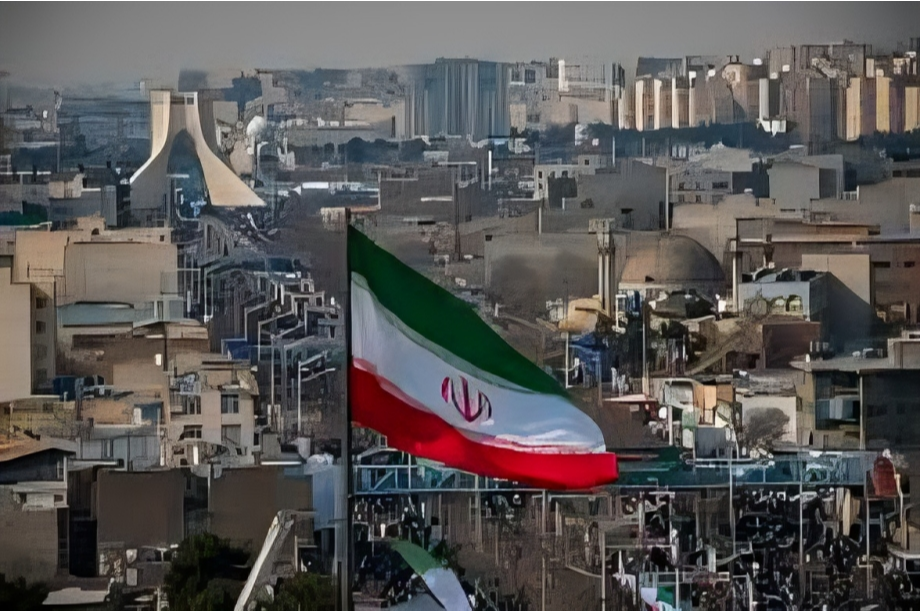
In the first days of January 2026, while much of the world was still nursing the warmth of the New Year, the Iranian government opened fire on its own citizens. Not in skirmishes. Not in targeted operations. In massacres. In cities like Rasht, Fardis, Kuhdasht and dozens of others, security forces deployed automatic weapons against crowds of protesters – ordinary men, women and children who had taken to the streets over a collapsing economy, crushing inflation and decades of suffocating repression.
The internet was cut. Phone lines were severed. And then the killing began in earnest.The numbers, even at their most conservative, are staggering.
Estimates from multiple credible sources, including Human Rights Watch, Iran International and internal Islamic Republic documents, put the death toll from January 8 and 9 alone at anywhere between 12,000 and 36,500. Families were forced to pay for the bullets used to kill their loved ones before they could collect the bodies. Wounded protesters were reportedly shot in the head while lying in hospital beds. The internet blackout was not a byproduct of chaos; it was a deliberate calculated act to kill in darkness, beyond the reach of the world’s conscience.This is not a regional matter. It is a crime against humanity. The rest of the world including Nigeria and Europe must say so, loudly and act accordingly.
Nigerians know what it means to watch a government turn weapons meant to protect citizens against them. We carry the memory of Lekki. We know how quickly “security operations” become a cover for slaughter and how swiftly the international community can look away when the victims are brown and poor and far from the cameras of the powerful. That shared wound gives us both the empathy and the moral authority to speak clearly about Iran: what is happening there is a massacre and silence from the global south serves as permission.
Nigeria is a signatory to the United Nations Charter and to the African Charter on Human and Peoples’ Rights. These are not merely ceremonial commitments. They bind us to the principle that sovereignty is not a shield behind which governments may slaughter citizens without consequence. The African Union, for all its institutional caution, has invoked the Responsibility to Protect in the past. Nigeria, as the continent’s most populous nation and a rotating voice in international forums, must press for Iran to face an emergency session of the UN Human Rights Council. Our diplomats should be on the phones. Our foreign minister should be at the podium.
Europe, for its part, has the leverage and the obligation to do more than issue carefully worded statements of “deep concern”. The European Union maintains trade relationships, diplomatic ties and financial instruments that can be directed toward accountability. Individual European governments should immediately invoke universal jurisdiction principles to begin building legal cases against Iranian officials responsible for ordering the massacres. Germany and France have used such mechanisms before. The evidence: leaked IRGC documents, verified videos, witness testimony etc already exists in abundance. The question is whether the political will to act matches the moral clarity of the moment.
The UN Security Council must convene urgently. Yes, Russia and China will likely obstruct – they always do when accountability threatens the model of governance they themselves practice. But the General Assembly has passed emergency resolutions before. The Human Rights Council has established fact-finding missions before. The International Criminal Court, with sufficient state referrals, has jurisdiction. These tools exist. What is missing is collective courage.
The Iranian people – Lur, Kurd, Persian, Arab and every ethnicity represented in those streets, did not ask to die. They asked for bread, for dignity, for a government that does not treat them as enemies to be exterminated. Their names are being counted, body by body, despite every effort by Tehran to bury them in silence.
History does not remember bystanders kindly. Rwanda taught us what the world pays when it watches and waits. Bosnia taught us. Darfur taught us. Iran is teaching us again and the lesson this time must be different. The world has both the responsibility and the tools to protect the Iranian people. What it requires now is the will to use them.
Thomas Joseph is a freelance writer, he writes on human rights and international affairs.
By Sylvester Thompson
With the aim of boosting productivity and fostering inclusive growth, Nigeria is increasingly anchoring its economic reform agenda on science, technology, and innovation.
Across agriculture, healthcare, manufacturing, education and the digital economy, government agencies and indigenous research institutions are deploying scientific solutions to improve livelihoods and strengthen economic resilience.
To foster economic diversification, President Bola Tinubu has frequently emphasised leveraging research and digital innovation to propel Nigeria’s growth, particularly through initiatives like the 3MTT programme and the 2025 Industrial Policy.
“We must invest in knowledge, innovation and technology to build a competitive, resilient and inclusive economy.
“Nigeria’s future prosperity depends on how well we deploy science to solve our development challenges.”
In addition, Tinubu has emphasised the importance of science-backed agriculture in tackling hunger and poverty.
“Food security is national security; we must apply science, innovation and modern technology to agriculture to ensure that Nigerians have access to affordable and nutritious food,” he said.
Experts note that biotechnology research, improved crop varieties and modern farming techniques are helping to boost yields and reduce vulnerability to climate shocks.
The National Biotechnology Research and Development Agency an agency under the Federal (NBRDA), Ministry of Innovation, Science and Technology, provides insights.
According to NBRDA, biotechnology is critical to achieving food security and nutrition sustainability.
The Director-General of the NBRDA, Prof. Abdullahi Mustapha, said scientific innovation offers practical solutions to longstanding agricultural challenges.
“Biotechnology enables us to improve crop productivity, enhance nutritional value and develop resilience against pests and climate stress.
“These innovations are essential for food security and rural economic growth,” he said.
Stakeholders are also of the submission that science and technology are also central to Nigeria’s industrialisation agenda, particularly in reducing import dependence and strengthening local value chains.
According to the Raw Materials Research and Development Council (RMRDC), research-driven utilisation of indigenous raw materials is critical to repositioning Nigeria’s manufacturing sector.
At the Nigeria Manufacturing and Equipment (NME) and Nigeria Raw Materials (NIRAM) Expo in Lagos in August 2025, Prof. Nnanyelugo Ike-Muonso, Director General of the RMRDC, warned that Nigeria’s heavy reliance on imported industrial inputs was undermining economic growth.
“Nigeria has abundant raw materials, but without science-driven value addition, industrial growth will remain weak,” he said.
He said there was a need for stronger collaborations between research institutions and manufacturers.
Similarly, the National Agency for Science and Engineering Infrastructure (NASENI), says local engineering solutions and indigenous manufacturing capacity are essential for sustainable development.
At the unveiling of NASENI’s fabricated products and prototypes in Abuja in 2025, the agency’s Executive Vice Chairman, Mr Khalil Halilu, said Nigeria must prioritise home-grown technology to drive industrial growth.
“Science and Engineering infrastructure are the backbone of industralisation.
“Our mandate is to ensure that Nigerian solutions power Nigeria’s development,” he said.
Recall that Tinubu has also consistently aligned with this approach, stressing the need for value addition and innovation-driven growth.
“We cannot continue to export raw materials and import finished goods. Industrialisation, driven by innovation and local capacity, is the pathway to economic strength,” Tinubu said.
In the healthcare sector, science and technology are improving diagnostics, pharmaceutical research and disease surveillance.
Officials say investments in biotechnology and local pharmaceutical production are essential for health security and economic stability.
“Strengthening local research capacity in healthcare reduces our dependence on imports and improves resilience,” an official in the ministry said.
Nigeria’s digital economy continues to expand, driven by innovation in software development, fintech and digital services.
Technology hubs, research centres and innovation programmes are nurturing startups and creating jobs, particularly for young people.
According to sector analysts, the digital economy’s contribution to
Gross Domestic Product (GDP) is expected to grow with improved broadband penetration and digital skills development.
Experts describe the digital economy as a strategic growth sector, and that technology is a powerful driver of jobs and economic inclusion.
What’s more, science and technology are also reshaping education and skills development; hence, the emphasis on science, technology, engineering and mathematics (STEM) education is aimed at building a future-ready workforce.
The Federal Ministry of Innovation, Science and Technology acknowledges that strengthening research institutions and aligning education with industry needs remain priorities.
Uche Nnaji, the immediate past Minister of Innovation, Science and Technology, said research outcomes must translate into real economic value.
“Our goal is to ensure that science and technology deliver measurable benefits to Nigerians,” Nnaji said.
More so, education experts argue that investing in scientific skills is critical for long-term competitiveness.
Beyond the productive sectors, science and technology are improving governance through data-driven policymaking, digital public services and innovation-led reforms.
Analysts say evidence-based research enhances transparency, efficiency and service delivery.
In spite of progress, stakeholders acknowledge challenges including limited research funding, infrastructure gaps and weak linkages between academia and industry.
However, experts agree that sustained investment and policy consistency can unlock the full potential of science and technology.
“There is no alternative to innovation-led development,” Peter Essien, a technologist said.
He advised that the country must place science and technology at the heart of its development agenda to witness growth.
As Nigeria navigates complex socioeconomic challenges, science and technology are increasingly shaping solutions across key sectors of the economy.
By strengthening institutions such as NBRDA, NASENI and RMRDC, supporting innovation and aligning research with national priorities, stakeholders say Nigeria can accelerate inclusive growth and build a resilient, knowledge-driven economy.(NAN).

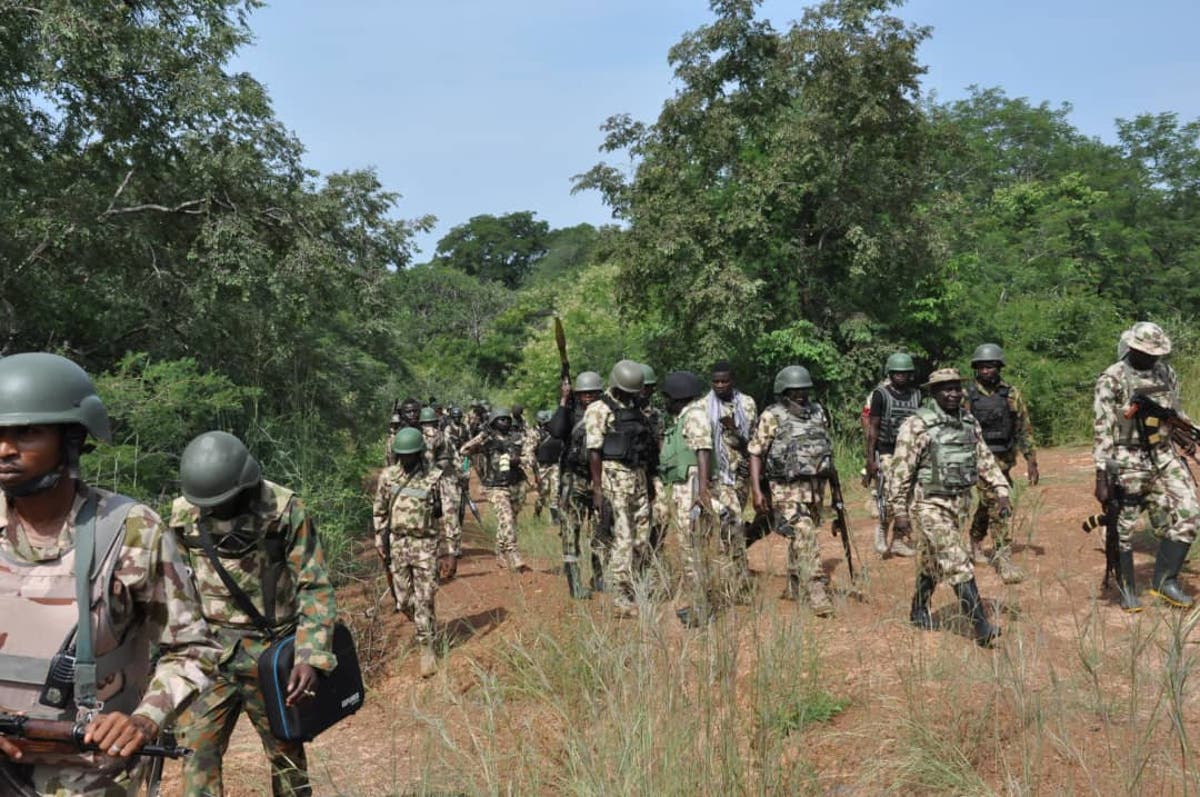
Troops Foil Suspected IPOB/ESN Kidnap Attempt, Rescue Five in Swift Night Operation
ShareBy David Torough, Abuja Troops of the Joint Task Force Southeast (JTF SE) Operation UDO KA have foiled a suspected...


New NSCDC Commandant Vows to Fight Crime in Kwara
ShareThe new Commandant, Nigeria Security and Civil Defence Corps (NSCDC) in Kwara, Bala Bodinga has pledged to fight crime in...

Olukoyede Emphasises Collaboration as Catalyst in Fight against Corruption
Share The Chairman, Economic and Financial Crimes Commission (EFCC), Ola Olukoyede, has called for closer collaboration among anti-corruption agencies in...
FOC Says Nigerian Navy Ranks 22nd Worldwide
ShareThe Flag Officer Commanding (FOC) Western Naval Command, Rear Adm. Abubakar Mustapha, has said that the Nigerian Navy has been...


Police Recover Three AK-47 Rifles, Others at Accident Scene in Niger
ShareFrom Dan Amasingha, Minna The Niger State Police Command has recovered three AK-47 rifles, six magazines and 104 rounds of ammunition following a motorcycle...

Kogi Rolls Out New Tax Rates to Boost Fiscal Reform
ShareFrom Joseph Amedu, Lokoja The Kogi State Government, in the wake of the new tax laws, has rolled out new tax rates for the State Ministries,...


Rapists Should be Castrated, Burnt Alive – Simi
ShareAfrobeats singer, Simisola Kosoko, popularly known as Simi, has sparked controversy after calling for capital punishment for rapists. Nigeria is currently in a...

Livestock Ministry Partners Military for National Food Security
ShareBy Raphael Atuu, Abuja The Federal Ministry of Livestock Development has pledged collaboration with the Nigerian Armed Forces to drive large-scale livestock production, strengthen food security,...
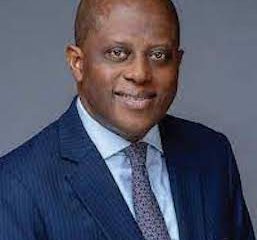

CBN Targets $1bn Diaspora Remittance Inflows – Cardoso
ShareBy Tony Obiechina, Abuja The governor of the Central Bank of Nigeria (CBN), Olayemi Cardoso said, with the diaspora remittance...

Terrorists Kill 34, Burn Villages in Kebbi Mid- day Attack
ShareBy David Torough, Abuja A wave of coordinated terror swept through parts of northwest Nigeria this week as suspected jihadist...