
NEWS
Supreme Court, NAHCON, Others Fail ICPC Integrity Scorecard

The ICPC has revealed that the Supreme Court of Nigeria, the National Hajj Commission of Nigeria (NAHCON), and 13 other agencies failed to meet the requirements of its 2024 Ethics and Integrity Compliance Scorecard (EICS).
This announcement highlights the failure of several key institutions to meet the required ethical standards and guidelines set by the ICPC for the year.
Dr Musa Aliyu, Chairman of the ICPC, made this revelation while unveiling the agency’s EICS on Thursday in Abuja.
The Chairman was represented by Demola Bakare, the ICPC Director of Public Enlightenment and Education.
Aliyu reported that 330 Ministries, Departments, and Agencies (MDAs) were assessed in the outgoing year, but none achieved full compliance with the EICS.
He emphasised that the 15 non-compliant MDAs had completely failed to conduct any system studies or submitted necessary financial and audit reports.
Aliyu said among the non-compliant agencies were the University of Ibadan (UI), Obafemi Awolowo University (OAU), Ile-Ife, Legal Aid Council, Abuja, and Federal Teaching Hospital, Gombe.
Other entities on the list, he said included the Federal Civil Service Commission (FCSC), Abuja; Council of Nigerian Mining Engineers and Geoscientists; Institute of Chartered Chemists of Nigeria; and the National Obstetrics Fistula Centre, Ningi, among others.
Aliyu warned that the ICPC would take appropriate actions, including enforcement measures, against these MDAs to ensure they complied with government directives.
In spite of the non-compliance of some agencies, the Chairman commended the Joint Admissions and Matriculation Board (JAMB) for emerging as the top performer in the EICS with a score of 89.75 per cent.
The Nigeria Railway Corporation (NRC) came second with 89.33 per cent, followed by Nigeria Bulk Electricity Trading Plc (NBET) with 88.73 per cent.
The assessment covered key indicators, including Management Culture and Structure (MCS), Governance and Executive Management, and Financial Management Systems (FMS).
It also examined Finance, Revenue, and Audit Processes, as well as Administrative Systems (AS), which included policies, ethics education, and whistle-blowing mechanisms.
The EICS serves as a preventive tool to assess and improve MDAs’ compliance with ethical standards, policies, and anti-corruption measures.
He said that the scorecard aimed to identify organisational gaps, provide actionable insights, advise the government on policy development, and foster self-evaluation within MDAs.
Aliyu further revealed that between December 2023 and December 2024, the ICPC tracked 1,500 projects across 22 states valued at N610 billion.
“During this period, the commission recovered N346 million in cash, assets worth N400 million, and helped the government save N30 billion.
“The tool covered 323 responsive MDAs, with 15 categorised as non-responsive and high-risk for corruption,” Aliyu said, noting that no MDA achieved full compliance in 2024.
He attributed these results to the absence of whistle-blower policies, strategic plans, and effective stock verification units.
He added that 29.55 per cent of MDAs achieved substantial compliance, 51.62 per cent partial compliance, 15.91 per cent poor compliance, and 2.92 per cent were non-compliant.
He said that ICPC would continue recognising MDAs with substantial compliance and deploying tools to promote integrity and accountability.
In his remarks, Jimoh Sulaiman, Head of the Constituency and Executive Projects Tracking Initiative (CEPTI), highlighted that project tracking had led to a higher completion rate for projects and increased public interest in constituency projects.
“Nigerians now understand that project funding comes from the Federal Government, not politicians’ pockets. They are demanding accountability,” Sulaiman stated. (NAN)
From Sylvia Udegbunam, Enugu
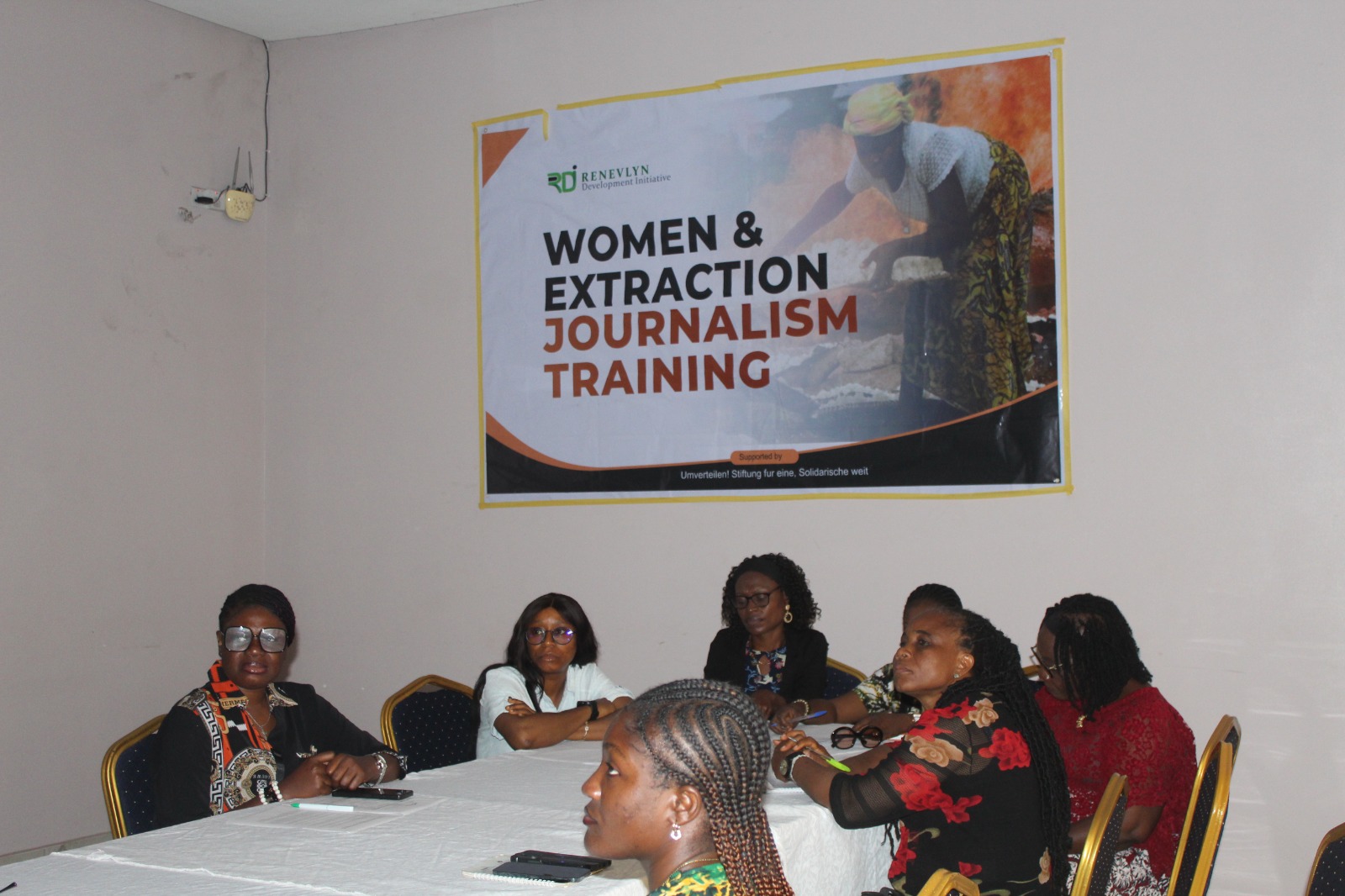
A non-governmental organisation, Renevlyn Development Initiatives, has called on women journalists in Enugu State to intensify investigative and gender-sensitive reporting on the environmental and socio-economic impacts of extractive activities on women in host communities.
The Executive Director of the organisation, Philip Jakpor, made the call during a one-day training on Agenda for Women and Extractive Journalism held at Hotel Sylvia, Independence Layout, Enugu, with the theme, “Empowering Women Journalists for Effective Reporting of Extractive Impacts in Nigeria.
”Jakpor stressed that discussions on extractive activities in Nigeria, particularly in Enugu State, would remain incomplete without addressing the devastating environmental consequences of coal mining.
He noted that women in host communities bear a disproportionate burden of mining activities because of their roles as caregivers, providers and major users of natural resources, including land and water.
He regretted that despite bearing much of the consequences of environmental degradation, women are often excluded from decision-making processes and policies concerning extractive activities in their communities.
He therefore urged female journalists to adopt gender-sensitive reporting approaches that amplify, document and adequately present the experiences of affected women.
Earlier, the Project Officer of Renevlyn Development Initiatives, Tracy Ohovwore, acknowledged the contributions of journalists in drawing attention to environmental challenges but observed that the specific experiences of women affected by extractive activities remained largely underreported.
She raised concerns over pollution in Iva Valley, Akwuke, Onyeama, Okpara and Awhum, alleging that the Ekulu and Nyaba rivers, which residents depend on for domestic water, had been contaminated by wastewater containing heavy metals, including arsenic, cadmium, lead and mercury.
Also speaking, the Executive Director of New Life Community Care Initiative (NELCCI), Mrs Florence Ifeanyi Aneke, said environmental degradation undermines community development by threatening livelihoods, food security, healthcare, education and access to clean water.
She added that pollution and land destruction could expose women to serious health risks, including reproductive health challenges, while increasing the economic hardship faced by families.
Aneke called on the Enugu State Government to harness the state’s natural resources in ways that create economic opportunities without destroying the environment or imposing further hardship on host communities.
She also advocated compensation for affected communities, particularly women and persons with disabilities, while urging the government to ensure their active participation in decisions concerning extractive activities.
In her contribution, a journalist, Ebere Ekeopara, shared her experiences growing up in a coal-mining community, highlighting poor remuneration for miners, health hazards and the impact of mining activities on women and family livelihoods.
She urged journalists to go beyond routine reporting through sustained investigative journalism that identifies environmental hazards, establishes institutional responsibilities and examines available interventions for affected communities.

By Tony Obiechina, Abuja
The Chairman of the Revenue Mobilisation, Allocation and Fiscal Commission (RMAFC), Dr. Mohammed Bello Shehu has charged Directors and Heads of Departments (HODs) to demonstrate commitment, accountability and professionalism in the discharge of their duties to ensure the successful implementation of the Performance Management System (PMS) in the Commission.
The Chairman gave the charge at the signing of Performance Contracts by Directors and Heads of Departments at the Commission’s headquarters in Abuja.
He described the exercise as more than the signing of official documents, noting that it represented a covenant of accountability and a commitment to delivering on the Commission’s strategic objectives through improved productivity and measurable results. He also noted that the initiative aligned with the Federal Government’s Renewed Hope Agenda under President Bola Tinubu, which prioritises institutional efficiency, good governance and improved service delivery.He explained that the PMS represents a deliberate shift from routine administrative activities to a result-oriented system that measures institutional and individual performance against clearly defined objectives. He noted that the Commission had recorded significant progress towards its implementation through the development of a dedicated IT platform, organisation-wide staff training, capacity building for PMS champions, management sensitisation sessions and change management initiatives.
He emphasised that the system was not designed to be punitive but to empower officers, clarify responsibilities, identify capacity gaps and promote fairness in performance assessment. He therefore urged Directors and HODs to ensure that departmental targets and key performance indicators were realistic, measurable, time-bound and aligned with the Commission’s strategic objectives.
Shehu assured staff of management’s commitment to providing the necessary support and enabling environment, while urging all officers to embrace the initiative and make accountability, professionalism and improved service delivery their guiding principles.
The Chairman of the Personnel Matters Committee (PMC) and Federal Commissioner representing Cross River State, Ntufam Eyo-Nsa Whitley, described staff as the driving force behind the success of the Commission, urging them to demonstrate discipline, diligence, emotional intelligence and dedication to their responsibilities. He encouraged officers to take the performance management exercise seriously and give their best towards achieving the Commission’s objectives.
He further urged staff to support one another, embrace the reform process and avoid attitudes that could undermine teamwork and institutional progress. Hon Ntufam called on the PMS champions to demonstrate commitment and provide guidance to their colleagues, stressing that collective responsibility, discipline and effective implementation would ensure the success of the initiative.
In his address, the Secretary to the Commission, Comrade Tosin Adeyanju, described the signing ceremony as a significant milestone in the Commission’s history, marking the transition from intention to action, planning to execution, and traditional performance evaluation to a modern, data-driven performance management system. He appreciated the Chairman’s leadership and the Commissioners’ support, while acknowledging the critical roles of Directors and HODs in driving the transformation.
He urged management staff to take ownership of their performance agreements and ensure regular engagement, feedback and monitoring to achieve the desired results. He stressed that the success of the PMS would depend not merely on signing the contracts but on the Commission’s ability to translate agreed targets into improved productivity, efficiency and measurable institutional achievements.
The Director overseeing the Administration and Human Resource Department, Alhaji Ahmed Rufai Gidado, explained that the Commission had undertaken a series of activities towards the implementation of the Performance Management System and that the signing of the performance contracts represented a major milestone in the process, marking the transition from preparatory activities to the implementation phase.
In his lecture on The Role of Performance Management in Public Sector Transformation, Mr. Nwachukwu John, Head of Economy Team Performance Management at the Office of the Head of the Civil Service of the Federation (OHCSF), commended RMAFC for the progress recorded in adopting the PMS framework. He noted that the Commission’s commitment demonstrated its readiness to embrace public service reforms and align individual responsibilities with institutional and national development objectives.
He explained that the PMS was designed to connect the responsibilities of individual officers with departmental targets, the Commission’s strategic plan and the Federal Government’s priorities. He urged Directors and HODs to ensure that performance contracts were cascaded to other levels of staff through regular engagement and feedback, emphasising that the system was a productivity tool rather than a promotion exercise.
The National Drug Law Enforcement Agency (NDLEA), Kaduna State Command, said it secured 18 convictions and arrested 130 suspects for drug-related offences in October.
The command also said it filed seven new charges and seized 2,015.
688 kilogrammes of illicit drugs and psychotropic substances during intensified operations across the state.The Command Press Officer, Assistant Superintendent of Narcotics Sani Garba, disclosed this in a statement issued on Thursday in Kaduna.
Garba said the operations, conducted under the leadership of the State Commander, Maijama’a Mohammed, also led to the dismantling of 46 drug distribution joints across the state.
He said cannabis sativa accounted for the largest quantity of substances seized, with 1,967.107 kilogrammes.
Other seizures included 42.94 kilogrammes of tramadol, 5.464 kilogrammes of various psychotropic substances, 0.154 kilogrammes of methamphetamine and 0.023 kilogrammes of cocaine.
He listed some of the other substances seized as diazepam, rohypnol, pentazocine, codeine, pregabalin and ketamine.
According to him, the dismantled drug joints were located in Kakuri, Kudenden, Gonin-Gora, Black Street, Badarawa, Narayi, Kabala West, Karji, Tirkaniya, Kantiaga, Tudun Wada, Nasarawa, Unguwan Dosa, Kawo and Television, among other locations.
Garba said the command had also sustained its drug demand reduction activities through counselling, treatment, rehabilitation and public sensitisation.
He disclosed that five clients successfully completed their counselling, treatment and rehabilitation programmes during the period, while 12 others received brief interventions.
He added that 314 persons underwent drug integrity tests as part of efforts to address substance abuse.
The spokesperson said the command was combining enforcement operations with preventive interventions to address both the supply and demand sides of the drug problem.
He quoted the State Commander as urging residents to provide timely and credible information to assist the agency in identifying drug dealers, traffickers and distribution networks.
He stressed that tackling drug abuse and illicit drug trafficking required collective efforts, urging members of the public to cooperate with NDLEA operatives.
He reaffirmed the command’s commitment to sustaining operations and expanding its counselling, treatment and rehabilitation initiatives to address drug abuse in the state. (NAN)



Group tasks Women Journalists on Reporting Impact of Coal Mining in Enugu
ShareFrom Sylvia Udegbunam, Enugu A non-governmental organisation, Renevlyn Development Initiatives, has called on women journalists in Enugu State to intensify...

RMAFC Chairman Tasks Directors, Others on Accountability, Productivity
ShareBy Tony Obiechina, Abuja The Chairman of the Revenue Mobilisation, Allocation and Fiscal Commission (RMAFC), Dr. Mohammed Bello Shehu has...

NDLEA Secures 18 Convictions, Arrests 130 Suspects in Kaduna
ShareThe National Drug Law Enforcement Agency (NDLEA), Kaduna State Command, said it secured 18 convictions and arrested 130 suspects for...
Gen Z No Longer Think for Themselves, Ayra Starr’s Mother Blames Social Media
ShareNene Aderibigbe, mother of Nigerian singer Ayra Starr, has criticised the influence of social media on Gen Z, claiming that...


Davido, Chioma Arrive in Style for Zlatan, Davita’s Wedding in Morocco
ShareNigerian music star, Davido, and his wife, Chioma Adeleke, have arrived in style in Marrakesh, Morocco, for the wedding celebration...


Lessons from the 2023 Presidential Elections: Obi Vs Wike
ShareBy Sunday Adelaja My goal in this article is to go beyond promoting a particular candidate like I did in...
Certificates Without Jobs: The Uncomfortable Reality of Nigeria’s Education System
ShareBy Idris Rufai Welcome to Nigeria, where young people are highly educated, professionally qualified and, unfortunately, increasingly experienced in the...


FG Generates N33tn Revenue in 10 Months – Oyedele
ShareBy Tony Obiechina, Abuja The Federal Government generated N33tn in revenue between January and October 2026, while about 90 per...

Terrorists Flee Strongholds, Military Block New Bases – DHQ
ShareBy David Torough, Abuja The Defence Headquarters (DHQ) has dismissed reports and suggestions of a ceasefire with Boko Haram terrorists,...


Court Nullifies Mark-led ADC Leadership, Atiku’s 2027 Candidacy
ShareBy David Torough, Abuja The Federal High Court in Abuja has nullified the leadership of the African Democratic Congress (ADC)...