Connect with us

NEWS

Supreme Court Verdict: CAACASVI Urges Atiku To Emulate Buhari’s Life

Published

on

Share
By Gabriel Atumeyi

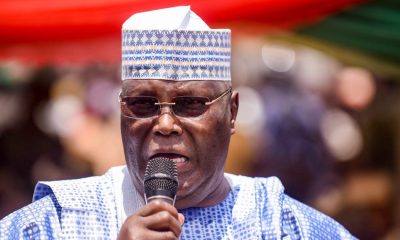
A Civil Society Organization, Citizens Awareness Against Corruption And Social Vices Initiative, CAACASVI has urged the Presidential Candidate of the People’s Democratic Party (PDP) in the last general election, Alhaji Atiku Abubakar to take lessons from the life of President Muhammadu Buhari.

The group said the recent verdict of the supreme Court on the 2019 Presidential election is prove that not only the rich can emerge the president Nigeria.

That the masses of Nigeria know the kind of people they want to be their leaders and the most essential and direly needed ingredient is Integrity.

This was made known in a statement made available to journalists in Abuja on Tuesday by its Executive Director, Comrade Olumuyiwa Onlede. According to him, President Muhammadu Buhari met a country in need of redemption and has been making giant strides in that regards.

He said: Having watched your most expensive league of lawyers loose to Buhari in both Presidential election Tribunal and the appeal panel in the supreme court that just affirm the election of President Muhammadu Buhari, it is high time the truth be told, candidate of the people democratic party (PDP) in the 2019 election Alhaji Atiku Abubakar must have a rethink of what really matters to people (Nigerians) and what also matters to God. Some years ago while on a campaign it was said that Alhaji Atiku Abubakar had pronouced that God does not answer the prayer of a poor man, this statement was like saying whoever that is poor should not practice religion and turn against God, this statement will anger God almighty as far as i understand religion because God had said it in the holy book that all men are the same in his eye. But God is a merciful God and ready to forgive any sin, but the sinner must repent, that is why Alhaji Atiku Abubakar must openly apologize to the poor in the whole world and also seek forgiveness from God.

“If a man with fleet of viable businesses and million naira income on a daily basis will loose to a man with only fifty cows as his main business, then there must be something in the later that is lacking in the former.

“Integrity is defined as adherence to moral and ethical principles; soundness of moral character and honesty. That is to say that haven been tested as the number two man in this country the number one man who was your boss was not satisfied with your conduct and more also the people of this great country whom you vowed to serve then were not also satisfied with your conduct while in office and those notions gave birth to your present political state in the country as you lost the pooling unit where you voted and only won your home state with a small margin in the presidential election.

“Politicians and all Nigerians must stop playing God and adhere to the teachings of their respective religions so as to avoid the anger of God in all ramifications, because God can not be mocked.

“Since the supreme court that is the highest court in our land (Nigeria) has put all litigations concerning 2019 general election to rest, we hereby congratulate Nigerians first, President Muhammadu Buhari for the victory and we urge the president to work in tandem with his promises to lift majority of Nigerians out of poverty and never to betray the trust that majority of Nigerians repose on him by re-election him for the second term in office. The president should not hesitate to show any appointee that deviate from his agenda the way out. The war against corruption must carry all stakeholders along to make it holistic.

“We also urge all opposition leaders not to engage in destructive criticism but objective criticism that will help the ruling party to move our great nation Nigeria forward.

Continue Reading
Click to comment

Leave a Reply

Your email address will not be published. Required fields are marked *

NEWS

EFCC’s Planned Direct Auction of Forfeited Assets, Illegal, Says NAA Boss

Published

on

Share

By Raphael Atuu, Abuja

The President of the Nigeria Association of Auctioneers (NAA), Engr. Benjamin Isibor Abhulimen, has described Economic and Financial Crimes Commission’s (EFCC’s) planned direct auction of forfeited and recovered assets without engaging licensed auctioneers as unlawful.

He warned that the move would undermine transparency, due process, accountability and internationally accepted standards governing the disposal of public assets.

Abhulimen who made this known to journalists in his Abuja, regretted that allowing the EFCC to independently conduct the sale of forfeited assets would not only erode public confidence in Nigeria’s asset recovery process, but it would also create opportunities for abuse and deny the Federal Government the maximum value that should be realised from the disposal of recovered properties.

He revealed that the EFCC had previously engaged licensed and accredited auctioneers to auction forfeited assets, a process that has not been officially reversed.

While explaining that the appointed auctioneers invested substantial financial, technical, and logistical resources to ensure that the exercise complied with the highest standards of professionalism, transparency and international best practices.

He further noted that many successful bidders had already taken lawful possession of properties purchased during the previous exercises by official auctioneers, demonstrating the credibility and effectiveness of a professionally managed auction process.

The president further noted that the exercise would not be transparent given the widespread complaints from other auctioneers who are being excluded from the exercise, despite investing significantly to be carried along.

While questioning the transparency of the process, NAA President argued that it is inconsistent with the principles of transparency, accountability, and good governance for the same institution responsible for investigating alleged financial crimes, securing court-ordered forfeitures, and maintaining custody of recovered assets to also assume responsibility for marketing and disposing of those assets without the involvement of independent licensed auctioneers.

According to him, professional auctioneers provide an essential layer of independence by ensuring objective valuation, extensive market exposure, competitive bidding, and transparent disposal procedures that protect public assets from undervaluation, insider dealings, and avoidable revenue losses and conflict of Interest.

To reinforce his position, Engr. Abhulimen cited the long established principle of natural justice, nemo judex in causa sua meaning that no person or institution should be a judge in its own cause.

He explained that the EFCC serves as the investigator, prosecutor and custodian of seized and forfeited assets, should not be the same agency to determine the valuation, marketing strategy, and eventual sale of those assets as such lapse would create inherent conflicts of interest and raise legitimate concerns about impartiality, fairness, and public accountability.

“The separation between law enforcement and commercial asset disposal is a fundamental safeguard against abuse of power. Independent auctioneers exist to guarantee transparency, competition, and public confidence throughout the disposal process,” he said.

He insisted that the disposal of forfeited assets should continue to be carried out through licensed professional auctioneers operating under judicial authorisation and in accordance with established legal and regulatory procedures.

While reaffirming the Nigeria Association of Auctioneers’ commitment to supporting the EFCC and other government institutions in strengthening Nigeria’s asset recovery framework, Abhulimen stressed that the Association remains committed to promoting transparency, accountability, due process, and value for money in the disposal of public assets.

He warned that sidelining licensed auctioneers would weaken public confidence and undermine the integrity of Nigeria’s asset recovery system.

“Nigerians are watching. We are fully aware of the EFCC’s reported actions, and the Nigeria Association of Auctioneers will continue to advocate for strict compliance with the law, due process, and internationally accepted standards governing the disposal of forfeited assets,” he remarked.

He concluded by urging all law enforcement agencies to maintain a clear institutional separation between investigative functions and the commercial disposal of seized assets, insisting that all forfeited property should be disposed of through independent, transparent, and professionally managed auction procedures under appropriate judicial supervision.

Continue Reading

NEWS

APC at 13: Leadership, Policy And The Transformation of Nigeria’s Democracy

Published

on

Share

By: Fabian Ugochukwu Okoye

Political parties are indispensable institutions in every democratic system because they aggregate citizens’ interests, recruit political leaders, formulate public policies, and provide platforms through which political competition and governance are organised.

Beyond contesting elections, they serve as the principal link between citizens and government by promoting political participation, representation, accountability, and policy implementation.
Consequently, the quality of democratic governance is closely associated with the strength, institutional capacity, and responsiveness of political parties.

The All Progressives Congress (APC) occupies a significant place in Nigeria’s democratic history. Formed in February 2013 through the merger of major opposition political parties, the APC emerged as one of the most consequential political coalitions since Nigeria’s return to democratic rule in 1999. Its formation represented more than the creation of a new political party; it marked a strategic realignment of opposition forces aimed at strengthening electoral competition and offering Nigerians a credible national alternative within the country’s multi-party democratic system. In doing so, the APC reshaped the dynamics of political competition and expanded the prospects for democratic alternation of power.

APC’s thirteenth anniversary provides an opportunity to reflect on its institutional evolution, leadership trajectory, policy orientation, and contributions to Nigeria’s democratic development between 2013 and 2026. Beyond celebrating the party’s longevity, the anniversary offers a platform for assessing how the APC has influenced political competition, governance, public policy, and democratic consolidation over the past thirteen years. Accordingly, this presentation examines the historical evolution of the APC, its defining characteristics, strategic contributions, and its place within Nigeria’s contemporary political landscape.

2.0 Historical Excursion: The Evolution of the APC

2.1 Political Background before 2013

Nigeria’s return to democratic governance on 29 May 1999 marked the beginning of the Fourth Republic following decades of intermittent military rule. The restoration of civilian government established a constitutional democracy founded on multi-party competition, periodic elections, separation of powers, and representative governance under the 1999 Constitution (as amended). The transition created opportunities for political participation and institutional development, while political parties emerged as the principal vehicles for leadership recruitment and democratic representation.

Between 1999 and 2013, the People’s Democratic Party (PDP) remained the dominant political force in Nigeria. The party won four consecutive presidential elections and maintained substantial control of the National Assembly, numerous state governments, and other elective offices. Although opposition parties participated actively in elections, they largely operated as separate entities with regional strongholds and limited national coordination. This fragmentation reduced their electoral competitiveness and constrained their ability to present a unified challenge to the ruling party.

As Nigeria’s democracy matured, increasing attention was directed towards the need for a more competitive political environment capable of strengthening accountability and improving governance. Political analysts, civil society organisations, and many political stakeholders argued that effective democracy requires not only credible elections but also a viable opposition capable of providing alternative policy choices and ensuring that governing parties remain accountable to the electorate. Against this background, discussions intensified among opposition leaders on the need to consolidate their political strength through a broad-based national coalition. The objective was not merely electoral success but also the creation of a stronger party system capable of promoting democratic competition, institutional stability, and national integration. These developments ultimately laid the foundation for the emergence of the All Progressives Congress (APC).

2.2 Formation of the APC (2013)

The All Progressives Congress (APC) was formally established in February 2013 through the merger of four major opposition political parties: the Action Congress of Nigeria (ACN), the Congress for Progressive Change (CPC), the All Nigeria Peoples Party (ANPP), and a faction of the All Progressives Grand Alliance (APGA). Subsequently, a group of governors, legislators, and political leaders who broke away from the ruling People’s Democratic Party formed the New PDP (nPDP) and aligned with the APC, further broadening the party’s national appeal.

The merger represented one of the most significant political realignments in Nigeria’s democratic history. Rather than functioning as isolated opposition parties, the coalition combined diverse political interests, regional support bases, and leadership structures into a single national platform. This strategic alliance demonstrated that coalition politics could serve as an effective mechanism for strengthening electoral competition within a multi-party democracy and promoting a more balanced political system.

Following the merger, the APC applied for registration with the Independent National Electoral Commission (INEC). On 31 July 2013, the Commission formally registered the APC as a political party, thereby completing the legal process required for its participation in Nigeria’s electoral system. Registration transformed the coalition from a political agreement into a legally recognised national institution with the capacity to contest elections at all levels of government.

The party’s founding philosophy centred on providing a broad-based, nationally competitive political platform committed to constitutional democracy, national unity, accountable governance, and sustainable development. More fundamentally, the formation of the APC reflected an effort to institutionalise coalition politics as a legitimate democratic strategy for broadening political participation, strengthening electoral competitiveness, and deepening Nigeria’s democratic process. From its inception, the party sought to position itself not only as an electoral alternative but also as an institution capable of contributing to the long-term consolidation of democratic governance in Nigeria.

2.3 Major Milestones (2013–2026)

Since its establishment in 2013, the All Progressives Congress (APC) has recorded several milestones that have shaped not only its institutional development but also the evolution of Nigeria’s democratic process. These milestones illustrate the party’s transition from a coalition of opposition groups to a governing political party with national influence, while reflecting broader developments in the country’s democratic journey.

The first major milestone was the registration of the APC by the Independent National Electoral Commission (INEC) on 31 July 2013. This formal recognition completed the merger process and transformed the coalition into a legally recognised political institution with the capacity to participate in elections nationwide. More importantly, it demonstrated that coalition politics could produce a viable national political party capable of operating within Nigeria’s constitutional and electoral framework.

The 2015 general elections represented a defining moment in both the party’s history and Nigeria’s democratic development. The APC won the presidential election and secured substantial representation in the National Assembly, resulting in the first peaceful transfer of executive power from an incumbent ruling party to an opposition party since the beginning of the Fourth Republic. Beyond its electoral significance, the transition reinforced public confidence in constitutional democracy by demonstrating that political power could change hands through the ballot rather than through extra-constitutional means. The election also strengthened Nigeria’s reputation as an evolving democratic state where electoral competition could produce genuine political alternation.

The 2019 general elections marked another important stage in the party’s institutional consolidation. The re-election of President Muhammadu Buhari, together with the party’s continued electoral success in several states and legislative elections, reaffirmed the APC’s position as the governing party. The outcome suggested that the party had moved beyond its initial status as an opposition coalition and had developed into a more established political organisation capable of sustaining electoral competitiveness over successive election cycles.

A further milestone occurred during the 2023 general elections, which resulted in the election of President Bola Ahmed Tinubu. This transition signified not only continuity in the party’s leadership at the federal level but also demonstrated the capacity of the APC to manage leadership succession through constitutional and democratic processes. The emergence of a new administration marked another phase in the party’s evolution and reflected its continued relevance within Nigeria’s competitive political environment.

The year 2026 marks the thirteenth anniversary of the APC and provides an appropriate opportunity to evaluate its institutional growth, leadership experience, governance philosophy, and contribution to democratic development. From its origins as a coalition of opposition parties, the APC has developed into one of Nigeria’s most influential political organisations, participating in successive elections, producing national leadership, and contributing to the country’s governance and policy landscape. The APC@13 celebration therefore represents not merely the commemoration of the party’s longevity but also an opportunity to assess its role in strengthening political competition, democratic institutions, and constitutional governance over the past thirteen years.

3.0 Key Features of the APC

The evolution of the All Progressives Congress (APC) over the past thirteen years reflects several institutional and organisational characteristics that distinguish it within Nigeria’s multi-party democratic system. These features explain not only the party’s electoral success but also its capacity to transform from a coalition of opposition parties into a governing political organisation with national reach. Together, they constitute the strategic foundations upon which the party has sustained its relevance in Nigeria’s contemporary political landscape.

3.1 Progressive Political Ideology

The APC identifies itself as a progressive political party, an orientation reflected in its constitution, manifesto, and policy agenda. The party emphasises democratic governance, social justice, economic growth, national unity, accountability, and citizens’ welfare as guiding principles for governance. While Nigeria’s political environment is characterised by ideological diversity and broad-based political coalitions, the APC has consistently projected itself as committed to reforms aimed at improving governance, expanding economic opportunities, strengthening institutions, and promoting inclusive national development.

Beyond defining policy priorities, the party’s ideological orientation provides a framework for articulating long-term development objectives and communicating its governance philosophy to the electorate. By grounding its programmes in constitutional democracy, the rule of law, and institutional reforms, the APC has sought to establish a recognisable policy identity that extends beyond electoral campaigns to the broader objectives of governance.

3.2 Coalition and Broad-Based National Membership

One of the APC’s greatest institutional strengths lies in its origin as a coalition of major political parties. The merger of the Action Congress of Nigeria (ACN), the Congress for Progressive Change (CPC), the All Nigeria Peoples Party (ANPP), and a faction of the All Progressives Grand Alliance (APGA), together with the subsequent alignment of members of the New PDP (nPDP), created a political platform with broad national appeal.

The significance of this coalition extends beyond its numerical strength. It demonstrated that political collaboration among diverse groups could overcome regional fragmentation and produce a nationally competitive political organisation. By bringing together leaders and supporters from different geopolitical zones, ethnic backgrounds, and political traditions, the APC established itself as a party with a truly national outlook. This broad membership base has enhanced its electoral competitiveness while strengthening its capacity to mobilise support and promote national political integration.

3.3 Internal Party Structures and Leadership

Institutional strength remains an essential feature of every enduring political party. The APC operates through constitutional structures that provide a framework for leadership selection, policy formulation, organisational administration, and electoral coordination at the national, state, local government, and ward levels. These structures facilitate continuity, organisational discipline, and effective coordination across the federation.

The party’s leadership architecture comprises elected executives and standing committees responsible for administration, membership mobilisation, strategic planning, candidate nomination, and policy implementation. Institutions such as the National Executive Committee (NEC), National Working Committee (NWC), state executive committees, and other party organs provide mechanisms for consultation, decision-making, and internal coordination.

Equally important is the party’s reliance on congresses and national conventions to elect officers, review constitutional provisions, and determine major policy directions. These processes reinforce institutional continuity and strengthen the party’s organisational capacity by ensuring that leadership transitions and major decisions occur within established constitutional procedures rather than through informal arrangements. In the long term, such institutionalisation contributes to organisational stability, enhances public confidence, and supports the development of a more resilient Democratic Party system.

3.4 Democratic Participation and Electoral Competitiveness

A defining characteristic of the APC has been its sustained participation in Nigeria’s democratic and electoral processes. Since its registration in 2013, the party has consistently contested presidential, governorship, National Assembly, state assembly, and local government elections across the federation. This continuous participation reflects the constitutional role of political parties as the primary vehicles for democratic representation, leadership recruitment, and public accountability.

More significantly, the emergence of the APC transformed Nigeria’s electoral landscape by consolidating previously fragmented opposition parties into a nationally competitive political platform. This development altered the balance of political competition by providing voters with a credible alternative at the national level, thereby strengthening the competitiveness of elections and reinforcing the principle that political authority should be determined through the ballot. In this regard, the APC contributed to deepening democratic choice and encouraging greater electoral accountability.

The party’s electoral performances in 2015, 2019, and 2023 further demonstrate its capacity to sustain political relevance within a competitive democratic environment. Beyond electoral victories, its continued participation in successive elections reflects the growing institutionalisation of democratic politics in Nigeria, where political legitimacy is increasingly derived from constitutional processes rather than extra-constitutional means. Consequently, the APC has become an important actor in consolidating Nigeria’s electoral democracy and promoting democratic continuity.

3.5 Policy-Driven Governance

Another defining feature of the APC is its emphasis on governance through articulated policy programmes and electoral manifestos. Since assuming office at the federal level, the party has consistently presented policy frameworks outlining its priorities in areas such as economic management, infrastructure development, agriculture, education, healthcare, security, social investment, and institutional reforms. These policy documents provide a strategic direction for governance while enabling citizens to evaluate government performance against stated commitments.

The significance of this approach lies in its contribution to programme-based politics, where electoral competition is increasingly shaped by policy alternatives rather than solely by personalities or regional affiliations. By presenting documented development priorities, the APC has sought to strengthen the relationship between electoral mandates and public policy implementation. Although the effectiveness of individual policies remains subject to public debate and independent assessment, the adoption of structured policy frameworks reflects an effort to institutionalise governance through strategic planning and measurable development objectives.

3.6 National Spread and Grassroots Mobilisation

The APC maintains an extensive organisational presence across Nigeria through party structures established at the national, state, local government, ward, and polling unit levels. This nationwide organisational network has enabled the party to maintain continuous engagement with citizens while strengthening its capacity for political mobilisation, membership recruitment, voter education, and electoral coordination.

Beyond its organisational reach, grassroots mobilisation has remained central to the party’s political strategy. Strong community-level structures facilitate communication between the leadership and the electorate, encourage citizen participation in democratic processes, and enhance the party’s responsiveness to local concerns. Such structures also contribute to political inclusion by creating opportunities for participation across diverse communities and regions.

The combination of nationwide organisational structures and sustained grassroots engagement has been instrumental in maintaining the APC’s electoral competitiveness and institutional resilience. More broadly, it demonstrates the importance of local political organisation in sustaining democratic participation, strengthening party institutionalisation, and promoting political integration within Nigeria’s federal system.

4.0 Major Contributions to Nigeria’s Democratic Development

Since its formation in 2013, the All Progressives Congress (APC) has played a significant role in shaping Nigeria’s democratic and governance landscape. Its contributions extend beyond electoral victories to include the strengthening of political competition, institutional development, public policy, and democratic governance. While assessments of the party’s performance naturally differ among scholars, policymakers, and citizens, its emergence has undoubtedly influenced the evolution of Nigeria’s Fourth Republic by reshaping the structure of political competition and governance.

4.1 Consolidation of Multi-Party Democracy

One of the APC’s most significant contributions has been its role in consolidating Nigeria’s multi-party democratic system. Before its emergence, opposition politics was characterised by fragmentation, with several political parties operating independently and largely within regional constituencies. This limited their capacity to compete effectively at the national level and weakened the ability of the opposition to provide a credible alternative to the ruling party.

The formation of the APC fundamentally altered this landscape by demonstrating that coalition politics could overcome political fragmentation and create a nationally competitive opposition. By uniting diverse political interests under a common platform, the party strengthened electoral competition, expanded democratic choice, and reinforced the principle that political power should be contested through open and credible elections.

Equally important, the success of the APC encouraged greater accountability within Nigeria’s political system. The existence of a viable opposition increased political competition, encouraged greater responsiveness among governing institutions, and contributed to the gradual institutionalisation of a more balanced party system. In this respect, the APC’s emergence represents a significant milestone in the maturation of Nigeria’s democratic process.

4.2 Historic Democratic Transfer of Power in 2015

The APC’s victory in the 2015 general elections remains one of the defining moments in Nigeria’s democratic history. The election produced the country’s first peaceful transfer of executive power from an incumbent ruling party to an opposition party since the restoration of democratic governance in 1999. This development represented a major democratic achievement because it demonstrated that political change could be accomplished through constitutional and electoral processes rather than through political instability or unconstitutional intervention.

Beyond its immediate electoral significance, the peaceful concession of defeat by the incumbent administration and the orderly transfer of authority strengthened public confidence in democratic institutions. It reinforced the credibility of elections as the legitimate mechanism for leadership change and affirmed the growing resilience of Nigeria’s constitutional order.

The 2015 transition also elevated Nigeria’s democratic profile within Africa by illustrating that competitive elections could produce genuine alternation of power while preserving political stability. As such, it remains one of the most enduring contributions of the APC to Nigeria’s democratic development and an important reference point in the country’s democratic evolution.

4.3 Electoral Reforms and Democratic Institutions

One of the notable contributions associated with APC-led administrations has been the advancement of electoral reforms and the continued strengthening of democratic institutions. A significant milestone was the enactment of the Electoral Act 2022, which introduced important legal innovations to improve the credibility, transparency, and efficiency of Nigeria’s electoral process. Among its key provisions were the legal recognition of technological innovations in voter accreditation and the electronic transmission of election results in accordance with the law, reflecting Nigeria’s gradual transition towards technology-driven election management.

Another important institutional development was the deployment of the Bimodal Voter Accreditation System (BVAS) by the Independent National Electoral Commission (INEC). Although INEC remains constitutionally independent in the conduct of elections, the legal and policy environment during this period supported the adoption of innovations aimed at improving voter accreditation, reducing electoral irregularities, and enhancing public confidence in the electoral process.

Beyond electoral administration, democratic governance depends on the effectiveness of institutions responsible for legislation, justice, accountability, and oversight. During this period, institutions such as the National Assembly, the judiciary, anti-corruption agencies, and other constitutional bodies continued to perform their statutory functions within Nigeria’s constitutional framework. While public discourse on institutional performance remains both legitimate and necessary in every democracy, the continued conduct of regular elections, peaceful constitutional transitions, and adherence to democratic procedures have contributed to strengthening institutional continuity and democratic resilience.

4.4 Infrastructure Development

Infrastructure development has remained a central component of governance under successive APC administrations, reflecting the understanding that modern infrastructure is fundamental to national development, economic productivity, and social integration. Investments have focused on expanding and rehabilitating critical infrastructure across transportation, railways, highways, aviation, housing, power, and public utilities.

Major projects undertaken during this period include the completion of the Second Niger Bridge, the Lagos–Ibadan Standard Gauge Railway, the Itakpe–Warri Railway, Abuja – Railway, the rehabilitation and expansion of major federal highways, and extensive upgrades to airports and other transport infrastructure. The current APC administration has embarked on the construction of ambitious regional trade corridors, including the Lagos-Calabar Coastal Highway and the Sokoto-Badagry Superhighway. These projects are intended to improve connectivity, facilitate trade and commerce, reduce transportation costs, and strengthen regional integration across the federation.

Beyond their physical impact, infrastructure investments contribute to broader national objectives by attracting investment, stimulating industrial activities, creating employment opportunities, and improving access to markets and public services. Although infrastructure development is inherently a long-term undertaking whose benefits accumulate over time, sustained investment in strategic national assets remains an important element of economic transformation and national competitiveness.

4.5 Economic and Social Policy Initiatives

The APC has also contributed to Nigeria’s democratic development through the formulation and implementation of economic and social policies aimed at promoting inclusive growth, reducing poverty, and improving citizens’ welfare. Across successive administrations, policy interventions have focused on macroeconomic management, agricultural development, industrialisation, digital innovation, financial inclusion, education, healthcare, and social protection.

Several social investment programmes were introduced to support vulnerable households, expand access to economic opportunities, and strengthen human capital development. Government initiatives also prioritised agricultural productivity, food security, support for small and medium-sized enterprises, and reforms designed to improve the ease of doing business. More recently, broader economic reform measures have sought to enhance fiscal sustainability, strengthen public finance, encourage domestic and foreign investment, and position the economy for long-term growth.

As in every democratic society, the implementation and impact of these policies continue to attract public debate and independent evaluation. Nevertheless, the emphasis on policy-based governance reflects an important aspect of democratic leadership, where governments are expected to respond to national challenges through structured programmes and measurable development strategies.

4.6 Security Sector Reforms

Strengthening national security has remained one of the defining priorities of APC-led administrations. During this period, government efforts have focused on enhancing the operational capacity of the Armed Forces of Nigeria and other security agencies to address complex security challenges, including terrorism, insurgency, banditry, kidnapping, maritime insecurity, oil theft, and other forms of organised crime.

Key initiatives have included increased investment in military platforms and equipment, expanded recruitment into the armed forces and security services, improved intelligence gathering and sharing, enhanced inter-agency coordination, and the establishment or strengthening of specialised operational structures to address emerging security threats. These efforts have been complemented by investments in surveillance technologies, intelligence-led operations, and capacity-building programmes designed to improve operational effectiveness.

Given the evolving nature of Nigeria’s security environment, security sector reform remains a continuous process rather than a single policy intervention. Nonetheless, sustained efforts to strengthen security institutions are essential for protecting national sovereignty, safeguarding citizens, supporting economic activities, and creating an enabling environment for democratic governance and national development.

4.7 Local Government and Grassroots Governance

The APC has consistently recognised grassroots governance as an essential pillar of democratic development and effective public administration. Through its nationwide organisational structures and elected representatives at different levels of government, the party has sought to strengthen citizen participation, political mobilisation, and community engagement across the federation.

Recent developments relating to local government administration have also renewed national attention on issues of local government autonomy, fiscal accountability, and improved service delivery at the grassroots. Strengthening local government institutions is widely regarded as essential for bringing governance closer to the people, improving responsiveness to local needs, and promoting community-driven development.

In addition to governance, the APC’s extensive grassroots structures have facilitated continuous interaction between political leaders and citizens. This organisational presence has supported civic participation, political education, and policy communication, thereby reinforcing the role of local communities as active stakeholders in Nigeria’s democratic process.

4.8 Youth and Women Inclusion in Governance

Youth and women constitute a significant proportion of Nigeria’s population and remain indispensable stakeholders in democratic governance and national development. Since its formation, the APC has sought to expand opportunities for their participation in party administration, electoral politics, public appointments, legislative representation, and governance processes.

The party has established dedicated youth and women structures to encourage leadership development, political participation, and greater inclusion in decision-making. Across successive administrations, young professionals and women have been appointed to ministerial, advisory, legislative, and administrative positions, reflecting ongoing efforts to broaden representation within public institutions.

Although increasing the representation of women and young people in elective offices remains an important national objective, continued efforts towards inclusion contribute to leadership renewal, policy innovation, and broader democratic participation. A political system that harnesses the talents and perspectives of its diverse population is better positioned to promote inclusive governance, strengthen democratic legitimacy, and respond effectively to the evolving aspirations of Nigerian citizens.

5.0 Strategic Standing of the APC in Nigeria’s Political Landscape

Since its establishment in 2013, the All Progressives Congress (APC) has evolved from a coalition of opposition parties into one of the most influential political organisations in Nigeria’s Fourth Republic. Its electoral success, institutional expansion, governance experience, and nationwide organisational presence have positioned it as a central actor in shaping the country’s political direction. Beyond winning elections, the party has influenced the dynamics of political competition, public policy, and democratic governance. Its strategic standing is therefore best understood through its organisational capacity, electoral strength, governance responsibilities, policy influence, and contribution to Nigeria’s role within the regional and continental political landscape.

5.1 Largest Political Party in Nigeria

Over the past thirteen years, the APC has grown into one of Nigeria’s largest political parties in terms of organisational structure, electoral representation, governmental presence, and national membership. Since assuming federal power in 2015, the party has continued to consolidate its political influence through successive elections while attracting elected officials, political stakeholders, and supporters from across the country.

Its prominence is reflected not only in electoral victories but also in its extensive representation at multiple levels of government, including the Presidency, the National Assembly, state governments, state legislatures, and local government structures. This broad institutional presence has enhanced the party’s capacity to influence governance and public policy while strengthening its position within Nigeria’s competitive multi-party system.

The APC’s growth also illustrates the importance of institutional development in sustaining political relevance. Rather than remaining solely an electoral coalition, the party has evolved into a national political institution with established structures capable of coordinating political activities and governance across the federation.

5.2 National Political Reach

One of the APC’s greatest strategic assets is its nationwide political presence. Unlike parties whose electoral strength is concentrated within specific regions, the APC maintains functional organisational structures in all thirty-six states of the federation and the Federal Capital Territory, supported by executives at state, local government, ward, and polling unit levels.

This nationwide presence reflects the party’s origins as a coalition that united political actors from different geopolitical zones under a common platform. By integrating diverse regional interests, the APC has been able to broaden its electoral appeal and establish itself as a genuinely national political organisation. Its extensive network has strengthened voter mobilisation, facilitated candidate selection across the federation, and enhanced the party’s ability to compete effectively in elections at every level.

Beyond electoral considerations, the APC’s national reach contributes to political integration by providing a platform through which Nigerians from different ethnic, religious, cultural, and socio-economic backgrounds participate in a common democratic process. This broad representation reinforces national cohesion and supports the functioning of Nigeria’s federal political system.

5.3 Control of Federal and Majority of State Governments

Since the 2015 general elections, the APC has remained the governing party at the federal level while maintaining a significant presence across many state governments. It has produced successive Presidents of the Federal Republic of Nigeria, retained substantial representation within the National Assembly, and secured governorships and legislative seats in numerous states.

This broad electoral mandate has positioned the party to influence governance across multiple tiers of Nigeria’s federal system. The simultaneous presence of the party at the federal and state levels creates opportunities for greater policy coordination, improved intergovernmental collaboration, and more effective implementation of national development priorities. It also provides a platform for aligning development programmes across different levels of government while respecting the constitutional autonomy of each tier.

However, Nigeria’s federal structure equally requires continuous cooperation among governments regardless of political affiliation. Consequently, effective governance depends not only on electoral success but also on constructive collaboration, institutional effectiveness, and adherence to constitutional principles.

5.4 Influence on National Policy Direction

As the governing party since 2015, the APC has played a significant role in shaping Nigeria’s national policy agenda. Through its manifestos, legislative priorities, executive programmes, and governance initiatives, the party has influenced policy formulation across key sectors including infrastructure, economic reforms, agriculture, education, healthcare, security, digital economy, fiscal management, energy, transportation, and social investment.

Beyond introducing policies, the party has influenced the broader direction of national development by prioritising long-term reforms intended to strengthen public institutions, improve service delivery, expand infrastructure, and stimulate economic growth. These priorities have informed government planning and legislative activities during successive APC administrations.

As in every constitutional democracy, however, policy influence extends beyond the governing party itself. Legislative oversight, judicial review, independent institutions, the media, civil society organisations, and public discourse all contribute to evaluating government policies and ensuring accountability. Consequently, the APC’s policy direction continues to evolve within the broader framework of Nigeria’s democratic governance system.

5.5 Regional and Continental Political Relevance

Nigeria occupies a strategic position within Africa as the continent’s most populous nation and one of its largest economies. Consequently, developments within Nigeria’s political system often have implications that extend beyond its national borders.

As the governing party, the APC has provided the political leadership under which Nigeria has continued to engage actively with regional and continental institutions, particularly the Economic Community of West African States (ECOWAS) and the African Union (AU). Through Nigeria’s foreign policy institutions, the country has remained involved in promoting regional peace, democratic governance, economic cooperation, conflict resolution, and collective security initiatives across West Africa.

The continuity of constitutional governance, peaceful political transitions, and Nigeria’s sustained participation in regional diplomacy have reinforced the country’s standing as a key democratic actor within Africa. Consequently, the evolution of the APC as Nigeria’s governing party has attracted considerable interest among policymakers, development partners, scholars, and political observers seeking to understand democratic governance and political transitions on the continent.

5.6 Strategic Challenges and Future Prospects

Like every major political party operating within a democratic environment, the APC faces both significant opportunities and important institutional challenges. Sustaining its strategic position will depend on its ability to strengthen internal cohesion, deepen internal democracy, effectively manage a diverse political coalition, respond to evolving socio-economic realities, and maintain public confidence through transparent and accountable governance.

The party must also respond to an increasingly informed electorate whose expectations regarding economic performance, security, employment, public service delivery, and institutional accountability continue to grow. Meeting these expectations is essential not only for electoral success but also for strengthening democratic legitimacy and public trust in political institutions.

Looking ahead, the APC’s long-term relevance will depend less on its historical achievements than on its capacity to adapt to emerging national challenges, strengthen party institutions, formulate responsive public policies, and promote inclusive governance. Ultimately, as in every democratic society, its strategic standing will continue to be determined through constitutional processes, electoral competition, and the confidence placed in it by the Nigerian people.

6.0 Leadership, Policy and Democratic Transformation (2013–2026)

The APC’s thirteen-year journey reflects the interaction between political leadership, public policy, and democratic transformation in Nigeria. Since its formation in 2013, the party has evolved from an opposition coalition into the governing party at the federal level, shaping governance, institutional reforms, and national development. Its experience demonstrates how political parties contribute not only to electoral competition but also to democratic consolidation and public administration.

6.1 Leadership Evolution

Leadership has been central to the APC’s growth. Formed through the collaboration of major opposition leaders, the party has experienced orderly leadership transitions within its structures while producing two Presidents through democratic elections. The transition from President Muhammadu Buhari to President Bola Ahmed Tinubu in 2023 reflected constitutional succession and reinforced democratic continuity. Beyond elected offices, the party’s institutional leadership through its National Executive Committee, National Working Committee, and state structures has supported organisational stability and strategic direction.

6.2 Governance Philosophy

The APC’s governance philosophy is anchored on democratic governance, accountability, national development, economic growth, security, and institutional reforms. Through its manifestos and policy programmes, successive APC administrations have prioritised infrastructure, public service delivery, economic reforms, and institutional strengthening. This philosophy reflects an effort to align governance with long-term national development while remaining subject to democratic oversight and public evaluation.

6.3 Policy Reforms

Between 2015 and 2026, APC administrations introduced reforms across infrastructure, agriculture, education, healthcare, transportation, public administration, the digital economy, and electoral administration. The Electoral Act 2022 represented a notable institutional reform that modernised aspects of Nigeria’s electoral framework. Collectively, these initiatives illustrate an emphasis on strengthening governance and improving public institutions, although their effectiveness continues to be assessed by citizens and policy analysts.

6.4 Democratic Resilience

Nigeria’s democratic institutions demonstrated resilience during this period despite political, economic, and security challenges. Regular elections, judicial resolution of electoral disputes, legislative oversight, and peaceful leadership transitions reinforced constitutional governance. The APC’s progression from opposition to governing party further illustrates the growing stability of Nigeria’s democratic process.

6.5 Institutional Strengthening

Institutional development remained an important aspect of democratic governance. Continued efforts to strengthen institutions responsible for elections, security, public finance, anti-corruption, infrastructure, and public administration contributed to greater accountability and governance stability. Sustained institutional reforms remain essential for consolidating democracy and improving public confidence.

6.6 Renewed Hope Agenda within APC’s Historical Trajectory

The Renewed Hope Agenda, introduced under President Bola Ahmed Tinubu following the 2023 elections, represents the latest phase of the APC’s governance agenda. Its priorities include economic growth, infrastructure, food security, human capital development, healthcare, education, energy reforms, and job creation. Within the APC’s thirteen-year history, the agenda reflects continuity in governance while responding to contemporary national priorities. Its long-term significance will depend on effective implementation and measurable outcomes.

7.0 Lessons from APC’s Thirteen-Year Journey

The APC’s evolution from an opposition coalition to a governing party offers important lessons for political parties and democratic governance in Nigeria. It demonstrates that strong institutions, effective leadership, policy continuity, and citizen participation are essential for sustaining democracy and promoting national development.

7.1 Importance of Coalition Politics

The APC’s formation illustrates how coalition politics can strengthen democratic competition by uniting diverse political interests around shared national objectives. The merger showed that cooperation and consensus-building can produce a credible national alternative and expand electoral choice.

7.2 Party Institutionalisation

The APC’s development highlights the importance of strong party institutions. Clear organisational structures, constitutional procedures, and effective administration promote continuity, stability, and resilience beyond individual political leaders.

7.3 Leadership Succession

The party’s experience underscores the value of orderly leadership succession through constitutional processes. The transition from President Buhari to President Tinubu reinforced democratic stability and demonstrated the importance of respecting constitutional mechanisms for political leadership.

7.4 Democratic Continuity

Successive elections, peaceful political transitions, and adherence to constitutional procedures have strengthened democratic continuity in Nigeria. These developments reinforce public confidence in democratic institutions and the rule of law.

7.5 Policy Consistency

The APC’s experience demonstrates that sustainable national development requires continuity in policy implementation. While reforms may evolve over time, maintaining long-term development priorities improves governance stability and policy predictability.

7.6 Citizen Engagement

Effective democracy depends on active citizen participation. Beyond elections, civic engagement, public dialogue, and accountability strengthen governance and ensure that political institutions remain responsive to the needs of the people.

8.0 Conclusion

The APC’s thirteen-year journey represents a significant chapter in Nigeria’s democratic development. From its emergence as a coalition of opposition parties in 2013 to its role as the governing party, it has reshaped political competition, facilitated the historic democratic transfer of power in 2015, and contributed to governance and institutional development.

Beyond electoral success, the APC’s experience demonstrates the importance of strong political institutions, constitutional governance, leadership succession, policy-driven administration, and citizen participation in consolidating democracy. As the party marks its thirteenth anniversary, its future relevance will depend on its ability to strengthen internal democracy, respond effectively to national challenges, and sustain public confidence through accountable and inclusive governance. Its journey provides valuable lessons for Nigeria’s continuing democratic evolution.

  • Fabian Ugochukwu Okoye is the Special Adviser on Research, Documentation and Strategy to the Kaduna State Governor
Continue Reading

NEWS

Petroleum Minister Commends NCDMB for Community-focused Interventions

Published

on

Share

From Mike Tayese, Yenagoa

The Minister of State for Petroleum Resources (Gas), Obongemem Ekperikpe Ekpo, on Saturday commended the Nigerian Content Development and Monitoring Board (NCDMB) for demonstrating that Local Content Policy could be a force for transforming lives and creating socio-economic value through community-focused interventions.

Speaking at the commissioning of a state-of-the-art Information and Communication Technology (ICT) Centre at Ika Comprehensive High School, Ikot Akpan Anwa, Akwa Ibom State, the Minister said such a strategic investment in the area, with vast possibilities for research and online learning through diverse educational platforms, would bolster human capital development, digital literacy and sustainable community development.

The ICT Centre, built and equipped by the NCDMB, comprises a modern computer laboratory with 50 networked desktop workstations, an interactive smart board, projector, server room and Starlink high-speed Internet connectivity to support digital learning, research and computer-based examinations.

Designed to accommodate up to 70 users, the facility also features air-conditioned learning spaces, a staff room, store and separate convenience facilities. Power reliability is supported by a 15kVA generator and a 15kVA solar power system with battery backup, complemented by a dedicated network infrastructure for seamless connectivity.

“This ICT Centre,” according to the Minister, “is far more than a building equipped with computers; it is an investment in the future of our children and a gateway to knowledge, innovation, creativity and opportunity.” Continuing, he noted that, “Nations that invest in the digital education of their young people today are the ones that will lead the world tomorrow.”

He said the initiative of the Board aligns with the Renewed Hope Agenda of President Bola Ahmed Tinubu by advancing access to quality education, youth empowerment, digital transformation and inclusive economic growth, as young

Nigerians in rural communities acquire relevant digital skills and competencies to participate effectively in a technology-driven economy.

Representing the Executive Secretary of the NCDMB, Felix Omatsola Ogbe, the Director, Corporate Services, Dr. Abdulmalik Halilu, stated that digital literacy and ICT capacity development remain a key component of the Board’s human capital development mandate aimed at building a skilled workforce for the Nigerian oil and gas industry and the broader economy. He noted that the facility would provide students with access to digital learning, research tools, artificial intelligence and global knowledge resources.

“This ICT Centre is more than a building; it is an investment in the future of our young people,” he stated, adding, “It represents our commitment to extending Nigerian Content objectives beyond industry into classrooms, where innovation, technology and skills development can empower the next generation.”

Halilu stressed that the project’s long-term success depends on collaboration among the Board, the school and the host community. He urged the community to take ownership of the facility and ensure its proper maintenance and sustainability for future generations.

“Our expectation is not simply to hand over a facility but to see measurable outcomes in the lives of the students who will use it. We therefore call on the school and the host community to safeguard this centre and ensure it continues to deliver value for many years to come.” He added.

Speaking on behalf of the project delivery team, the Managing Director of Standard Institute of Technology Limited, Alexander Nsidibe, expressed appreciation to NCDMB for the confidence placed in the company to deliver the project. He described the ICT Centre as a demonstration of the Board’s commitment to quality infrastructure development and human capital advancement.

He pledged the company’s continued support for the facility’s maintenance for one year after handover, noting that the Centre would enhance students’ digital competencies and prepare them for productive life in industry.

In her welcome address, the Principal General of Ika Comprehensive High School,. Nkom John Umoette, described the ICT Centre as a transformative intervention that would bridge existing digital access gaps. She noted that the school lacked an ICT facility, which constrained students’ exposure to digital learning and computer-based education.

She expressed appreciation to Ekpo and the NCDMB for making the project a reality, stating that the facility would equip students with essential digital skills, improve their preparedness for computer-based examinations, and create greater opportunities for academic excellence and future careers.

A representative of the community commended the Minister and the NCDMB for the delivery of the ICT Centre, noting that the facility would significantly improve access to digital learning and computer-based examinations.

He recalled that students previously travelled to Uyo and neighbouring communities to register for and take examinations such as JAMB, incurring additional costs and facing logistical challenges.

Continue Reading

Advertisement

Top Stories

NEWS2 minutes ago

EFCC’s Planned Direct Auction of Forfeited Assets, Illegal, Says NAA Boss

ShareBy Raphael Atuu, Abuja The President of the Nigeria Association of Auctioneers (NAA), Engr. Benjamin Isibor Abhulimen, has described Economic...

NEWS5 hours ago

APC at 13: Leadership, Policy And The Transformation of Nigeria’s Democracy

ShareBy: Fabian Ugochukwu Okoye Political parties are indispensable institutions in every democratic system because they aggregate citizens’ interests, recruit political...

Metro16 hours ago

Gov Otu Reshuffles Cabinet, Charges Exco on Performance

ShareFrom Ene Asuquo, Calabar Cross River State Governor, Sen. Prince Bassey Edet Otu, has reshuffled his cabinet in a strategic...

Metro16 hours ago

WHO Donates Vehicles, Medical Equipment to Kaduna Nursing Colleges

ShareThe World Health Organisation (WHO) on Monday donated two vehicles and other medical equipment to Kaduna State College of Nursing...

Metro16 hours ago

Supreme Court Upholds Death Sentence of Man Convicted for killing Another

ShareThe Supreme Court affirmed the conviction and death sentence of Abu Umar, for stabbing a man to death during a...

NEWS16 hours ago

Petroleum Minister Commends NCDMB for Community-focused Interventions

ShareFrom Mike Tayese, Yenagoa The Minister of State for Petroleum Resources (Gas), Obongemem Ekperikpe Ekpo, on Saturday commended the Nigerian...

SPORTS16 hours ago

Super Falcons Suffer Racist Abuse Ahead of WAFCON Title Defence in Morocco

ShareNigeria’s Super Falcons have been subjected to racist abuse on social media ahead of the 2026 Women’s Africa Cup of...

BUSINESS16 hours ago

Businesses Split over High Borrowing Costs, Credit Access

ShareBy Tambaya Julius, Abuja Nigerian businesses are divided over whether high borrowing costs or limited access to credit remains the...

NEWS16 hours ago

Amachree Challenges Al-Mustapha for Real Evidence Over Abacha Memoir Claims

ShareBy Tambaya Julius, Abuja  Former Assistant Director of the Department of State Services (DSS), Dennis Amachree, has challenged Major Hamza...

NEWS16 hours ago

Xenophobia: Tinubu Rejects Ramaphosa’s Special Envoy, Demands Action

ShareBy Tambaya Julius, Abuja President Bola Ahmed Tinubu has declined to receive a special envoy sent by South African President,...