
Education
Taliban Further Extend Ban on Schoolgirls Beyond Grade 6

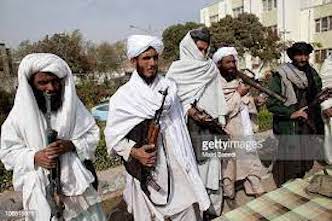
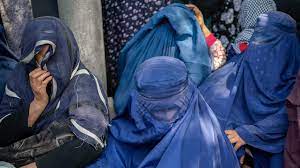
In Afghanistan, schoolgirls beyond grade six were turned away from their classes on Wednesday after a decision by the Taliban government to keep school doors closed to them.
Despite a previous green light, the Taliban’s education ministry announced that all schools will remain closed for girls beyond grade six until further notice.
In the meantime, a school uniform for girls is to be designed based on Sharia law, Afghan culture and tradition.
Schoolgirls who had been waiting impatiently for classes to resume since the Taliban’s return to power were disappointed when they were turned up for classes on Wednesday.
Many returned home with tearful eyes.
“We are also human, why shouldn’t we be able to go to school? What is our fault?.
“The tears that I’m crying is the blood that my heart is bleeding,” a schoolgirl said as she burst into tears.
The decision has already sparked wide reactions.
On Tuesday, Aziz Ahmad, the Taliban’s education ministry spokesman said that schools will reopen for girls but under specific conditions such as separation of school buildings, observance of hijab face covering and teaching by female instructors.
In traditional Afghan society, boys and girls were already attending separate classes and all female students and teachers must wear the hijab.
Following the Taliban takeover in August, hardliners have imposed more restrictions.
For example, girls and women have been deprived of their social life such as their right to education, work and freedom of movement.
Those who protested have been suppressed.
The Taliban deprived women of work and education when they were ruling the country during the 90s. (dpa/NAN)




Candidates seeking admission into Nigerian tertiary institutions can now upload and verify their O’Level results from the comfort of their homes, following a new initiative by the Joint Admissions and Matriculation Board (JAMB).
Under the new arrangement, candidates will no longer need to visit Computer-Based Test (CBT) centres solely to upload their Senior Secondary School Certificate Examination (SSCE) results, as JAMB will verify the results directly with the examination bodies, beginning with the West African Examinations Council (WAEC).
In a statement on Monday in Abuja, JAMB’s Acting Director, Public Affairs and Protocol, Dr.
Fabian Benjamin, said the Board would continue to deploy technology and collaborate with examination and government agencies to simplify its services and make them more accessible to candidates.According to him, the initiative was part of its renewed commitment to making its services “easier, faster, safer and more convenient” for candidates.
He said the integration of its e-Facility platform with examination bodies would enable candidates’ results to be verified against the records of the issuing bodies before being downloaded into their profiles.
The new system is also expected to address problems associated with manual O’Level result uploads, including misplaced or mixed-up paper results, presentation of fraudulent or unverified certificates and errors in the manual entry of subjects and grades.
The examination body said the initiative would particularly ease pressure on CBT centres during periods of high patronage and help reduce the effect of network challenges and long queues.
The statement reads: “Consequently, candidates can now upload their O’Level results from the comfort of their homes, while the Board undertakes the verification of such results directly with the issuing examination bodies.
“The initiative is part of the Board’s renewed commitment to making services easier, faster, safer and more convenient for candidates. By using technology to reduce unnecessary visits to CBT centres, queues and manual processes, JAMB is putting candidate ease of service delivery at the centre of its operations.
“The new arrangement also addresses challenges associated with manual O’Level result uploads, including misplaced or mixed-up paper results, presentation of unverified or fraudulent results, and errors in the manual entry of subjects and grades. Through the integration of JAMB’s eFacility platform with examination bodies, results can now be verified directly against the examination body’s records before being downloaded into the candidate’s profile.”
To use the new service, candidates are required to visit its website, enter their National Identification Number (NIN) and select the number of examination sittings and relevant examination body or bodies.
After providing their email address and GSM number, candidates are required to pay for the verification using a debit card or bank transfer before entering their examination number, examination series and examination year.
From Joseph Amedu, Lokoja
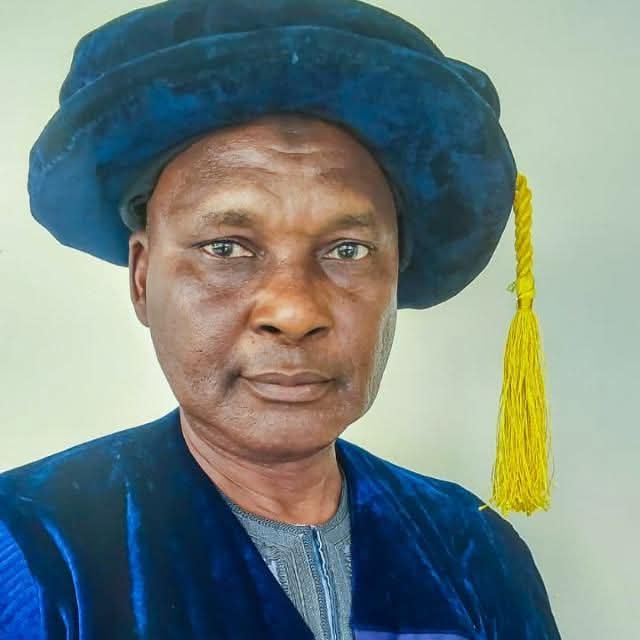
A Professor of History at the Federal University, Lokoja, Suberu Ochi Abdulrahaman, has raised the alarm over the prevailing political illegality bedeviling Nigeria insisting that leaders in the system should endeavor to obey the laws of the land and do the right thing that would move the nation forward.
Professor Abdulrahaman made the observation while delivering the 45th Inaugural Lecture Series of the University at its Felele Campus, in Lokoja, on Wednesday.
Professor Abdulrahaman in his Lecture titled, Persisting Illegalities in Nigeria’s Political Space: Who is to Blame? A Historical Discourse on Power, Institution and Democratic Governance, noted that political illegality which ranges from electoral fraud, arbitrary use of executive power for manipulation and intimidation to sponsorship of thuggery and violence in the system, amongst others, can only be overcome if leaders in governance work in accordance with the nation’s constitution.
According to the Inaugural lecturer “The resistance of political illegalities is neither accidental nor the responsibility of a single institution or generation.
“It is the cumulative product of colonial administrative legacies, prolonged military
authoritarianism, weak institutional development, political opportunism, inadequate civic engagement, and failures of ethical
Leadership.
“History teaches us that no nation develops sustainably when public institutions are weakened by impunity, when constitutional rules are subordinated to personal interests, or when political power is exercised without accountability.
“Equally, history reminds us that societies are capable of renewal when they choose to strengthen institutions rather than personalities, uphold the rule of law rather than arbitrary power, and promote justice above expediency.
“Accordingly, the challenge before Nigeria is not simply to conduct periodic elections or enact additional legislation.
The greater challenge is to cultivate a democratic culture in which constitutionalism becomes habitual, public office is regarded as a sacred trust, institutions command public confidence, and citizens
actively defend democratic values.
“Political leaders must recognise that authority derives its legitimacy not merely from electoral victory but from faithful obedience to the Constitution and unwavering commitment to the public good.
“Institutions must be empowered to function independently, impartially, and professionally.
” Citizens must reject every form of political illegality, whether manifested through vote buying, political
violence, corruption, or indifference to injustice”
The Vice Chancellor of the University, Professor Gbenga Solomon Ibileye in his welcome address, disclosed that his administration will continue to give Inaugural Lecture Series topmost priority as it offers opportunity for where the public is highly equipped with relevant knowledge on contemporary issues affecting the society.
He described Professor Suberu Abdulrahaman as an accomplished historian who has made his mark in his academic field.
Academic Staff Union of Universities (ASUU) has authorised 20 federal and state universities across Nigeria to commence varying degrees of industrial action.
The decision was reached during a critical National Executive Council (NEC) meeting held in Abuja between August 8 and 9, 2026.
ASUU National President, Prof.
Christopher Piwuna, disclosed this at the weekend, expressing the union’s deep frustration over the “haphazard implementation” of the landmark December 2025 FGN-ASUU Agreement.The union warned that a full-scale resurgence of campus unrest is now inevitable.
Regarding the 20 approved universities facing looming strikes, the NEC resolved to grant permission for industrial action once individual institutions successfully satisfy internal union requirements.
The affected institutions include: Adekunle Ajasin University, Akungba (AAUA); Nasarawa State University, Keffi (NSUK); Ibrahim Badamasi Babangida University, Lapai (IBBUL); University of Medical Sciences, Ondo (UNIMEDO); Gombe State University (GSU), Gombe; Plateau State University (PLASU), Bokkos; Emmanuel Alayande University of Education (EAUED), Oyo; Ambrose Alli University, Ekpoma (AAUE); Olusegun Agagu University of Science and Technology (OAUSTECH), Okitipupa; Abia State University (ABSU), Uturu; University of Education and Entrepreneurship (UEE), Akamkpa; Kaduna State University (KASU), Kaduna.
Others are Aliko Dangote University of Science and Technology (ADUSTECH), Wudil; Northwest University, Kano (NWUK); Enugu State University of Science and Technology (ESUT), Enugu; Imo State University (IMSU), Owerri; Niger Delta University (NDU), Wilberforce Island; University of Africa, Toru-Orua (UAT); Bayelsa Medical University (BMU), Yenagoa; and Taraba State University (TSU), Jalingo.
ASUU also disclosed that the implementation status of universities within the Lagos Zone is currently under review, with separate declarations expected in due course.
Speaking on the core grievances driving the crisis, ASUU noted that while Vice-Chancellors at the federal level face severe challenges due to underfunded monthly salary bills, the situation at the state level is considerably worse.
According to the union, only about 10% or fewer of state governors have openly endorsed the new salary package established in December 2025.
The rest were accused of “playing the ostrich” and passing financial burdens onto Governing Councils that lack the funding to back them.
The union also explicitly blamed officials within the Federal Ministry of Finance and the Office of the Accountant-General of the Federation. These bodies are accused of deliberately stalling promotion arrears, dragging their feet on monthly salary releases, and illegally withholding the remittance of academics’ deductions to their respective Pension Fund Administrations (PFAs).
Furthermore, ASUU raised concerns over the unpaid, withheld three-and-a-half months’ salaries dating back to the 2022 nationwide strike. While ASUU initially praised President Bola Tinubu for releasing four months of those salaries, the refusal to remit the balance has left a “strong bitter taste.”
The union also condemned the prolonged delays in paying the 25/35% wage award and outstanding promotion arrears to its members.
Meanwhile, ASUU issued a stern warning regarding the recent harassment of its branch leaders and members by Vice-Chancellors at ESUT, IMSU, and ABSU.
The NEC declared that it will strictly refuse to call off any industrial action in these specific institutions until all forms of victimization stop completely.
Beyond the immediate academic crisis, the NEC reviewed the worsening socio-political and economic landscape of Nigeria.
The union strongly condemned the ongoing atmosphere of pre-election violence, political killings, and economic instability as the country approaches upcoming election cycles, noting that these existential threats directly undermine the living and working conditions of everyday Nigerians and university lecturers alike.
Despite praising the mediation efforts of Senator Lanre Tejuoso, the Chairman of the Implementation Monitoring Committee (IMC), ASUU maintains that it will stop at nothing to enforce the full scope of the agreement.
The union has announced that it will convene an emergency NEC meeting in the next few weeks to appraise the situation. If the government fails to act swiftly to clear outstanding financial entitlements and halt the harassment of lecturers, a wider, coordinated national academic shutdown may follow.



NCS Lilypond Export Command Gets New Acting CAC
ShareThe Nigeria Customs Service (NCS), Lilypond Export Command, has appointed Deputy Comptroller Olusola Salako as its Acting Customs Area Controller...

Oyebanji Reappoints Retired Ekiti Accountant-General
ShareEkiti State Governor, Biodun Oyebanji, on Tuesday approved the appointment of Titilayo Olayinka as the new Accountant General of the...

Eid-el-Maulud: Tinubu, Govs, Others Preach Peace, Compassion, Unity
ShareBy Laide Akinboade, Abuja President Bola Tinubu, state governors, traditional rulers and religious leaders have called on Nigerians to draw...

Niger Mosque Massacre: Tinubu Orders Rescue of over 60 Abductees
ShareFrom Dan Amasingha, Minna President Bola Ahmed Tinubu has ordered the Armed Forces, the Nigeria Police Force, the Department of...


JAMB Breaks New Ground, Allows Home Upload of O’Level Results
ShareCandidates seeking admission into Nigerian tertiary institutions can now upload and verify their O’Level results from the comfort of their...
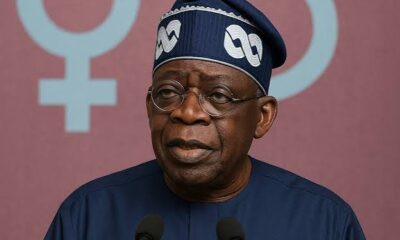

Tinubu Mourns Ogogo, Extols His Creative Legacy
SharePresident Bola Tinubu has condoled with the family, friends and colleagues of veteran Nollywood actor, filmmaker and screenwriter Taiwo Hassan,...


Nigeria Upgrading its Digital, Intelligence-led Border Management System — NIS
ShareNigeria is strengthening its border management architecture through digital technology, biometric identity systems, intelligence sharing and stronger collaboration with border...
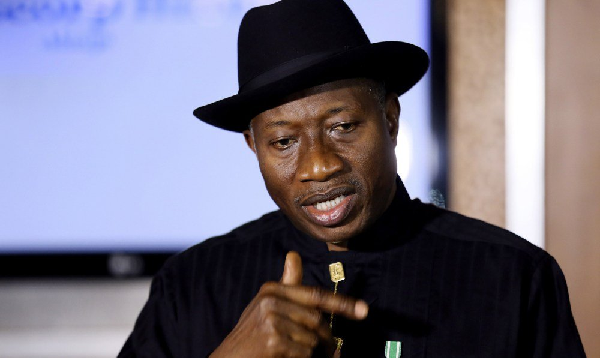
ShareGoodluck Jonathan Advises Leaders to Invest in Youths, Industry Former President of Nigeria, Dr. Goodluck Jonathan, has called on leaders...


First Quarter Pension Contributors Rise by 143,248 – PenCom
ShareThe National Pension Commission (PenCom) said cumulative Retirement Savings Account (RSA) registrations under the Contributory Pension Scheme (CPS) rose by...


Police Honour 10 Fallen Officers, Disu Vows to Crush Banditry
ShareBy Elijah Oguche, Abuja The Nigeria Police Force (NPF) on Monday honoured 10 officers of the Special Intervention Squad (SIS)...