
Foreign News
Tens of Thousands March in UK as Situation Worsens in Gaza


Tens of thousands of people gathered for pro-Palestinian demonstrations across the UK amid growing international concern over the situation in Israel and Gaza.
Marchers filled the streets of central London on Saturday as thousands also gathered in Manchester, Liverpool, Edinburgh, and other parts of the UK.
Demonstrators carried flags and flares and chanted pro-Palestinian slogans as marchers heard calls for world leaders to condemn Israel’s actions.
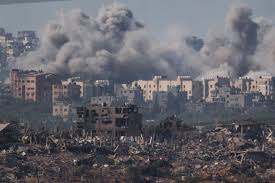
It comes as thousands of Palestinians attempted a mass exodus from northern Gaza after Israel’s military told them to evacuate before an expected ground invasion.
The UN, human rights groups, and others have been among those expressing deep concern about the impact of Israeli action on civilians as the death toll continues to rise amid airstrikes and a siege on the territory.
The renewed violence came after an attack last week by Palestinian militant group Hamas left hundreds of Israeli civilians and soldiers dead.
More than 1,000 officers were deployed by the Metropolitan Police before Saturday’s demonstration in the capital, with police saying in advance that anyone showing support for Hamas may face arrest.
Certain areas of London were covered by a Section 60AA power, which requires a person to remove items that might be used to conceal their identity, such as masks, until the early evening.
As marchers arrived in the thoroughfare and made their way to a stage outside the prime minister’s Downing Street office, chants of “Rishi Sunak, shame on you” and “from the river to the sea, Palestine will be free” rang out among the crowd.
Home Secretary Suella Braverman earlier this week urged police chiefs to consider whether that pro-Palestine slogan could amount to an offence, while also suggesting that waving Palestinian flags could in some contexts be seen as illegitimate.
The Met confirmed that as of 5:30 pm, seven people at the demonstration had been arrested for a number of alleged offences including one person on suspicion of causing criminal damage.
“There have been small pockets of disorder; flares, bottles, and fireworks have been thrown at police,” the force said in a post on social media.
Before the demonstration, the BBC’s headquarters in London was daubed in red paint as pro-Palestinian group of Palestine Action accused the broadcaster of having “blood on its hands” over its coverage.
The BBC has also faced criticism in recent days from senior ministers for maintaining its editorial stance not to describe Hamas militants as terrorists.
In Edinburgh, thousands of people staged an impromptu march to the Scottish Parliament, marching from The Mound, where the protest was held, and down Edinburgh’s Royal Mile before taking the knee in solidarity with Palestinians caught up in the conflict.
The UK government has been steadfast in its support of Israel, with ministers calling on police to use the “full force of the law” against shows of support for Hamas or bids to intimidate the UK’s Jewish community.
Amid concerns about the scale of the Israeli response, Prime Minister Rishi Sunak said on Friday that the country has “every right to defend itself” from Hamas attacks but stressed that civilian safety must be “paramount in our minds.”
But 12 aid agencies, including Oxfam, Action Against Hunger, and Action Aid, called on Sunak and Foreign Secretary James Cleverly to use the UK’s influence to help bring an end to the violence. (dpa/NAN




Australian researchers on Thursday revealed that alcohol consumption causes a higher proportion of cancers in Australia than previous estimates.
According to a statement of the University of Sydney, the study estimates that around 4.6 per cent of all cancers in Australia are caused by alcohol consumption, which also increases the risk of developing cancer by 19 per cent.
The research, published in the British Journal of Cancer, analyzed alcohol consumption behavior among 225,000 people in the Australian state of New South Wales’ 45 & Up Study.
The study’s lead author Peter Sarich from the University Of Sydney School Of Public Health said “cancer is the leading cause of premature death in Australia.
“While the science on the causes of cancer continues to evolve, the evidence is now clear that reducing alcohol consumption is an effective strategy for preventing cancer.’’
Researchers estimated that over 7,800 cancer cases diagnosed in Australia in 2024 were attributable to alcohol, exceeding earlier estimates of between 2.8 per cent and 4.1 per cent.
The study found cancer risk rises with increased alcohol intake. For every 10 drinks consumed per week, the risk of cancer increased by 19 per cent.
The risk rose by 46 per cent for liver cancer, 27 per cent for cancers of the mouth, throat, larynx and esophagus, 18 per cent for breast cancer, and 16 per cent for colorectal cancer, according to the study.
Sarich said if Australians followed national guidelines of no more than 10 drinks per week, more than 3,700 alcohol-related cancer cases annually could be prevented.
He added that only around half the population is aware that alcohol causes cancer.
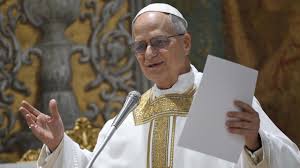
Pope Leo XIV commemorated the first anniversary of the death of his predecessor, Francis, as he addressed worshippers in Equatorial Guinea yesterday.
The pontiff paid tribute to his predecessor’s commitment to the most vulnerable and marginalised groups in society.
As he flew from Angola to Equatorial Guinea, Leo said Francis had given “his witness, his words, and his gestures.
He did so by truly living close to the poorest, to the least, to the sick, to children, and to the elderly.”
In tribute, Leo said, “Let us thank the Lord for the great gift of Francis’ life to the whole Church and to the whole world.
”As Pope, Francis headed the Catholic Church from 2013 to 2025. He died at the age of 88.
The current pope, who was the curia cardinal Robert Francis Prevost, a U.S. and Peruvian citizen, was then elected to succeed him.
Equatorial Guinea is the final stop on the pope’s 11-day tour.
Africa is one of the regions of the world where the Catholic Church is growing.
There are currently around 290 million Catholics living on the continent, and this could rise to more than 700 million by the end of this century, forecasts suggest.
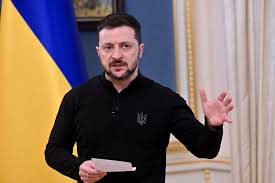
Ukraine’s President Volodymyr Zelensky has condemned a US decision to extend the period during which Russia is allowed to sell oil despite Western sanctions.
The move means countries can purchase Russian oil and petroleum products already loaded on vessels at sea until 16 May.
The US argues that the waiver is meant to ease the energy supply crunch sparked by the US-Israel war with Iran.
But in his remarks on Sunday, Zelensky said “every dollar paid for Russian oil is money for the war” in Ukraine. Widespread sanctions have been in place against Russia since President Vladimir Putin launched his full-scale invasion of its neighbour in February 2022.
The devastating US and Israel attacks against Iran have prompted it to retaliate not only against Israel and US military bases in the Gulf, but also against energy fatalities and other civilian sites across Arab allies of the US in the region.
Additionally, Iran has virtually shut the Strait of Hormuz – the narrow passage where some 20% of the world’s oil and liquefied natural gas (LNG) is usually transported through.
This has led to turmoil in energy markets, with fears that a world recession may ensue if it is not reopened soon.
The US move to ease Russian sanctions on 13 March was widely condemned by Zelensky as well as his European allies.
Extending the waiver on Friday, the US said it wanted “to ensure oil is available to those who need it” as negotiations to end the war “accelerate”.
The Ukrainian leader said Russia had more than 110 tankers from its “shadow fleet” – vessels with obscured ownership designed to help it bypass sanctions – with “over 12 million tons” of oil.
Their sale, he added, would bring $10bn (£7.4bn) to Moscow’s coffers as “a resource that is directly converted into new strikes against Ukraine”.
The Ukrainian leader did not explain what those figures were based on.
But he added that just over the past week, Russia had launched “over 2,360 attack drones, more than 1,320 guided aerial bombs, and nearly 60 missiles of various types at our cities and communities”.
That included the deadliest attack against Ukraine in months on 15 April during which more than 700 drones and missiles were used in multiple waves in one night, killing at least 18 people.
Ukraine has also attacked Russia, particularly focusing on energy facilities.
However, despite ongoing attacks, a stalemate has been reached in the war in Ukraine, with Russia in control of about 20% of Ukrainian territory.
Efforts led by the US to end the war have been put on hold as a result of the war in Iran.



Wike Waives C-of-O Fees for Nigerian Law School
ShareBy Laide Akinboade, Abuja The Minister of the Federal Capital Territory (FCT), Nyesom Wike on Thursday gave an immediate waiver of fees for the Certificate of...
Study Links Alcohol to Higher Cancer Burden in Australia
ShareAustralian researchers on Thursday revealed that alcohol consumption causes a higher proportion of cancers in Australia than previous estimates. According to a statement of...


C’River Debunks False COVID-19 Report, Confirms Only One Case
ShareFrom Ene Asuquo, Calabar The Cross River State Government has refuted a publication by online platforms alleging the discovery of 10 new...


NCC Orders Airtime Credits for Poor Network Service
ShareThe Nigerian Communications Commission (NCC) said telecom operators will compensate subscribers for poor network quality through airtime credits under a strengthened regulatory enforcement framework...


CBN Orders Banks on Monthly Report of Mobile, ATM Transactions
Share The Central Bank of Nigeria has directed banks and other financial institutions to submit monthly reports on failed electronic...


Tinubu Seeks Senate Nod for $516m Sokoto–Badagry Superhighway Loan
ShareBy Eze Okechukwu, Abuja President Bola Tinubu has formally requested the National Assembly’s approval for a $516.3 million external loan...
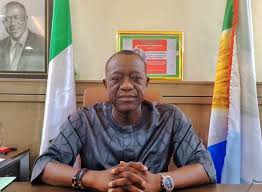

2027: APC Begins Sale of Forms, Adopts Consensus, Direct Primaries
ShareBy David Torough, Abuja The All Progressives Congress (APC) has rolled out a comprehensive and revised timetable for its 2027...


Grant Pardon to Henry Okah, Niger Delta Activists Tells Tinubu
ShareBy Raphael Atuu, Abuja Popular Niger Delta activist Nengi James OON, alongside other youths under the aegis of Advocates for...


NCoS Places Facility on Red Alert over Alleged Attack Threats in Niger
ShareFrom Dan Amasingha, Minna The Nigerian Correctional Service (NCoS) in Niger State has placed all custodial centres across the state on red...


FIBA WWC: D’Tigress Land in Tough Group B with France, Hungary, Korea
ShareNigeria’s D’Tigress will face France, Hungary, and Korea in Group B at the 2026 FIBA Women’s World Cup. The draw set up the D’Tigress for...