
POLITICS
Terrorism Fight: Prosecution, Investigation Prove Difficult – Magaji SAN


By Leo Zwanke
Terrorism remains one of the most daunting challenges confronting Nigeria, with its tentacles spreading across borders and leaving behind trails of destruction that undermine lives, property, and national cohesion.
Over the years, successive administrations have deployed a mix of legislation, military operations, and intelligence strategies in the bid to combat insurgency.Yet, the persistent dilemma has been how to strike a balance between these counterterrorism measures and the protection of fundamental human rights, a debate that continues to resonate both nationally and globally.
It was against this backdrop that Senior Advocate of Nigeria (SAN), Dr. Labaran Magaji, presented his latest book, “Enforcement of Anti-Terrorism Laws and Protection of Human Rights in Nigeria,” in Abuja.
More than a literary unveiling, the event at Rainbow Event Centre became a convergence point for Nigeria’s intellectuals, policymakers, political leaders, and community figures, who gathered to reflect, commend, and deliberate on how the nation can confront terrorism without compromising justice and constitutional freedoms.
The gathering was filled with reflections, praises, and candid commentary on how Nigeria should proceed in confronting terrorism without sacrificing justice and rights.
In his vote of thanks, Dr. Labaran Magaji emphasised on the delicate balance required in fighting terrorism without undermining constitutional rights. According to him:“The fight against terrorism must not be waged at the expense of the fundamental rights of Nigerians. While national security is non-negotiable, the protection of human rights remains the cornerstone of democratic governance. It is possible, and indeed necessary, to reconcile these two seemingly conflicting objectives.”
The Senior Advocate recounted his experiences investigating Boko Haram cases in Borno, Yobe, and Adamawa States, where innocent civilians were sometimes misclassified as terrorists by questionable security methods.
He narrated how in Yobe, entire communities were subjected to crude profiling using an armoured personnel carrier nicknamed(APC)“the computer.” Anybody could fall a victim,” Magaji said. “Thousands of people were detained without any offense linking them to terrorism. That was a motivation for me to go into this research. I wanted to find a balance where suspected terrorists could be fairly tried without denying them their constitutional rights.”
He added that even those caught in the act of terror must be subjected to due process:“Assuming, without conceding, somebody came here with an improvised explosive device wanting to detonate it, our natural instinct would be to beat him to death. But the law requires that even at that, he is still a suspect. That is the weight of the Constitution. That is why this book is not to undermine any institution, but to provide solutions and knowledge that strengthen our fight against terror.”
Former Attorney General of the Federation and Minister of Justice under the Muhammadu Buhari administration, Abubakar Malami SAN, hailed the work as both timely and courageous.“During my tenure, one of the toughest balancing acts was ensuring that our anti-terrorism measures complied with constitutional guarantees and international human rights commitments.
Dr. Magaji’s book provides a scholarly framework grounded in both law and practical realities. It is a resource that policymakers and legal practitioners must not ignore.”
Malami stressed that law enforcement strategies must go hand-in-hand with legitimacy:“The fight against terror cannot be won by arms and laws alone. It must be won by building trust in government institutions.”
Governor Abdullahi Sule of Nasarawa State, represented by Deputy Governor Dr. Emmanuel Akabe, linked the subject of terrorism to development challenges.“Terrorism thrives where poverty, illiteracy, and unemployment are prevalent. As leaders, we must understand that the best form of counterterrorism is to build an inclusive society where citizens feel a sense of belonging.
“I commend Dr. Magaji for this intellectual contribution, because governance must be rooted in knowledge.”
Sule also noted that Nasarawa State was proud of Magaji’s elevation to SAN, describing him as “a son of the soil who represents the state’s growing contribution to national development.”
Justice Sidi Bage, Emir of Lafia and retired Justice of the Supreme Court, highlighted the judiciary’s pivotal role:“The courts remain the last hope of the common man, and in terrorism cases, the weight on the judiciary is enormous. Judges must interpret anti-terrorism laws in ways that protect the state without eroding freedoms. Dr. Magaji’s work is a vital tool for both the bench and the bar.”
Philanthropist and political stakeholder, Dr. Muhammad Maikaya, praised Magaji’s work for bridging academia and policy.“This is not just an academic text, it is a practical guide for policymakers. Magaji has demonstrated that security and rights are not mutually exclusive but mutually reinforcing. We cannot win the fight against terror without winning the confidence of the people.”
The Accountant General of Nasarawa state Dr. Ahmed Musa Muhammad emphasized that the book echoes long-standing advocacy points.“ you cannot bomb terrorism out of existence. You must address the causes and respect human rights. Dr. Magaji’s book is a ‘call to conscience’ for the state. It should be on the desks of lawmakers, security chiefs, and judicial officers.”
Political analysts at the event also weighed in on the larger implications while Barr. Samuel Ogah, a constitutional lawyer and political commentator, said the book could redefine Nigeria’s security debate.“For years, politicians have exploited insecurity either to score points or to justify draconian policies. What Dr. Magaji has done is to strip the issue bare, showing that the fight against terror must not turn the state itself into a violator of rights.”
Hon. Musa Ibrahim, an APC chieftain from Toto Local Government, described Magaji’s elevation to SAN as a political asset for Nasarawa.“He is not just a lawyer; he is a voice of reason. Nasarawa needs intellectuals like him who can influence national policies from an informed perspective.”
Mrs. Grace Auta, a PDP women leader in Nasarawa, added:“We may belong to different parties, but on security, we must unite. Magaji’s book provides us with knowledge to press for reforms in how terrorism is handled.”
Observers from civil society, including the Centre for Democracy and Development (CDD) and the Transition Monitoring Group (TMG), also expressed interest in collaborating with Magaji to mainstream rights-based approaches in counterterrorism policy.
Legal scholar Prof. Yemi Akinseye-George SAN, who reviewed the book, described it as “a masterpiece that combines doctrinal analysis with field experience.”“This book demonstrates that Nigeria can lead Africa in showing how to fight terror lawfully. It should be adopted by universities, law schools, and training academies for security forces.”
By the close of the Abuja event, one consensus had emerged: Dr. Labaran Magaji’s elevation to SAN and his new book are not just personal achievements, but milestones for Nigeria’s legal and political landscape.
As one political pundit put it:“Nigeria needs more SANs like Magaji — not only Senior Advocates of Nigeria, but Senior Advocates of Nationhood.”
The launch of “Enforcement of Anti-Terrorism Laws and Protection of Human Rights in Nigeria” was therefore more than a ceremonial event; it was an invitation to reflect, debate, and chart a sustainable path forward.
As Dr. Magaji aptly noted: “The true measure of our success against terrorism is not only in the number of battles won, but in how faithfully we preserve the values of humanity while confronting terror.
” The Abuja gathering was ultimately about more than a book—it was about Nigeria’s soul, and the critical question of whether the nation can defeat terror without becoming a terror to its own people.
By David Torough, Abuja
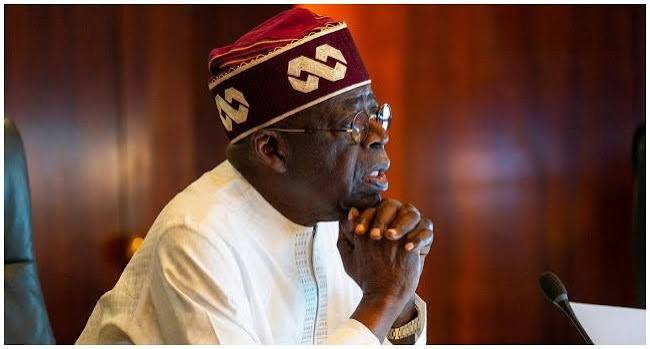
President Bola Tinubu has signed the Appropriation (Amendment) (No. 4) Bill, 2025, extending the implementation period of the 2025 budget from September 30, 2026, to December 31, 2026.
The amendment was passed by the Senate and the House of Representatives on Tuesday, September 29, 2026, before being transmitted to the President for assent.
According to a statement issued on Wednesday by Bayo Onanuga, Special Adviser to the President on Information and Strategy, the extension will give Ministries, Departments and Agencies (MDAs) additional time to complete ongoing capital projects.
The statement said the move would ensure that funds already appropriated are fully utilised without disrupting critical government programmes.
“The extension gives Ministries, Departments and Agencies more time to complete ongoing capital projects,” the statement said.
“It ensures that funds already appropriated are fully put to work for Nigerians, without disrupting critical programmes.”
Tinubu also commended the leadership and members of the National Assembly for what the statement described as the prompt consideration of the amendment.
The president said the development demonstrated continued cooperation between the Executive and Legislative arms of government in the interest of the country.
The amendment therefore allows the Federal Government to continue implementing the 2025 budget until December 31, 2026, instead of the earlier September 30 deadline.
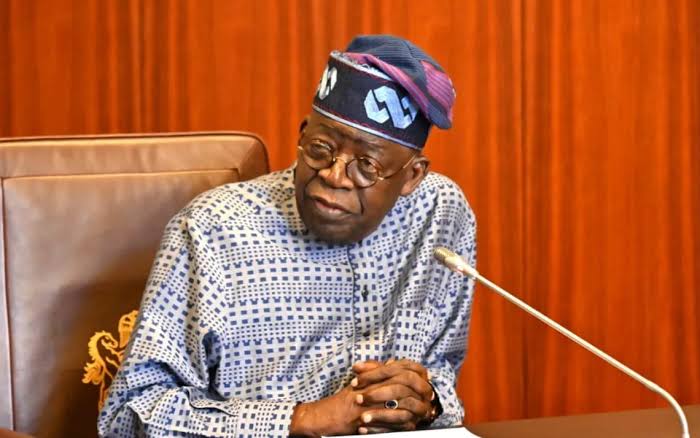
President Bola Tinubu has submitted the 2026 Statutory Budget Proposal of the Niger Delta Development Commission (NDDC) to the House of Representatives for consideration and passage.
This is contained in a letter dated Aug.
20, 2026, addressed to the Speaker of the House of Representatives, Rep. Abbas Tajudeen and read by the Deputy Speaker, Rep. Benjamin Kalu at plenary on Tuesday in Abuja.In the letter, Tinubu said that the budget was prepared by the Minister of Niger Delta Development in line with the provisions of Section 121 of the 1999 Constitution.
According to him, the proposal was based on the NDDC’s revenue and expenditure forecasts and it aligned with the fiscal and developmental policies of the Federal Government and the Renewed Hope Agenda.
He said that the proposal also took into consideration the 2024–2026 Economic Recovery Growth Plan as well as key assumptions of the 2026 Appropriation Act of the Federal Government.
The President said the NDDC had prioritised programmes aimed at improving youth empowerment, energy and power supply, education, industrial and enterprise development, health and security.
He also listed increased agricultural productivity among the commission’s priorities, saying the interventions were intended to lift a significant number of citizens out of poverty.
Tinubu urged the House to give the proposal consideration and ensure its timely passage.
“I look forward to the timely passage of the 2026 Statutory Budget Proposal of the NDDC by the House of Representatives,” he said. (NAN)
By David Torough, Abuja
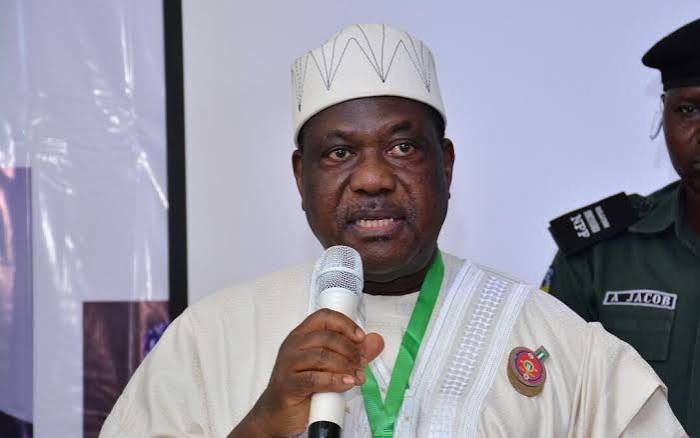
The Secretary to the Government of the Federation, Sen. George Akume, has charged Ministries, Departments and Agencies (MDAs) to translate the findings of the 2026 Transparency and Integrity Index (TII) into concrete improvements in their operations in order to strengthen accountability and public trust.
He gave the charge while delivering the keynote address at the presentation of the 2026 Transparency and Integrity Index held at the Auditorium of the Federal Ministry of Finance, Abuja.
The SGF said the administration of President Bola Tinubu, remains committed to open, accountable and responsible governance, stressing that public institutions must ensure that their policies, programmes and actions are transparent, visible and understandable to Nigerians.
According to him, the Index has become a vital instrument for assessing accountability, openness and ethical standards across government institutions, while providing MDAs with clear benchmarks to identify areas of strength and gaps requiring improvement.
He urged heads of MDAs to integrate the findings and indicators of the Index into strategic planning, performance management, budget priorities, procurement processes, staff training and digital disclosure rather than allow the report to become another document left unused.
“The report should not sit on the shelf and should inform management decisions, budget priorities, procurement processes, staff training, digital disclosure, and how you communicate with the public,” he said.
Akume emphasised that transparency should be viewed as an institutional asset rather than an administrative burden, noting that integrity must be embedded in the procedures and culture of public institutions through clear policies, proper record-keeping, effective oversight, ethical leadership and consequences for wrongdoing.
He further tasked MDAs to take advantage of technology by ensuring that their websites and data portals provide accurate, timely and user-friendly information, including current budget, contract and service information, to enable citizens to effectively engage government and track the utilisation of public resources.
The SGF explained that the 2026 TII assesses public institutions in five critical areas comprising fiscal transparency, open procurement and contracting, human resources and inclusion, control of corruption and citizens’ engagement, adding that the initiative complements existing public service reforms, anti-corruption measures and Nigeria’s Open Government Partnership commitments.
He noted that the ultimate objective of transparency and integrity should go beyond institutional rankings to building public institutions that Nigerians can understand, engage with and hold accountable, while safeguarding public resources and improving service delivery.
“The Federal Government remains fully committed to this goal. We will continue building institutions that are transparent, accountable, professional and responsive to the needs of the people,” the SGF said.
Akume commended the Bureau of Public Service Reforms (BPSR) and the Centre for Fiscal Transparency and Public Integrity (CeFTPI) for sustaining the initiative, while calling for stronger collaboration among government, civil society, professional bodies, development partners and the media in strengthening transparency and bringing corruption to its knees.



Atiku Abubakar: Perhaps it is Time to Give Him a Fair Hearing
ShareBy Ishaya Inuwa Durkwa There comes a time when a people must decide whether yesterday’s grievances will continue to determine...

Zamfara at 30: At Last, Zamfara Has Begun to Fly
ShareBy Suleman Ahmad Tudu On October 1, 1996, Zamfara State was carved out of the old Sokoto State by the...

FG Moves to Automate Teachers’ Awards, Ends Manual Selection Process
ShareBy Tony Obiechina, Abuja The federal government has digitalised the selection process for the 2026 President’s Teachers’ and Schools’ Excellence Awards (PTSEA),...

Utsev Leads Nigerian Delegation to World Water Congress in Glasgow
ShareBy David Torough, Abuja Minister of Water Resources and Sanitation, Engr. Prof. Joseph Terlumun Utsev, will on Saturday, October 3,...


BBNaija Season 11: Keivo Becomes Second Housemate to be Disqualified
ShareKeivo has become the second Big Brother Naija housemate to be disqualified from Season 11. This follows his physical altercation...


Mofe-Damijo Envisions Bright Future for Nigeria at 66
ShareVeteran actor and public speaker, Richard Mofe-Damijo, has expressed optimism about Nigeria’s future, describing the country as a work in...


My Wife Paid $20k for Her Surgery Herself, Peller Fires Back at Carter Efe
ShareNigerian content creator and streamer, Peller, has fired back at Carter Efe after the streamer compared their relationships while praising...


I Didn’t Want to be in the Spotlight – Tems
ShareGrammy-winning Nigerian singer Temilade Openiyi, popularly known as Tems, has revealed that despite wanting musical success, she was uncomfortable with...
Nigeria at 66: Which Way Nigeria?
ShareBy Tochukwu Jimo Obi Sixty six years after independence, Nigeria should be asking itself a question that can no longer...

Nigeria at 66: Booming Banks, Struggling Nation, Where Is the Promised Prosperity?
ShareBy Blaise Udunze As Nigeria celebrates 66 years of independence, it must ask whether the country has delivered the prosperity...