
Uncategorized
The Deceptive Tactics of IPOB

By Emeka Jerome
All warfare is based on deception. Hence, when able to attack, we must seem unable; when using our forces, we must seem inactive; when we are near, we must make the enemy believe we are far away; when far away, we must make him believe we are near –Sun Tzu
In the words of the revered war strategist Sun Tzu, deception is a critical component of war execution.
Echoing Sun Tzu’s teachings, the proscribed Indigenous People of Biafra (IPOB) has refined the craft of deception, using a tapestry of falsehoods to advance and achieve their objectives. This treatise will highlight how the group has continually employed deception as a weapon of war to deceive gullible members, keep the public attracted to them and deepen its presence in the south east. No doubt, IPOB’s ascent to prominence was founded upon a bedrock of deception right from its inception. Spearheaded by Nnamdi Kanu, the emergence of IPOB was an outgrowth of the supposedly reformed Movement for the Actualization of the Sovereign State of Biafra (MASSOB), a pro-secessionist group that had already seen its power wane and was known for its cunning activities and propensity for violence.Although IPOB came into being in 2012, Kanu had already garnered a significant following due to his inflammatory broadcasts on Radio Biafra, a responsibility he had taken on as a member of MASSOB. Recognising that the decline of MASSOB could spell the end of his influence, Kanu, aiming to secure both relevance and financial gain, intensified his facade of advocating for Biafra’s freedom. He accomplished this by spreading propaganda against the Nigerian Government and fostering optimism among the susceptible members of the public. By rebranding and emerging as a new entity, IPOB projected an image of a fresh movement seeking self-determination while carefully avoiding associations with MASSOB’s past activities. His strategy worked because in no time, Kanu assumed command over the sphere of IPOB’s operations, rapidly ascending to its helm.
When IPOB started its brand of agitation, it was cheered on. Nnamdi Kanu became an overnight messiah. The poor vulnerable uneducated market apprentices became his ardent followers. He exploited them. Kanu adequately deployed his expertise of Radio Biafra to deceive. By broadcasting incendiary messages and misinformation, he manipulated emotions and perceptions of the public to IPOB’s advantage.
The false narratives he propagated about the Nigerian Government’s actions and intentions fuelled anger and frustration among his followers. The use of hate speech and derogatory language against Government, portraying them as oppressors and enemies of the people painted a one-sided narrative of victimhood which generated sympathy for their cause, making it difficult for their followers to critically assess the situation. By leveraging international media attention, IPOB amplified their narrative on a global scale. Sensationalized headlines and stories about their activities played into their strategy, allowing them to maintain the façade of a legitimate movement fighting for self-determination while downplaying or omitting their more radical actions.
The group while orchestrating actions that provoked responses from the Nigerian Government, created martyrs and gained international sympathy. Most of their tactics aimed to paint IPOB as a peaceful movement unjustly oppressed by a hostile government, thus diverting attention from their own aggressive activities. Ironical!
Unsurprisingly, Igbo diaspora across Europe and America began to join IPOB. Politicians back home were consulting its leader, Kanu. His house became a Mecca of sorts. Kanu got emboldened and then, combative. He became proud and dictatorial. His words were feared. He aspired by every means to be like Ojukwu, famed for his lionic roars. Kanu had disciples. Within this newfound position, Kanu artfully manipulated the collective sentiment, leveraging deception to foment hostility towards the government under the guise of championing the elusive cause of Biafran freedom. His financial resources began to significantly swell in different hard currencies. He skillfully garnered financial support from both the rich and the poor under the ploy of rallying donations to fuel the secessionist agenda. Simultaneously, as his personal coffers grew richer, he persistently peddled false hope to his followers, deceitfully and heartlessly portraying himself as their champion in the struggle. Kanu became bolder and went ahead to establish a military Wing, the Eastern Security Network (ESN). Operating ostensibly to counter Fulani herdsmen in the South East or so we were told, the ESN initiated a series of assaults designed to stoke the flames of ethnic conflict and destabilise the nation. Paradoxically, the reported activities of Fulani herdsmen have notably diminished, however IPOB’s actions in the region has remained persistent.
In what initially appeared to be a child’s play in the beginning, soon transformed the South East into a breeding ground for violence, marked by a surge in assassinations, bloodshed, intimidation and various forms of mayhem. Security agencies sent to the zone to restore order became targets for annihilation. The group’s orchestrations have, indeed, in the spirit of Sun Tzu’s teachings, harnessed deception’s formidable power to its advantage. Recognising that Kanu, a Nigerian based in London and his group held the potential to plunge the country into anarchy if left unchecked, the Nigerian government took proactive steps. It proscribed the group and went a step further by extraditing Kanu back to Nigeria. This was to ensure he faced charges for the chaos and destabilization he allegedly caused in the Southeastern region. In response, the group members protested and began issuing out senseless sit-at-home orders every Monday. Doom awaited whoever dared to come out on days meant for the so called sit-at home. Even school children were not spared. The young and old met same fate. For each day sit at home order was enforced, millions of naira was lost. Trading, economic, educational activities were halted. The sick does not dare to go to the hospital. Regardless of the protests voiced by the local inhabitants, IPOB ruthlessly dealt with anyone who dared to defy their directives, ironically targeting the very individuals they professed to champion and liberate. Deception at the highest core! For the people, the snake they nurtured in their bosom has now turned around to bite them.
With Kanu now in custody and facing legal proceedings, his disciple Simon Ekpa, in faraway Finland, capitalized on his mentor’s influence to achieve his own rise to prominence. Recognising the opportune moment for him to also cash out, Ekpa launched a deadlier faction called the Autopilot and afterwards the Biafra Government in Exile. He continues to give false sense of hope to liberate Biafrans while using them to swim in millions. Same as his mentor, it has now become unmistakably clear that IPOB’s motivations are primarily driven by financial gain. Under the pretext of calling for the release of Kanu, he dishes out orders to for sit-at-home, organises fundraising frequently with the false and deceptive narrative of using the money to fund ESN. How laughable. Ekpa became more vicious. The South East is currently in a mess. Sit-at-home orders stretches for weeks with zero considerations of how it negatively affects the poor residents. Meanwhile the person issuing out the directive is doing so from the comfort of his home abroad.
IPOB’s skillful use of deception as a strategic weapon of war becomes even more apparent when considering recent developments. They are now attempting to distance themselves from the autopilot faction of IPOB led by Simon Ekpa. IPOB is doing double speak. At one instance, it wants to distance itself from Sit-at home. At the other, it states that though it started it, Simon Ekpa is not implementing it its own way. But at least, it was Kanu and IPOB that started it. They are in agreement. While they vehemently deny that the Eastern Security Network (ESN) engages in combative and violent activities, this assertion contradicts the evidence provided by the numerous arrests made and the ongoing campaigns carried out by the military and other security agencies. As the number of arrests increases, IPOB intensifies its efforts to disassociate itself from these individuals, seemingly attempting to detach their image from these actions. Yet, in ironic twist, they continue to advocate for the release of these very individuals they claim not to be affiliated with. The contradictory stance of denying membership while concurrently issuing press releases about the detention of their members raises questions about the veracity of their claims. It is as if they are performing a delicate balancing act, trying to maintain an image of innocence while supporting those apprehended.
Furthermore, Simon Ekpa’s frequent calls for a sit-at-home protest have created a conundrum for the group. In light of the public’s skepticism and widespread condemnation, they appear to be shifting blame onto Ekpa’s faction, using this as an opportunity to once again deceive the public into believing that they are the virtuous side. But it is evident as daylight that in a larger context, IPOB’s insistence on non-violence stands in stark contrast to past actions. During the EndSARS protests, Nnamdi Kanu’s directive to his followers to burn down Lagos demonstrated their potential for incitement. The ensuing chaos and destruction following this directive were widely observed. Their claims of nonviolence also clash with their association with the Ambazonian secessionist group in Cameroon, an entity known for its aggressive tactics. The inconsistency is further highlighted by their clashes with the Army and Police in the South East. These confrontations raise questions about their true intentions and undermine their assertions of nonviolence. In the face of these complex and often contradictory actions, IPOB’s manipulation of information and narratives emerges as a deliberate and sophisticated strategy to shape public perception, rally support and maintain a facade of innocence even as evidence points to a different reality.
Another strategy being deployed by IPOB is the sustained misleading narrative that all rival factions other than its own are sponsored by the Federal Government or its agencies. This claim is distorted and contradicts the evident struggle for supremacy between Kanu and Ekpa. It is important to note that Kanu broke away from MASSOB. Ekpa is only traversing a similar path. Why then is Kanu angry and propagating falsehood for the purpose of deception? At the moment, the times are not good for the IPOB. It is in dire straits and fight of its life. It is in a big struggle as its days are numbered. Sooner than later, like its predecessor Biafra-Republic-agitation-associations, will become extinct and go into oblivion. This is not a false prophesy. It is a matter of time. Again, like the South East elite and governments, IPOB has got a wild cat for a pet and it turned to feed on it. All is not well with Kanu and IPOB. They have both crumbled and crawling. There is fire on the mountain and IPOB is in disarray. It is struggling. Kanu is in detention. His IPOB is in shatters. Disorganised. Only vultures have surrounded him. Everything is wrong. There is leadership tussle. IPOB has broken into factions. There is Simon Ekpa autopilot. There is Chika Edozien Directorate of State (DOS). IPOB is in a big fight over its finances. Kanu’ s younger brothers want to control it. In Germany, Italy, London, France among others IPOB huge funds is at the heart of a fight. Some accounts have been blocked. Others are objects of litigation. Kanu is worried. He is losing control. There is a bigger fight among Kanu’s legal team. No cohesion. Some feel entitled. There’s contest over who is the lead counsel. Some lawyers who never had addresses or any profitable ventures have found rest in IPOB. Some who couldn’t have won the simplest civil cases in a customary court are cashing out on IPOB and fleecing Kanu. Poor him.
While IPOB burns, Southeast also burns. Eastern Security Network, unknown gunmen, kidnappers, hostage takers, warlords, combatants, killers, marauders, blood suckers, violent vigilantes have taken over the region. Only a reign of terror is visible. IPOB is helpless. Simon Ekpa, from far away Finland is fueling the crisis. Violently forced sit-at-home order is enforced by those IPOB struggles to deny are not its members. In the absence of Kanu, Ekpa has tried to mimic him in voice, attitude and carriage. The kill-them-order, has accentuated. Ekpa tries to outdo Kanu. Ironically, Kanu is in denial. He and IPOB are desperately denying that Ekpa isn’t their member or working for them.
A time was when Kanu publicly called for attacks on Nigerian Soldiers and other law enforcement agents including the police. Kanu called for violent attack of fulani herdsmen. He called many Igbo politicians names. He called them Efulefu. What has Ekpa done differently? IPOB is just intelligent by half. Now, the organisation and Kanu want Monday sit-at-home cancelled but used for Economic Empowerment Day (EED) and call/march for his unconditional release. Any difference? Whether as sit-at-home or EED or call for Kanu’s release, is it not the same? Double speak! The new plan is even more dangerous. It will bring Kanu’s faction of IPOB into confrontation with Ekpa’s. Then blood will flow. A bird that leaves the ground and perches on the anthill is still on the ground. This is an Igbo adage. Kanu claims IPOB is not responsible for the dastardly acts in the South East. But he has not denied tasking ESN to be bloody. Even now, he tries to deploy the ESN for certain accomplishments. Initially, we were told ESN was fighting Fulani herdsmen. But is that still true? We were told it was about Buhari. Is he still there?
There is another angle we are ignoring. Kanu has never denied not to have committed most of the things he is accused of. His very dull infantile defence is that he did that in the UK, a jurisdiction not covered by Nigeria. Fact is that Kanu and his cohorts have injured the South East, Ndigbo and humanity. History will not judge him right. He may pontificate and grandstand. He may look for scapegoats and point accusing fingers to “innocent” persons and places. He has destroyed his homeland. He has destroyed Igbo culture, value and ethical discipline. Igboland is in ruins, the type never suffered during the civil war. While IPOB thinks or believes that its tactics are superb and impregnable, they are rather self-destructive. The tactics have not only impeded peace in the South East but inhibited the resolution of the crisis and perhaps, encouraged the continued incarceration of Kanu.
At the end, Ndigbo will understand the essence of the current agitation. They will understand that it is a complete ruse. It is a manipulative deception; a heist organised by some negatively ambitious young men who, in their desire to be rich, started a variant of 419/Yahoo Yahoo. It worked for them. They got the money and attention of the vulnerable. They used intimidation, harassment and fear mongering to actualise their aim. The bone of contention among IPOB leaders is about how to keep and share the booty. The one behind the bars wants to maintain a control from detention. The money is so huge to be left in the hands of others. Kanu is voracious for money. IPOB is rich and the funds cannot just be left like that. The agitation is no longer about Biafra or Ndigbo. It is about Money, Women and Power. It is an ego fight among select narcissists. The IPOB leaders do not want the Igbo followers to know this. It will not be good for their narrative and end goal. It will deflate the deceptive tactics. Keeping the propaganda and fake news alive is the best they can do. The deceptions work, at least, for now. But the lies will definitely die someday. There is a short span of life for lies and deceit. Sooner than later, light and knowledge will come upon Ndigbo. May that day come. And quickly too.
Emeka Jerome, writes in from Umuahia, Abia State.
Uncategorized
Adebayo, Obi Have Capacity, Knowledge Determination to Lead Nigeria – Pastor Ituah Ighodalo

Pastor Ituah Ighodalo is a prominent man of God who supritends Trinity House, a non denominational Christian fellowship centre. He is also the founder, African Leadership, a platform which seeks to informs and finds solutions to the leadership problems plaguing Nigeria.
In this interview filed by Mike Odiakose, he talks about the ingredients that a good leader must possess, the perceived Christian genocide, the USA threat against Nigeria, Adewole Adebayo and Peter Obi and their place in political history.
You have a platform for discussing leadership traits that can benefit government and governance. What inspired its formation?
The African Leadership Group, (ALG), that’s what it is called under the auspices of the Tri Africa Foundation, is our response to trying to solve three or four issues in Nigeria and in Africa or in Africa.
Number one, what are the people’s thoughts on an effective and efficient society?Number two; how do we resolve our leadership question and get the right leaders? Number three; how do we better inform the people about what is going on around them? Number four; how do we identify leadership potential and potential leaders. That’s what the African Leadership Group is set up to do? It does that through about three or four different kinds of activities.
The first activity is the discussion that we have once a week where we identify people who speak on the subject matter that we have identified in terms of leadership. We do this through this conversation and that conversation, informs and identifies potential leaders and advises leadership. Two: we have some town hall meetings where we go around the whole world educating Africans and Africans in diaspora about what the situation is.
Three; we have some trainings in the school of leadership and development. And also the community impact activities that we do. Then, we have a fund, Hope Alive Fund that we use in empowering indigent people who qualify.
Adewole Adebayo, Peter Obi were some of your guests on the platform. What is your assessment of their grasp of the issues affecting the country, and do you think they have the capacity to lead?

I think both Peter Obi and and Adewole Adebayo have the capacity and the knowledge and the determination to lead the country. I think they do. Peter Obi is not even young anymore. He’s 64. That’s not a young man. Maybe relative to what we’ve experienced in Nigeria, he may look young. But 64 is not young. Adewole Adebayo is 53 years, he is young. He has the energy and the strength and the knowledge. What he probably may not have is the wide bandwidth. You know, the wide bandwidth of interrelationships and connections. But that is what a party system does for you. If for example, he was in a party that was a broad-based party, a strong party, they will make up for his lack of bandwidth and they will pull the party together and promote him as a good candidate.
Adebayo speaks very well. He’s very knowledgeable. Although I have not tested his capacity to implement things. But in terms of his knowledge, his enthusiasm, and his roadmap, he does he’s spoken very well.
Q.Peter Obi is another individual with a huge followership. What is your opinion of him?*
A.Peter Obi has the added advantage that he has been tested before as a governor in Anambra State. He claims that he left a very good record there. He did very well. When you talk to the people of the state, they’re in two opinions. Some think he did well, some think he could have done better. But also he’s a hard-working man. He has the reputation of being frugal, a good manager of money and so and so forth. I think he would have done a decent job as the president of Nigeria if he were president. But I still think that in Nigeria, we’re still looking for that man who has the capacity, wherewithal, compassion, determination, who has the energy, and who has the love for Nigeria, genuine and sincere love for Nigeria that really really wants to turn Nigeria around.
Younger person, a person with energy, you know with some level of maturity. So you can’t be too young. I think a person between the ages of 45 and 65 should be able to do this job. I think there is need some maturity.
Candidate below 40, might be a bit too inexperienced and not have the network and the broad base to handle a complex place like Nigeria. But if we have 40 and 45 years above and is surrounded by a very good party system or good social system, good team of advisors who have seen different aspects of Nigeria. such candidate should be able to run the country.
What does it really take to effectively govern Nigeria?
The person must understand the history of Nigeria, the background of Nigeria, the formation of Nigeria, the different tribes and persons, and their complexities, and their interests, the religions of Nigeria. You must be a very accommodating person. Very honest, corruption-free, hard-working. Must be a visionary, who sees a great future for Nigeria. Must be bold. Have the capacity for international relations and interconnections. And you must be determined to see Nigeria work. You must not be a greedy, selfish, self-oriented person, which is the unfortunate lot of our leaders today. They’re more interested in themselves and what they want to do for themselves and not in the collective good of the average Nigerian.
Looking at these leadership qualities, do you think we have someone that can fill into this gap?
I just said that we’re still looking for that person. But I can assure you that people like that exist. It’s just that we may not know them. We may not know them because they’ve not been loud people. They’ve not made noise all over the place. They’ve not been exposed to public attention and all that, but they do exist. They’re very very competent people in Nigeria. And if you go all over the world, a lot of Nigerians are doing extremely well. They are available, which is part of what we are trying to do at ALG to find these people to bring them out, to talk to them, to find out where they are, what they are doing. And even if they are not president, they can be so support material. Because to run Nigeria, you need quite a good team. You need a good team of different kinds of people.
Nigeria and leadership challenge. What’s the way out?
There’s a way out. We are just in a moment in time. We don’t know what’s going to happen in 30 years time, 40 years time, 50 years time. Nigeria is evolving and definitely there is a way out. Right now we have even a new crop of young Nigerians below 20, below 25. Their thinking is different. In another 30 40 years, they’ll be the ones in leadership. They will be able to clear us out. This cannot continue. But what I think for the present time, what we need to do is one; educate Nigerians. A lot of people get away with what they do in Nigeria because a lot of people are not informed. They’re not educated. They don’t know the difference between right and wrong, good and bad. So, if you educate Nigerians and get them informed, they’ll be able to take a much more stronger stake in in their well-being and in their production.
This is what changed France and took them out of feudal rulership of kings and monarchs. It took them out of the monarchy because over time,the French people became much more educated, much more aware, much more informed. And one day there was enough people who are very well informed who led the revolution against the king Louis XVI. He was beheaded. His execution by guillotine on January 21, 1793, at the Place de la Révolution in Paris, marked a dramatic and irreversible end to centuries of a continuous monarchy, including the earlier feudal period.
That kind of thing will also happen in Nigeria that by the time a lot more people are well informed, they will stand and say, we are not going to take this any more.They will define properly the kind of president or leader they want and they will not allow their votes to be bought. Not allow votes to be manipulated and them taking advantage of.
It would happen over time, then you have enough people that are educated and bold enough, a lot of what is going on now will not be possible in Nigeria or anywhere else in the world.
The second is that by divine providence, something can happen that can put somebody of reasonable quality and depth in leadership in Nigeria. And it has happened before. At least three or four times. Divine providence brought in Obasanjo his first time. He was second to Murtala Muhammed, unfortunately, Muhammed who was also a great leader, lost his life and that made Obasanjo becoming president, it was divine providence. God brought him again the second time. The second time around, it was Abiola that was running for presidency. Between Babangida and Abacha, they prevented Abiola from claiming his mandate.
Then all of a sudden, Abacha died, Abiola died, and again, we brought in Abdul Salam. Because divine providence that brought in Abdul Salam who for fear of his life and international community in about 11 months conducted an election and divine providence also brought Obasanjo out of prison with no money to become president of Nigeria.
This is probably divine providence. A lot of things are providential, and then somehow God can also make that happen again. Divine providence made Jonathan President. Jonathan on his own wouldn’t say he wants to be president of Nigeria, never could have happened based on his exposure and his background at that time. But somehow, Obasanjo hand picked him to be number two to Umaru Musa Yar’Adua who was sick and died and providence brought Jonathan into leadership and so on so forth.
To be honest, almost everything that has happened or not happened, there’s been providence in it. Okay, even our president President Bola Tinubu, again was pushed in there by divine providence. To become governor of Lagos state, it was divine providence. And that changed the trajectory of his life. That hand of providence is still working and has not failed and will not fail.
And that’s why prayer is important. Calling upon the name of the Lord is important. Everybody who’s thinking that people are wasting their time praying, they don’t know that God walks through a process. Pharaoh was still very much in charge of Egypt, but Moses was growing also in the same Egypt. And when the time came, Moses took his place and let the children of Israel out of Egypt. When the israelite were going to leave Egypt, they didn’t know. They thought it was impossible. They didn’t see the way out.
They didn’t know that there was a Moses in the wilderness just waiting to come about to speak to Pharaoh and challenge him. Nobody else had the guts or the authority to do that. But Moses had to be in the wilderness to come back and do it. And he did it with the backing of God. So, God is still alive. Joseph was living happily in the same Egypt. They didn’t know that he wanted to become leader of Egypt. He was even in prison just like Obasanjo.
We have a lot of David’s all over the place. Waiting to be discovered. Divine providence brought David too and he killed Goliath and his fame grew. So that hand is still available and that hand can only be moved by prayer and righteousness of a few. You know it doesn’t even have to be the whole country.
God is still alive. And what he says in 2 Chronicles 71:14 that:If my people, which are called by my name, shall humble themselves, and pray, and seek my face, and turn from their wicked ways; then will I hear from heaven, and will forgive their sin, and will heal their land.
I have no doubt about it. Nigeria is too blessed. Nigeria is too important to God. Nigeria is too favored for it not to succeed. There is a lot of hope.
To be honest, if we look at the country critically, one can still go out there and walk and make some money………It’s still a big economy in spite of the level of not so good leadership because God has been extremely gracious to us. There are many many worse countries than Nigeria.
Even in terms of human rights, the human rights record is not terrible. The banditry is horrible now. The insecurity is disastrous. The level of infrastructure is so poor and so and so forth. But all these things can change very quickly if we get the right kind of people who are saying the right kind of things.
You mean Nigeria is not doing bad despite economy challenges, perceived genocide against Christians, terrorist having free day in the country?
Well, there’s a lot of poverty in Nigeria. But thank God, it’s not at the level of starvation. There’s some countries today where there’s a whole lot of starvation. You can’t live in Gaza right now. There are some parts of Lebanon you can’t leave in. You can’t go to Southern Sudan. It’s terrible. And there’s some parts of South Africa with black people living there that is really horrible.
But in Nigeria, there is a lot of resilience and people still keep coping. Lives are wasted, no doubt. People are hungry, no doubt. But people keep going and keep going . So, I’m even grateful to God that we are not at the point of war or the point of starvation where we experience disease outbreak, or kwashiorkor. That gives us a lot of energy and a lot of hope and a lot of potential To be honest, we’ve a bit of orientation. We can up our game very quickly. There’s nobody in Nigeria that cannot be productive.
And on insecurity…?
To the insecurity, it’s all politics. some people are using religion and and banditry and destruction of people to play politics, to make places ungovernable for people, to make some people lose elections, to make some people look bad in terms of governance. That is part of the origin.
Then some people are insisting that unless they have power in one way or the other, then they will continue to ferment this crisis and make Nigeria look terrible until they are in power. The third is that some people are misled in terms of their religion thinking that this is the right thing to do, but some people know the right thing, but they are deliberately misleading them and getting them to cause this havoc. But the most painful thing now is that people are making money from it. People are making money on both sides, The bandits are making a lot of money. They have never seen that kind of money before. Then, the people sponsoring them are making money and then the people who are supposed to capture them, some of the leaders in security forces are making money. They’re doing their best to make sure that they sabotage the process. It is going to take a lot of determination. It will take very sincere leader, determined and objective leader to change this scenario.
The whole process again has been corrupted. So you have people making money. The security forces are making money through the investment in money to buy equipment.Those getting benefit from it and making other people homeless and unhappy, should remember God is not asleep. He is the right judge who will judge everyone accordingly. People should think for posterity, legacy, think for things that will happen after they have gone. We should learn to fear God and leave behind something that the world will celebrate them for.
The United States has designated Nigeria as a “Country of Particular Concern” due to religious freedom issues. What are the implications of this, and what is your take on the speculation about the US government intervening in Nigeria over perceived genocide against Christians?
The first effect is what it is having now. Our government is waking up and getting a bit anxious that America is putting their eyes on them. That’s the first effect. The second effect is that America has told the whole world that I am interested in Nigeria. There’s not been a time in our history that America has shown so much interest in Nigeria.
The third implication that there are sanctions, against the country and against individuals. There are some people now on what they call a watch list by America. That means that their movement, finances, activity is being watched. And some of them may not be allowed to come into America. Maybe at some stages there’s enough evidence they will track their money and they may confiscate their assets. Okay? If they think that the assets or monies were wrongly obtained here and there, they will confiscate it. So things that they would never have bothered with before they are now bothering with.
And then finally there’s a threat of some kind of military action not to cause a war against Nigeria, at least we haven’t got into that level, but to rescue these people that we have not been able to rescue or to capture the bandits, you know? So there’s that threat. There’s no way that sort of a thing would happen that would not destabilize our own internal security and all of our people.
And the danger with America is that once they start and they begin to taste blood, they don’t stop. They may begin to look for ways of even destabilizing our politics and causing us trouble. They’ve done it before in Afghanistan, Iraq, Southern Sudan, Libya. They removed Gaddafi on a false pretext and or whatever it is.
It was all wrong what they did. It was all politics and they’ve left Libya prostrate now. Libya is like a ghost of itself. Places where education was free, resources were free, petrol was almost free. Now they are almost like a like a barren land, and that’s America for you. They will cause this array so that they can take advantage of places and resource and they’re now looking at Nigeria that way.
We must come together as reasonable Nigerians and resist this by doing whatever we need to do. The first thing is to do the right thing. Our leaders know the right thing to do. Let them do it.
Even as the Nation is grapple with renewed waves of banditry, mass abductions, and violent attacks across the country, minister of defence, tender his resignation letter few days ago
Well, I think when Nigerians learn to really tell us the truth that we can begin to respond to whatever they are saying. It’s very coincidental that we’re having defense problems and the minister tendered resignation and then the excuse we are giving is that is on health challenge, we will believe them.
But all I know is that since he’s done that, he gives the president an opportunity to make sure that he appropriately fits that position for whatever good reason he should appropriately fit that position. He shouldn’t bring into that position anybody that doesn’t have the experience or competence.
I just want to look at it from that positive angle and let’s pray that God will Give the retiring minister good health and long life in Jesus name. Amen.
How has been the running of the ministry especially since the demise of your your wife?
It is God’s ministry and God is doing his work. We are just there as instruments in his hands to obey Him. People ask me, how do we do it? How do I do it? I say I do it one day at a time. We have set ourselves a vision, direction that God is taking us through and we’re running the ministry. I thank God for my late wife. She did an awesome job. She worked with a group of women that are truly outstanding. And most of the things that she was doing, she didn’t do alone. She did it in consultation with people. And the people are still with us and they’re running along with it and doing it as well as they can and even as well as she did if not even a bit better. I am thankful to God that God has been able to fill in the gap that she left and kept the ministry going. And I do know that even on my own demise or retirement whatever, the ministry will continue to go and work strong.
There’s nobody that is indispensable and nobody has any monopoly of anything. Just make sure that you are an instrument in God’s hands and you will continue to run his own ministry and you continue to play your part.
I still feel very much the effect and the influence of my late wife. And somehow she still gets people to do a lot of things that she’s not physically able to do. So, I still think that the benefits of that relationship is still around me and around the children that God gave to us. So I can see God working. I take everything one day at a time. I don’t put any determination to anything. I allow God to lead me.
Any message to Nigerians?
My message to Nigerians as a minister of God is for them to know God and fear Him because the Bible also says the fear of the Lord is the beginning of outstanding things. It’s the beginning of wisdom, it’s the beginning of knowledge. is beginning of being who God wants you to be.
Anybody who fears God will also respect men and treat them well. If Nigerians can fear God and respect men, we’ll have a beautiful Nigeria. What is wrong with Nigeria right now is that not enough people fear God and respect men. A lot of people fear their herbalist, they fear their onishegun, they fear themselves, they fear other human beings. They have no regard for ordinary men. They are more interested in themselves and that’s what weighs Nigeria down.
Whereas, most developed societies have been able to evolve a system where there’s self-respect, where people’s lives matter, where people’s opinions matter, where people are not unnecessarily downtrodden and look down upon by a few and taking advantage of where people are accountable and you can hold them to record and responsibility.
That is what is missing in Nigeria. So, I wish Nigerians a Merry Christmas. I want them to look and seek for the God of the Christmas and for them to serve him and fear him and be determined that they will all collectively work hard for a greater society and a great a greater nation

The Centre for the Promotion of Private Enterprise (CPPE) has urged policymakers to prioritise targeted interventions to address uneasiness around cost of living to ensure Gross Domestic Product (GDP) growth translated into real improvements in citizens’ welfare.
The Founder, CPPE, Dr.
Muda Yusuf, gave the advice on Tuesday in Lagos in reaction to the country’s third quarter GDP report which grew by 3. 98 per cent.Yusuf noted that though the report showed slight moderation from the 4.3 per cent growth in the second quarter.
However, data confirms the economy remains firmly on a path of steady recovery and consolidation.
Yusuf said the performance highlighted the positive impact of ongoing economic reforms, especially in stabilising the exchange rate, moderating inflation, improving fiscal conditions and gradually restoring investors’ confidence.
According to him, these macroeconomic gains have strengthened business sentiment and supported activity across key sectors of the economy.
He, however, noted that in spite of improving fundamentals, the cost-of-living crisis remains a concern.
Yusuf said while disinflation was underway and prices of some food items and manufactured products were easing, the social outcomes of economic reforms continued to weigh on households.
“It is, therefore, imperative for policymaking to prioritise targeted interventions to address the uneasiness around cost of living and ensure that GDP growth and macroeconomic stability translate into real improvements in citizens’ welfare—particularly for vulnerable groups,” he said.
Yusuf said to consolidate the gains recorded in Q3 and unlock stronger, more inclusive growth, certain policy interventions were critical.
He emphasised the need to reduce structural bottlenecks, mitigate the cost of the living crisis, strengthen agricultural productivity, rebuild manufacturing competitiveness and address housing affordability.
Yusuf also called for increased funding for social sectors such as health and education, enhancement of non-oil exports, stabilised oil output and security of critical infrastructure.
He reaffirmed that targeted policies to ease cost-of-living pressures was crucial to making the reform process inclusive.

Uncategorized
Reps Order Forensic Audit of NMDPRA over Alleged Mismanagement of Gas Infrastructure Fund
By Ubong Ukpong, Abuja
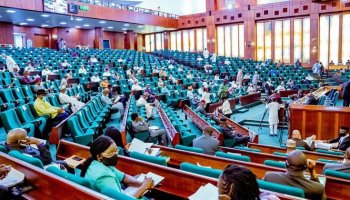
Public Accounts Committee (PAC), of the House of Representatives, on Monday, ordered a forensic audit of theMidstream and Downstream Gas Infrastructure Fund by the Nigerian Midstream and Downstream Petroleum Regulatory Authority (NMDPRA), over the alleged mismanagement of the Fund’s operations from 2021 to date.
The Committee Chaired by Representative Bamidele Salam on Monday made the decision after a motion, titled “Motion on the Urgent Need to Investigate Misapplication and Mismanagement of Midstream and Downstream Gas Infrastructure Fund by the Nigerian Midstream and Downstream Petroleum Regulatory Authority (NMDPRA) from Year 2021 to Date in Contravention of the Petroleum Industry Act (PIA) 2021,” was moved by Hon. Cyriacus Umeha and seconded by Hon. Kafilat Ogbara.The Committee noted that Section 52(1) of the Petroleum Industry Act (PIA) 2021 established the Midstream and Downstream Gas Infrastructure Development Fund, stating that its utilisation must be subjected to appropriation by the National Assembly.It further observed that Section 52(7a) stipulates that the fund should be financed through 0.5 percent of the wholesale price of petroleum products and natural gas sold in Nigeria, collected from wholesale customers in addition to levies outlined in Section 47(2)(c) of the Act.Lawmakers also drew attention to Sections 52(8) and (9) of the Act, which mandate the NMDPRA to ensure the prompt collection of all such sums into the Fund’s account within 21 days of the sale of petroleum products and natural gas in the country.The Committee highlighted that Order 20, Rule 6(5) of the House Standing Orders (11th Edition) empowers the Public Accounts Committee to investigate loss of public revenue, non-remittance of fees, and violations of financial laws in the administration of public funds.However, concerns were raised after the Public Accounts Committee, in a letter dated July 21, 2025, requested the NMDPRA to submit relevant information on the administration and utilization of the Fund and to appear before the Committee on August 12, 2025.According to the motion, the Authority neither responded to the request nor honoured the invitation.The Committee explained that it issued a final reminder on August 26, 2025, but the NMDPRA still failed to comply, raising further suspicion about the management of the fund.Lawmakers expressed alarm that several wholesale customers had defaulted in paying the mandatory 0.5 percent levy, despite Section 52(9) empowering the Authority to set regulations for late or non-payment.They also cited serious allegations of due process violations, disregard for financial regulations, and the absence of audit reports on the fund since its establishment.In response, the House resolved to mandate the Office of the Auditor-General for the Federation to conduct a comprehensive forensic audit of all funds collected by the NMDPRA since 2021.The Committee said the audit is expected to uncover the extent of alleged mismanagement, misappropriation, and fraudulent diversion of funds, as well as identify wholesale customers who failed to remit the required levy.PAC ordered the Auditor-General to report back to the Committee within 60 days.

Group Backs Tinubu, Urges Sule to Run for Senate
ShareFrom Abel Zwanke, Lafia The Chief Executive Officer of the Community Initiative for Character Moulding and Entrepreneurship Development (CiCMED) and...
Ooni Installs Oluremi Tinubu as Yeye Asiwaju Ile Oodua
ShareFrom Ayinde Akintade, Osogbo The Permanent Chairman, Southern Nigeria Traditional Rulers Council (SNTRC), Arole Oodua Olofin Adimula and Ooni of...

NYSC Presidential Honor Award Winner Returns to Benue, Shows Appreciations
ShareFrom Attah Ede, Makurdi An ex- corps member and a recipient of Presidential Honour Award, Udokpo Abasi, at the weekend...


NGO Launches Climate Project Steering Committee in Benue
ShareFrom Attah Ede, Makurdi A global Non-Governmental Organisation (NGO), International Alert has inaugurated Climate Project Steering Committee in Benue State,...


A silent Emergency: Soaring Costs of Diabetes Care Spark Alarm
ShareBy Folasade Akpan For Mrs Schola Effiong, a 58-year-old confidential secretary in Calabar, managing diabetes in today’s economy feels like...

World Bank, Partners Record Progress Toward 1.5bn Healthcare Goal
ShareThe World Bank Group, global partners and countries on Saturday announced continued progress toward the goal of delivering affordable and...


UN Commits to Strengthening Nigeria’s Policy Framework, Enhancing Digital Safety
ShareThe UN Women has reaffirmed its commitment to strengthening policy frameworks, enhancing digital safety, and promoting accountability for online harms...

Nightclub Fire in India’s Goa Kills 25 People
ShareA fire at a popular nightclub in India’s coastal region of Goa has killed 25 people, local officials say. Police...

Hong Kong votes in Election as City Mourns Deadly Fire
ShareHongkongers are voting in an election seen as a test of public sentiment following a deadly fire that angered some...


PDP Crisis: Wike Camp Moves to Conduct Fresh Congresses, Convention
ShareBy Laide Akinboade, Abuja The factional Board of Trustees (BoT) of the Nyesom Wike tendency in the Peoples Democratic Party...