
Uncategorized
The Deceptive Tactics of IPOB

By Emeka Jerome
All warfare is based on deception. Hence, when able to attack, we must seem unable; when using our forces, we must seem inactive; when we are near, we must make the enemy believe we are far away; when far away, we must make him believe we are near –Sun Tzu
In the words of the revered war strategist Sun Tzu, deception is a critical component of war execution.
Echoing Sun Tzu’s teachings, the proscribed Indigenous People of Biafra (IPOB) has refined the craft of deception, using a tapestry of falsehoods to advance and achieve their objectives. This treatise will highlight how the group has continually employed deception as a weapon of war to deceive gullible members, keep the public attracted to them and deepen its presence in the south east. No doubt, IPOB’s ascent to prominence was founded upon a bedrock of deception right from its inception. Spearheaded by Nnamdi Kanu, the emergence of IPOB was an outgrowth of the supposedly reformed Movement for the Actualization of the Sovereign State of Biafra (MASSOB), a pro-secessionist group that had already seen its power wane and was known for its cunning activities and propensity for violence.Although IPOB came into being in 2012, Kanu had already garnered a significant following due to his inflammatory broadcasts on Radio Biafra, a responsibility he had taken on as a member of MASSOB. Recognising that the decline of MASSOB could spell the end of his influence, Kanu, aiming to secure both relevance and financial gain, intensified his facade of advocating for Biafra’s freedom. He accomplished this by spreading propaganda against the Nigerian Government and fostering optimism among the susceptible members of the public. By rebranding and emerging as a new entity, IPOB projected an image of a fresh movement seeking self-determination while carefully avoiding associations with MASSOB’s past activities. His strategy worked because in no time, Kanu assumed command over the sphere of IPOB’s operations, rapidly ascending to its helm.
When IPOB started its brand of agitation, it was cheered on. Nnamdi Kanu became an overnight messiah. The poor vulnerable uneducated market apprentices became his ardent followers. He exploited them. Kanu adequately deployed his expertise of Radio Biafra to deceive. By broadcasting incendiary messages and misinformation, he manipulated emotions and perceptions of the public to IPOB’s advantage.
The false narratives he propagated about the Nigerian Government’s actions and intentions fuelled anger and frustration among his followers. The use of hate speech and derogatory language against Government, portraying them as oppressors and enemies of the people painted a one-sided narrative of victimhood which generated sympathy for their cause, making it difficult for their followers to critically assess the situation. By leveraging international media attention, IPOB amplified their narrative on a global scale. Sensationalized headlines and stories about their activities played into their strategy, allowing them to maintain the façade of a legitimate movement fighting for self-determination while downplaying or omitting their more radical actions.
The group while orchestrating actions that provoked responses from the Nigerian Government, created martyrs and gained international sympathy. Most of their tactics aimed to paint IPOB as a peaceful movement unjustly oppressed by a hostile government, thus diverting attention from their own aggressive activities. Ironical!
Unsurprisingly, Igbo diaspora across Europe and America began to join IPOB. Politicians back home were consulting its leader, Kanu. His house became a Mecca of sorts. Kanu got emboldened and then, combative. He became proud and dictatorial. His words were feared. He aspired by every means to be like Ojukwu, famed for his lionic roars. Kanu had disciples. Within this newfound position, Kanu artfully manipulated the collective sentiment, leveraging deception to foment hostility towards the government under the guise of championing the elusive cause of Biafran freedom. His financial resources began to significantly swell in different hard currencies. He skillfully garnered financial support from both the rich and the poor under the ploy of rallying donations to fuel the secessionist agenda. Simultaneously, as his personal coffers grew richer, he persistently peddled false hope to his followers, deceitfully and heartlessly portraying himself as their champion in the struggle. Kanu became bolder and went ahead to establish a military Wing, the Eastern Security Network (ESN). Operating ostensibly to counter Fulani herdsmen in the South East or so we were told, the ESN initiated a series of assaults designed to stoke the flames of ethnic conflict and destabilise the nation. Paradoxically, the reported activities of Fulani herdsmen have notably diminished, however IPOB’s actions in the region has remained persistent.
In what initially appeared to be a child’s play in the beginning, soon transformed the South East into a breeding ground for violence, marked by a surge in assassinations, bloodshed, intimidation and various forms of mayhem. Security agencies sent to the zone to restore order became targets for annihilation. The group’s orchestrations have, indeed, in the spirit of Sun Tzu’s teachings, harnessed deception’s formidable power to its advantage. Recognising that Kanu, a Nigerian based in London and his group held the potential to plunge the country into anarchy if left unchecked, the Nigerian government took proactive steps. It proscribed the group and went a step further by extraditing Kanu back to Nigeria. This was to ensure he faced charges for the chaos and destabilization he allegedly caused in the Southeastern region. In response, the group members protested and began issuing out senseless sit-at-home orders every Monday. Doom awaited whoever dared to come out on days meant for the so called sit-at home. Even school children were not spared. The young and old met same fate. For each day sit at home order was enforced, millions of naira was lost. Trading, economic, educational activities were halted. The sick does not dare to go to the hospital. Regardless of the protests voiced by the local inhabitants, IPOB ruthlessly dealt with anyone who dared to defy their directives, ironically targeting the very individuals they professed to champion and liberate. Deception at the highest core! For the people, the snake they nurtured in their bosom has now turned around to bite them.
With Kanu now in custody and facing legal proceedings, his disciple Simon Ekpa, in faraway Finland, capitalized on his mentor’s influence to achieve his own rise to prominence. Recognising the opportune moment for him to also cash out, Ekpa launched a deadlier faction called the Autopilot and afterwards the Biafra Government in Exile. He continues to give false sense of hope to liberate Biafrans while using them to swim in millions. Same as his mentor, it has now become unmistakably clear that IPOB’s motivations are primarily driven by financial gain. Under the pretext of calling for the release of Kanu, he dishes out orders to for sit-at-home, organises fundraising frequently with the false and deceptive narrative of using the money to fund ESN. How laughable. Ekpa became more vicious. The South East is currently in a mess. Sit-at-home orders stretches for weeks with zero considerations of how it negatively affects the poor residents. Meanwhile the person issuing out the directive is doing so from the comfort of his home abroad.
IPOB’s skillful use of deception as a strategic weapon of war becomes even more apparent when considering recent developments. They are now attempting to distance themselves from the autopilot faction of IPOB led by Simon Ekpa. IPOB is doing double speak. At one instance, it wants to distance itself from Sit-at home. At the other, it states that though it started it, Simon Ekpa is not implementing it its own way. But at least, it was Kanu and IPOB that started it. They are in agreement. While they vehemently deny that the Eastern Security Network (ESN) engages in combative and violent activities, this assertion contradicts the evidence provided by the numerous arrests made and the ongoing campaigns carried out by the military and other security agencies. As the number of arrests increases, IPOB intensifies its efforts to disassociate itself from these individuals, seemingly attempting to detach their image from these actions. Yet, in ironic twist, they continue to advocate for the release of these very individuals they claim not to be affiliated with. The contradictory stance of denying membership while concurrently issuing press releases about the detention of their members raises questions about the veracity of their claims. It is as if they are performing a delicate balancing act, trying to maintain an image of innocence while supporting those apprehended.
Furthermore, Simon Ekpa’s frequent calls for a sit-at-home protest have created a conundrum for the group. In light of the public’s skepticism and widespread condemnation, they appear to be shifting blame onto Ekpa’s faction, using this as an opportunity to once again deceive the public into believing that they are the virtuous side. But it is evident as daylight that in a larger context, IPOB’s insistence on non-violence stands in stark contrast to past actions. During the EndSARS protests, Nnamdi Kanu’s directive to his followers to burn down Lagos demonstrated their potential for incitement. The ensuing chaos and destruction following this directive were widely observed. Their claims of nonviolence also clash with their association with the Ambazonian secessionist group in Cameroon, an entity known for its aggressive tactics. The inconsistency is further highlighted by their clashes with the Army and Police in the South East. These confrontations raise questions about their true intentions and undermine their assertions of nonviolence. In the face of these complex and often contradictory actions, IPOB’s manipulation of information and narratives emerges as a deliberate and sophisticated strategy to shape public perception, rally support and maintain a facade of innocence even as evidence points to a different reality.
Another strategy being deployed by IPOB is the sustained misleading narrative that all rival factions other than its own are sponsored by the Federal Government or its agencies. This claim is distorted and contradicts the evident struggle for supremacy between Kanu and Ekpa. It is important to note that Kanu broke away from MASSOB. Ekpa is only traversing a similar path. Why then is Kanu angry and propagating falsehood for the purpose of deception? At the moment, the times are not good for the IPOB. It is in dire straits and fight of its life. It is in a big struggle as its days are numbered. Sooner than later, like its predecessor Biafra-Republic-agitation-associations, will become extinct and go into oblivion. This is not a false prophesy. It is a matter of time. Again, like the South East elite and governments, IPOB has got a wild cat for a pet and it turned to feed on it. All is not well with Kanu and IPOB. They have both crumbled and crawling. There is fire on the mountain and IPOB is in disarray. It is struggling. Kanu is in detention. His IPOB is in shatters. Disorganised. Only vultures have surrounded him. Everything is wrong. There is leadership tussle. IPOB has broken into factions. There is Simon Ekpa autopilot. There is Chika Edozien Directorate of State (DOS). IPOB is in a big fight over its finances. Kanu’ s younger brothers want to control it. In Germany, Italy, London, France among others IPOB huge funds is at the heart of a fight. Some accounts have been blocked. Others are objects of litigation. Kanu is worried. He is losing control. There is a bigger fight among Kanu’s legal team. No cohesion. Some feel entitled. There’s contest over who is the lead counsel. Some lawyers who never had addresses or any profitable ventures have found rest in IPOB. Some who couldn’t have won the simplest civil cases in a customary court are cashing out on IPOB and fleecing Kanu. Poor him.
While IPOB burns, Southeast also burns. Eastern Security Network, unknown gunmen, kidnappers, hostage takers, warlords, combatants, killers, marauders, blood suckers, violent vigilantes have taken over the region. Only a reign of terror is visible. IPOB is helpless. Simon Ekpa, from far away Finland is fueling the crisis. Violently forced sit-at-home order is enforced by those IPOB struggles to deny are not its members. In the absence of Kanu, Ekpa has tried to mimic him in voice, attitude and carriage. The kill-them-order, has accentuated. Ekpa tries to outdo Kanu. Ironically, Kanu is in denial. He and IPOB are desperately denying that Ekpa isn’t their member or working for them.
A time was when Kanu publicly called for attacks on Nigerian Soldiers and other law enforcement agents including the police. Kanu called for violent attack of fulani herdsmen. He called many Igbo politicians names. He called them Efulefu. What has Ekpa done differently? IPOB is just intelligent by half. Now, the organisation and Kanu want Monday sit-at-home cancelled but used for Economic Empowerment Day (EED) and call/march for his unconditional release. Any difference? Whether as sit-at-home or EED or call for Kanu’s release, is it not the same? Double speak! The new plan is even more dangerous. It will bring Kanu’s faction of IPOB into confrontation with Ekpa’s. Then blood will flow. A bird that leaves the ground and perches on the anthill is still on the ground. This is an Igbo adage. Kanu claims IPOB is not responsible for the dastardly acts in the South East. But he has not denied tasking ESN to be bloody. Even now, he tries to deploy the ESN for certain accomplishments. Initially, we were told ESN was fighting Fulani herdsmen. But is that still true? We were told it was about Buhari. Is he still there?
There is another angle we are ignoring. Kanu has never denied not to have committed most of the things he is accused of. His very dull infantile defence is that he did that in the UK, a jurisdiction not covered by Nigeria. Fact is that Kanu and his cohorts have injured the South East, Ndigbo and humanity. History will not judge him right. He may pontificate and grandstand. He may look for scapegoats and point accusing fingers to “innocent” persons and places. He has destroyed his homeland. He has destroyed Igbo culture, value and ethical discipline. Igboland is in ruins, the type never suffered during the civil war. While IPOB thinks or believes that its tactics are superb and impregnable, they are rather self-destructive. The tactics have not only impeded peace in the South East but inhibited the resolution of the crisis and perhaps, encouraged the continued incarceration of Kanu.
At the end, Ndigbo will understand the essence of the current agitation. They will understand that it is a complete ruse. It is a manipulative deception; a heist organised by some negatively ambitious young men who, in their desire to be rich, started a variant of 419/Yahoo Yahoo. It worked for them. They got the money and attention of the vulnerable. They used intimidation, harassment and fear mongering to actualise their aim. The bone of contention among IPOB leaders is about how to keep and share the booty. The one behind the bars wants to maintain a control from detention. The money is so huge to be left in the hands of others. Kanu is voracious for money. IPOB is rich and the funds cannot just be left like that. The agitation is no longer about Biafra or Ndigbo. It is about Money, Women and Power. It is an ego fight among select narcissists. The IPOB leaders do not want the Igbo followers to know this. It will not be good for their narrative and end goal. It will deflate the deceptive tactics. Keeping the propaganda and fake news alive is the best they can do. The deceptions work, at least, for now. But the lies will definitely die someday. There is a short span of life for lies and deceit. Sooner than later, light and knowledge will come upon Ndigbo. May that day come. And quickly too.
Emeka Jerome, writes in from Umuahia, Abia State.
By Tochukwu Jimo Obi
Sixty six years after independence, Nigeria should be asking itself a question that can no longer be postponed: what exactly has become of the great promise of our nation? A country blessed with enormous human and natural resources should not, at this stage of its journey, still be struggling with problems that ought to have become distant memories.
As we mark 66 years of independence, this should be more than another occasion for colourful ceremonies, patriotic speeches and celebrations. It is a time for sober reflection as a people, to examine where we are, where we ought to be and, most importantly, how best to move Nigeria forward.Undoubtedly, Nigeria is not where it used to be. There have been significant developments in different sectors of the economy and society, and successive administrations have introduced policies and programmes aimed at addressing the country’s challenges. However, we must also acknowledge that we are certainly not where we ought to be, considering the enormous human and natural resources available to us. A nation blessed with abundant natural resources, a large youthful population and considerable human capital should be able to provide a higher standard of living for its citizens.
At 66, Nigeria should have no reason to still be battling with inadequate power supply, dilapidated roads, massive unemployment and widespread hunger. These are challenges that have persisted for decades, despite the huge resources committed to addressing them. While some of our past and present leaders may have done, or may still be doing, their best, the reality remains that their efforts alone have not been enough to solve the numerous problems bedevilling the nation. What Nigeria requires is sustained commitment, effective institutions, accountability and policies that go beyond individual administrations.
Corruption and insecurity also continue to pose serious challenges to national development. Resources that should be channelled towards infrastructure, education, healthcare, job creation and other essential services can be undermined by corruption and poor accountability. Similarly, insecurity discourages investment, disrupts economic activities and threatens the lives and livelihoods of citizens. We cannot continue like this as a nation. There must be a collective determination to strengthen institutions, uphold the rule of law and confront the factors that continue to undermine national development.
Unfortunately, the people themselves appear to have become accustomed to many of these perennial problems. This has contributed to a situation where some citizens fail to demand accountability from leaders or make effective use of their democratic power during elections. Democracy gives citizens the opportunity to choose their representatives and to replace those whose performance does not meet their expectations. Elections should therefore be about competence, integrity, policies and the ability to serve the public interest, rather than personal loyalty or temporary benefits.
Sycophancy has also become increasingly visible in our political space. Some people praise leaders excessively for personal gain, defend actions they would ordinarily condemn and, in some cases, sell their votes during elections, only to complain about bad leadership afterwards. Citizens must understand that leadership and followership are interconnected. When voters trade their electoral power for immediate personal benefits, they may be contributing to a system that makes it more difficult to demand responsible governance later. The ballot should be treated as an important instrument for shaping the future of the country.
As Nigeria marks this 66th anniversary, our leaders at all levels must put the interest of the nation at the centre of their decisions and actions. Religious, political and ethnic considerations should not be allowed to take precedence over the collective interest of Nigeria. Diversity should be a source of strength rather than a reason for division. Those entrusted with public office must remember that political positions are temporary, while the consequences of decisions taken in office can affect generations yet unborn.
The people also have an important role to play in moving Nigeria forward. Citizens must obey the law, reject corruption, participate responsibly in elections, demand accountability and contribute positively to their communities. Professionals must give their best in their respective fields, young people must be encouraged to pursue productive opportunities, and the private sector must continue to contribute to economic development. Nation building cannot be left entirely to government. Every Nigerian has a responsibility to contribute to the Nigeria we desire.
At 66, the question, therefore, is not simply which way Nigeria, but what kind of Nigeria do we want to leave for the next generation? The answer lies in our collective willingness to change the things that have held us back, strengthen the institutions that sustain democracy and development, and place national interest above personal, political, religious and ethnic considerations. Nigeria has the resources, talent and potential to achieve greatness. What is required is the collective will to translate that potential into reality. As we celebrate 66 years of independence, let us renew our commitment to building a peaceful, prosperous and united nation. Nigeria shall be great again.
Tochukwu Jimo Obi, Obosi Anambra state.
By Tambaya Julius, Abuja
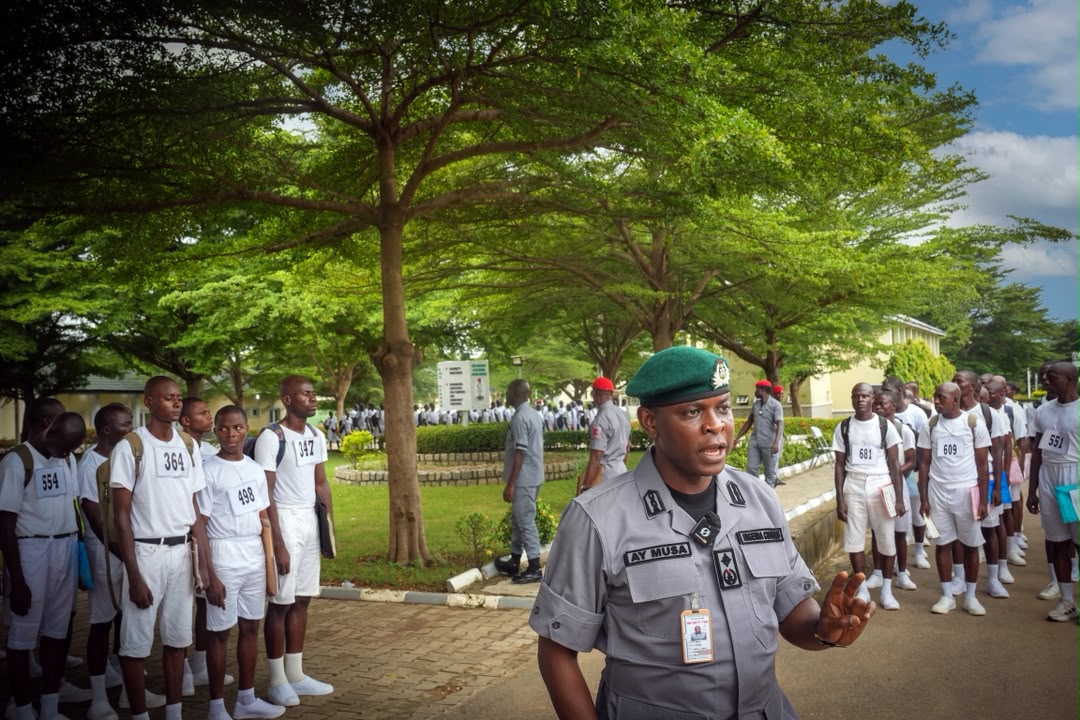
The Nigeria Customs Service (NCS) has concluded the final phase of its 2025 recruitment exercise, with nearly 3,000 shortlisted candidates undergoing screening in an exercise the Service said recorded improved coordination and efficiency.
The two-week exercise, held at the Training and Doctrine Command (TRADOC), Gwagwalada, Abuja, commenced on September 7 and ended on September 19, 2026.
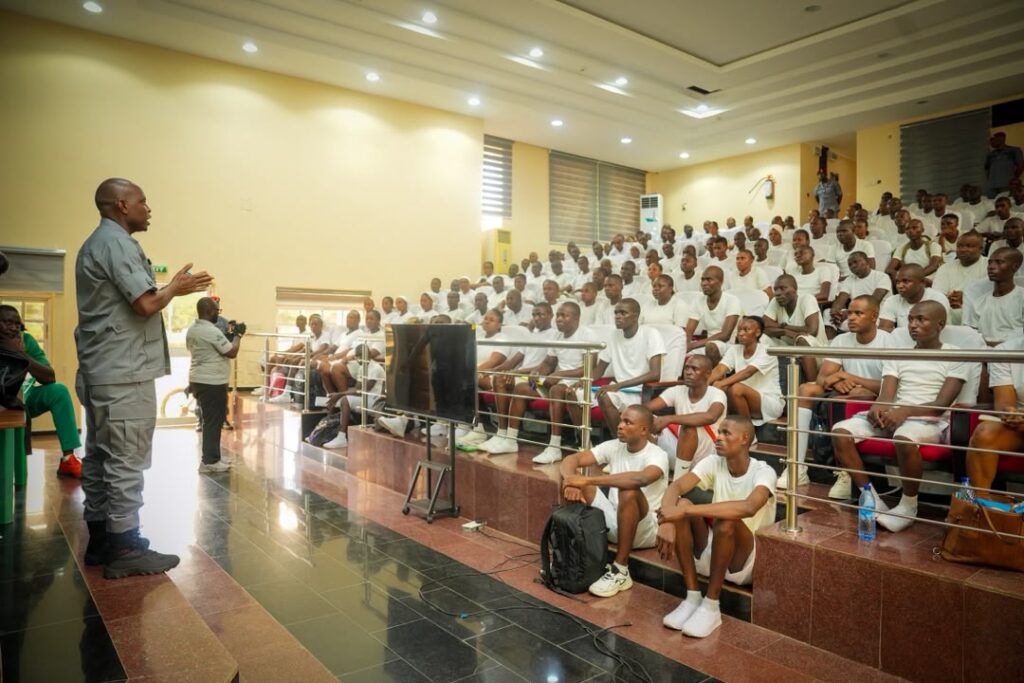
Candidates shortlisted for the Assistant Superintendent of Customs II (ASCII), Inspectorate and Customs Assistant cadres underwent documentation, physical fitness assessments and medical screening as part of the final stages of the recruitment process.
The exercise was conducted in batches, a measure introduced by the Service to reduce congestion and ensure smoother movement of candidates through the various screening points.
Speaking on the exercise, the Assistant Comptroller-General of Customs in charge of Human Resource Development, Frank Onyeka, said the Service had addressed challenges identified during the earlier phase of the recruitment process.
According to him, measures were introduced to improve coordination and reduce congestion at the screening centres.
“We have put measures in place to reduce congestion and ensure a smoother process this week. The gaps identified last week have been addressed, and we do not expect them to recur this week,” Onyeka said.
He urged candidates to remain disciplined and comply with the procedures established for the exercise.
The Service also introduced personalised screening forms as part of efforts to strengthen verification and minimise discrepancies in candidates’ records.
The Deputy Comptroller of Customs and member of the recruitment coordinating team, Adamu Musa, said each shortlisted candidate was provided with a form containing personal information and details required for the various stages of the screening.
He said the approach represented a departure from the previous system in which candidates received forms at the screening venue.
“Any candidate that has been shortlisted has a form designed especially for him, unlike in the past where you come, they issue you a form, and then some people along the way go and even change some of the records,” Musa explained.
According to him, the forms contained candidates’ names and other details covering sports, medical assessment, documentation and related requirements.
“So, once the candidate comes, you just verify what you already have from the system,” he added.
Musa said the new arrangement had made it easier for officials to authenticate candidates’ information while reducing opportunities for alterations and discrepancies.
The recruitment team also assessed candidates against established requirements, including age, physical fitness and drug screening.
Musa disclosed that candidates who test positive for hard drugs, exceed the stipulated age requirement or are found to have physical conditions that could affect their ability to perform their duties may be disqualified, subject to the final decision of the Service’s management.
He also stressed the importance of continuous recruitment and manpower development, noting that the expanding responsibilities of the Customs Service require personnel capable of responding to emerging challenges.
According to him, a well-trained workforce remains important to the Service’s responsibilities in national security, border protection, revenue collection and trade facilitation.
The Service also warned candidates and members of the public against relying on unverified information about the recruitment exercise.
Musa urged applicants to obtain recruitment updates only through the official communication channels of the Nigeria Customs Service, including its official website and verified social media platforms.
He warned that fraudsters could exploit the recruitment process by circulating fake announcements, misleading applicants or making unauthorised demands.
The warning comes as the Service moves towards the next stages of the recruitment process following the completion of the final screening exercise.
With the introduction of personalised forms, batch screening and tighter verification procedures, the NCS said it had strengthened the process to improve efficiency, reduce congestion and protect the integrity of the recruitment exercise.

Post Recapitulation: NAICOM Holds First Quarterly Staff Meeting
By Tony Obiechina, Abuja
The Commissioner for Insurance, Olusegun Ayo Omosehin, at the weekend presided over the Quarterly Staff General Meeting of the National Insurance Commission (NAICOM), the first such gathering since the successful conclusion of the insurance industry’s recapitalization exercise.
The meeting brought together management and staff to review the achievements recorded during the recapitalization programme and to align on the Commission’s strategic direction for the period ahead.
Participants also used the occasion to discuss issues bordering on staff welfare, institutional effectiveness, and the overall growth of the organization.
In their deliberations, the Commission reaffirmed its commitment to stronger regulation and supervision of the insurance sector, continuous capacity building for staff, and sustained operational excellence.
NAICOM said in a statement on Saturday that the resolutions reached at the meeting would help drive the emergence of a more resilient, competitive, and trusted insurance industry in the country.



Atiku Abubakar: Perhaps it is Time to Give Him a Fair Hearing
ShareBy Ishaya Inuwa Durkwa There comes a time when a people must decide whether yesterday’s grievances will continue to determine...


Zamfara at 30: At Last, Zamfara Has Begun to Fly
ShareBy Suleman Ahmad Tudu On October 1, 1996, Zamfara State was carved out of the old Sokoto State by the...

FG Moves to Automate Teachers’ Awards, Ends Manual Selection Process
ShareBy Tony Obiechina, Abuja The federal government has digitalised the selection process for the 2026 President’s Teachers’ and Schools’ Excellence Awards (PTSEA),...

Utsev Leads Nigerian Delegation to World Water Congress in Glasgow
ShareBy David Torough, Abuja Minister of Water Resources and Sanitation, Engr. Prof. Joseph Terlumun Utsev, will on Saturday, October 3,...


BBNaija Season 11: Keivo Becomes Second Housemate to be Disqualified
ShareKeivo has become the second Big Brother Naija housemate to be disqualified from Season 11. This follows his physical altercation...


Mofe-Damijo Envisions Bright Future for Nigeria at 66
ShareVeteran actor and public speaker, Richard Mofe-Damijo, has expressed optimism about Nigeria’s future, describing the country as a work in...


My Wife Paid $20k for Her Surgery Herself, Peller Fires Back at Carter Efe
ShareNigerian content creator and streamer, Peller, has fired back at Carter Efe after the streamer compared their relationships while praising...


I Didn’t Want to be in the Spotlight – Tems
ShareGrammy-winning Nigerian singer Temilade Openiyi, popularly known as Tems, has revealed that despite wanting musical success, she was uncomfortable with...
Nigeria at 66: Which Way Nigeria?
ShareBy Tochukwu Jimo Obi Sixty six years after independence, Nigeria should be asking itself a question that can no longer...

Nigeria at 66: Booming Banks, Struggling Nation, Where Is the Promised Prosperity?
ShareBy Blaise Udunze As Nigeria celebrates 66 years of independence, it must ask whether the country has delivered the prosperity...