
NEWS
The EFCC’s Disturbing Raid on Uyo Teaching Hospital


By Isaac Asabor
There are boundaries that should never be crossed, not by criminals, not by desperate men, and certainly not by institutions entrusted with protecting the public. Last week, the Economic and Financial Crimes Commission (EFCC) crossed one of those boundaries.
In what may go down as one of the most troubling operations in its history, armed EFCC operatives reportedly stormed the University of Uyo Teaching Hospital (UUTH), not a criminal hideout, not a money-laundering hub, but a place of refuge for the sick, vulnerable, and poor across Akwa Ibom State.
The question of their actions left hanging in the air is one no official statement can easily answer: what happened to our humanity?To be clear, corruption is a serious national plague. It has stolen public wealth, crippled institutions, and left communities across Nigeria battling decayed infrastructure and abandoned promises. The EFCC was created to confront that reality. But when an agency loses sight of the human beings it exists to protect, it risks becoming dangerously indistinguishable from the abuse it was established to fight. That is the uncomfortable line the EFCC appeared to approach in Uyo.
Uyo is a city known for its warmth, resilience, and quiet dignity. For many residents of Akwa Ibom and neighbouring communities, the University of Uyo Teaching Hospital is more than a medical institution, it is often the last hope for survival.
Patients arrive there daily from Ikot Ekpene, Eket, Oron, and remote riverine communities where access to quality healthcare remains painfully limited. Mothers come seeking safe childbirth. Accident victims are rushed in from dangerous highways. Children battling severe malaria are carried in by exhausted parents who have already spent everything they have simply trying to get treatment.It was this sanctuary that armed operatives reportedly invaded.
Eyewitness accounts described scenes of confusion and panic: officers shouting orders through crowded wards, frightened patients clutching drips and oxygen lines, medical staff interrupted mid-treatment, and families thrown into distress as heavily armed men moved through sensitive hospital spaces. These were not statistics. They were human beings already fighting for their health and survival.
No reasonable person disputes the importance of holding financial criminals accountable. Reports suggest the EFCC was pursuing a suspect accused of financial crimes who allegedly sought hospital admission while evading arrest. If that is true, then the agency had every right to investigate and apprehend the individual within the bounds of the law.
But even legitimate law enforcement has limits. This is as the pursuit of one suspect cannot justify actions that place hundreds of vulnerable patients at risk. A hospital is not an ordinary operational environment. It is a place where fear, disruption, and panic can carry life-threatening consequences.
When armed operations interfere with emergency care, intimidate medical personnel, or create chaos around critically ill patients, the consequences may not always be immediately visible, but they can be devastating all the same.
One can only imagine the anxiety of an elderly hypertensive patient hearing armed officers shouting outside a ward, or the distress of a mother trying to shield a feverish child in the middle of confusion. These moments matter. In healthcare settings, even brief disruptions can carry dangerous implications. That is why restraint, planning, and discretion are not optional in such operations, they are essential.
What makes the incident even more troubling is that there were alternatives. The agency could have coordinated quietly with hospital management. It could have maintained surveillance outside the facility, monitored exits, or waited until the suspect was medically cleared. It could have executed its duties with professionalism and sensitivity, avoiding unnecessary panic among vulnerable patients and healthcare workers. Instead, the operation reportedly reflected excessive force and poor judgment. And in doing so, it sent a deeply disturbing message to ordinary Nigerians: that even hospitals are no longer safe from aggressive displays of state power.
That perception is dangerous for public trust. Law enforcement agencies derive legitimacy not merely from the authority they possess, but from the restraint and responsibility with which they exercise it. Once citizens begin to fear those meant to protect them, institutions lose moral credibility.
There will be those who defend the operation by insisting that criminals should find no refuge anywhere, including hospitals. But that argument misses the larger point entirely. A society does not strengthen justice by traumatizing the sick and vulnerable. It weakens it.
The EFCC owes the patients, staff, and families affected by this operation a sincere and unambiguous apology, not a carefully worded bureaucratic statement, but a genuine acknowledgement that the handling of the raid caused fear, distress, and public outrage.
The people inside UUTH were not collateral damage. They were citizens deserving of dignity, protection, and compassion.
Nigeria’s fight against corruption is necessary. But that fight must never come at the expense of humanity itself.
Because when patients lying in hospital beds begin to fear law enforcement more than illness, something has gone terribly wrong.
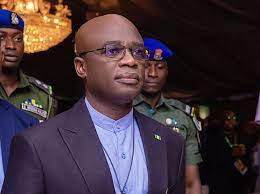
By Daniel Gbabo Anyam
Before now, Rev. Fr. Hyacinth Iormem Alia was widely known and respected across Benue State as a Catholic priest whose ministry touched lives in profound ways.
His name carried weight not merely within church circles but among ordinary citizens who saw in him a compassionate leader. His pastoral assignments exposed him to the daily struggles of the people, and this close contact with communities shaped his understanding of governance long before his foray into partisan politics.Through his sermons and humanitarian efforts, he gradually emerged as a moral authority whose voice commanded respect beyond religious boundaries.
Famed for his healing masses which attracted huge crowds, Father Alia became a symbol of hope to the downtrodden. The afflicted, the vulnerable, and those burdened by life’s challenges found solace in his words and prayers. Many testified to spiritual and emotional upliftment, and this built an enduring bond between him and the masses. Over time, the trust he earned was not just spiritual but social, as people began to see him as someone who genuinely cared for their welfare and dignity.
As a priest, he emphasized compassion, humility, and accountability, qualities that later defined his political persona. He often preached about justice, fairness, and service, values that resonated strongly with citizens who yearned for ethical leadership. His ability to connect with people from across social strata demonstrated emotional intelligence and empathy, traits essential for statesmanship. This moral grounding gave him a unique advantage as he transitioned from the pulpit to public office.
For many years, he remained engrossed in the ministry and hardly meddled in politics. His focus was primarily spiritual and humanitarian, making his eventual entry into politics both surprising and intriguing. To observers, nothing suggested that the Catholic priest would one day seek elective office. Yet, beneath the surface, his exposure to social challenges had honed him for leadership beyond the church.
When he declared his intention to vie for the governorship of Benue state, some were surprised, others were skeptical, but many welcomed the development as a breath of fresh air. Unlike conventional politicians, he did not need to build credibility from scratch. The trust he had cultivated over years of service in the Lord’s vineyard had already created a reservoir of goodwill among the populace.
With the “Yes Father” slogan, his electioneering campaign gained instant traction. The slogan became more than a political catchphrase; it symbolized continuity of trust and faith in his leadership. His campaign galvanized communities and drew massive grassroots support. Youths, women, and elders rallied behind him, seeing in him a leader who understood their struggles and aspirations.
The sheer momentum of his campaign catapulted his party, which was then the opposition in the state, to a resounding victory in the 2023 general elections. His emergence marked a turning point in Benue’s political landscape. Many voters saw his victory as a triumph of integrity over entrenched political interests. His success demonstrated the power of grassroots mobilization and the appeal of a candidate perceived as sincere and selfless.
On May 29, 2023, he was sworn in as the sixth democratically elected governor of Benue State. The transition from priest to governor was historic and symbolic. It represented not only personal achievement but also the people’s desire for a new leadership style anchored on moral values. From that moment, Governor Alia stepped into national limelight, attracting attention from across Nigeria.
Upon assumption of office, he inherited significant challenges, including unemployment, unpaid salary arrears, and economic stagnation as a result of fiscal indiscipline. These issues demanded bold, surgical and innovative solutions. His response reflected decisiveness and strategic thinking, qualities associated with emerging statesmen. He prioritized stabilizing the workforce and restoring confidence in government institutions.
One of his early actions was initiating employment opportunities across multiple sectors. Thousands of youths were recruited into the civil service and government agencies. This move significantly reduced unemployment and restored hope among young people. It also demonstrated his belief in empowering citizens as a pathway to sustainable development.
Institutions such as the University Teaching Hospital, SUBEB, Benue Links, SEMA, and BIPC became channels for job creation. Through these agencies, many individuals found gainful employment. His administration’s focus on expanding opportunities highlighted his commitment to inclusive governance and human capital development.
The revitalization of industries under BIPC further boosted economic activity. By supporting local production and strengthening state-owned enterprises, he encouraged self-reliance. These initiatives not only created jobs but also stimulated local economies. His economic approach reflected long-term planning rather than short-term political gains.
In the area of infrastructure, Governor Alia embarked on road construction, rehabilitation of public facilities, and urban renewal projects. Communities long neglected began to witness development. Improved infrastructure enhanced mobility, commerce, and social interaction. This visible progress strengthened public confidence in his leadership.
His leadership style has been characterized by accessibility and grassroots engagement. He regularly interacts with citizens and listens to their concerns. This participatory approach fosters inclusion and strengthens democracy. It also reinforces his image as a leader who governs with the people, not above them.
Transparency and accountability have remained central to his administration. He emphasizes prudent financial management and responsible governance. This approach has helped rebuild trust in public institutions. By promoting accountability, he is gradually reshaping governance culture in the state.
Despite resistance from some members of the old political order, his popularity has not waned. Many citizens continue to support him because of his performance-driven leadership. His ability to maintain grassroots support reflects political maturity and resilience. These qualities are essential for statesmanship.
The governor has strategically endangered youth participation at the highest levels of leadership. The young men and women of Benue are now deciding the future of their generation. Importantly, he is even preparing them for projection into the national grid of power play and decision making. This is also mirrored as an affront to the old political order.
Barely three years in office, has his influence extended beyond the state. Governor Alia has begun to play roles at the national level. His participation in national political activities underscores his growing stature. He is increasingly seen as a voice representing progressive governance.
His selection among those who were entrusted to organize the APC convention in Abuja is a mark of his rising influence. This responsibility placed him among leaders shaping national political direction. It also signaled recognition of his leadership qualities beyond his home state.
At the convention, he demonstrated coordination and consensus-building abilities. He provided leadership not only for his state delegation but also for broader political stakeholders. His calm disposition and consultative approach earned him respect. Such attributes are hallmarks of emerging statesmen.
Beyond politics, his personal qualities continue to define his leadership. Discipline, and moral grounding remain evident in his decisions. He projects a calm demeanor even in challenging situations. These traits inspire confidence in the people.
His commitment to youth empowerment and social welfare reflects a people-centered governance. By investing in education, employment, and social programs, he is laying the foundations for sustainable growth. His policies aim to uplift citizens and reduce inequality.
Gradually but surely, the priest is unfolding into a statesman. His journey from a spiritual shepherd to political leader illustrates the power of trust, integrity, and service. With continued dedication to inclusive governance, his future holds even greater promise for Benue State and the nation.
Gbabo Anyam is Principal Private Assistant (PPA) to the Governor of Benue State on Due Process Government House Administration.

By David Torough Abuja
Governor Hyacinth Alia of Benue State has congratulated President Bola Ahmed Tinubu on his victory in the All Progressives Congress (APC) direct primaries held across the country, describing the outcome as a reflection of the confidence Nigerians have in the President’s leadership.
In a congratulatory message issued on behalf of the people of Benue State, Governor Alia said the President’s victory was well-deserved, citing what he described as the courage, reforms, and developmental strides recorded under the current administration.
The governor noted that the result of the primaries demonstrated the desire of party members and supporters for continuity in governance and the consolidation of the Renewed Hope Agenda.
Alia reaffirmed Benue State’s support for President Tinubu and pledged continued collaboration with the Federal Government to deliver more democratic dividends to the people of the state.
He also urged APC faithful across the country to remain united and committed ahead of the general elections, expressing confidence that the party would secure a landslide victory at the polls.
The Benue governor emphasized the need for party members to work together to sustain the gains of the administration for the benefit of Nigerians.
NEWS
Enegix Construction Alleges Fraud, Interference in Ebonyi RAAMP Contract, names Osagie Adewunmi

By David Torough, Abuja
Enegix Construction JV PMCC Ltd has accused unnamed actors of fraudulently usurping its Rural Access and Agricultural Marketing Project (RAAMP) contract in Ebonyi State, alleging illegal interference, diversion of funds, and threats to its personnel.
Speaking at a press conference in Abuja on Sunday, the company said it was lawfully awarded RAAMP contracts in Ebonyi State and mobilized to site, executing what it described as substantial works.
According to Enegix, the works included 100% clearance of a 28-kilometre road corridor, earthworks on 25 kilometres, hydraulic structures over 14 kilometres, and commencement of concrete pavement and bridge works.The firm stated that a joint measurement exercise on 1 September 2025 valued executed work at ₦1.01 billion. Enegix said it requested amortization of its Advance Payment Guarantee (APG) for ₦566.7 million on 11 September 2025 to continue the project, but the request was declined by the State Project Coordinator.
Enegix alleged that Ms. Osagie Adewumni, who it said presented herself as having ties to former President Olusegun Obasanjo, later secured a loan of about ₦1.5 billion in the company’s name through a Providus Bank account she became a co-signatory to. The company said it later discovered she had assumed control of the account and withheld details from the firm. Enegix said Chief Obasanjo has since disowned Ms. Adewumni in a letter, and the company has rescinded its agreement with her on grounds of fraud and misrepresentation.
The company further alleged that Ms. Adewumni, in connivance with Ebonyi State Commissioner for Rural Development Okpor Jude Chikadibia, gained unauthorized access to project sites and blocked Enegix’s personnel from working. Enegix said its staff were threatened by the Commissioner, forcing a temporary withdrawal for safety reasons.
It also claimed that on 23 May 2026, its team was obstructed at the Ominyi site by touts allegedly acting under the instructions of Hon. Mbam Obinna Goodluck, a member of the Ebonyi State House of Assembly, and that equipment on site had been vandalized and materials lost.
Enegix said it has written to the Ebonyi State Government, RAAMP National Coordinator, the World Bank, Agence Française de Développement, and anti-corruption agencies without receiving intervention. The firm cited an interim payment certificate of ₦1.25 billion dated 1 May 2026 issued by the project consultant, and said it requested payment into its Zenith Bank contract account, but alleged that pressure was being mounted to pay Ms. Adewumni instead.
The company called on the EFCC, ICPC, Nigeria Police Force, and other security agencies to investigate, and urged the World Bank and AFD to ensure disbursements are made only to its recognized Zenith Bank account. It also asked the Ebonyi State Government to restore it to the project sites and guarantee the safety of its staff and equipment.
Enegix stated that it remains the lawful contractor and has not assigned its rights to Ms. Adewumni or any other party, adding that it will pursue all lawful remedies to recover its rights and investments.
Attempts to reach Ms. Osagie Adewumni, Commissioner Okpor Jude Chikadibia, and Hon. Mbam Obinna Goodluck for comment were unsuccessful at press time. The Ebonyi State Government and RAAMP officials have not issued a public response to the allegations._



The EFCC’s Disturbing Raid on Uyo Teaching Hospital
ShareBy Isaac Asabor There are boundaries that should never be crossed, not by criminals, not by desperate men, and certainly...

Alia: The Making of a Statesman
ShareBy Daniel Gbabo Anyam Before now, Rev. Fr. Hyacinth Iormem Alia was widely known and respected across Benue State as a Catholic priest whose ministry touched...

Benue Governor Alia Congratulates Tinubu on APC Primary Victory, Pledges Continued Support
ShareBy David Torough Abuja Governor Hyacinth Alia of Benue State has congratulated President Bola Ahmed Tinubu on his victory in...


Enegix Construction Alleges Fraud, Interference in Ebonyi RAAMP Contract, names Osagie Adewunmi
ShareBy David Torough, Abuja Enegix Construction JV PMCC Ltd has accused unnamed actors of fraudulently usurping its Rural Access and...


NRS Pledges Transparent Administration of Mining Royalties under New Law
ShareThe Nigeria Revenue Service has pledged transparent and fair administration of mining royalties under the new tax laws that transferred...


OPay Expands N1.2bn 10-year Scholarship Programme, Adds Innovation Challenge in partnership with Google
ShareOPay, a leading fintech company in Nigeria, has officially opened applications for the 2026 edition of its flagship scholarship programme,...

Terrorists Invade Kwara Prayer Ground, Kill Three Worshippers, Kidnap 15
ShareBy David Torough, Abuja Terrorists intensified attacks across North Central Nigeria at the weekend, killing three worshippers and abducting at...


Bayelsa state is for APC, says Lokpobiri
Share“As he delivered 13,591 votes to president Tinubu in his Ward 8” From Mike Tayese, Yenagoa As the 2027 political...

Tinubu Polls 277,192 Votes In APC Presidential Primaries in Bayelsa*A Restructured Nigeria Possible, Says Gov Diri
ShareFrom Mike Tayese, Yenagoa President Bola Tinubu, on Saturday, polled 277,192 votes in the direct primaries of the All Progressives...

Udende Leads Massive Tinubu Endorsement in Benue APC Primaries
ShareBy David Torough, Abuja The Senator representing Benue North East Senatorial District, Senator Emmanuel Memga Udende, on Saturday led party...