
NEWS
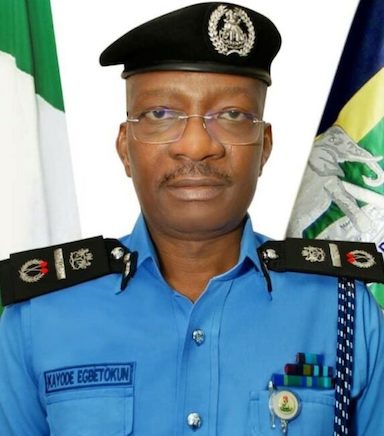
The IGP, Media Malice and National Security

By Umar Bako
In recent times – and more particularly following the issue of the emplacement of a fixed tenure of office, which is being responded to from different perspectives – the Inspector General of Police, Kayode Egbetokun, seems to be caught up in the eye of a media storm – or at least the caustic reactions of a section of it.
This appears greatly inclined to constantly pillory or trolling him, in what might seem an effort to extract a pound of flesh for real or perceived injustices from the security sector honcho.No doubt, there have been the age-long and routine concerns around the arbitrary arrests and detention of youths, instances of human rights violations in the handling of protesters, with examples made of some of those involved in the #EndBadGovernance protests, the prosecution of minors, etc.
For much of the foregoing, the police authorities have equally sought to ban the arbitrary arrests and detention of youths, as well as show more sensitivity to human rights concerns, among other similar measures.Yet, when what seems like the more concerted attacks – with a highly visible media rendition – on the person of the IGP – beyond the wider police establishment that he leads – is considered carefully, it all appears basically as much ado about nothing. These are layers of vigorous responses, coming from the rank of those who are apparently unhappy with the fact that Egbetokun has been granted the sort of lease that many of his predecessors were not availed with (that is also said would slow down the ascension of other senior officers to the commanding height), which is to serve out a full four-year term of office, as now provided for and authorised by Section 18(8A) of the Nigeria Police Act, as amended.
This appears to be what is driving the rigorous antagonism to, if not open confrontation of, the IGP, in ways that do not bode well for national security. This is because agents of destabilisation can seize on this distraction to perpetrate nefarious activities that could compromise our collective safety.
A prominent section of the media – and specifically an online platform – seems to readily offer itself as a purveyor of all sorts of content that are antagonistic of the IGP, thereby ultimately seeking to create public disaffection for him, even when embedded in these are elements of a fair cause. In one prominent instance, there is the case of six very senior police officers who were found to have falsified their ages in order to remain longer in service, whilst also circumventing the service regulations. The IGP had thus sought to subject them to disciplinary action.
However, these officers, who were close to retirement from the force, had also been threatening havoc if the IGP did not retire with them, as they claimed that they are all subject to the same rule under Section 18 of the Police Act. Conscious of the fact that he is a political appointee who that rule is not applicable to, the IGP is said to have initially sought a disciplinary committee to consider the matter of these errant officers, who were to then proceed on retirement, before what seemed to have been a counter-directive came from the Presidency to put the retirement on hold.
The said online platform has readily lent itself to vigorously disseminating all forms of information that would put the IGP and his office in a negative light, particularly due to the antagonism of its primary promoter to the IGP.
The online medium had equally claimed that a “mutiny” was brewing in the Police Force, with the protests of over 200 officers, who despite being found to have falsified their ages, were refusing to retire from service, even though some of them have spent close to four decades in service. Prominent among these officers is said to be a Deputy Inspector General, who is in charge of a crucial department within the Force.
Hence, a controversy was created out of what should have been a straightforward directive of the Police Service Commission (PSC) to the IGP to retire officers who have spent either 35 years in service or had attained the age of 60, by also questioning the morality of this directive being carried out by an IGP who is said should also have retired, when the rules on his tenure as an appointee of the president yet makes his own position in service very clear.
There is equally the case of a lawyer, Tolu Babaleye, who wrote to the President in September 2024, querying the legal status of the IGP, who he described as having become “statutorily a civilian” but was still presenting himself as a police officer. This was also given prominence by the said online platform.
In the letter by the lawyer, he claimed that “…I am surprised that the said Retired Inspector General of Police who by all indications is now a civilian is still parading himself as the No. 1 Police Officer in Nigeria and still going about as the IGP with full paraphernalia of office as if he is not aware that he is now a civilian based on law.”
And in what could be considered as some form of mischief, the lawyer actually concedes to awareness of the legal framework on which the position of the IGP hinges, as he noted in his letter that, “I have also observed that there seems to be a constitutional conundrum brooding from this situation at hand with the contradictory provisions of Police Act 2020 in S.7 (6) and S. 18 (8)”.
However, could there be said to be a “conundrum” if the legal provisions cited are not wilfully misread, with the latter section 18 being a general provision referring to all police officers, while Section 7 is very clear about the tenure of the IGP as a political appointee of the President?
It is a bit disturbing that a lawyer who makes all the affectation of being informed by quoting the relevant provisions of the law would not be aware of the amendment to section 18, through the addition of subsection 8A by the National Assembly, which clarifies any ambiguity that might have existed between Sections 7 and 18 of the Police Act.
It could be said that the attempt to ridicule the IGP through this public missive to the president was further deepened by the online platform, which went ahead in that story to give vent to allegations that might be spurious. It claimed, without any shred of evidence, that some senior police official sources had given information that the IGP had bribed his way through the National Assembly to secure his tenure elongation, after the amendment bill initially sent by the Presidency in this regard had stalled. Hence, Egbetokun is said to have manipulated the system to get what he wanted.
Without evidence, this is a deeply concerning allegation that can impugn the reputation of the IGP as a desperate careerist, who has engaged in an illicit act contrary to the requirement of his office. Yet, the Police PRO, Muyiwa Adejobi, had pointed out that the said amendment to the Police Act on the tenure of the IGP has a history of its own, going back to the eighth National Assembly when it was first broached, before it finally succeeded in the tenth National Assembly.
An interesting dimension to the media maelstrom the Inspector General of Police is embroiled in pertains to his social media description as an “Illegal IGP Kayode Egbetokun” by politician and publisher of SaharaReporters, Omoyele Sowore, which the IGP apparently took serious exceptions to by seeking recourse to self-defence through the institution of a lawsuit against Sowore on charges involving cybercrime and cyberstalking.
In response, SaharaReporters has been an advocate in the case of its founder through which there have been the counter charge of a violation of the Nigeria Police Act, which forbids any police officer to initiate legal proceedings in their own personal interest or in defence of their public duties without the approval of the government.
Without the prejudice of commenting on any issue that is sub judice and before the consideration of the courts, it appears to me that much of the issues that are driving the media campaigns against the IGP are actually much ado about nothing. Beyond the flaring of egos and the urge to shove fingers into one another’s eyes to register the severity of each’s angst with the other, a simple clear-eyed appeal to provisions of the law on the tenure of the IGP, as provided by Section 18 (8a) of the Nigeria Police Act, as amended would dispel the need for all these venting.
The foregoing would render the issues clear enough and those who have issues with the IGP should, rather than inflame the polity with their rhetoric, while pressing the media into serving their ends and becoming catalysts of destabilisation, save their passions for other more worthy purposes. The tenure of the IGP is only for four years and 2027 is just around the corner. Even then, this would not be a rite of entitlement, as each administration statutorily reserves the right to choose its own heroes and villains alike.

The Securities and Exchange Commission (SEC), said it is focused on delivering a sustained near zero trade fail rate under the T+1 settlement cycle in the second half (H2) of the year.
The Director-General (D-G) of SEC, Dr.
Emomotimi Agama said this in a document made available to the journalists in Abuja on Sunday.Agama said the focus would be on full delivery-versus-payment discipline across custodians, brokers and the Central Securities Clearing System Plc (CSCS).
The D-G said the early evidence of the settlement cycle since June was encouraging, adding that the Commission intended to demonstrate at least a full quarter of clean settlement data.
He said that foreign investors must be able to complete their currency conversion and funding within the compressed cycle without being forced into pre-funding.
According to him, we are working closely with the Central Bank of Nigeria (CBN), custodians and settlement banks to ensure same day Forex execution and confirmation for portfolio flows.
”The Certificate of Capital Importation (CCI) process must be fully electronic, timely and predictable, so that entry and exit were seamless.
”The Commission has formally engaged the CBN on CCI modernisation to align the regime with T+1 realities,” he said.
On a decision by FTSE Russell’s to observe the market through the T+1 transition, Agama said it was a standard index-governance practice whenever a market undertook a structural change of this magnitude.
He said the index provider was simply verifying that the shortened cycle worked as well in practice as it does on paper, particularly for foreign portfolio investors.
On the outlook for equities, fixed income securities, and alternative investments in H2, he said the market would be more selective but constructive.
”After a 47.4 per cent first half advance, some consolidation is natural and indeed healthy.
”The drivers remain intact:, recapitalised banks deploying fresh capital, a strong pipeline of new listings, improving foreign participation and half-year earnings that we expect to be broadly resilient.
”For fixed income, the environment remains rewarding, with disinflation continuing and yields still elevated, real returns are positive across much of the curve, and we expect vibrant sovereign, sub-national and corporate issuance including infrastructure and green instruments,” he said.
He listed some reforms in the market to include the Investments and Securities Act (ISA) 2025, which modernised the entire legal architecture, bringing digital assets within the regulatory perimeter, and strengthening enforcement powers.
Others are outlawing Ponzi schemes with severe sanctions, and giving investors a far stronger protective framework.
”Before year-end, investors should expect further implementation of our Capital Market Liquidity Roadmap; continued rollout of the recapitalisation of market operators to ensure intermediaries are as strong as the market they serve.
”Others are deepened sustainability and ESG disclosure standards; enhanced RegTech-driven supervision; and continued expansion of regulated digital asset admissions,” the D-G said.
On regulatory credibility, Agama said the task of the Commission was to be transparent and firm in enforcing disclosure standards, and sanctioning market abuse.
He said the Commission was committed to dismantling Ponzi schemes under the expanded powers of the ISA 2025, and ensuring that every naira an investor raised was protected by a functioning rulebook.

From Sylvia Udegbunam, Enugu
A non-governmental organization (NGO) known as Kimpact Development Initiative (KDI) has trained Journalists, CSO’s religious body, students, Community influencers, political parties’ members and other stakeholders in the Southeast on advancing voters participation and encourage peaceful election, in the forthcoming 2027 general elections in Nigeria.
The capacity building training with the theme “Voters Mobilisation and Peace Building Training” was held at Best Western hotel Independence layout Enugu.
The team lead of KDI, Bukola Idowu, in his lecture emphasized that voters’ participation in Nigeria is seriously declining and there is need for mobilisation and also encourage eligible voters in Nigeria to come out and participate in the forthcoming 2027 general election.
According to him “In Nigeria today, the most important thing is election, because it is in election that we choose the leader that will manage the resources and govern the people, and Nigerians have not understood the importance of government. No one can exist without the government. If you stay away from governance and do nothing about it, you will be ruled by your inferiors”, he said.
However, he pointed out that currently in Nigeria, governance or appointment is by your efforts or work in the political party, and not by competent. He noted that governance is an important endeavor stressing that, what puts people in governance is election.
“The ability to recruit a quality leadership is through election, therefore the person you elect in government in the next four years will determine how you live, your educational direction, economic direction, taxes, infrastructure and your health”.
“The next person that will rule Nigeria will be determined by election, therefore the aim of this training is to strengthen stakeholders of the electoral process, equip them with tools and platforms for accessing credible electoral information, build practical strategies for promoting informed voter participation, community based voter mobilisation and peace building
He noted further that the training will equip participants with practical skills to identify conflict drivers, recognize early warning indicators, analyze electoral risks and apply community based approaches for preventing electoral violence before, during and after election.
Bukola in his lecture noted that he acknowledged that there are barriers, conflict drivers and indicators that influences people’s participation in Nigeria election, which includes electoral violence, disenfranchisement, distrust, rigging, intimidation and other election malpractice, but encouraged Nigerian citizens not to allow any factor to discourage them in carrying out their civic responsibility.
He urged the participants to use their different mediums and educate Nigerian citizens especially those in their communities on the need for them to go and register for PVC, ensure they collect their PVC’s, cast their vote on the election day and monitor the election, from the polling unit to collation center and finally to the judiciary level.
He noted that it will help Nigerians to elect a credible candidate of their choice for a democratic government in the forthcoming 2027 general election.
He further urged the participants to enlighten eligible voters to be careful while thumb printing on the ballot papers to avoid invalid or rejected votes that can affect the election of a credible candidate, stressing that “every vote cast is very important”.
The participants at the end of the training had a practical group exercise session where they developed practical state level action plans, identified priority audiences, key civic messages, mobilisation channels, peace building intervention, conflict hotspot, implementation timelines and responsibilities.
A participant and also a Journalist in the training, Emma Nweze in an interview said that the training is educational. It mirrored well what is happening in the political landscape in Nigeria dogged by violence and voter apathy. The bottom line of the training is that if every Nigeria should participate actively, we may have good governance.

The Independent Petroleum Marketers Association of Nigeria (IPMAN) said uncertainty over petrol prices has forced many marketers to halt fresh purchases, leading to the temporary closure of some filling stations.
The Zonal Chairman of IPMAN, Western Zone, Chief Oyewole Akanni, disclosed this on Sunday, in an interview in Ibadan.
Akanni said that the situation was triggered by the suspension of loading of the Premium Motor Spirit (PMS) at the Dangote Refinery about four days ago.
This, he said, forced marketers to source products from private depots at significantly higher prices.
According to him, the cheapest ex-depot price at private depots in Lagos currently ranges between ₦1,200 and ₦1,220 per litre, excluding transportation costs.
He said that marketers who bought products on Friday paid between ₦1,210 and ₦1,220 per litre.
“The non-availability of fuel at some filling stations and the closure of others are due to fluctuations in the price of lifting fuel from depots.
“Since Dangote Refinery stopped selling PMS about four days ago, private depot owners have increased their prices.
“Many filling stations that have exhausted their stock are waiting to see whether prices will come down when Dangote Refinery resumes sales or increase further.
“Only a few marketers are buying products for now because of the uncertainty,” he said.
Akanni, however, maintained that there was no fuel scarcity, urging motorists and other consumers not to engage in panic buying.
“There is no fuel scarcity, members of the public should not panic.
“Although there is a possibility of an increase in pump price, if the current situation persists,” he said.
The zonal chairman explained that Dangote Refinery neither gave prior notice nor explained the reason for the suspension of sales of PMS to marketers.
Akanni said that four truckloads of petrol meant for his stations had remained at the refinery since the suspension of loading.
“I was supposed to have received four truckloads of PMS since four days ago, but that has not happened because the trucks are at the Dangote refinery, which has not been selling.
“The company is not even loading its own trucks. They are all parked there,” he said.
The IPMAN chairman said that the Nigerian National Petroleum Company Limited (NNPC Ltd) was also affected because it also sourced products from the Dangote refinery.
According to him, private depots are now selling PMS for as much as ₦1,250 per litre, while marketers can obtain products from Nipco and Aiteo at about ₦1,200 per litre.
“The major issue now is the fluctuation in depot prices, which has created uncertainty in the market,” Akanni said.
He expressed hope that normal supply would resume once the situation at the Dangote Refinery was resolved.
Many filling stations in Ibadan metropolis are closed, leaving customers puzzled as to what was going on.



Yahaya Swears in 23 Commissioners, 13 Aides
ShareGombe State Gov, Inuwa Yahaya, on Saturday swore in 23 new commissioners, 13 special advisers, and one permanent secretary, just...


SEC to Deliver Sustained Zero Trade Fail Rate in T+1 Settlement Cycle, Says DG
ShareThe Securities and Exchange Commission (SEC), said it is focused on delivering a sustained near zero trade fail rate under...
When Murder Allegations Trail a Public Official: The Case for Temporary Recusal
ShareBy Isaac Asabor Public office is built on one indispensable currency: trust. The authority exercised by elected and appointed officials...

NGO Trains Stakeholders on Advancing Voters Participation, Peaceful election
ShareFrom Sylvia Udegbunam, Enugu A non-governmental organization (NGO) known as Kimpact Development Initiative (KDI) has trained Journalists, CSO’s religious body,...

Fuel Price Uncertainty Forces Marketers to Temporarily Halt Supply – IPMAN
ShareThe Independent Petroleum Marketers Association of Nigeria (IPMAN) said uncertainty over petrol prices has forced many marketers to halt fresh...

NDIC Hosts Africa Regional Committee Annual Meeting, Workshop in Abuja
ShareBy Tony Obiechina, Abuja The Nigeria Deposit Insurance Corporation (NDIC) will host the International Association of Deposit Insurers (IADI) Africa...


NECO Refutes ‘Miracle Centre’ Allegation over Kogi School
ShareBy Dan Amasingha, Minna The National Examinations Council (NECO) has dismissed claims that Government Secondary School, Olowa, in Dekina Local...

Pius Akutah: The Quiet Reformer Steering the Nigerian Shippers’ Council to New Heights
ShareBy David Torough It has become very safe, perhaps, to conclude that the Executive Secretary and Chief Executive Officer(CEO) of...


Troops Foil ISWAP Mass Abduction Attempt at FGGC Monguno, Rescue 46 Students
ShareFrom Muhammad Muhammad Al-amin, Maiduguri Troops of Operation HADIN KAI, in collaboration with personnel of the Nigeria Police Mobile Force...


NAICOM Boss Tasks CIIN on Professionalism, Ethics as New President Emerges
ShareBy Tony Obiechina, Abuja The Commissioner for Insurance, National Insurance Commission, Olusegun Ayo Omosehin has called on the Chartered Insurance...