
OPINION
The New Nigerian Tribe


By Sola Adeyeye
My name is Sola Adeyeye. I am here to report for duty not as a professor of Biological Sciences, nor as a senator of the Federal Republic of Nigeria. I am here, just like everyone here gathered, as a member of a New Tribe, one that is totally committed to the advancement of Nigeria.
It is an enormous privilege to stand here before you today; an honour to stand before “the New Tribe” at the birth of what I dare declare will go down as the most consequential event of the 2023 election season.The opportunity to be here is not one that I take for granted, as this offers me not just the rare privilege to see the future ahead of its coming, but a chance to speak at an event that heralds the dawn of a new day for Nigeria.
It is a moment in history that I would not miss for anything else. This moment captures, in essence, all that I have spent my years pushing – the birth of a New Tribe that transcends all the divides that have kept Nigeria down.History has brought our country to a defining moment. To be deaf to the moment is to miss the significance of it. To be blind to the signs of the times is to lose track, lose momentum, and lose the essence of the moment. It is always about the moment. It is about this moment. It is about today and what it portends for tomorrow.
We gather here today because of what this moment is saying to us as Nigerians. He who has ears, let him hear what this moment is saying. She who is wise, let her pay attention to this moment. Let him or her, who is diligent, rise to the occasion as Nigeria gives birth to a new tribe.
Nigeria has been calling for a new tribe for over six decades. Nigeria summons us to rise over and above our differences to embrace the things that we have in common. Nigeria enjoins us to rise beyond localised tongues and tribes to become a new Tribe – THE NIGERIAN. Because I am a biological scientist, please permit me to clarify that I am liberally using the word “tribe” in a colloquial sense to refer to a subspecies, Homo sapiens nigerianus.
A new tribe where no one is pulled down on account of differences in ethnicity or religion. The new tribe that cares for the man at the top, just as it cares for the talakawa. This new tribe that embraces each and every one, irrespective of tongue, because we are all one tribe, a people bound by one destiny under God.
It is instructive that it is in Kano that we are launching the birth of this new tribe. The story of Kano is the story of Nigeria, the story of overcoming odds, of defiance and resilience in spite of many darts thrown its way. The story of Kano is the story of the ancient walls that surround the old city, walls that have remained standing for centuries, despite wars and attacks. Indeed, Kano represents the indomitable spirit of Nigeria. No wonder, Kano is described by World Heritage Sites as “the most impressive monument in West Africa”.
The story of Kano is the story of Nigerians who, on the back of agriculture, commerce and industry, built a city whose growth has been wholly organic, having neither served as an administrative national capital like Lagos and Abuja nor as a regional capital like Ibadan, Enugu and Kaduna. Some say that Kano is a city, others say it is a city-state. They all affirm that Kano is a city, constantly pregnant with other cities in its womb.
With its population, history of activism, level of political awareness and peculiar political culture, it is no wonder that Kano votes have always come as a political tide to push Nigeria in the right direction, at the most critical juncture. Beyond that, the progressive and activist political culture here has positively permeated other parts of Nigeria.
If the progressive tendency in Nigerian politics has the objective of putting the welfare of the talakawa at its core, that, in part, is because of the foundation laid by people like Aminu Kano, whose politics was wholly dedicated to the welfare of the masses. So, in many ways, the choice of Kano as the place to launch the new tribe is symbolic and historic.
In Kano we find the numbers, the richness of culture and resourcefulness that will serve as the raw materials for the future we so desperately desire. Kano speaks to our past, the present and our future in unique and evocative ways. It is appropriate that it is in the city of Kano that we today launch the birth of a new tribe that will herald the birth of a new Nigeria.
The journey which began for our party, the All Progressives Congress (APC), in 2013 comes full circle, ten years after, in 2023. It is a new dawn beckoning upon us to make history. And the new tribe intends to do just that.
Next year, Nigerians will be summoned to make an exceptional judgment worthy of the times. The forces of history enjoin us to search carefully amongst us for a bold, brave and tireless leader with a resolve to take on challenges that may come our way. A leader with a strong vision for our nation’s future, one who has the courage to make unpopular decisions, a leader with the ability to put our times in the perspectives of history. At that supreme moment we have to get it right. I believe we have that leader in Yẹmí Osinbajo who personifies the calm river that runs deep. A decent and honourable man, both in his private and public life.
Indeed, we are faced with a number of challenges as a country, but truth be told, we have surmounted a number of them. The work of laying the foundation has taken us more time than we envisaged, but then, the fact that the critical building blocks are in place, in certain areas, is proof of progress and a sign that we are going in the right direction. We now stand at the cusp of a new birth at the most critical point in the life of our country. We are faced with the double task of deciding on which direction to go to move our country forward, and of choosing the person to lead us in that direction.
For me, it is an easy choice to make. For millions of Nigerians, given a chance, it should equally be an easy choice to make, except that many are mired in pessimism that arose from wanton betrayal by governments. For the New Tribe here gathered plus millions of our cohorts all over Nigeria, our choice is clear and simple!
The moment has chosen for us a man that Providence has prepared for the task. The moment speaks to choosing a man who transcends all tribes, an embodiment of the New Tribe, defined not by the cacophony of dialects but the symphony of our common humanity. The moment requires a man who is able to galvanise the ideals and ideas that will unfold the beckoning glory of a new Nigeria.
My compatriots, history is encapsulated in moments. This moment of Nigerian history has itself chosen a man and that man is Professor Oluyemi Oluleke Osinbajo, the vice president of the Federal Republic of Nigeria. Yemi Osinbajo is the man of the moment for Nigeria. He is well-grounded and adequately prepared. A tested and trusted hand, with the right temperament, the intellectual fire power, and governance ethos best suited for this moment. Yemi Osinbajo is the man for the moment. Not for his own sake, but for the sake of our country, Nigeria.
Let me confess to a fact that all of us here already know. No Nigerian, including Yemi Osinbajo, has all the answers. Professor Osinbajo’s uniqueness is the God-given capacity to ask the right questions, the answers to which must come from all of: We the people, guided by God and inspired by a leadership that has a wholesome character, yes, even in Nigeria, leadership with integrity, shall provide the answers to the problems that have beset us for far too long.
Yemi Osinbajo’s rise to prominence is not a fluke or a national infatuation but the consequence of his remarkable skills – a keen intellect, noble intentions and the wit and grace to express them in ways that have inspired millions across the country. Osinbajo has a rare gift exactly suited to the fearful times – he knows the language of reassurance and hope. Whatever Osinbajo says is carefully considered, whether in private discourse or in public fora; Osinbajo has been the voice of moderation, combining common sense and compassion on issue after issue.
Yemi Osinbajo is the man who will lead us in the right direction, with the help of God and millions of Nigerians, the New Tribe, that have been yearning for an opportunity to side-step all the forces that have been pulling us apart, so that Nigeria can truly emerge as the giant it long should have been.
Our country needs a statesman who envisions Nigeria as a self-sufficient, self-sustaining, upper middle tier country in the shortest possible time. Such a person must be one with tall dreams and big ideas. That is Osinbajo. Big dreams, beautiful and noble, are the stuffs that propel heroes.
Yes, Nigeria needs a president with the grasp, depth, fecundity, confidence, grit, and fortitude to see beyond the frightening and seemingly intractable predilections that beset us. This moment has gifted us such a man: His name is Osinbajo.
I believe that the moment is here. I believe that the New Tribe has been prepared for this moment and that you will step up, in different parts of Nigeria, as enablers of this moment.
It is a new day. It is a new dawn. May history be kind to the New Tribe for the foresight in recognising this moment for what it is and rising up for it. May history be kind to the people of Nigeria. May history be kind to the chosen man of the moment, Yemi Osinbajo. He is a man who, at any crossroads, can be counted on to lead in the right direction.
May history be kind to us all, as we make history. May history be kind to the Federal Republic of Nigeria.
Sola Adeyeye is the senator for Osun Central in the National Assembly.


By Uji Wilfred
Right from the foundations of the Independence struggle that led to self-rule, political party formations in Nigeria were crafted majorly for the capture of political power through periodic elections.
Political Parties never had ideological foundations that defined the boundaries of political recruitment and participation.
Political parties in their formation, leadership structure and ownership, belonged more to the ruling oligarchs than the people or the masses.In the First Republic, political parties had little ideological bent, framed along regional and ethnic sentiments, but little of rallying the entire nation along in a unified polity.
In the general elections of 1954 – 1956, each of the ruling political party, the Northern People’s Congress, the Action Group and the National Council of Nigerian Citizens emerged as regional parties in terms of the demographic voting pattern as well as the control of political seats.The First Republic suffered from a contradiction of centripetal and centrifugal forces within the framework of the tripartite system which eventually led to the collapse of that republic.
Political parties as well as the leadership recruitment reflected a regional and ethnic bias more than the need for the national integration of Nigeria.
Decamping across political lines, irrespective of ideological leanings, were the basic norms of the First Republic with political parties splitting out from the major political party. Formation of new political parties to fragment the dominant hold of ruling political parties were common political vices of the political class at that time. For example, Chief Akintola, despite the ideological soundness of the Action Group, splitted up the party with the formation of a new political party.
Chief Akintola’s desire was fired more by ambition than the issues of ideology and national interest.
In Northern Nigeria, the ruling Northern People’s Congress waged a war of suppression and dominance against other minority political parties with strong ideological bent that inspired minority ethnic nationalism.
The NPC through its slogan of One North, One Destiny, suppressed minority political parties such as the United Middle Belt Congress led by Joseph Tarkaa.
The point is that Nigeria from her foundations inherited a political culture where political parties have weak ideological roots as well as party and leadership recruitment.
Since 1999, Nigeria has witnessed the recycling of bourgeoisie Political Party Formation and leadership recruitment through a process of metamorphosis that defiles ideological lines and national interest.
Political participation and leadership recruitment has been centered on the urgent need to capture power at the center using political parties owned by a few powerful oligarchs.
The People’s Democratic Party in its formation and foundation was a fraternity of past and serving military generals and their civilian equivalent.
The PDP since its inception has been led by past military officers like David Mark and Atiku Abubakar, the civilian equivalent of the military.
The dream of the PDP led by these retired military generals under the leadership of former President Olusegun Obasanjo was the enthronement of Africa’s biggest political party that was to last for a century.
As good as the dream of the party was, the PDP, like the experience of the First and Second Republics lacked deep ideological roots that defined the boundaries of political recruitment and participation.
The triumph of the People’s Democratic Party forced the rival All People’s Party and the Action Congress of Nigeria into a state of collapse and submission leading up to the bourgeoisie metamorphosis that resulted to the formation of the All Progressive Congress on the eve of 2015 with the sole objective to unseat President Good luck Jonathan.
The APC was a metamorphosis and amalgamation of opposition parties including some dissenting faction of the PDP to reclaim the so called birth right of the far right North in Nigeria to produce the President of Nigeria.
Political recruitment and leadership struggle in Nigeria has never been defined by ideological needs to salvage or emancipate Nigeria as a nation. Political struggle has always been a recycling of that section of the bourgeoisie, through a process of metamorphosis, whose objective is to capture political power at the center.
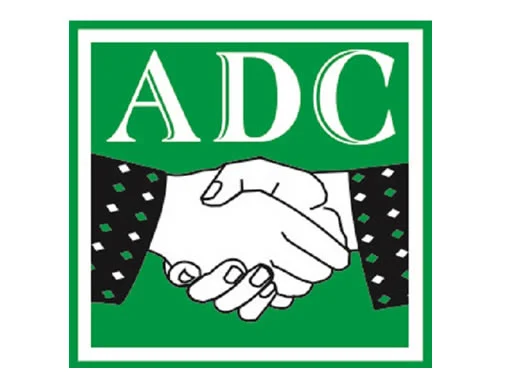
The present protest and political struggle by the African Democratic Congress, the faction led by David Mark and Atiku Abubakar, is a recycling of bourgeoisie metamorphosis not too different from the experience of 2015.
At best, the David Mark and Atiku Abubakar led protest represents that desperate struggle entrenched in the thinking of the Far Right of Far Northern Nigeria, that political leadership resides in the ancestral birth right of the aristocratic ruling political class of the North.
David Mark and Atiku Abubakar perhaps are suffering from a dementia that has made them forget that they were the agents that destroyed the foundations of democracy in Nigeria through the sacking of former President Good luck Jonathan of the People’s Democratic Party.
These men formed the All Progressive Congress and wrestled power from a democratic government exploiting the dynamics of national security and developmental challenges.
In 2015, Nigerians believed their opinions and through the ballot removed Good luck Jonathan.
However, since then, has Nigeria fared better under the APC that was enthroned by oligarchs leading in the present protest under the auspices of the ADC.
Perhaps, David Mark and Atiku Abubakar may assume that Nigeria suffers from a collective dementia that has forgotten the past so soon.
There is an adage that says, he who comes to justice and equity must come with clean hands. The same forces that enthroned bad governance in Nigeria factored in the APC, through a metamorphosis, want to rebirth another Nigeria through the ADC.
In ideological terms, this does not make sense, the ADC Protest is the same old thing of old wine in a new wine bottle.
If Nigeria must experience a change, let it come through some revolutionary medium that will not exploit the people’s trust and betray them once in power.
Over the past decades, the betrayal of public trust, exploiting the innocence of the people, perhaps the naivety of the people, is what we have seen and experienced through the circles of bourgeoisie metamorphosis and political leadership recruitment.
By Raphael Atuu
Benue State, fondly referred to as the “Food Basket of the Nation,” was created on February 3, 1976, by the military administration, carved out of the old Plateau State. From its inception, the state was administered by a succession of military administrators, followed by civilian governors in Nigeria’s evolving political landscape.
Over the decades, leadership passed through several hands each leaving varying degrees of impact on the state’s trajectory.
In its early years, Benue was widely regarded as a peaceful and united society. Communities coexisted in harmony, bound by shared values, cultural pride, and a strong sense of collective identity.
The economy was largely driven by agriculture, with fertile lands producing yams, rice, cassava, and other staple crops. Institutions like the Benue Cement Company also contributed to economic activity and employment.In those days, the government was distant from the daily struggle of the average citizen. Few people concerned themselves with the affairs of Government House. Wealth and dignity were derived from hard work, farming, trading, and craftsmanship not political patronage.
The people spoke with one voice, celebrated their traditions with pride, and upheld communal respect as a guiding principle.
However, the return of democracy in 1999 marked a significant turning point, one that would reshape the state’s social and political fabric in ways few anticipated.
With democratic governance came new opportunities, but also new challenges. Politics gradually became the most attractive path to wealth and influence.
For many, Government House transformed from a symbol of public service into a gateway to personal enrichment.
The perception of politics shifted from service to self-interest.
As political competition intensified, unity began to erode. Divisions along ethnic, local government, and party lines deepened. The once cohesive voice of the Benue people became fragmented, often drowned in partisan conflicts and power struggles.
Perhaps more troubling was the subtle transformation in societal values.
The Benue man, once admired for courage, resilience, and industry, began though not universally to exhibit tendencies toward dependency and political loyalty over merit.
Sycophancy started to replace integrity, and the dignity of labor was gradually overshadowed by the allure of quick gains through political connections.
Elected officials rose to positions of authority and influence, becoming key decision-makers in society.
Yet, for many citizens, the dividends of democracy remained elusive. Infrastructure development lagged, agricultural potential remained underutilized, and poverty persisted despite abundant natural resources.
The irony is striking: a state so richly endowed, yet struggling to translate its potential into tangible progress.
Beyond economics, insecurity and communal clashes in recent years have further strained the social fabric.
The peace that once defined Benue has been challenged, forcing many communities to confront displacement and uncertainty.
While these issues are complex and multifaceted, the role of political leadership in addressing or failing to address them cannot be ignored.
So, where did the politicians get it wrong?
They lost sight of the essence of leadership service to the people. Governance became more about control than development, more about personal gain than collective good.
Long term planning gave way to short term political calculations. Investments in agriculture, which should have remained the backbone of the state’s economy, were neglected in favor of less sustainable ventures.
Moreover, the failure to foster unity and inclusive governance widened the gap between leaders and the led. Politics became a tool for division rather than a platform for progress.
Yet, all hope is not lost.
Benue still possesses immense potential, fertile land, vibrant culture, and resilient people, what is needed is a return to the values that once defined the state: hard work, unity, integrity, and community driven development.
Leadership must be reimagined, not as an avenue for wealth, but as a responsibility to uplift the people.
The story of Benue State is not just one of decline it is also one of possibility.
With the right vision, commitment, and collective will, the state can reclaim its place as a model of peace, productivity, and progress.
The question remains: will its leaders and its people rise to the occasion?
If you want, I can.

By Tanimu Yakubu
Nigeria is not collapsing; it is confronting long-avoided economic realities. The current hardship, though undeniable, reflects a deliberate process of correcting structural imbalances that have persisted for years. Distress is evident, but it must not be mistaken for systemic failure.
Countries in true economic collapse do not unify exchange rates, rebuild external reserves, regain access to international capital markets, or improve fiscal performance.
Nigeria, despite significant pressures, is making measurable progress across these indicators.Ending a Distorted Economic Order
For years, Nigeria operated under an economic framework that projected stability while masking deep inefficiencies.
Artificially suppressed fuel prices, multiple exchange rate windows, and expansionary fiscal practices incentivized arbitrage over productivity.These distortions disproportionately benefited a narrow segment of the population while imposing hidden costs on the broader economy.
Their removal has revealed the true cost structure of the system. While this transition has triggered inflationary pressures, it has also restored policy transparency and enhanced the credibility of economic management.
Strengthening the Fiscal Base
Recent fiscal data indicates a strengthening foundation. Distributable revenues to the Federation Account have risen by over 40 percent following subsidy removal, reflecting improved remittance discipline and reduced leakages.
Nigeria’s public debt remains below 30 percent of GDP, a relatively moderate level compared to peer emerging markets, according to the International Monetary Fund. Meanwhile, external reserves have surpassed $40 billion, based on figures from the Central Bank of Nigeria.
At the subnational level, increased fiscal inflows are enabling more consistent salary payments, with some states introducing inflation adjustments, an indication of gradually expanding fiscal space.
Inflation: A Transitional Challenge
Inflation remains the most immediate and visible consequence of ongoing reforms. It is being driven by exchange rate adjustments, energy price corrections, and longstanding supply-side constraints.
Global experience suggests that such inflationary spikes are often temporary when reforms are sustained. The greater risk lies not in reform itself, but in policy inconsistency or reversal.
Interpreting the Present Moment
Public frustration is both expected and understandable. Nigerians are justified in demanding tangible improvements in living standards. However, it is important to distinguish between short-term hardship and systemic collapse.
Nigeria’s institutional framework remains intact, fiscal capacity is improving, and macroeconomic reforms are actively progressing. This phase represents adjustment, not disintegration.
From Stabilisation to Impact
The next phase of reform must translate macroeconomic gains into measurable improvements in citizens’ welfare.
Strategic investments in healthcare, education, and targeted social protection will be essential to sustaining public confidence.
Ultimately, the credibility of these reforms will be judged not by policy intent, but by their impact on everyday life.
Conclusion: The Imperative of Consistency
Nigeria has long recognised its economic challenges; what has often been lacking is sustained policy execution. The greatest threat at this juncture is not reform fatigue, but reform reversal.
Abandoning the current course would erode credibility, deter investment, and reintroduce the very distortions that hindered growth.
This moment demands patience, discipline, and resolve. Nigeria is not collapsing, it is undertaking a necessary correction and laying the foundation for a more resilient economic future.
Tanimu Yakubu is DG, Budget Office of the Federation.


Joseph Undu Bags National Safety Personality Award in Lagos
ShareBy David Torough, Abuja Award-winning Nigerian journalist and security analyst, Joseph Saater Undu, has been shortlisted for the prestigious Safety...
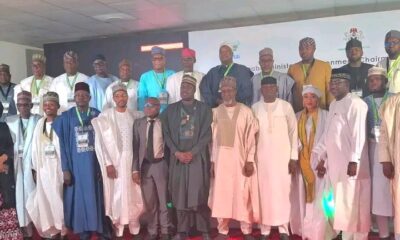

FG Reaffirms Commitment to ACReSAL Project at Mid-Term Review in Kaduna
ShareBy David Torough, Abuja The Federal Ministry of Water Resources and Sanitation has reaffirmed its commitment to the successful implementation...

Mutfwang Holds Close Door with Former State Governors
ShareFrom Jude Dangwam, Jos Plateau State Governor, Caleb Mutfwang has convened a strategic meeting with former governors of the state towards addressing the security challenges bedevilling the state. The meeting held...

Lobi Stars Trim Squad to Push for Promotion
ShareThe Nigerian National League (NNL) side, Lobi Stars Football Club of Makurdi, has trimmed its squad and retained a few quality players to push for promotion to the...


Pope Criticises ‘Tyrants’ Who Spend Billions on Wars after Trump Spat
SharePope Leo has criticised leaders who spend billions on wars and said the world was “being ravaged by a handful of tyrants” in unusually forceful comments during a...


Nigerian Men Scared of Bold, Confident Women, Phyna Claims
ShareFormer Big Brother Naija winner, Josephine Otabor, popularly known as Phyna, has claimed that she is still single because Nigerian...

Residents Decry Persistent Power Outage in Abuja Community
ShareBy Raphael Atuu, Abuja Residents of Waru District in Apo, within Nigeria’s Federal Capital Territory, are raising the alarm over what they...
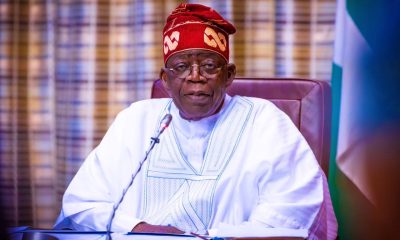

2027: Tinubu Meets Coordinators, Renews Plea for Unity, Rule of Law
ShareBy David Torough, Abuja President Bola Tinubu has called for unity, resilience and renewed commitment to nation-building, urging Nigerians to...

Gunmen Abduct 14 UTME Candidates in Benue Enroute Exams Centre
ShareFrom Attah Ede, Makurdi A wave of concern has trailed the ongoing Unified Tertiary Matriculation Examination (UTME) nationwide following the...

Army Honours Fallen Heroes as Brig. Gen. Braimah, Others Laid to Rest in Maiduguri
ShareFrom Muhammad Muhammad Al-amin, Maiduguri The Nigerian Army has conducted a solemn burial ceremony for Brigadier General Oseni Braimah, Captain...