
NEWS
THE UNIVERSITY AS A CATALYST FOR SOCIETAL DEVELOPMENT

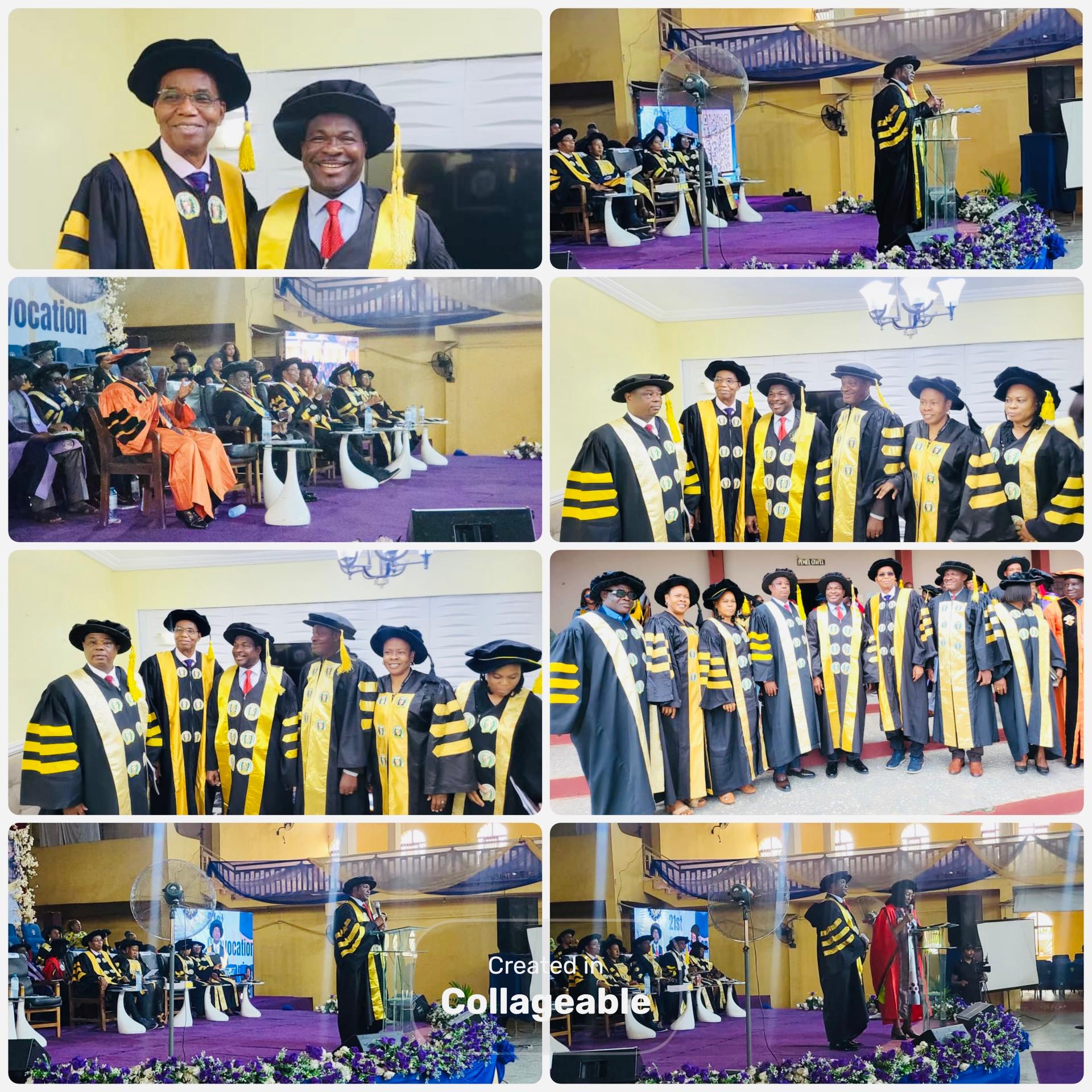
BY PROF. MIKE OZEKHOME, SAN
INTRODUCTION
Universities are not merely centers of instruction; they are engines of transformation, positioned at the crossroads of knowledge, innovation, and culture.
Across history, universities have stood as catalysts for change: they incubated the Renaissance, propelled scientific revolutions, and today power the digital age. Beyond technology, they mould character, refine values, and produce leaders capable of service and sacrifice. In this sense, the health of a nation is mirrored in the vitality of its universities. Where universities thrive, society flourishes with innovation and progress; where they falter, society stagnates in ignorance and decay.
Yet, this catalytic potential is constrained by underfunding, weak autonomy, and poor industry linkages, especially in developing contexts. To unlock their promise, universities must be repositioned through sustained investment, stronger governance, and robust partnerships with government, industry, and civil society. Ultimately, the university is not an enclave but the beating heart of national destiny: the conscience, compass, and catalyst of societal advancement.
Keywords: Universities, Societal Transformation, Human Capital, Innovation, Higher Education Policy, Sustainable Development, Civic Engagement
DEFINITION OF TERMS
University:
A university is far more than a cluster of buildings where lectures are delivered and examinations conducted. At its essence, it is an institution of higher learning and research, uniquely mandated to generate, preserve, and disseminate knowledge across disciplines. Unlike earlier stages of education, which focus on the absorption of established facts, the university emphasizes inquiry, critique, and innovation. It is the arena where theories are tested, discoveries are made, and societies are equipped with the intellectual capital required for progress. Rooted in the Latin universitas magistrorum et scholarium (meaning “a community of teachers and scholars”) the university represents a fellowship of minds devoted to truth, dialogue, and discovery. It is not merely a transmitter of knowledge but also a creator of it, serving as both a timeless custodian of wisdom and a timely responder to the needs of each age.
Education:
Education is the systematic process of imparting and acquiring knowledge, skills, and values, whether formally or informally. It equips individuals with reasoning ability, judgment, and intellectual maturity. While formal education occurs in structured settings such as schools and universities, informal education is embedded in family, community, and social interactions. At all levels, education provides the foundation for personal growth, civic responsibility, and societal advancement.
Societal Development
Societal development refers to the sustained improvement in a community’s well-being and collective capacity. It extends beyond economic growth to include the strengthening of social structures, access to quality public services, institutional resilience, and individual empowerment. True development is inclusive and equitable, ensuring that progress is sustainable and that the needs of present generations are met without compromising the welfare of future ones.
Human Capital Development:
Human capital development is the process of enhancing individuals’ knowledge, skills, health, and productivity in order to unlock their potential and contribute to broader economic and social progress. It involves deliberate investment in education, training, and healthcare, ultimately producing a workforce that is innovative, competitive, and equipped to drive sustainable national growth.
Innovation Ecosystem
An innovation ecosystem is a dynamic network of interdependent actors such as entrepreneurs, firms, governments, universities, and investors, working collaboratively to transform ideas into impactful solutions. These ecosystems thrive on continuous interaction, knowledge-sharing, and resource pooling, creating the enabling environment necessary for sustained innovation, economic competitiveness, and societal transformation.
THE GLOBAL HISTORY OF UNIVERSITIES AND TERTIARY INSTITUTIONS:
The modern university is the product of centuries of intellectual struggle, cultural refinement, and institutional evolution. Its catalytic role in societal progress can only be understood by tracing its historical roots.
Ancient Foundations of Higher Learning:
Early prototypes of the university emerged in ancient centres of learning such as the Platonic Academy in Athens, the Library of Alexandria in Egypt, and schools of philosophy in India and China. Though not universities in the modern sense, they created traditions of advanced learning, debate, and preservation of knowledge that influenced later institutions.
The Rise of the Medieval European University:
The University of Bologna, founded in 1088, is often considered the first modern university. Initially focused on Roman law, it was organized as a universitas; a guild of students and masters. The University of Paris followed in 1150, excelling in theology and philosophy, while Oxford, Cambridge, Salamanca, and Heidelberg soon became key intellectual hubs. Early universities were closely tied to the Church, with theology as the “queen of the sciences,” but also nurtured scholasticism and critical inquiry, laying the foundations for the Renaissance.
Renaissance, Humanism, and the Scholarly Revolution:
During the Renaissance and Enlightenment, universities expanded beyond religious study to embrace literature, science, and art. Humanist thinkers like Petrarch, Boccaccio, and Lorenzo Valla challenged scholastic traditions, promoting grammar, rhetoric, poetry, moral philosophy, and history. By the 15th century, humanism entered academia, reshaping disciplines like medicine and natural philosophy. This fusion of humanism and scholarship paved the way for the Scientific Revolution.
Universities and the Scientific Revolution:
By the 17th and 18th centuries, universities became centres of scientific discovery. Figures such as Galileo, Newton, and Descartes advanced transformative theories that fueled the Industrial Revolution. Continental universities in Italy, Germany, and Scotland embraced this role, while Oxford and Cambridge remained more conservative, leaving institutions like the Royal Society to spearhead scientific research in England.
The German Research University and the Modern Model:
The 19th century introduced the German research university, exemplified by the University of Berlin under Wilhelm von Humboldt. Its principles, unity of teaching and research, academic freedom, and the pursuit of truth, became the template for the modern research university, influencing institutions worldwide and shaping contemporary higher education.
Africa’s Pioneering Intellectual Heritage
Long before colonialism, Africa nurtured advanced systems of education, rivaling and in some cases preceding European counterparts. The Academy of Alexandria (4th century BC–7th century AD) served as both a library and an intellectual hub, shaping knowledge across the Mediterranean. The University of al-Qarawiyyin (859 AD) in Morocco and al-Azhar University (970 AD) in Egypt remain among the world’s oldest and most influential centres of higher learning.
In West Africa, Timbuktu flourished between the 12th and 16th centuries, with institutions like Sankore Madrasah attracting thousands of students in law, theology, astronomy, mathematics and medicine. Ethiopia also sustained a unique scholarly tradition through Ge’ez-based monastic schools and theological academies for over 2,700 years, emphasizing literacy, history, and philosophy.
Together, these traditions affirm that Africa was not a passive recipient of Western education but a custodian and pioneer of intellectual traditions that shaped civilizations globally.
HISTORY OF UNIVERSITIES AND TETIARY EDUCATION IN NIGERIA:
The origins of university education in Nigeria can be traced to the establishment of Yaba Higher College in 1930, the country’s first post-secondary institution. Alongside it, specialized training schools were introduced in government departments: agriculture at Moor Plantation (Ibadan) and Samaru (Zaria), veterinary science at Vom, and engineering in Lagos. Yaba College offered courses in engineering, agriculture, medicine, pharmacy, surveying, teaching, commerce, and forestry. Its mission was to train Africans for junior administrative and technical roles, reducing reliance on costly European expatriates.
However, the college soon faced criticism. Nationalists argued that its scope was narrow compared to a true university, its diplomas lacked international recognition, and graduates were restricted to junior posts, unlike British counterparts who advanced into senior civil service. This dissatisfaction fueled agitation for a full-fledged Nigerian university.
First-Generation Universities
The Asquith and Elliot Commissions of 1943 reviewed higher education across West Africa. While most members recommended three regional university colleges (Ibadan, Achimota, and the Gold Coast), the minority proposed a single university college at Ibadan with feeder institutions elsewhere. With Britain’s Labour Party victory, the minority recommendation prevailed, leading to the founding of University College, Ibadan in 1948, affiliated with the University of London.
After independence, the Ashby Commission (1959) assessed Nigeria’s manpower and educational needs and recommended expansion. Following its report, several universities were created: the University of Nigeria, Nsukka (1960), the first autonomous Nigerian university with an American orientation, followed by the University of Ife (now Obafemi Awolowo University, 1962), Ahmadu Bello University, Zaria (1962), and the University of Lagos (1962). In the same year, University College Ibadan attained full university status. Collectively, these five institutions became known as Nigeria’s “first-generation universities.”
Second-Generation Universities
Expansion continued with the establishment of the University of Benin (1970), later accredited by the National Universities Commission (NUC). During the Third National Development Plan (1975–1980), the federal government created seven new universities—Calabar, Jos, Maiduguri, Sokoto, Ilorin, Port Harcourt, and Kano—forming the “second-generation universities.”
By the 1980s, following the creation of 19 states, the federal government sought geographical balance by establishing universities of technology in states without federal universities. This broadened access to higher education and entrenched universities as central pillars of Nigeria’s national development.
THEORETICAL FRAMEWORKS AND MODELS LINKING UNIVERSITY EDUCATION TO SOCIETAL DEVELOPMENT:
Human Capital Theory
Popularized by Theodore Schultz and Gary Becker in the 1960s, Human Capital Theory views education, training, and health as investments that enhance productivity and generate economic returns, much like physical capital. Universities are therefore central to economic growth: they supply skilled labour, certify competencies, and produce tacit knowledge that industries rely on. This justifies investments in scholarships, vocational streams, and tertiary education aligned with labour market needs. Governments use wage premiums, productivity gains, and graduate employability as measures of return. However, the theory has limitations. It often treats education as a private good rather than a public one, underemphasizes issues of equity and access, and risks narrowing education into purely vocational training at the expense of civic and cultural functions.
Modernization Theory
Emerging in the mid-20th century through thinkers such as Walt Rostow, Modernization Theory links societal development to processes like industrialization, urbanization, and mass education. Universities are seen as engines of modernity: training bureaucrats, scientists, and professionals, diffusing meritocratic norms, and anchoring national development. The theory portrays higher education expansion as both a cause and consequence of modernization. However, it has been critiqued for being Eurocentric and overly linear, assuming all societies must follow a Western trajectory. In practice, increased enrolments alone do not guarantee growth or democratic development; outcomes depend on institutional quality, equitable access and labour market absorption.
Social Learning Theory:
Albert Bandura’s Social Learning Theory emphasizes that people learn not only through direct instruction but by observing and modelling others. Key concepts include imitation, role modelling, self-efficacy, and reciprocal determinism (the interaction of person, behaviour, and environment). Universities are strong sites of social learning: students acquire norms, tacit skills, and professional ethics from faculty, mentors, peers, and institutional culture. Practices such as mentorship, research supervision, clinical placements, communities of practice, and student societies foster modelling and imitation. Institutional culture: academic integrity, collegiality, debate, also shapes conduct. This theory underscores the importance of experiential learning opportunities (labs, internships, simulations) and highlights that what universities model in practice often matters as much as what they teach in classrooms.
Dependency Theory:
Developed in the 1960s–1970s by scholars like Andre Gunder Frank and Cardoso & Faletto, Dependency Theory argues that underdevelopment in the global South is structurally produced by unequal integration into the global economy. Resources flow from the periphery to the core, reinforcing dependency. Applied to higher education, the theory suggests universities often reproduce dependency by importing curricula, adopting donor-driven research agendas, relying on Western accreditation metrics, and experiencing brain drain. This dynamic undermines intellectual sovereignty. In response, the theory encourages universities to pursue decolonization by building indigenous research agendas, promoting local language scholarship, investing in context-relevant technologies, and fostering South–South knowledge networks. Ultimately, it challenges universities to shift from serving external markets to driving national autonomy and development.
Knowledge Economy Theory:
The knowledge economy reframes growth around innovation, knowledge, and human capital rather than physical inputs. Universities, research centres, and high-tech firms become central to generating and diffusing knowledge. Institutions like the OECD, World Bank, and UNESCO have shaped this policy framework.
Universities contribute by conducting basic and applied research, producing skilled graduates, transferring technology through patents and start-ups, and offering policy advice. Governments support this through R&D funding, university–industry partnerships, incubators, technology transfer offices (TTOs), science parks, and intellectual property reforms (e.g., Bayh–Dole). Performance is measured using patents, publications, and innovation indices. Critiques caution that commercialization pressures may push universities to prioritize applied research over fundamental inquiry, risk mission drift, and deepen inequality if access to innovation remains uneven.
Triple Helix Model: Universities, Industry, and Government
Developed by Henry Etzkowitz and Loet Leydesdorff, the Triple Helix model views innovation as the product of interactions between universities, industry, and government. Each actor assumes hybrid roles: universities as entrepreneurial institutions, industry as research partners and funders, and governments as enablers through policy and funding. The model explains the rise of TTOs, science parks (e.g., Stanford Research Park, Research Triangle), and university spin-offs. It has underpinned regional innovation strategies worldwide. Evidence shows success depends on cultural norms, institutional capacity, governance, and funding ecosystems. Critics argue it sometimes prioritizes techno-economic goals over social inclusion and risks elite capture in weak institutional contexts. For universities, applying the model means professionalizing TTOs and incubators, co-designing research agendas while safeguarding autonomy, advocating for supportive policies, and ensuring innovation benefits local communities as well as global corporations.
CORE FUNCTIONS OF UNIVERSITIES AS TOOLS FOR SOCIETAL DEVELOPMENT:
At their core, universities exist to educate: transferring knowledge and skills through both theoretical instruction and practical research. They provide students with foundational and specialized knowledge, foster critical thinking, and nurture creativity, while also producing new knowledge through research. In this way, they equip individuals to make informed decisions and contribute meaningfully to society.
Knowledge Creation and Dissemination:
Universities are crucibles of discovery. Beyond preserving existing knowledge, they generate new ideas through research, laboratories, and scholarly collaboration. These innovations fuel economic growth, enrich culture, and advance social justice. Dissemination occurs through teaching, mentoring, publishing, conferences, and open-access platforms, ensuring that knowledge extends beyond the ivory tower. Universities also prepare students for the workforce through partnerships, internships, and alumni networks, linking learning to employability and social mobility. They increasingly embrace lifelong learning and entrepreneurship, commercializing research through Technology Transfer Offices (TTOs), science parks, and start-ups to translate theory into practical solutions with public value.
Human Capital Development:
Universities develop human capital by equipping individuals with skills that drive both personal transformation and national growth. Stories like that of Hammed Kayode Alabi in Nigeria whose education led to youth empowerment initiatives and graduates of Gedo International University in Somalia illustrate how higher education directly improves employability, healthcare, and community well-being. Empirical studies confirm that university education correlates with stronger human capital and economic progress. Sustained outcomes depend on effective leadership, staff development, and retention within universities. Sectoral examples, such as improved patient care at the University of Calabar Teaching Hospital, show that university-trained professionals enhance institutional performance and national productivity.
Character Formation and Values
A nation thrives not just on resources but on citizens of integrity. Universities shape character by instilling values like honesty, responsibility, discipline, and justice. They function as forges of virtue, preparing graduates for principled citizenship alongside technical competence. Research from Iranian universities links moral character to stronger academic and civic outcomes, while initiatives like the University of Birmingham’s Framework for Character Education stress that virtues such as integrity and empathy are essential for societal flourishing. Without character formation, societies risk producing technically skilled but ethically deficient graduates, perpetuating corruption and social decay.
Research and Innovation
Universities are hubs for research that fuels innovation across disciplines. They generate new knowledge, deepen understanding of diseases, and contribute to breakthroughs in medicine, robotics, artificial intelligence, and policy. Research advances not only science and technology but also governance and social systems. Universities support innovation by providing resources, grants, and entrepreneurial training, enabling faculty and students to launch ventures and translate ideas into impactful solutions that enhance national economies and global competitiveness.
Economic Development:
Universities stimulate economies by creating jobs for academics, researchers, and service staff, while also generating demand for local goods and services. They attract students who contribute to local commerce and infrastructure development, transforming surrounding regions into urbanized hubs of activity. By producing skilled graduates and fostering innovation, universities enhance productivity, attract employers, and increase regional competitiveness. Their role in economic development extends beyond direct employment to broader regional transformation and urban growth.
Civic Engagement and Social Responsibility:
Through academic programs, partnerships, and student activities, universities cultivate civic consciousness and social responsibility. They collaborate with governments and non-profits on community projects, provide platforms for democratic dialogue, and foster political awareness through student unions and electoral activities. By exposing students to diverse backgrounds, they nurture empathy, tolerance, and social awareness, helping to combat civic apathy. Universities thus prepare students not only for employment but for active, responsible citizenship.
Cultural and Global Influence:
Universities preserve and enrich culture while fostering global understanding. They act as custodians of heritage through archives, museums, and research, while also pushing cultural boundaries through literature, art, and critical scholarship. Diverse student populations promote cross-cultural exchange, strengthening intercultural understanding. Universities influence public discourse through performances, exhibitions, and publications, shaping national identity and international dialogue. In a globalized world, they serve as bridges between nations, advancing both cultural vitality and global cooperation.
Social Mobility and Equity:
Universities serve as ladders of opportunity, enabling individuals to transcend the limitations of birth and background. Research from The Sutton Trust shows that higher education dramatically increases the likelihood of upward mobility for disadvantaged students. By offering access to skills and networks, universities disrupt cycles of poverty and narrow class disparities. The OECD also emphasizes that equitable education systems strengthen fairness in learning and career outcomes. Graduates from disadvantaged backgrounds often inspire their communities, ensuring that leadership and opportunity reflect broader social diversity.
Political Development:
Universities are crucibles for political leadership, civic activism, and policy expertise. Institutions such as the Abuja Leadership Centre (ALC), African Leadership University and Senghor University explicitly train future leaders, while historic universities like Fort Hare in South Africa produced liberation leaders including Nelson Mandela and Julius Nyerere. Universities also foster democracy through debate, student politics, and human rights initiatives, as seen at the University of the Western Cape’s African Universities Hub for Human Rights. By shaping political consciousness, universities help cultivate statesmen, not just professionals.
Cultural and Social Transformation:
Universities reshape societies by influencing values, norms, and social movements. They promote inclusivity, gender equality, and diversity through policies and leadership representation. Institutions such as the University of Rijeka in Croatia and Nelson Mandela University in South Africa have institutionalized gender equity in their leadership and curricula. Globally, universities like Walailak (Thailand), Charles Darwin (Australia), and Honoris United Universities (Africa) have pioneered gender-focused programs. Universities are also epicentres of protest and reform, producing leaders such as B.R. Ambedkar in India and hosting modern protests on global issues like Gaza. In this way, they function as laboratories of social transformation, advancing justice and inclusivity while producing reform-minded leaders.
CHALLENGES HINDERING UNIVERSITIES AS CATALYSTS:
Underfunding and Infrastructural Decay
Chronic underfunding has left many Nigerian universities in decay. Once-renowned institutions like the University of Ibadan struggle with leaking roofs, broken seats, erratic power supply, and outdated libraries. These conditions undermine learning, research, and innovation, turning spaces of knowledge into symbols of neglect.
Brain Drain of Academics:
Low salaries, delayed allowances, poor working conditions, insecurity, and repeated strikes have fueled an exodus of lecturers and researchers abroad. With Nigerian academics earning as little as ₦195,000 monthly (around US$130), less than peers in Niger or Chad, the flight of talent has become a hemorrhage of intellectual capital, weakening the country’s academic and research base.
Curriculum Irrelevance:
University curricula remain outdated, failing to match global technological trends, local industry needs, or national development priorities. This misalignment produces graduates who lack relevant skills, leaving many unemployed or underemployed. Former Education Minister Tunde Adeniran criticized the system for producing “parasites and unemployable graduates,” reflecting a widespread concern about graduate readiness.
Politicization, Corruption, and Strikes:
Universities are often established for political patronage rather than genuine educational need, leading to poorly funded institutions with low academic standards. Corruption compounds these weaknesses: mismanagement of funds, nepotism, admission racketeering, “sorting” (cash-for-grades), ghost workers, and sexual exploitation undermine integrity. Frequent strikes further destabilize academic calendars, erode quality, and discourage both students and faculty.
Poor Research–Industry Linkages:
There is a weak connection between academic research and industry needs. Partnerships are fragmented, with limited funding for applied research, weak intellectual property systems, and few incentives for commercialization. SMEs often lack the capacity to engage universities, while universities themselves are constrained by inadequate structures. Consequently, many promising discoveries fail to move from research to market application.
Weak University Autonomy:
Universities in Nigeria and other African countries remain heavily controlled by governments. In Nigeria, centralized payroll systems like IPPIS, funding restrictions, and rigid admissions processes limit institutional independence. Oversight by the National Universities Commission (NUC) further curtails flexibility in governance and innovation. Without greater autonomy, universities cannot effectively adapt to changing educational and societal needs.
Limited Global Competitiveness of African Universities:
African universities struggle to rank highly in global indices such as QS or Times Higher Education due to poor research output, inadequate funding, unstable academic calendars, and weak global visibility. While a few institutions like Afe Babalola University (Nigeria) appear in global rankings, they remain far behind peers in Egypt or South Africa. Persistent strikes, brain drain, and infrastructural deficits further weaken their ability to compete internationally.
PATHWAYS TO RECLAIM THE UNIVERSITY’S ROLE
RECOMMENDATIONS:
Adequate Funding and Resource Allocation
Universities cannot thrive without proper investment. Beyond paying salaries, funding must prioritize modern infrastructure, digital libraries, research grants, and innovation hubs. Without these, institutions risk producing mediocrity rather than driving national progress.
University–Industry–Government Synergy (Triple Helix Model):
For universities to act as catalysts, they must bridge theory and practice through structured collaboration. Governments should create enabling policies, industries should provide platforms and funding, while universities supply talent and research. Internship pipelines, joint research, and industrial endowments are vital to aligning education with development needs.
Emphasis on Research Commercialization
Much academic work in Africa remains unused, gathering dust in archives. Research must be transformed into patents, startups, and policy tools that directly impact society. Stronger intellectual property systems and innovation hubs, such as ABUAD’s commercial centre, show how research can shape economies across sectors like medicine, agriculture, energy, and law.
Curriculum Reform: Innovation, Entrepreneurship, Technology, Ethics
Outdated syllabi hinder progress. Curricula must integrate innovation, entrepreneurship, and technology while embedding ethics and leadership. The goal is not just to train professionals but to produce nation-builders who are both competent and value-driven—graduates capable of creating jobs, not just seeking them.
International Collaboration and Global Competitiveness
African universities must embrace global integration through partnerships, exchange programs, and joint publications. Participation in global rankings enhances visibility, while attracting foreign students and researchers boosts diversity and revenue. The aim is not imitation but integration—competing globally while staying relevant locally.
Revival of Mentorship, Discipline, and Value-Driven Leadership:
Reclaiming the university’s role requires a return to mentorship and discipline. Senior academics must guide juniors in both scholarship and values, while universities must re-establish ethical practices, academic rigor, and service-oriented leadership. Without character, knowledge can be destructive; with it, knowledge becomes transformative.
CONCLUSION:
The university, when rightly positioned, is more than an academic enclave; it is the multiplier of societal progress and the heartbeat of national destiny. It preserves, expands, and transmits knowledge across generations, drives innovation through research, and cultivates civic values that sustain social cohesion. Far beyond being a training ground for professionals, it is a crucible of leadership, a forum for debate, and a repository of cultural identity. Universities mirror society’s realities while simultaneously shaping its future.
No nation can rise above the strength of its universities. Thriving institutions fuel creativity, employment, and progress; weak ones breed ignorance, stagnation, and despair. Underfunding, politicization, or reducing them to degree mills undermines national development and mortgages the future. Conversely, universities that are well-funded, ethically governed, globally connected, and firmly linked to industry evolve into engines of innovation, civic renewal, and economic competitiveness.
For Africa—and Nigeria in particular—the stakes are even higher. To break cycles of dependency and underdevelopment, universities must be reclaimed and repositioned as true engines of transformation. This requires systemic reforms, consistent investment, and a cultural revaluation of higher education. Strong universities not only produce employable graduates but also generate solutions to national challenges, foster inclusive societies, and uphold the intellectual sovereignty of the continent.
The truth is simple yet profound: a society’s development is mirrored in the vitality of its universities. To strengthen them is to secure the future, invest in human capital, and expand the horizons of possibility. To neglect them is to doom tomorrow to mediocrity and decline. For Nigeria and Africa, genuine transformation rests on a clear imperative: universities must remain at the centre—resourced, reformed, and revered as the catalysts of societal development.
ARCHBISHOP BENSON IDAHOSA’S VISION HAS CRYSTALISED:
The birth of Benson Idahosa University was not the invention of man’s ambition, but the unfolding of a divine prophecy. Its story does not begin with classrooms and faculties, but with a voice. It was a voice that broke forth in 1978, addressing one man, the late Archbishop Benson Andrew Idahosa.
In that year, when universities in Nigeria were the exclusive preserve of federal and state governments courtesy of Decree No. 33, the Lord God Almighty spoke what seemed unthinkable: “You shall raise a University for the glory of My Majesty.” To the Archbishop, it was clear—this was not a dream within human reach. This was a feat so staggering that only God could perform it, and only faith could hold it.
The Archbishop understood that obedience must precede fulfillment. Thus, he began where the Lord directed. Out of the divine seed came the Word of Faith Group of Schools. It was an educational vision that grew into a shining model for future generations, proof that God’s word does not fall to the ground. Yet, this was only the beginning, a foreshadowing of something greater.
Then came a new dawn. On the 5th of August, 1992, at precisely four o’clock in the morning, heaven interrupted the silence of the Archbishop’s chamber. The Spirit of God stirred him from his rest and sat him upright, and the voice of the Lord came once more, steady and irresistible, rehearsing His faithfulness:
“Did I not tell you I would take you across the nations? Behold, I have done it, and I am still doing it.
Did I not tell you I would raise through you a Bible School for all peoples? I have done it.
Did I not tell you I would open unto you the gates of television for the preaching of My Word? I have done it. Did I not tell you I would establish through you a hospital of mercy and evangelism? I have done it.”
Then the Lord gave the final charge:
“Now, hear Me, My servant: you shall build a University, and I will surely bring it to pass. The men and women appointed to labour with you in this vision have already been called, and they are already within this Ministry.”
So, the vision of Benson Idahosa University was sealed. It was not by decree of government, not by the counsel of men, but by the eternal word of the Living God.
In 1992, despite the legal restrictions imposed by Decree No. 33, Archbishop Idahosa pressed forward. Through the Committee’s Secretary, Deacon Michael Okagbare, he submitted a formal application to the National Universities Commission (NUC), requesting permission to establish and run a private university in Benin City. Later that year, on the 12th of September, the Archbishop, alongside members of the Committee, convened a grand foundation-laying ceremony for what was then known as the Christian Faith University Institute of Continuous Learning. The event drew an array of political, social, and religious leaders, among them the civilian Governor of Edo State, Chief John Oyegun, together with his Executive Council. That day, before the eyes of dignitaries and believers alike, the Archbishop’s vision took its first tangible step, as the Institute commenced operations with diploma-awarding programmes.
FINAL WORDS
The story of Benson Idahosa University is not the tale of brick and mortar alone; it is the unfolding of prophecy, the triumph of faith, and the steady labor of visionaries who dared to believe in the impossible. From its divine conception to its present standing as a pioneer in Nigeria’s private university movement, BIU has shown itself to be more than an academic institution. It is a forge where character is refined, intellect sharpened, and leadership birthed. Its history bears witness to courage against restrictions, innovation in the face of limitation, and excellence secured by discipline and grace.
In a nation wrestling with questions of leadership, values, and development, Benson Idahosa University stands as a citadel of hope. It is not merely educating students; it is shaping a new generation of leaders whose competence is matched by character, whose knowledge is guided by wisdom, and whose ambitions are anchored in responsibility to both God and society. To speak of the prestige of BIU is to speak of its destiny—to remain a cradle for future leaders of the nation, a light to Nigeria’s educational landscape, and a testimony that faith, vision, and excellence, when fused together, can build legacies that outlast time.

By Tony Obiechina, Abuja
The Federal Government has suspended the proposed review of registration fees for the 2027 West African Senior School Certificate Examination (WASSCE) and the National Examinations Council (NECO) Senior School Certificate Examination (SSCE).
The federal government last week announced the jacking up of the fees from N27,500 to N50,000.
However, in a statement on Monday July 13, 2026, signed by Director, Press and Public Relations, Boriowo Folasade, the Federal Ministry of Education announced that the letter conveying the proposed fee adjustment, dated June 18, 2026, has been withdrawn to allow for a comprehensive review and broader consultations with all relevant stakeholders before a final decision is taken.
According to the statement, the Ministry acknowledged the concerns and constructive feedback received from the public and appreciates the keen interest shown by Nigerians in matters relating to access to quality education.
The statement read: “The proposed review was informed by the prevailing economic realities and the rising cost of conducting credible national examinations.
“The current examination registration fees have remained largely unchanged for several years despite significant increases in operational costs, including logistics, security, printing of examination materials, technology deployment, quality assurance and other essential services required to maintain the integrity and credibility of public examinations across the country.
“Nevertheless, the Honourable Minister of Education, Dr. Maruf Tunji Alausa, has directed that the proposal be placed on hold in line with the Federal Government’s commitment to inclusive, transparent and evidence-based policymaking.
“This decision underscores the Ministry’s determination to ensure that policies affecting millions of Nigerian students and their families are carefully considered, socially responsive and reflect the collective interest of the nation.
“As part of the fresh review process, the Ministry will further engage extensively with examination bodies, State Ministries of Education, school proprietors and administrators, parents’ associations, organised labour, education stakeholders and other critical partners to ensure that any future decision is fair, sustainable, transparent and responsive to prevailing realities while safeguarding access to education.
“Accordingly, the proposed review of examination registration fees will not take effect, as earlier communicated, pending the conclusion of the consultation process.
“The Federal Ministry of Education reassures Nigerians that the welfare of students, equitable access to quality education and responsible policy decisions remain at the heart of the Renewed Hope Agenda of President Bola Tinubu, for the education sector.
“The Ministry appreciates the understanding, patience and continued support of all stakeholders and remains committed to keeping the public fully informed throughout the consultation process.”, it added.

The Federal Government’s approval of a N50,000 registration fee for National Examinations Council (NECO) and West African Examinations Council (WAEC) from 2027 has attracted mixed reactions from education stakeholders.
In separate interviews on Sunday in Abuja, some of the stakeholders described the increase as excessive and unaffordable, warning it could worsen financial pressure on families and students.
Others urged the government to review the decision, introduce subsidies for vulnerable candidates, and ensure any fee adjustment reflects prevailing economic realities and wider stakeholder consultations.
However, some stakeholders supported the review, arguing that improved funding could strengthen certificate verification, digital infrastructure and service delivery if implemented with transparency and affordability safeguards.
The approval was conveyed by the Federal Ministry of Education in a memo dated June 18, 2026, signed by the Director of Senior Secondary Education, Adeniji Ibrahim.
The memo was signed on behalf of the Minister of Education, Dr. Tunji Alausa, following a directive to harmonise WAEC and NECO Senior School Certificate Examination registration fees.
Under the approval, NECO’s SSCE internal fee will rise from N30,000 to N50,000, while WAEC’s will increase from N27,000 to N50,000 from 2027.
An educationist, Beatrice Oke, described the increase as excessive despite acknowledging rising operational and logistics costs.
“The percentage increase is too high, although we expected a review after some time due to rising logistics costs.
“However, many average Nigerians may not afford the new fees, and this could force some students out of school,” she said.
Oke urged the government to review the increase or introduce measures to cushion its impact on low-income households.
She said affordable examination fees were vital to sustaining access to education and preventing more children from dropping out of school.
She also urged governments at all levels to expand subsidies and intervention programmes for vulnerable students to guarantee equitable access to education.
A private school owner, Funmilayo Soyoye, also described the increase as excessive.
She said many graduates seeking employment or admission for further studies might struggle to pay the new fee.
“Certificate verification is a mandatory requirement for many academic and employment processes and should remain affordable.
“The government should consider the economic realities facing Nigerians before approving such a sharp increase.
“This policy may discourage many young people from pursuing opportunities that require certificate verification,” she said.
Another school owner, who preferred anonymity, urged the government to justify the increase.
The proprietor said any fee review should be transparent and reflect improvements in service delivery.
According to the school owner, certificate verification should become faster, more efficient and more accessible.
A parent, Alhaji Abdulfatai Ibrahim, appealed to the government to rescind the decision in the interest of students and job seekers.
He said the increase would worsen hardship for families already grappling with rising education costs.
Ibrahim urged the authorities to engage stakeholders and adopt a more moderate pricing structure.
However, an education consultant, Olamide Ogunkoya, said the review might be justified if it strengthened certificate verification and digital infrastructure.
She said investment in secure verification systems would curb certificate fraud and enhance the credibility of Nigerian examination bodies.
Ogunkoya urged the government to balance cost recovery with citizens’ access to essential public services.
She also called for wider consultations before implementing major education policies, stressing that affordability and accessibility should remain central to reforms.
The memo, directed to the Registrar, NECO, conveying the increase, read:
“Re: Upward review of registration fees for examinations conducted by NECO.
“The West African Examinations Council has requested an upward review of the examination fees for the Senior School Certificate Examination for school candidates, with effect from 2027.
“You may recall that at a meeting of examination bodies held with the Honourable Minister of Education on March 31, 2026, where the need for upward review of examination fee was discussed, the Honourable Minister of Education directed that WAEC and NECOshould adopt a uniform fee for the conduct of the SSCE.
“Consequently, I am directed to convey the Honourable Minister of Education’s approval of the sum of Fifty Thousand Naira (N50,000) only, as the new examination fee for candidates with effect from NECO SSCE internal 2027.
“You are to bring the content of this letter to all stakeholders.
“Please accept the Honourable Minister’s warm regards.”

A man suspected of killing his wife and two daughters in Bedfordshire has been in court in South Africa after UK authorities submitted an application to extradite him.
Nothabo Zandile Tshuma, 42, and her daughters Natalie, 15, and Nala, five, were found dead by police in a house in Great Denham, near Bedford, on 6 July.
The Crown Prosecution Service has authorised three murder charges against Ndodana Mkhanyisi Tshuma, 45, who is a British citizen of Zimbabwean heritage.
He has appeared before magistrates in Johannesburg where he confirmed his name and was told a further court hearing would take place on 22 July.
During the hearing he indicated he would be speaking in English.
His mother and sister were seated in the court’s public gallery, and Tshuma waved to his family as he was taken down to the holding cells at the end of Monday’s hearing.
South African police spokesperson Athlenda Mathe explained that the court proceedings concern the extradition request and a charge of illegal possession of firearms.
She said: “We can confirm that South Africa has received a provisional extradition request from Interpol Manchester through to Interpol Pretoria.
“We will be awaiting a full extradition request within 40 days, which will include the case docket as well as supporting evidence.
“However, we can confirm that, for now, we do have the warrant of arrest from UK authorities.”
Police added that he travelled from Heathrow Airport in London to South Africa, via Dubai, and he briefly went to Zimbabwe before returning to Johannesburg.
He was arrested in the Kensington suburb of the city on Friday.
In a tribute, family members said “words cannot begin to express the depth of our emptiness and sorrow in the fact of this tragic and senseless loss of life”.




World Cup 2026: France Set to Clash with Spain in Epic Battle
ShareTwo-time World Cup champions France will on Tuesday take on Spain, the reigning European champions and 2010 FIFA World Cup...
State Police and Fear of Governors’ Abuse
ShareBy Tochukwu Jimo Obi The debate over the creation of state police in Nigeria has continued to generate intense public...

FG Withdraws Registration Fees Hike on WASSCE, NECO, SSCE
ShareBy Tony Obiechina, Abuja The Federal Government has suspended the proposed review of registration fees for the 2027 West African...

Education Stakeholders Split over FG’s N50,000 WAEC, NECO Examinations Fee
ShareThe Federal Government’s approval of a N50,000 registration fee for National Examinations Council (NECO) and West African Examinations Council (WAEC)...


Triple Murder Suspect Appears in South Africa Court
ShareA man suspected of killing his wife and two daughters in Bedfordshire has been in court in South Africa after...


England to Wear All-white Kit against Argentina
ShareEngland will wear their all-white home kit to face Argentina in the semi-finals of the World Cup in Atlanta on...


CAF President Mourns South Africa W’Cup Player, Jayden Adams
ShareConfédération Africaine de Football Président Dr. Patrice Motsepe has expressed sadness over the death of South Africa international and Mamelodi...


2027: YPP Presidential Candidate Pledges Inclusive Governance
ShareBy Julius Tambaya, Abuja The presidential candidate of the Young Progressive Party (YPP), Peter Agada, has pledged to usher in...


ADC Dismisses Rival Nomination Portal Claim, Urges INEC to Probe Alleged Forgery
ShareAfrican Democratic Congress (ADC) has dismissed the claims by a rival group of uploading presidential nomination details to the Independent...


World Bank Seeks Stakeholders’ Support to Advance Early Childhood Devt
ShareThe World Bank Country Director for Nigeria, Mathew Verghis, has called for stronger leadership and broader stakeholder support to advance...