
NEWS
Tinubu Applauds Benue Legacy at 50, Pledges Stronger Support

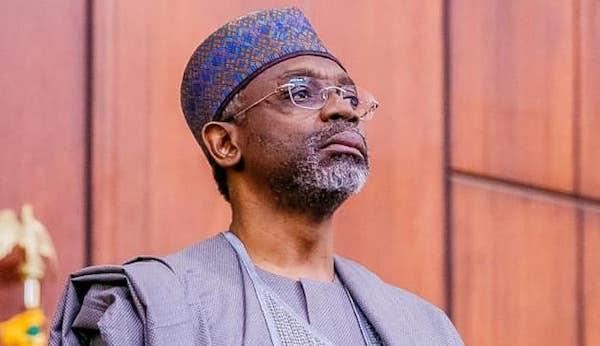
From Attah Ede, Makurdi
President Bola Tinubu has described Benue State’s contributions to Nigeria as profound and enduring, assuring the people of the Federal Government’s continued partnership in improving security and unlocking the state’s vast economic potential as Benue marked its Golden Jubilee.
Represented by his Chief of Staff, Femi Gbajabiamila, at the grand finale of the state’s 50th anniversary celebration at the IBB Square, Makurdi, the President said the creation of Benue on February 3, 1976, reflected Nigeria’s commitment to justice, inclusion and balanced development, adding that the state has since evolved into one of the pillars of the federation.
Tinubu commended Benue for its contributions to national food security, economic growth and nation-building, noting that the state has produced distinguished leaders and professionals whose achievements continue to shape Nigeria. He also paid tribute to founding figures, including the late Joseph Sarwuan Tarka, former Governor Aper Aku and the Secretary to the Government of the Federation, Senator George Akume, for their roles in the state’s development.
The President urged Benue people to remain united, peaceful and optimistic, saying the next phase of the state’s development rests in the hands of its youth.
Governor Hyacinth Alia described the 50th anniversary as a defining milestone celebrating the state’s resilience, unity and purposeful leadership despite years of insecurity, communal conflicts, displacement, flooding and economic challenges.
He said his administration was restoring confidence in governance through fiscal discipline, infrastructure expansion, improved healthcare and education, agricultural support, investment promotion and enhanced security across the state’s 23 local government areas.
Alia reiterated his resolve to diversify the state’s economy beyond agriculture by promoting agro-processing, manufacturing, mining, technology and tourism, noting that Benue possesses more than 45 identified solid mineral deposits, including gold, lithium, limestone, barite, kaolin, lead and zinc, alongside promising oil and gas prospects.
The governor assured investors that his administration would continue to create an enabling environment for responsible investment and value addition through local processing and manufacturing industries.
The Golden Jubilee celebrations coincided with Governor Alia’s 60th birthday and the third anniversary of his administration, culminating in an interdenominational thanksgiving service at the IBB Square on Sunday.
At the service, Alia pledged to deliver more democratic dividends to the people, calling for unity and support for his administration. He also disclosed plans to send an Executive Bill to the Benue State House of Assembly to establish a Benue State Merit Awards platform to honour deserving indigenes.
The governor said he had forgiven those opposing his administration and urged them to embrace reconciliation for the collective progress of the state.
In his homily, Executive Secretary of the Benue State Christian Pilgrims Welfare Board, Rev. Fr. Michael Melladu, urged the governor to remain steadfast and vigilant against forces seeking to destabilise his administration.
Plateau State Governor Caleb Mutfwang, represented by his deputy, Josephine Chundu, congratulated Alia and called for greater unity among Middle Belt states, noting the shared history and aspirations of Benue and Plateau.
Former Benue governors, Senator Gabriel Suswam and Senator Barnabas Gemade, alongside traditional rulers led by the Och’Idoma, Agabaidu John Odogbo, commended the governor’s leadership and urged him to remain focused despite distractions, as prayers were offered for peace, security and continued development in the state.
By Hassan Olayinka
Every community has a hospital that tells a story. Some tell stories of neglect, where broken equipment gathered dust, overstretched health workers struggled with limited resources, and patients travelled long distances in search of quality care.
Others tell stories of hope, where government investment restores confidence in public healthcare and brings life-saving services closer to the people.For many years, Kwara belonged largely to the first category. Decades of underinvestment left many public health facilities in poor condition. Specialist services were limited, and access to quality healthcare remained a challenge, especially for rural communities.
Many residents who could afford it sought treatment outside the state, while those who could not often settled for inadequate care.Under the administration of Governor AbdulRahman AbdulRazaq, however, a different story is unfolding. It is a story reflected not in political rhetoric but in upgraded hospitals, improved healthcare outcomes, renewed confidence among development partners, and the growing number of Kwarans who can now access quality medical services within the state.
Unlike many reforms that begin with headline-grabbing projects, Kwara’s healthcare transformation started with the basics. The administration focused on rebuilding the primary healthcare system, strengthening secondary facilities, investing in modern medical equipment, expanding health insurance coverage, and improving the welfare and capacity of health workers.
The results are increasingly visible across the state.
Nearly 200 primary healthcare centres have been renovated, equipped and solarised under programmes supported by the Basic Healthcare Provision Fund, the World Bank-assisted IMPACT Project, and state resources. Of these, 83 have been upgraded to modern Level-Two facilities with labour rooms, laboratories, pharmacies, immunisation units, clean water, reliable electricity, staff quarters, and perimeter fencing. Communities including Alapa, Magaji Ngeri, Ago Oja, Aboto-Alfa, Ijagbo, Babanloma, Oro, and Lade now have health facilities that are not only functional but also capable of delivering quality services closer to the people.
The reforms extend well beyond primary healthcare. General hospitals in Patigi, Lafiagi, Kaiama, Yashikira, Oro, and other parts of the state have undergone major upgrades, while the former General Hospital, Ilorin, has been transformed into the Kwara State University Teaching Hospital (KWASUTH).
More than a change of status, the upgrade positions the institution as a centre for specialist healthcare, medical education, and the training of future health professionals.
Nothing symbolises this ambition more than the ultramodern Intensive Care Unit recently completed at KWASUTH. Commissioned by the First Lady of the Federal Republic of Nigeria, Senator Oluremi Tinubu, during her official visit to Kwara State, the facility is the largest Intensive Care Unit in North Central Nigeria.
It significantly expands the state’s capacity to manage critically ill patients and complex surgical cases, reducing the need for emergency referrals outside Kwara.
The administration has also prioritised modern diagnostics. At the inception of the AbdulRazaq administration, much of the state’s diagnostic infrastructure was outdated or no longer met contemporary standards. Rather than continue relying on obsolete technology, the government procured a state-of-the-art 1.5 Tesla MRI machine and a 160-slice CT scanner, significantly strengthening the diagnosis of neurological, oncological, spinal, and other complex medical conditions.
Modern ultrasound machines have also been distributed to health facilities, while Sobi Specialist Hospital has received new ophthalmic equipment to strengthen eye care services.
Complementing these investments is a state-of-the-art Oncology Centre under construction in partnership with ASR Africa. When completed, it will improve access to cancer diagnosis and treatment, sparing many families the emotional and financial burden of travelling outside the state for specialised care.
Healthcare infrastructure alone, however, cannot deliver better outcomes without qualified professionals. Like many parts of Nigeria, Kwara has not been immune to the migration of doctors, nurses, and other health workers. The state’s response has been both pragmatic and proactive.
The AbdulRazaq administration has implemented the full CONMESS and CONHESS salary structures alongside hazard allowances to improve staff welfare and retention. Hundreds of healthcare workers across different cadres have been recruited, with additional nurses currently being employed to strengthen service delivery.
Equally important is the sustained investment in training. Dozens of midwives have been trained in Basic Emergency Obstetrics and Newborn Care, while hundreds of health workers have received specialised training in nutrition, immunisation, quality improvement, childhood pneumonia management, and disease surveillance.
Kwara also became the first state in Nigeria to commence payment of the Medical Residency Training Fund in 2025, supporting resident doctors and reinforcing its commitment to developing a sustainable healthcare workforce.
The reforms have been matched by deliberate efforts to make healthcare more affordable. Through the KwaraCare Health Insurance Scheme, more than 100,000 residents, particularly the poor and vulnerable, now enjoy access to essential healthcare services without the crushing burden of out-of-pocket expenses. Regional offices established across the state have further expanded access, making Kwara one of Nigeria’s leading examples in the drive towards universal health coverage.
The annual free medico-surgical outreach has become another defining feature of the administration’s people-centred approach. In 2025 alone, more than 10,000 residents across the 16 local government areas benefited from free consultations, surgeries, medications, eye care services, and the distribution of eyeglasses.
Emergency response has also improved with ambulances deployed across all 16 local government areas, supported by outreach vans, motorcycles, and digital tools that have strengthened service delivery, monitoring, and accountability.
The impact of these reforms is no longer measured only by projects completed but by outcomes achieved. Kwara has consistently ranked among Nigeria’s best-performing states in primary healthcare delivery, winning the Primary Healthcare Leadership Challenge several times and attracting incentive funding of more than $1.4 million to further strengthen health services
Immunisation coverage has consistently surpassed national targets, while nearly half a million children have received Vitamin A supplementation and deworming medication through state-supported programmes.
Independent health indicators also point in the right direction. Kwara now records one of the lowest under-five mortality rates in Nigeria, reflecting sustained investments in maternal and child healthcare, nutrition, immunisation, and community-based interventions. The renewed confidence of development partners such as the World Bank and UNICEF further underscores the credibility of the state’s healthcare reforms.
Recognition has naturally followed these achievements. In 2025, Governor AbdulRahman AbdulRazaq received the Nigerian Medical Association’s Award of Excellent Service in recognition of his contributions to healthcare delivery and human capital development. The honour complements other national recognitions earned by Kwara for excellence in primary healthcare and public health programming.
No serious observer would argue that every healthcare challenge has been solved. Healthcare remains one of the most demanding sectors of governance, requiring continuous investment, innovation, and adaptation. Population growth, the migration of health professionals, and emerging public health threats mean that the work of building a resilient health system is never truly finished.
Yet governance should be judged not by the absence of challenges but by the quality of its response to them. By that standard, Kwara’s healthcare story has become one of steady, measurable, and verifiable progress. From revitalised primary healthcare centres and upgraded general hospitals to the largest Intensive Care Unit in North Central Nigeria, modern diagnostic equipment, expanded health insurance coverage, and improved health outcomes, the state has demonstrated that purposeful leadership can transform a critical sector.
Perhaps the most enduring achievement of the AbdulRazaq administration is not the number of facilities renovated or the sophistication of the equipment procured. It is the restoration of public confidence in a healthcare system that increasingly works for ordinary people. For thousands of Kwarans who can now access quality healthcare closer to home, healthcare has ceased to be a promise. It is steadily becoming a reality.
Hassan Olayinka is a public affairs commentator based in Ilorin, Kwara State.
By Tambaya Julius, Abuja
The Federal Government has reaffirmed its partnership with Dangote Cement Plc and other stakeholders in the housing sector to accelerate the delivery of affordable and inclusive housing across Nigeria as part of efforts to reduce the country’s housing deficit.
The commitment was reiterated at the 2026 Abuja International Housing Show (AIHS), where stakeholders also applauded Dangote Cement and the President of Dangote Industries Limited, Aliko Dangote, for their contributions to affordable housing, infrastructure development and Africa’s industrialisation.
Speaking during a visit to the Dangote Cement pavilion at the exhibition, the Minister of Housing and Urban Development, Dr. Muttaka Rabe Darma, said the Federal Government remained committed to working with the company to tackle Nigeria’s housing challenges.
Darma noted that the theme of this year’s exhibition, “Housing Solutions for Low-Income and Informal Workers in Africa,” aligns with the Federal Government’s agenda of expanding access to decent and affordable housing for low-income earners and workers in the informal sector.
Stakeholders at the event described Dangote Cement as a strategic partner in bridging Nigeria’s housing deficit through the production of quality building materials and sustained investments in infrastructure.
They also applauded Aliko Dangote for his commitment to Africa’s industrialisation and economic transformation, noting that his investments have continued to stimulate economic growth, create employment opportunities and promote sustainable development across the continent.
Founder and Chief Executive Officer of the Abuja International Housing Show, Festus Adebayo, described Dangote Cement as a dependable partner whose consistent support has played a significant role in the growth and success of the annual housing exhibition.
He disclosed that Dangote Industries Limited is the principal sponsor of the 20th edition of the exhibition, while Dangote Cement is showcasing innovative products and building solutions designed to support affordable housing delivery.
Speaking on behalf of the National Sales Director, Dolapo Alli, Dangote Cement’s Regional Sales Director for North Central, Bankole George, said access to decent housing is fundamental to human dignity, social stability, economic productivity and inclusive national development.
He identified the major constraints to affordable housing in Nigeria as the high cost of land, rising prices of building materials, limited access to mortgage financing, weak rental systems and restrictive planning regulations.
The Director advocated innovative financing mechanisms tailored to low-income earners and informal-sector workers, including micro-mortgages, rent-to-own schemes, cooperative savings programmes, employer-assisted housing initiatives and incremental housing loans.
Former Speaker of the House of Representatives, Rt. Hon. Aminu Waziri Tambuwal, urged lawmakers to champion legislative reforms that would improve access to affordable housing across the continent.
Former Senate President, Senator Anyim Pius Anyim, also called for innovative financing models to bridge Africa’s housing gap and expand home ownership opportunities for millions of people.
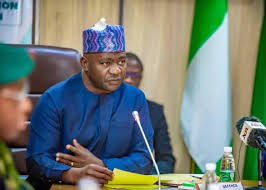
By Elijah Oguche, Abuja
Nigeria’s Minister of Defence, General Christopher Musa (Rtd), has dismissed reports alleging that he resigned from office, describing the claims as false, misleading and aimed at distracting ongoing efforts to improve the country’s security.
Speaking with State House Correspondents after a meeting with President Bola Tinubu at the Presidential Villa, Abuja, General Musa said he had never contemplated or discussed resigning from office.
“I’m not going anywhere. I have never discussed it. I don’t even know who the person who brought that information is.
But whoever it is will face legal action,” he said.The Minister said he had just briefed President Tinubu on the current security situation across the country, adding that the President expressed satisfaction with the progress being recorded by the nation’s security agencies.
General Musa thanked Nigerians for their continued support and called for a whole-of-society approach in tackling terrorism, banditry and other security threats.
He noted that the cooperation of citizens has contributed significantly to the improvements being witnessed in the security landscape, assuring that efforts would continue until terrorists and other criminal elements are defeated.
In a related development, the Ministry of Defence also issued a public disclaimer through the Minister’s Special Assistant on Media, Leah Katung-Babatunde, describing reports of the minister’s alleged resignation as “fabricated misinformation” intended to mislead the public.
The ministry reaffirmed that General Musa remains fully committed to his responsibilities and continues to oversee Nigeria’s defence and security agenda, including the implementation of policies and strategies aimed at strengthening national security.
It urged media organisations, bloggers and social media users to verify information through official government channels before publishing or sharing sensitive reports, warning that the spread of false information about senior government officials, particularly in the security sector, could undermine public confidence and distract from ongoing efforts to address the country’s security challenges


When healthcare stops being a promise
ShareBy Hassan Olayinka Every community has a hospital that tells a story. Some tell stories of neglect, where broken equipment...

FG Partners Dangote Cement, Boosts Affordable Housing Delivery
ShareBy Tambaya Julius, Abuja The Federal Government has reaffirmed its partnership with Dangote Cement Plc and other stakeholders in the...

Defence Minister Denies Resignation Rumours, Threatens Legal Action
ShareBy Elijah Oguche, Abuja Nigeria’s Minister of Defence, General Christopher Musa (Rtd), has dismissed reports alleging that he resigned from...
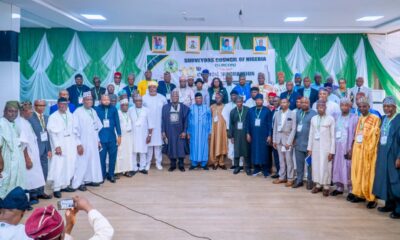

FG Inaugurates 10th Surveyors Council of Nigeria
ShareBy David Torough, Abuja The Secretary to the Government of the Federation (SGF), Sen. George Akume CON, has inaugurated the...

Tinubu’s Reforms Repositioning Nigeria for Long-Term Prosperity, Says Idris
ShareBy David Torough, Abuja The Minister of Information and National Orientation, Mohammed Idris, has said that the economic reforms introduced...

Akume Urges Code of Conduct Tribunal to Adopt Digital Technology for Faster Justice Delivery
ShareBy David Torough, Abuja The Secretary to the Government of the Federation (SGF), Senator George Akume, has urged the Code...

Tinubu’s Reforms Repositioning Nigeria for Long-Term Prosperity, Says Idris
ShareBy David Torough, Abuja The Minister of Information and National Orientation, Mohammed Idris, has said that the economic reforms introduced...

Akume Reaffirms Nigeria’s Commitment to Stronger Serbia Ties
ShareBy David Torough, Abuja The Secretary to the Government of the Federation (SGF), Senator George Akume, has reaffirmed the Federal...

Idris Urges Bloggers, Content Creators to Uphold Ethics, Support Nation-building
ShareBy David Torough, Abuja The Minister of Information and National Orientation, Mohammed Idris, has called on bloggers, online content creators...

FCT, Niger Get Tougher Traffic Enforcement as FRSC Launches Safety Drive
ShareThe Federal Road Safety Corps (FRSC), Abuja Zonal Command, has launched Operation Sauka Lafiya, a special enforcement and public safety...