
Agriculture
Tinubu Approves Committee to Stem Farmers-Herders Clashes

By Tony Obiechina, Abuja
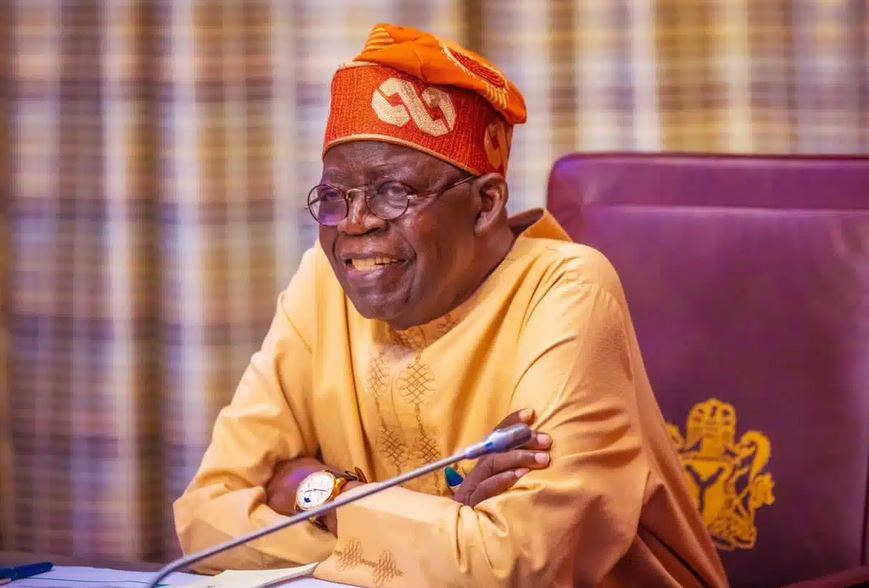
President Bola Tinubu has approved the establishment of a Presidential Committee dedicated to the reform of the livestock industry and the provision of long-term solutions to recurring clashes between herders and farmers in the country.
The President announced the establishment of the Committee on Thursday in Abuja, following the submission of a report from the National Conference on Livestock Reforms and Mitigation of Associated Conflicts in Nigeria.
The Conference was convened by the former Executive Governor of Kano State and Chairman of All Progressives’ Congress (APC), Dr.
Umar Abdullahi Ganduje.The President explained that the Committee was expected to collaborate with the Federal Ministry of Agriculture and Food Security, and propose recommendations aimed at fostering a peaceful co-existence between herders and farmers while ensuring the security and economic well-being of all Nigerians.
“The Federal Government is fully prepared to cover the cost of acquiring the land. These opportunities will provide gainful employment for our veterinary doctors, while opening doors for the private sector as the provision of new educational opportunities for herders’ and their children emerge. Medical facilities will be established. This is a life-changing opportunity that we have.
“Imagine us producing enough milk for our school children. Imagine us becoming net exporters of cheese and yoghurt. Imagine us producing the skin massively with a major Nigerian leather industry. Imagine us providing cold storage facilities and employment across the nation. These things are possible in front of us,” the President charged.
A statement by Special Adviser on Media and Publicity, Chief Ajuri Ngelale, said Tinubu commended Ganduje for assembling the best minds and experts to find solutions to the perennial issues between pastoralists and farmers.
He also praised the committee members for their diligent work in examining the complex issues related to livestock management, land use, and security.
“Out of every tragedy, if you are careful, you will see an opportunity. We have faced this conflict for some time. We know it is a homegrown problem. It is very hard for people to stay away from their traditional, old ways.
“I tried in 2018 to bring about a solution to this problem, but it proved elusive. But I’ve been told not to ever give up, and today I believe the solution is here,” the President stated, referring to the committee report, which contains several recommendations.
“It is not the fault of herders and farmers that this crisis has persisted. It is the fault of the leadership who failed to find immediate solutions to solve their problems. Leadership is about thinking and doing,” he said.
In his remarks, Ganduje recalled that during his tenure as the Governor of Kano State, he had hosted the National Conference as part of a deliberate effort to promote the modernization of livestock production, while strengthening the capacity of local authorities to manage relationships and amicably resolve conflicts between herders and farmers.
He noted that Kano had remained one of the most peaceful states in the country throughout his eight years in office.
“Mr. President, I am convinced that the report submitted here today has the antidote to the problems of the livestock industry. It addresses the key reforms and presents various development options required for the sustainable development of the sector.
“The implementation of the proposals will enhance productivity, improve livelihoods, promote environmental conservation, address substantial causes of conflicts between farmers and pastoralists, and help in reducing the cost of importation for animal products like milk and beef,” the Convener noted.
WFP Approves $2.5bn to Tackle Hunger in Nigeria
The World Food Programme (WFP) has committed the sum of $2.5 billion to support Nigeria in tackling hunger in the next five years.
Country Director, WFP David Stevenson, disclosed this when he visited the Ministry of Humanitarian Affairs and Poverty Alleviation in Abuja on Thursday.
Stevenson said the initiative will harness the agricultural potentials in the north of the country.
He said, “I recently had a short discussion with the vice-president and we agreed to meet again in Abuja,” he said.
“We presented our strategy called ‘Out of conflict interest solutions’. It is a food system strategy based on the agricultural potential in the north.
“As you know, from Lake Chad across Borno to Potiskum, straight to Kano into the north-west had been the bread basket in the past, really productive.
“What I am taking out of this is renewed energy. I came to Nigeria to really help and I actually came back to the world food programme after some years away.
“We presented our strategy called ‘Out of conflict interest solutions’. It is a food system strategy based on the agricultural potential in the north.
“As you know, from Lake Chad across Borno to Potiskum, straight to Kano into the north-west had been the bread basket in the past, really productive.
“What I am taking out of this is renewed energy. I came to Nigeria to really help and I actually came back to the world food programme after some years away.
“I was mentioning to the minister that I came back to Nigeria because really I believe in the country and the ability of Nigerians to work out their own challenges and to prosper as so many have.
“It is really exciting for me and my office to be a part of it so I have come with interest and I am leaving with so much energy and interest than I came in with.”
According to a statement by the WFP, 2.1 million Nigerians stand to benefit from the initiative.
“The World Food Programme has pledged to support President Bola Tinubu’s zero hunger programme under the federal ministry of humanitarian affairs and poverty alleviation,” the statement reads.
“2.1 million Nigerians have already been captured as beneficiaries of the program with the hope to expand while working with the minister of humanitarian affairs and poverty alleviation Dr. Betta Edu.
“The minister commended the WPF for the support, adding that ‘we have the challenges staring at us in the face and we must provide solutions to them’.”
She said the support is coming at a time when Nigeria is in need of lasting solutions to the hunger challenge in the country.
Nigeria Has No Business Being Poor- Tinubu
President Bola Tinubu, on Thursday said Nigeria had no business being poor, having been blessed with enormous human and natural resources across the country.
In a statement by Chief Ajuri Ngelale, the Special Adviser to the President on Media and Publicity, on Thursday in Abuja, Tinubu assured Nigerians that under his leadership, the resources would be adequately harnessed for the benefit of citizens.
Ngelale said the president stated this at a meeting with a 62-man delegation from Rivers, comprising of leaders from both the ruling All Progressives’ Congress (APC), and the opposition Peoples Democratic Party (PDP), to the State House, Abuja.
“We are not meant to be in a position to be poor. We will turn the tide! Somewhere, somehow in this storm, there’s a quiet and peaceful place for us. We will locate it!
“We are not lazy people, we are richly endowed. We just need to be our brother’s keeper, and good neighbours to one another. I am not a President that will give excuses.
“’I will work hard for our nation with purpose, determination and dedication, to create wealth for all Nigerians., we have no reason to be poor! We will not look back, we will run aggressively forward.
“Today, we may be swimming against the tide. But the waves will soon propel us forward from behind. We will achieve the goals and dreams of our forefathers. I am inspired by the people I now lead,” the President said.
Speaking on infrastructure development in Rivers State, Tinubu said he had heard the cries of prominent Rivers sons, with particular reference to the Eleme Junction-Onne axis of the East-West Road, linking the Port Harcourt Refinery.
According to him, the FCT Minister, Nyesom Wike, is a strong adviser, and will follow up on the issue for prompt action.
“The Honourable Minister, Wike, is not just the Minister of FCT, he is also my adviser and an admirer of mine. He has hit the ground running and he should be encouraged by the state,” the President said.
In his remarks, Gov. Siminalayi Fubara of Rivers, told the President that the delegation, which included leaders of political parties, past and present members of the state and National Assembly across parties, was on a solidarity and thank you visit.
“The people of Rivers State voted for you in the last general elections based on their belief in fairness, equity and justice. This is the first time that Rivers State is truly feeling the impact of the Federal Government, since the inception of democracy in 1999,” Fubara said.
The governor said that the delegation appreciated the President for appointing capable sons and daughters of the state into highly strategic positions in his administration.
He particularly thanked the president for the appointments of Wike; Ngelale, other sons and daughters of Rivers into the Boards and Management of the Niger Delta Development Commission (NDDC), as well as other institutions.
Fubara applauded Tinubu for attracting the 14 billion dollars investment approval for projects nationwide during the G-20 Summit, including the expansion of Indorama Petrochemicals in Eleme, Rivers.
He disclosed that state had just allocated 209 hectares of land in support of the new investment. (NAN)

Some residents in Lagos State have expressed concern over the recent surge in the price of tomatoes, forcing many households to adopt alternatives.
The residents made their views known in separate interviews on Wednesday in Lagos.
A market survey showed that a 50kg basket of tomatoes now sells between N115,000 and N125,000, compared to between N35,000 and N40,000 recorded last month.
Olachi Igwe, a resident of Ago Palace, said the scarcity and high cost of tomatoes had disrupted her household’s meal plans.
“I contacted my usual vendor, but she said tomatoes were scarce and difficult to source.
“A small bowl we used to buy for between N3,500 and N4,000 now sells for as high as N6,000 to N7,000, when available.
“For now, my family will resort to palm nut stew (ofe akwu) until prices stabilise,” she said.
Another resident, Mercy Okeleye of FESTAC, said although her family prefers fresh tomatoes, rising prices have forced her to consider cheaper options.
“I cannot do without fresh tomatoes because of the taste, but I may have to buy broken ones, popularly called ‘esha’, which are relatively cheaper.
“I do not consider tomato paste a suitable substitute because it is not purely made from tomatoes,” she said.
Also speaking, Tope Babalola from Dopemu, said she might adjust her cooking methods if prices remain high.
“I have not bought tomatoes in over a month, but if the price is still high, I will use more onions and peppers.
“I will not resort to artificial additives; I prefer natural ingredients for my meals,” she said.
Joan Ogugua, another resident, said she had already switched to tomato paste to cope with the situation.
“I asked my son to buy tomato paste for our meals. I cannot justify spending excessively on fresh tomatoes when other basic needs must be met,” she said.
Also, Oge Ugwu, a civil servant at Lekki, said she would resort to cucumber stew with the recent price hike.
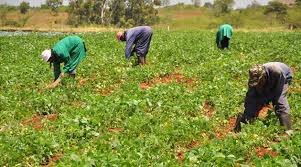
The Tomatoes Growers and Processors Association of Nigeria (TOPAN) has predicted a steady increase in the price of the produce between May and June 2026.
The Kaduna State Chairman TOPAN, Rabiu Zuntu, disclosed this in an interview recently in Lagos.
Zuntu noted that although there is no particular time for tomatoes planting season up north, seasonal weather variations can affect the production of the produce.
“Although we can plant tomatoes all-year-round, we cannot assure quality harvest all-year-round.
“Some farmers are harvesting now, while others are transplanting, and others are harvesting.
“Tomatoes are still available for sale but the price of the produce is gradually on the increase.
“Come May/June, the prices of tomatoes will be very expensive, so now is a good time to stock up the produce. There’s always a scarcity within that period.
“This is because of the nature of the weather in the north around that period, the weather is usually very hot and tomatoes cannot resist such hot temperature,” he said.
Zuntu said the price of tomatoes have started rising up in the north.
“A 50kg rafia basket of tomatoes sells from N20,000 as against N7,000 to N10,000 that was sold earlier in the year.
“While a crate of tomatoes up north is sold between N10,000 and N15,000 as against N5,000 to N6,500 sold earlier in the year.
“In most part of Kano State, where there is bumper harvest, they are rounding off their harvest. So, tomato is not that available there and most buyers have turned to where they can find it now, mostly within Kaduna State and some parts of Plateau State.
“So, that’s why the supply has decreased and the tomato supply and cost is determined by the law of demand and supply,” he said.
A 50kg basket of tomatoes in Lagos, at the moment, sells between N40,000 and N60,000 depending on the size and quality.

The Smallholder Women Farmers Organisation in Nigeria (SWOFON), Oyo State chapter, has said that the lack of irrigation facilities had become a major obstacle to dry season farming in the state.
The Chairperson of SWOFON in Oyo State, Atinuke Akinbade, said this in an interview in Ibadan on Monday.
Akinbade, who shared the experiences of women farmers in the state during the 2025 dry season, said that inadequate access to water for irrigation significantly affected the performance of many farmers during the period.
“It hindered many older farmers from participating in dry season farming and also prevented younger farmers from doing as much as they could in cultivating large acres of land,” she said.
Akinbade explained that farmers who managed to plant during the season struggled to access sufficient water to irrigate their farms, a situation worsened by the effects of climate change.
“Many farmers who depended on streams and wells to water their crops suffered major setbacks because those sources could not provide enough water for irrigation.
“Some farmers had to resort to buying water from commercial water tankers, which increased the cost of production, while at times it was even difficult to get water from the tankers,” she said.
The SWOFON chairperson warned that failure to address the problem could worsen food insecurity in the coming months.
“Even now, rainy season farming has not fully commenced because of the irregular rainfall pattern.
“This is a double burden, and if nothing is done, it may lead to serious hunger later,” she said.
Akinbade, however, acknowledged that the government had organised training for members of the association on home gardening.
She, however, said that little support was provided to address the challenges of dry season farming.
The chairman said that the home garden support package given to members consisted mainly of seedlings and one sprayer.
“They gave us two packs each of maize and pepper seeds, with six seeds in each pack, as well as one sprayer, so that we can grow food for household consumption,” she said.
Earlier, Oluwatoyin Oyedeji, SWOFON Coordinator in Oyo East, explained the severe hardship members of the organisation experienced in sourcing water for irrigation.
“Many farmers are already counting their losses because water was not available to irrigate their farms.
“Those who depended on streams and brooks were badly affected because many of them dried up, while the few that still had water had so little that farmers had to dig deeper into the ground in search of more,” Oyedeji said.
In the same vein, the Women Leader for farmers in Saki East, Musiliu Ashiru, said the absence of irrigation facilities also hampered dry season farming in her area.
According to her, many farmers still engaged in dry season farming have had to pay for water to keep their crops alive.
“Many of them buy water from the dam here to irrigate their crops. It has not been easy for them this year,” Ashiru said.



Pope Leo to Have Surgery after Lump Found on Lung
SharePope Leo XIV has announced he will be operated “in the coming days” after a nodule was found on his...


Motorists Express Worry over Non-access to NNPC Petrol Discount
ShareMany motorists said in spite of the discount in pump price of petrol at the Nigerian National Petroleum Company Ltd...


Tuberculosis: Benue Assembly Passes Law, to Protect Patients from Discrimination
ShareBy Laide Akinboade, Abuja The Benue State House of Assembly has passed into law a landmark legislation aimed at eliminating...

President Tinubu’s 30-Day Fuel “Discount” Cannot Repair the Damage of Subsidy Removal
ShareBy Daniel Nduka Okonkwo The Federal Government has issued a stark warning: restoring petrol subsidies could push the exchange rate...


Troops Neutralize Explosive Devices planted in Zamfara Community
ShareFrom Ifeanyichukwu Nwannah, Gusau The troops of Operation Fansan Yamma (OPFY) have neutralised Explosive Devices Planted along Magami–Hannutara–Dansadau road, Maru,...


Mbah Reaffirms Enugu’s Commitment to Trade, Investment, Industrial Growth
ShareFrom Sylvia Udegbunam, Enugu Enugu State Governor, Dr. Peter Mbah, has reaffirmed his administration’s commitment to creating an enabling environment...


Concerns About the 2027 General Elections
ShareBy Jibrin Ibrahim As the countdown to the 2027 elections reached 100 days this week Tuesday, Joash Amupitan, chairman of...

World Bank Report Confirms Economic Reforms Yielding Results – Tinubu
SharePresident Bola Tinubu said the World Bank’s October 2026 Nigeria Development Update confirms his administration’s economic reforms are yielding results...

Bandits Burn Houses, Business Premises in Niger Border Community
ShareFrom Dan Amasingha, Minna Suspected bandits have attacked Kigbera village in Konkoso Ward, Borgu Local Government Area of Niger State,...


Fuel Price Discount and Monetary Policy Recalibration: Communicating Policy Change Without Undermining Reform Credibility
ShareBy Uche Joe Uwaleke Economic reforms are rarely judged solely by their immediate outcomes. They are also assessed by the...